


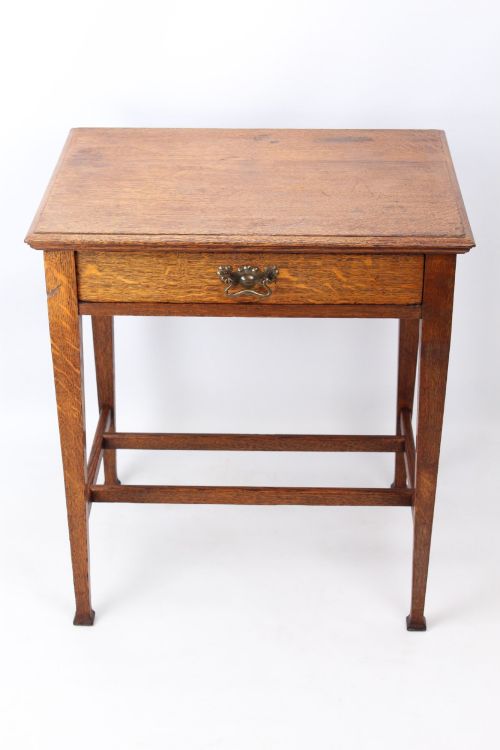
Edwardian Writing Table Desk
When searching for an edwardian writing table desk, collectors discover versatile furniture designed for correspondence and study.
Edwardian Writing Table Desk
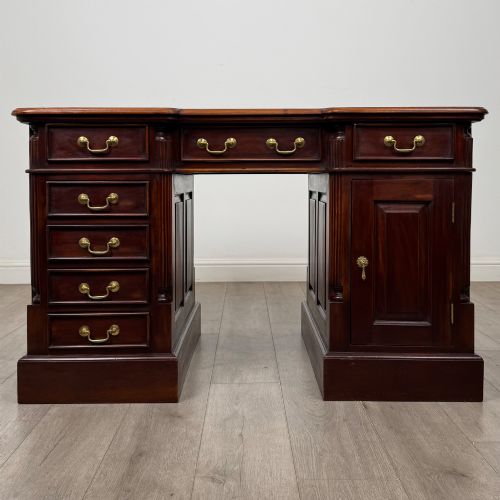
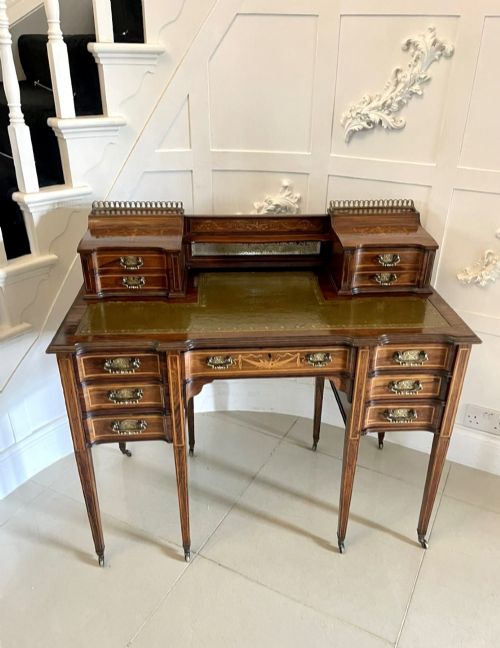
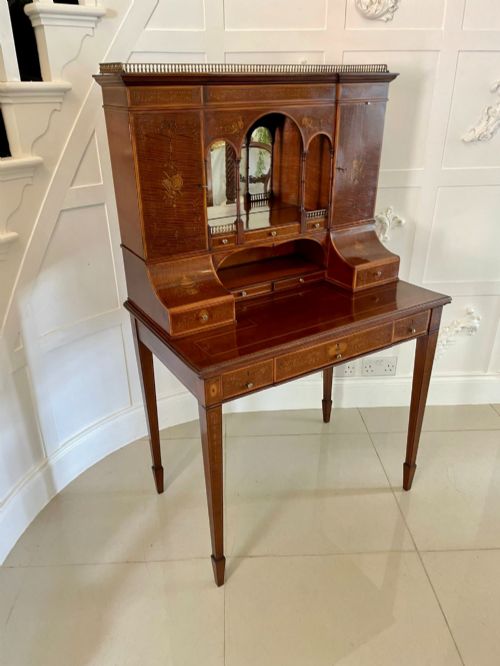
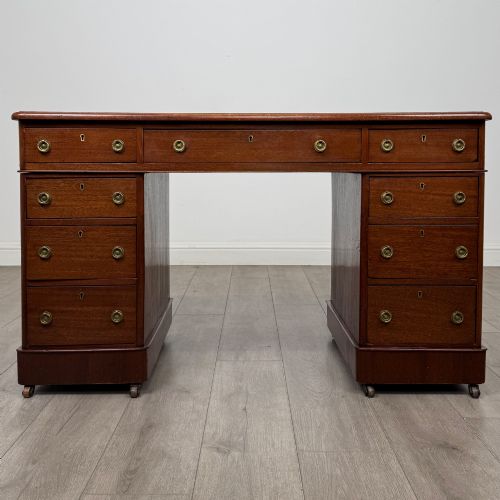
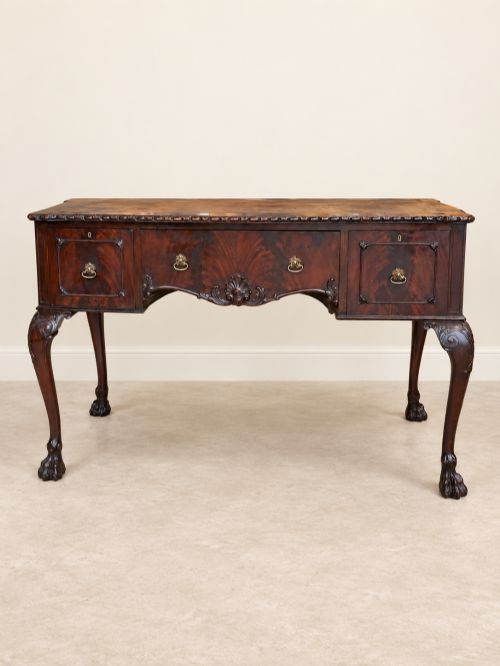
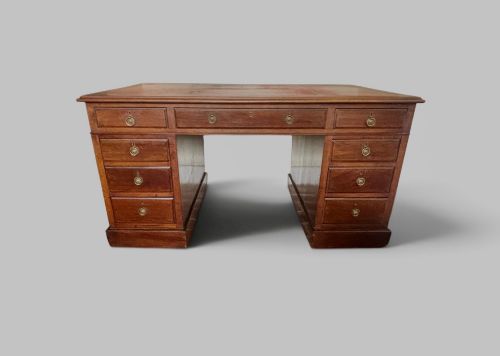
An edwardian writing table desk encompasses various forms designed primarily for correspondence, study, and administrative tasks within the home. Pieces range from compact ladies writing desks with fitted interiors to large freestanding pedestal and partners desks suited for libraries and studies.
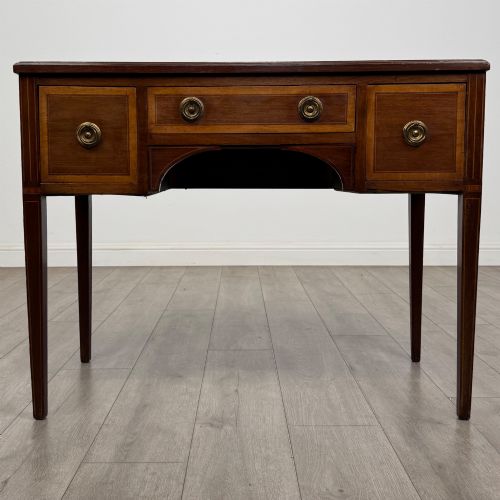
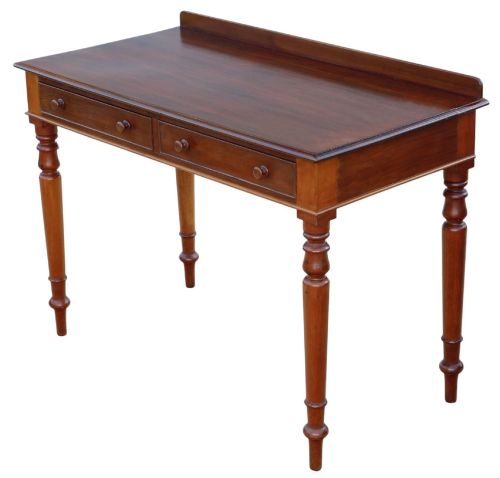
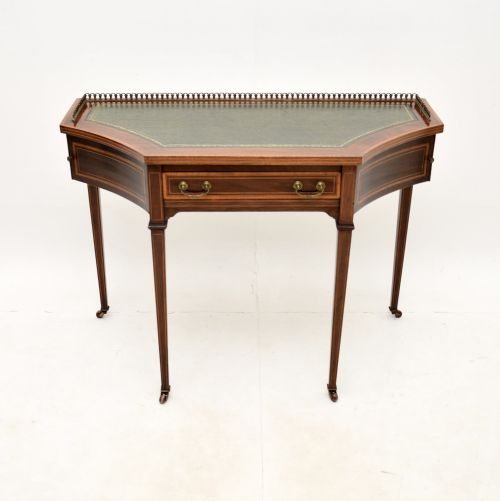
The material palette heavily reflects mahogany, walnut, and satinwood, frequently enhanced with inlaid decoration, satinwood banding, and leather writing surfaces. Construction encompasses standard freestanding tables with frieze drawers as well as specialised metamorphic and cylinder roll-top variants.
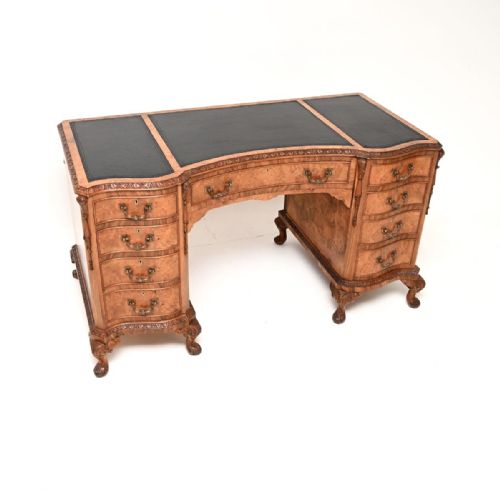
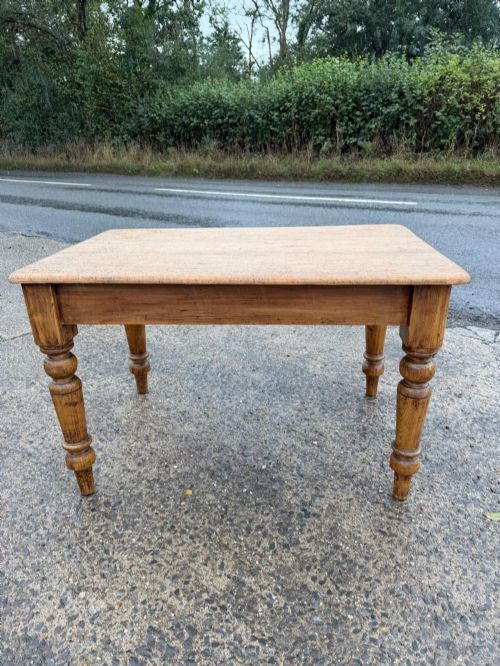
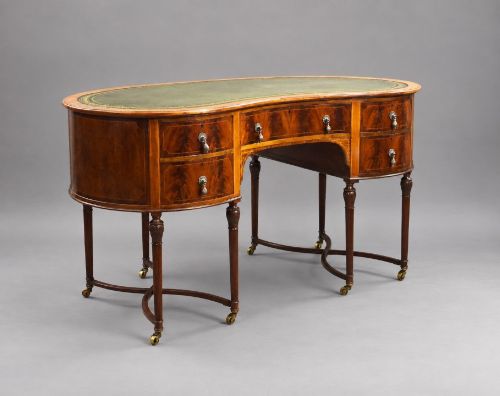
While the Edwardian period dominates the aesthetic, related pieces draw upon late Victorian, Arts and Crafts, and revival styles such as Sheraton and Queen Anne. Smaller kidney-shaped and ladies writing desks appear frequently alongside more substantial oak and mahogany library tables.
How They Were Made
Cabinetmakers constructed these desks primarily using solid timbers and veneers of mahogany, walnut, satinwood, and oak, frequently incorporating contrasting stringing and marquetry motifs. Leather insert writing surfaces appeared commonly on the tops, tooled with gilt borders.
Desk construction often involved dovetailed drawer boxes, turned or tapering legs, and brass hardware such as drop handles and handles with backplates. More complex mechanisms appeared in metamorphic writing tables, drop-front bureaus, and cylinder desks with fitted internal compartments.
Secret compartments and hidden drawers delighted Edwardian letter-writers, offering clandestine spots for confidential notes.
What Varies in Quality
The degree of refinement in cabinetmaking separates standard utility desks from pieces produced by notable makers and workshops. Superior examples display carefully chosen flame mahogany, burr walnut, or satinwood veneers matched across surfaces with precise marquetry and stringing.
Attention to detail in secondary woods, original brass hardware, and the complexity of fitted internal compartments indicate higher craftsmanship. The integration of structural stability in freestanding forms and the preservation of original leather writing surfaces further distinguish finer pieces.
Heal and Son·Trollope and Sons·Edwards and Roberts·Maple and Co·S and H Jewell·Cooper and Holt·Waring and Gillows·Ray and Miles
The Edwardian Writing Table Desk Glossary
- Pedestal desk
- A heavy desk comprising two banks of drawers supporting a single desktop. These typically feature a central frieze drawer and large proportions.
- Marquetry
- Decorative veneer work forming pictorial or geometric patterns using various coloured woods. This technique frequently appears on Edwardian satinwood and mahogany surfaces.
- Partners desk
- A large double-sided desk designed for two people to work opposite one another. These incorporate drawers and cupboards on both sides.
- Frieze drawer
- A drawer situated immediately beneath the main working surface of a table or desk. These often feature locks and pull handles.
- Satinwood
- A light-coloured, hard wood derived from tropical trees, prized for its lustrous grain. It is commonly used for Edwardian cross-banding and inlay.
Edwardian Writing Table Desk: Frequently Asked Questions
How were these desks used originally?
These desks served as domestic centres for writing letters, managing household accounts, and reading correspondence. Ladies desks often included small stationery compartments, while larger pedestal models accommodated professional paperwork.
In polite society, a dedicated writing table provided a private space for correspondence before the widespread adoption of modern communications.
How do I identify an Edwardian desk?
Edwardian desks are typically characterised by lighter proportions than their Victorian predecessors, often featuring Sheraton revival influences, mahogany or satinwood veneers, and delicate stringing. Construction details and timbers align with manufacturing practices around the turn of the twentieth century.
Makers' marks, brass hardware styles, and specific revival motifs help differentiate Edwardian output from earlier nineteenth-century furniture.
How do I care for a leather top desk?
Leather writing surfaces require gentle maintenance using specialist leather dressings to prevent drying and cracking over time. Avoid exposing the leather and underlying wood to direct sunlight or extreme temperature fluctuations.
Using blotting paper or protective pads during writing helps preserve the gilt tooling and the condition of the leather surface.