





Edwardian Woodland Landscape
These edwardian woodland landscape paintings capture British trees, bluebells and quiet forest paths in oil and watercolour.
Edwardian Woodland Landscape
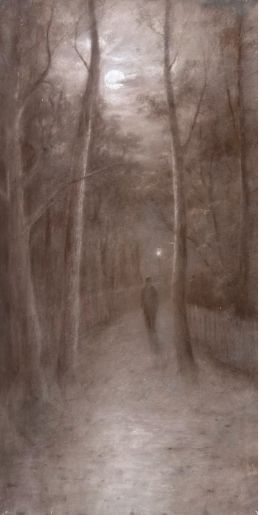
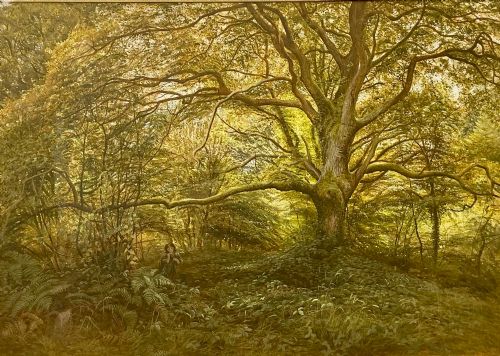
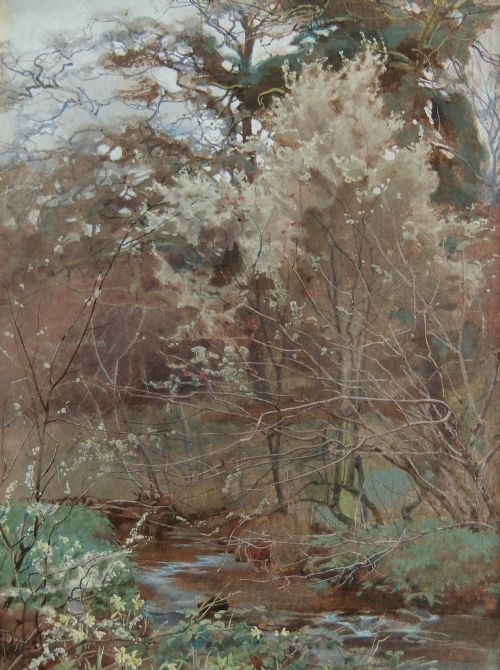
An edwardian woodland landscape brings the quiet of British forests indoors through painted scenes of trees, bluebells, and shaded glades. These works date mainly from the early twentieth century, spanning the Edwardian period alongside late Victorian and later decades up to the mid-twentieth century.
The selection on this page consists of paintings, watercolours, drawings, and oil paintings on canvas or board. They range from intimate watercolour sketches to large landscape oil paintings depicting subjects such as wooded glens, bluebell woods, and cattle in woodland settings.
Most pieces lean towards British Impressionism, Tonalism, and traditional landscape realism. They picture specific places like Yorkshire, Hertfordshire, North Wales, and Boscombe, rendered by British and Irish artists working in the opening decades of the 1900s.
How They Were Made
Artists utilised oil paint on canvas or board, and watercolour pigment on paper, building scenes through layered brushwork and washes. Charcoal appears in initial drawings on canvas, setting the structure before pigment meets the surface.
Support materials include woven canvas, heavy watercolour paper, and glass frames that protect the delicate pigment underneath. The physical creation relies on traditional fine art mediums typical of early twentieth-century British studios.
Listings feature works in oil paint, watercolour pigment, and charcoal on paper, canvas, and glass.
What Varies in Quality
The strength of a piece rests in the artist's handling of light filtering through trees and the naturalism of the foliage. Finer works display confident brushwork and a balanced tonal palette that gives depth to the woodland canopy.
Condition varies according to how well the paper, canvas, and original glass have survived the decades. Works with strong provenance and original framing retain more of their period integrity than those subjected to later restoration.
William H Myers·Thomas Bromley Blacklock·Clarence Henry Roe·Alfred Grey·Rowland Henry Hill·Alfred W Parsons·Harold Swanwick·Charles James Adams·Ernest Higgins Rigg·George Graham·Beatrice Parsons·Edward H Holder·George F Wetherbee·Charles Edward Wilson·John Falconar Slater·Lester Sutcliffe·George Neil
The Edwardian Woodland Landscape Glossary
- Oil painting
- A work created using pigments bound in a drying oil, applied to canvas or board. This medium allows for rich colour depth and textured brushstrokes.
- Watercolour
- A paint consisting of pigment suspended in a water-based solution, typically applied to paper. It yields translucent washes suited to capturing shifting forest light.
- Tonalism
- An artistic style that emerged in the late nineteenth and early twentieth centuries, focusing on shadow, atmosphere, and a subdued colour palette. It shapes many landscape works of this era.
- British Impressionism
- A movement reflecting French impressionist techniques adapted by British artists, prioritising natural light and everyday rural scenes painted outdoors.
Edwardian Woodland Landscape: Frequently Asked Questions
What periods do these landscapes cover?
The pieces span the Victorian era, the Edwardian period, and stretch into the nineteen-twenties, thirties, and forties. Most cluster around the early twentieth century.
Dates reflect the stylistic shifts from late nineteenth-century naturalism towards early twentieth-century British impressionist landscape painting.
Are these works painted on canvas or paper?
Artists used multiple supports depending on the medium. Oil paintings appear on canvas and board, whilst watercolours and drawings rest on paper.
Glass frequently covers the watercolour works on paper to protect the pigment from moisture and handling over time.
How should I frame and display a watercolour?
Watercolours require framing behind glass with acid-free mount board to prevent the paper from yellowing. Keep them away from direct sunlight to protect the pigments.
Stable indoor humidity levels help preserve both the paper support and the wooden frames common to this period.