

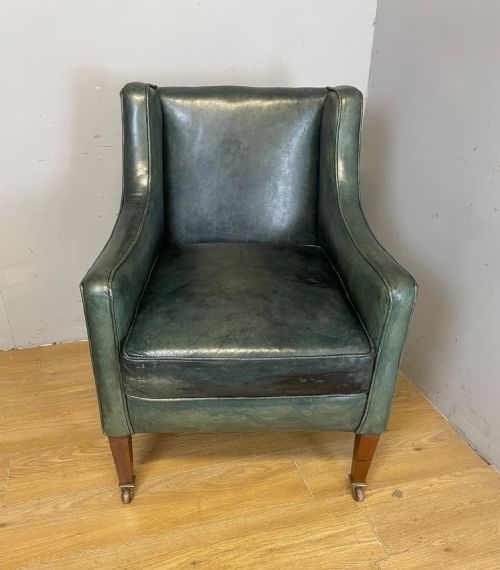
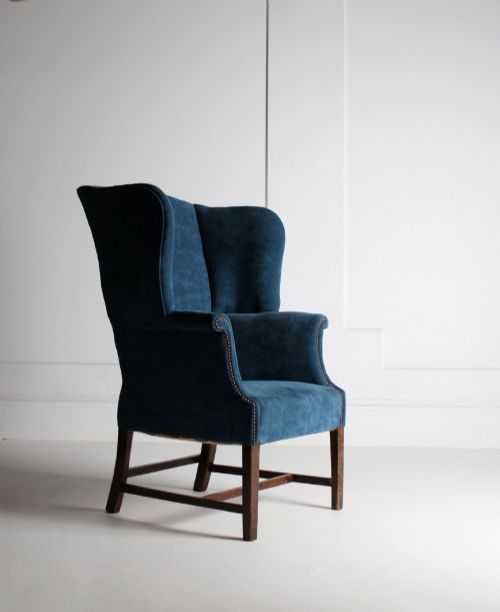
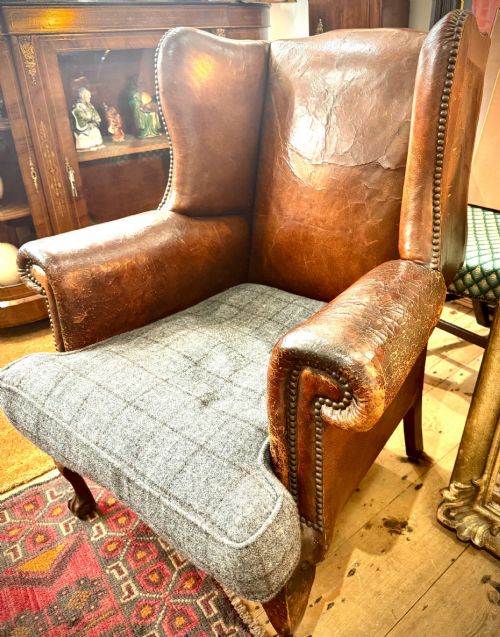
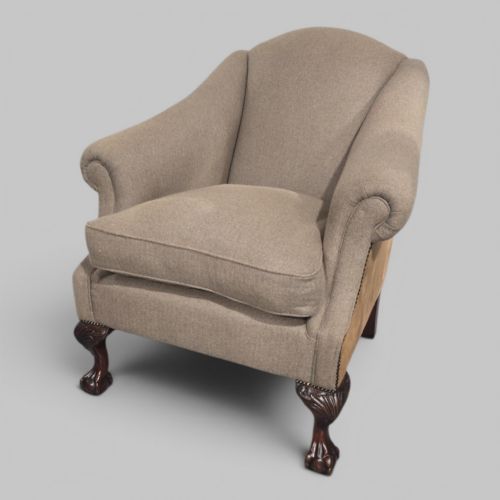


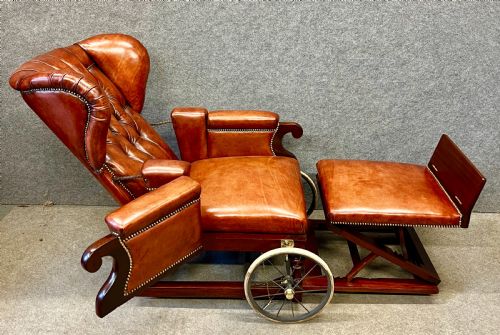


Edwardian Winged Library Chair
An edwardian winged library chair offers deep-seated comfort paired with high protective wings, designed for serious reading rooms and studies.
Edwardian Winged Library Chair
When you search for an edwardian winged library chair, you enter a domain of sturdy seating built for comfort, warmth and long hours of reading. The examples you meet on this page span the Edwardian era itself, alongside Victorian, Regency and eighteenth-century interpretations that share the high back and sheltering sides.
These armchairs appear in several distinct guises, from traditional timber frames to specialised metamorphic and reclining designs. Some take the form of country house wingbacks, while others incorporate brass hardware, velvet, wool, or deeply patinated leather.
The materials reflect a period of solid craftsmanship, utilising sturdy timbers like mahogany and oak alongside plush upholstery. Every piece serves the fundamental purpose of shielding the sitter from draughts while providing a supportive place to sit.
How they were made
Makers constructed the foundational frames of these armchairs using dense hardwoods such as mahogany, oak and walnut. These timbers provided the structural integrity required to support deep upholstery and heavy daily use.
Upholstery techniques combined sprung seats with durable coverings of leather, velvet or wool, secured with brass detailing where appropriate. Specialised mechanisms in mechanical variants allowed the backrests or footrests to adjust for invalid or convalescing use.
Edwardian Winged Library Chair Retail Price Guide 2026
Typical asking prices for edwardian winged library chair among the pieces listed under this phrase on Sellingantiques today, from the lower quarter to the upper quarter. They describe what is for sale here now, not the wider market.
Listings feature mahogany, oak, walnut, leather, velvet, wool, and brass across several periods including the Edwardian era, Victorian times, and the Regency period.
What varies in quality
Quality rests heavily on the integrity of the timber frame and the authenticity of the materials used in the upholstery. Pieces featuring solid mahogany or walnut sit at the higher end of the scale compared to simpler timber constructions.
The presence of specialised mechanical functions, such as reclining actions or metamorphic adjustments by known makers, elevates a piece significantly. Finer examples display meticulous attention to proportion, supportive padding and high-grade leather or textile finishes.
J Foot And Son·John Ward
The Edwardian Winged Library Chair Glossary
- Wingback
- An armchair featuring side panels attached to the arms and framing the back to shield the sitter from draughts. This traditional form remains central to library seating.
- Metamorphic
- A descriptive term for furniture that transforms from one form into another, such as a chair incorporating a reclining mechanism. These pieces utilise clever mechanical engineering.
- Chippendale Revival
- A decorative style reviving eighteenth-century motifs, often characterised by rich mahogany frames and elegant carved details. Makers utilised these classical designs to appeal to later buyers.
- Porters armchair
- A fully enclosed hooded seat designed originally to keep drafty hall porters warm during long vigils. They frequently feature deep leather upholstery and substantial wooden hoods.
Edwardian Winged Library Chair: Frequently Asked Questions
What is a winged library chair?
A winged library chair is a comfortable upholstered armchair featuring high side panels designed to trap heat and block drafts in large rooms.
These chairs provided an ideal seating option for reading and studying in traditional homes.
How do I identify an Edwardian chair?
Edwardian chairs often feature lighter proportions than their Victorian predecessors, utilising mahogany or oak frames with understated stylistic revivals.
Examining the underlying timber and upholstery style helps clarify the period of manufacture.
Were these chairs used for health purposes?
Some period library chairs incorporated mechanical reclining or metamorphic functions specifically designed for convalescing invalids.
These specialised seating arrangements offered adjustable support for individuals requiring extended rest.
What materials cover these armchairs?
Original coverings typically include deep brown or red leather, textured velvet, or durable wool fabric.
These materials were chosen for longevity and comfort during long hours of sitting.