




Edwardian Walnut Kneehole Desk
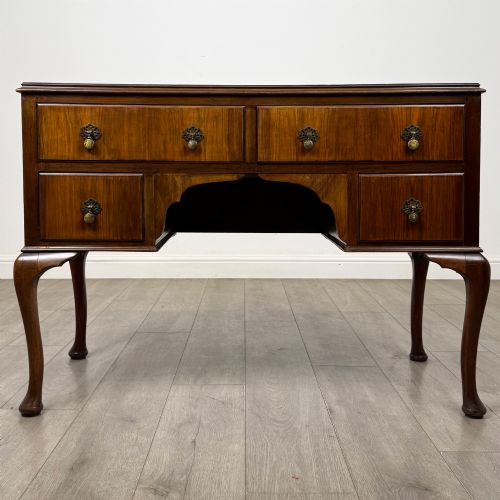
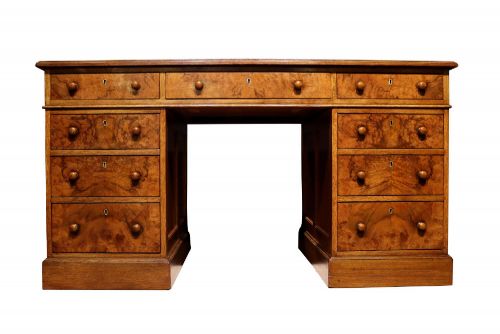
An Edwardian walnut kneehole desk offers a compact writing surface framed by banks of drawers, designed for refined domestic studies and libraries.
Edwardian Walnut Kneehole Desk
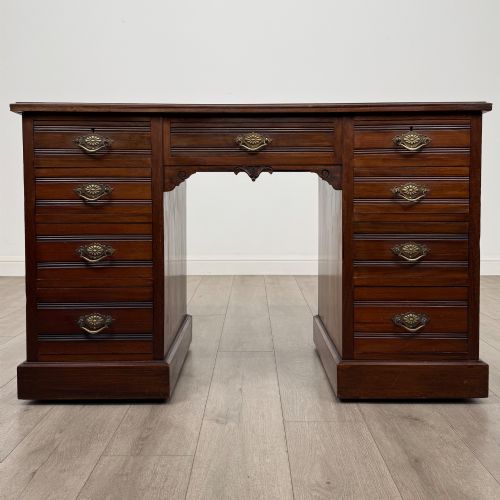
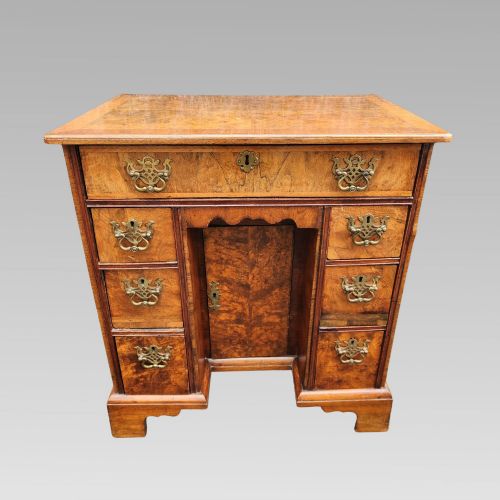
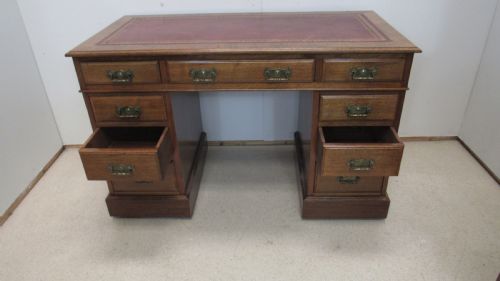
The edwardian walnut kneehole desk brings together a central recessed opening beneath a top drawer, flanked by pedestals containing multiple smaller drawers. These pieces emerge predominantly from the Edwardian period, alongside Victorian and later twentieth century examples.
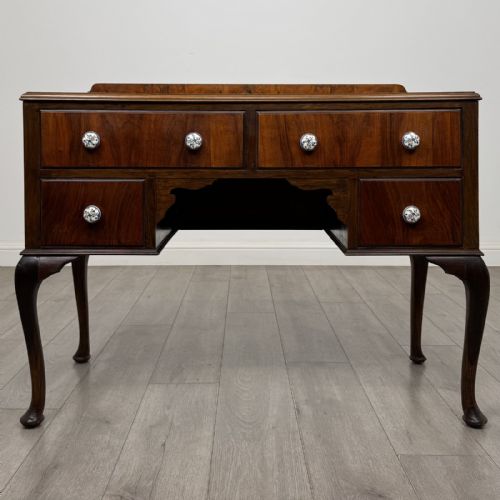
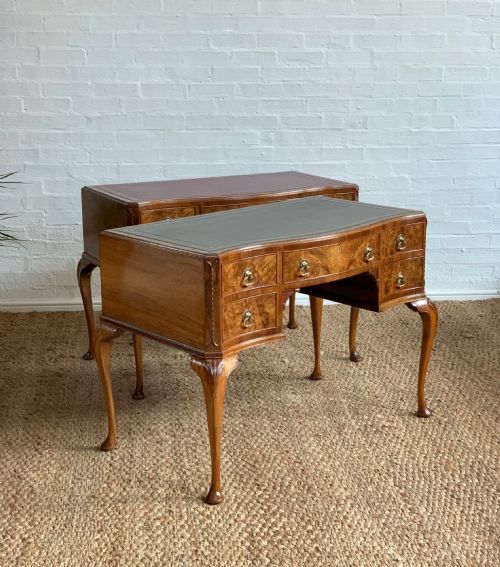
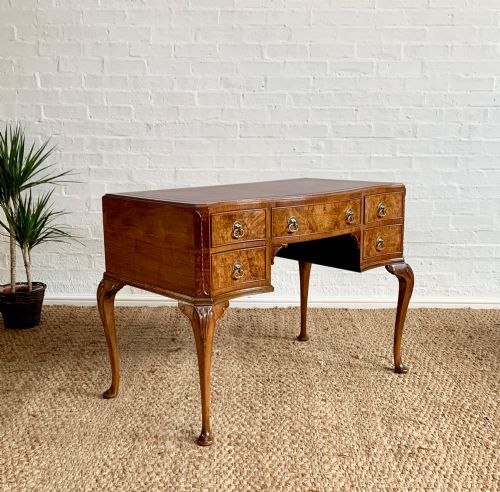
Most variations on this page follow traditional pedestal desk formats, though writing tables, side tables, and low boy forms also appear. Makers often drew on Queen Anne and Chippendale revivals, incorporating stylistic cues like cabriole legs or ornate brass hardware.
Buyers will encounter timber variations ranging from plain walnut and red walnut to highly figured burr walnut veneers. Oak frequently appears in secondary framing elements and drawer linings within these pedestals.
Construction and materials
Cabinetmakers constructed these desks using solid walnut or applied burr walnut veneers over secondary timbers such as oak. Distinctive figuring in the wood was prized for top surfaces and drawer fronts to catch the light.
Brass handles and escutcheons punctuate the drawer layouts, while inset leather writing surfaces frequently provide a durable working plane. Traditional dovetail joinery secures the drawer construction throughout.
Edwardian Walnut Kneehole Desk Retail Price Guide 2026
Typical asking prices for edwardian walnut kneehole desk among the pieces listed under this phrase on Sellingantiques today, from the lower quarter to the upper quarter. They describe what is for sale here now, not the wider market.
Baker Street addresses and Glasgow cabinetmakers left their signatures inside these drawers, proving furniture had a commuter belt long before suburban trains.
Judging quality and execution
Superior examples distinguish themselves through the choice of timber, particularly symmetrical burr walnut veneers selected for the top and drawer fronts. The crispness of carved details in revival styles also separates standard production from finer cabinet work.
Attribution to documented makers elevates an example, as seen in pieces bearing the marks of established firms like Wylie & Lochhead or Gill & Reigate. Robust internal framing and clean secondary woods like oak indicate higher standards of period workshop construction.
Wylie & Lochhead Glasgow·Gill & Reigate·Heal & Sons·Druce & Co
The Edwardian Walnut Kneehole Desk Glossary
- Kneehole
- A recessed space beneath the central drawer of a desk designed to accommodate the user's legs. This arrangement allows for banks of drawers on either side.
- Burr Walnut
- Timber taken from a growth on a walnut tree, yielding swirling, highly decorative grain patterns. Cabinetmakers sliced this wood into veneers for tabletops and drawer fronts.
- Pedestal Desk
- A freestanding desk comprising two separate pedestals of drawers supporting a single desktop. These units often separate into sections for easier transport.
- Low Boy
- A small table with drawers resembling the lower section of a highboy or tallboy chest. These items frequently double as writing desks or dressing tables.
- Dovetail
- A joint formed by interlocking wedge-shaped fingers, used extensively in period drawer construction. This method provides high tensile strength without relying on metal fasteners.
Edwardian Walnut Kneehole Desk: Frequently Asked Questions
How do I spot an Edwardian desk?
Edwardian desks often display lighter proportions and revival styles like Queen Anne or Chippendale compared to heavy Victorian predecessors. Look closely at the construction methods and timber choices characteristic of the early twentieth century.
Secondary woods like oak and specific brass hardware styles also help pinpoint the manufacturing era when examining the interior drawers.
What is a kneehole desk used for?
These desks served as compact writing stations for correspondence and estate management in period homes. The central recess allowed the user to sit comfortably while accessing the flanking drawer pedestals.
Today, they function well as writing tables in studies or as alternative dressing tables in bedrooms.
Are burr walnut desks durable?
Burr walnut veneer provides a stable and decorative surface when applied to solid secondary timbers by skilled makers. The underlying construction of oak and walnut ensures structural integrity for daily use.
Proper placement away from direct heat sources protects the veneer and polish over time.