
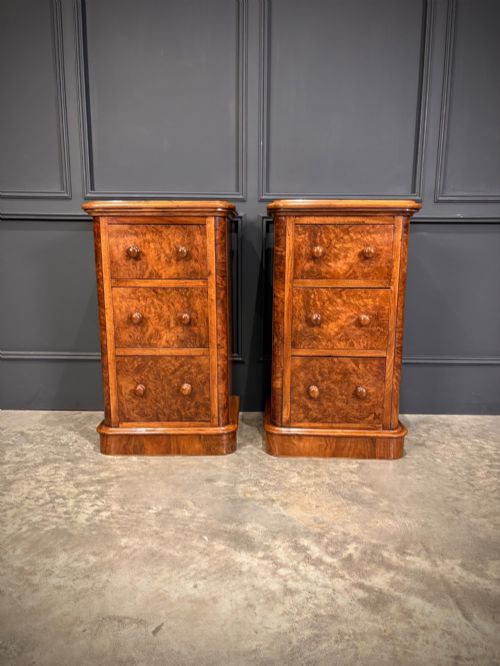
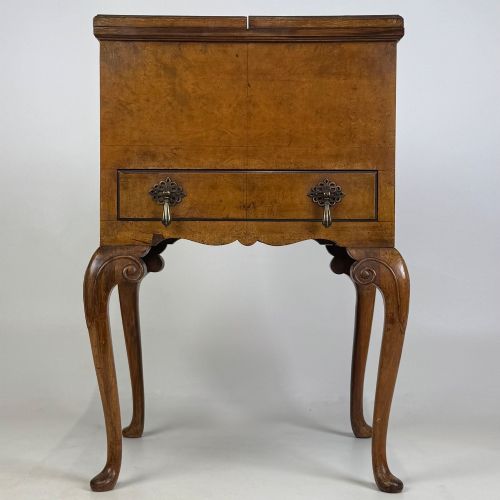
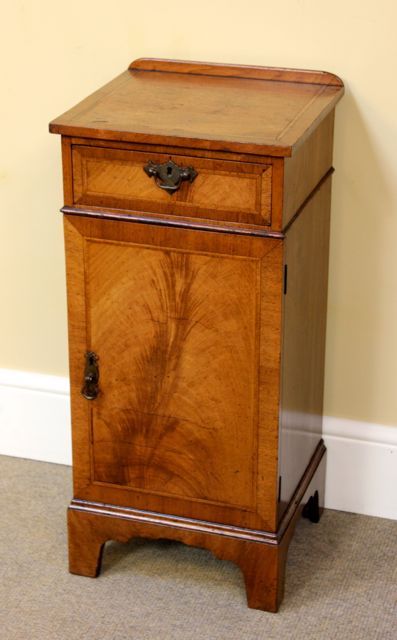
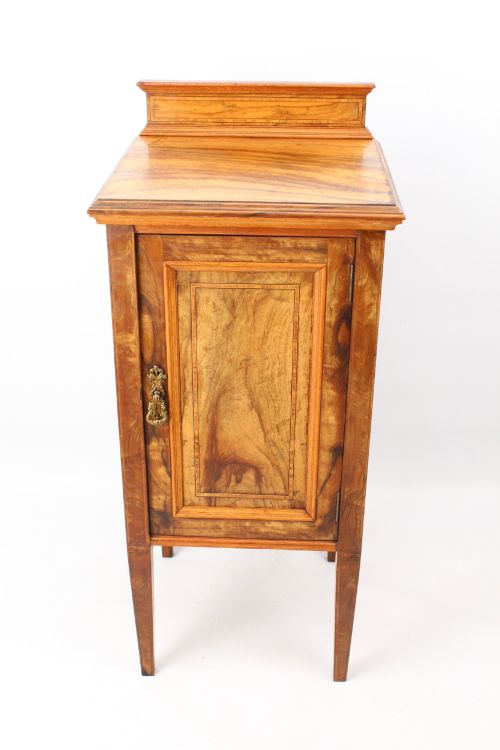

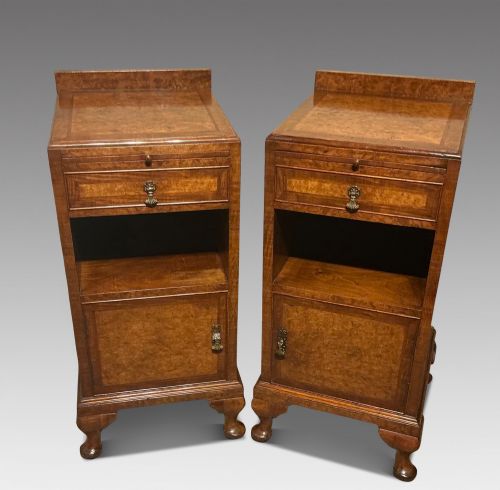

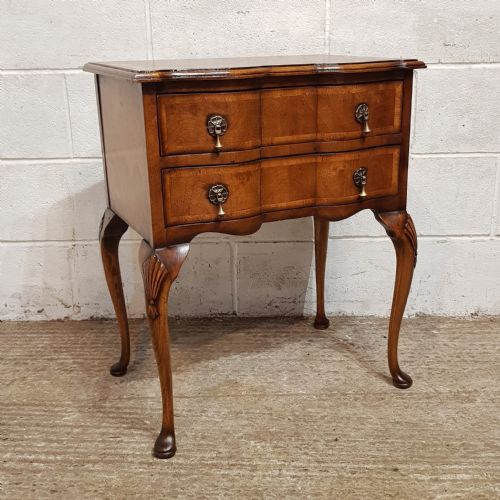


Edwardian Walnut Bedside Tables
Edwardian walnut bedside tables are compact bedroom storage pieces that combine practical surface space with enclosed cabinetry, bringing rich timber grain into the sleeping quarters.
Edwardian Walnut Bedside Tables
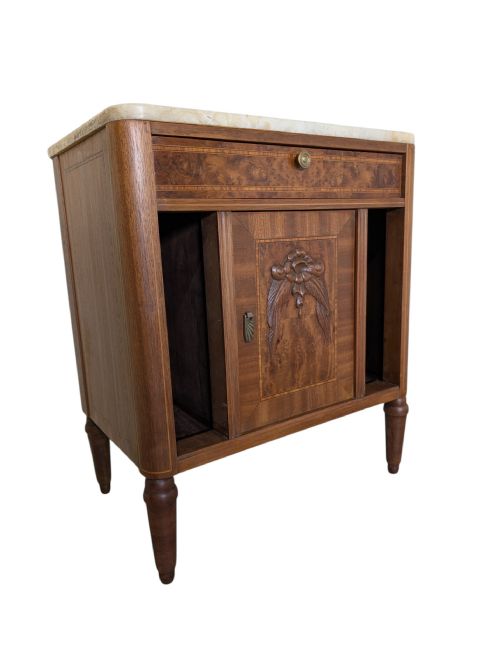
When you search for edwardian walnut bedside tables, you encounter pieces designed for the bedroom to hold a lamp and night necessities. The selection includes cabinets, pedestal cupboards, and open side tables.
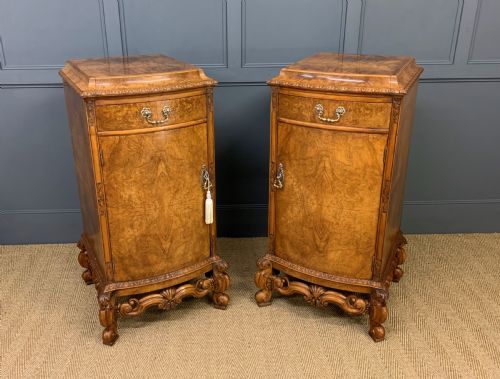
Many examples date from the Edwardian era, alongside related items from the nineteenth and early twentieth centuries. Forms range from simple single-door cabinets to pairs with marble tops or serpentine fronts.
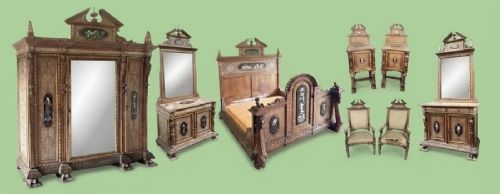
Origin variations include English workshops and makers such as Maple and Co, alongside continental styles with French influences. Buyers find both standalone units and items originating from larger bedroom suites.
Materials and Construction
Cabinet makers utilised walnut timber, frequently applying burr walnut veneer to create patterned surfaces on doors and drawer fronts. Solid walnut and satin walnut also appear across the structural elements and legs.
Fitted interiors often incorporate shelves and pot cupboard compartments behind panelled doors. Brass hardware provides handles and hinges, while selected models integrate inset marble tops or parquet patterns.
Listings feature walnut, burr walnut, satin walnut, and marble, spanning the Victorian period through the nineteen-twenties.
Assessing Quality
The standard of timber selection sets individual pieces apart, particularly the depth and figuration of the burr walnut veneer used on the primary surfaces. Finer items demonstrate careful matching of grain patterns across doors and drawer fronts.
Construction detail distinguishes workshop standards, seen in the solidity of the timber framework and the precision of parquetry or inlaid decoration. Branded pieces from established makers carry distinct marks of workshop provenance.
Maple and Co·Waring and Gillows
The Edwardian Walnut Bedside Tables Glossary
- Burr Walnut
- A distinct timber figuring obtained from the growth excrescences of walnut trees. This veneer displays swirling grain patterns highly prized for decorative furniture fronts.
- Pot Cupboard
- A traditional bedside cabinet designed originally to house a chamber pot. These enclosed cupboards typically feature a single door and an internal shelf.
- Parquetry
- A geometric mosaic of wood pieces used for decorative surfaces. Makers applied small wooden tiles to tabletops and cabinet fronts to create patterned geometric designs.
- Serpentine Front
- A curved furniture front featuring a convex centre flanked by concave ends. This shaping requires skilled woodworking to follow the undulating contours.
- Marble Top
- A stone slab fitted to the upper surface of a bedside cabinet. This addition provided a durable, wipe-clean area for water jugs and wash accessories.
Edwardian Walnut Bedside Tables: Frequently Asked Questions
What is an edwardian walnut bedside table?
These are small bedroom cabinets and tables produced during the early twentieth century using walnut timber. They provide a surface for lighting and enclosed storage for personal items.
Designs range from plain cupboards to ornate pieces with marble tops and decorative veneer work. Many survive as matching pairs.
How were these bedside cabinets used?
Original domestic use centred on the bedside for holding candles, lamps, and night essentials. The enclosed cupboards frequently functioned as pot cupboards for chamber pots.
Today they serve similar bedside functions while accommodating modern lighting and books. Their compact proportions suit placement beside contemporary bed frames.
Are these tables usually found in pairs?
The inventory contains both single items and matching pairs intended for opposite sides of a bed. Pairs often originate from larger bedroom suites.
Matching pairs command particular interest from collectors seeking balanced bedroom layouts. Single pieces function well as standalone accent tables.
How do I identify an edwardian piece?
Dating relies on construction methods, timber choice, and stylistic cues typical of the period around nineteen hundred. Edwardian furniture often shows lighter proportions than heavier Victorian predecessors.
Maker stamps or labels inside doors sometimes confirm the exact period and workshop origin. Burr walnut veneer and brass hardware remain characteristic hallmarks.