


Edwardian Vanity Bottle
An edwardian vanity bottle sits on a dressing table to hold perfume or cologne behind a sterling silver or tortoiseshell cap.
Edwardian Vanity Bottle
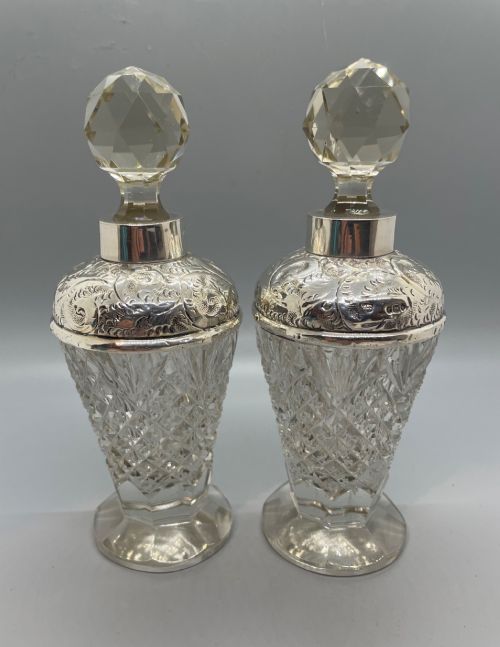
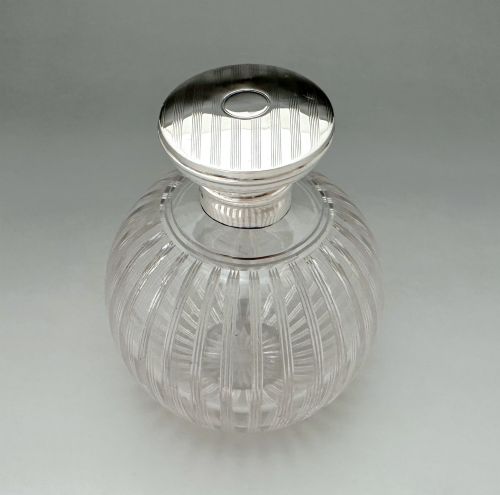
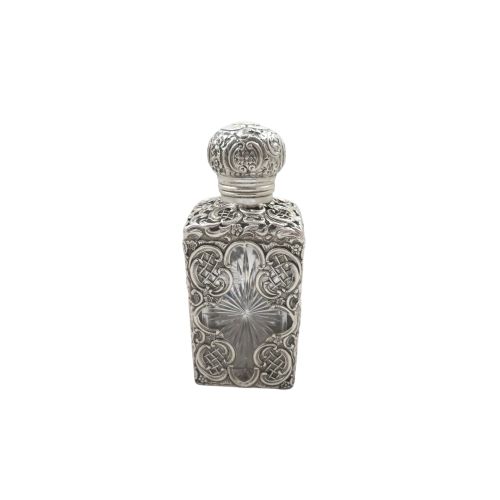
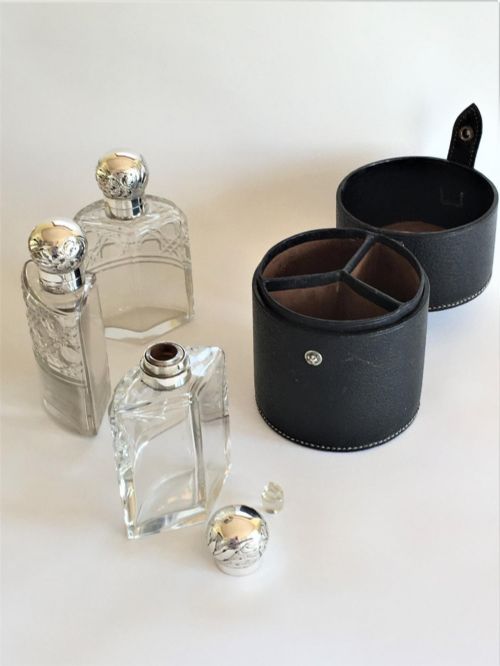
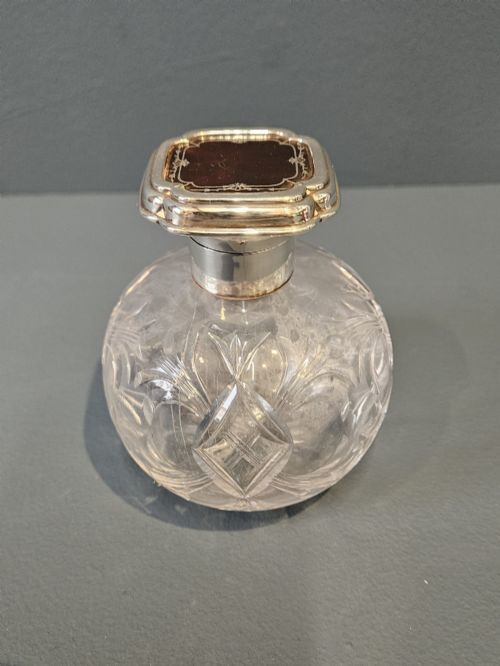
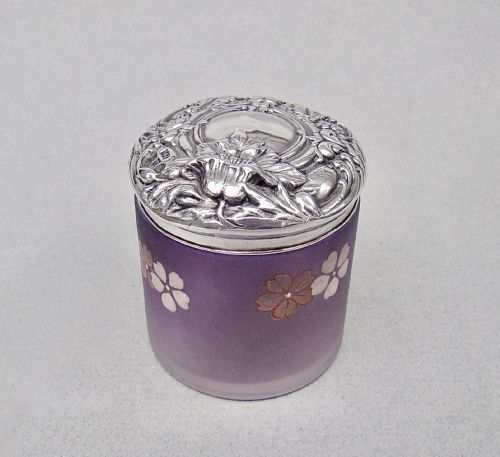
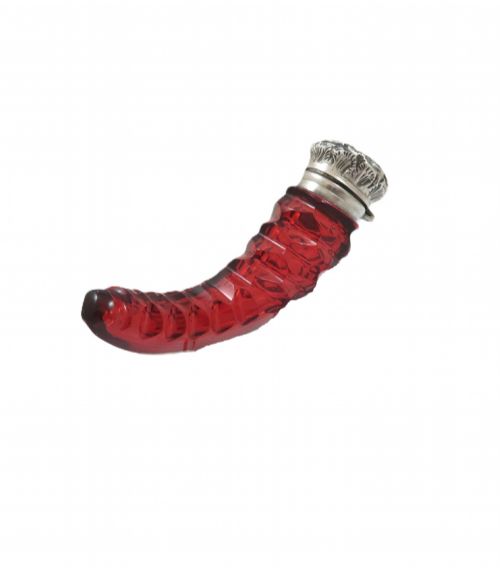
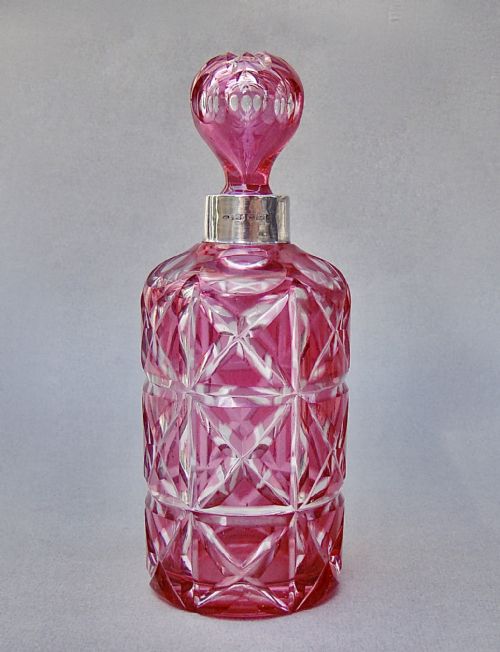
An edwardian vanity bottle encompasses small glass scent vessels and dressing table jars intended for daily personal use. The examples met most frequently on this page combine cut glass or coloured crystal bodies with silver mounts, collars, and hinged lids.
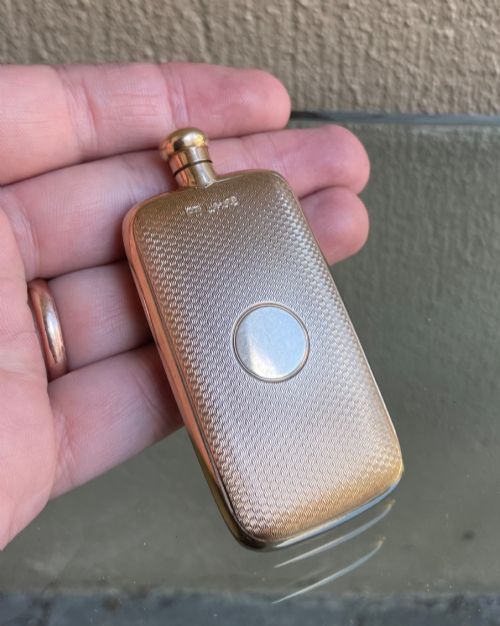
Production spans the Victorian era through the Edwardian period and into the Art Deco years, capturing changing tastes in personal grooming accessories. Forms range from simple globular bottles to travel flasks, cologne trios, and overlay vessels.
Makers utilised various decorative styles including Art Nouveau curves and George V restrained forms. These items served as functional containers on dressing tables or fitted travel cases.
How they were made
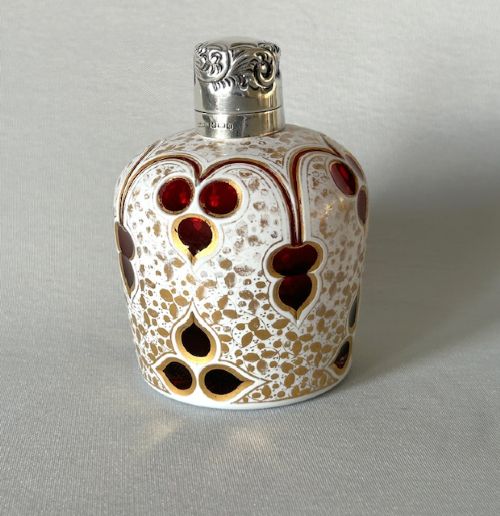
Glass bodies were formed through cutting, moulding, or blowing, utilising clear lead crystal, cranberry glass, and frosted or ruby glass. Artisans applied overlay techniques and surface etching to create textured patterns.
Silver mounts, collars, and lids were shaped and hallmarked, often incorporating guilloche enamel or inlaid tortoiseshell panels. These metal components were secured to the glass necks with specialised adhesives or threaded collars.
Listings feature sterling silver, cut crystal, cranberry glass, and tortoiseshell materials across the Victorian and Edwardian periods.
What varies in quality
The weight and depth of the cut glass distinguish standard production from finer work, alongside the clarity of the crystal or richness of the cranberry tint. Thick, hand-cut lead crystal reflects light with greater brilliance than thin moulded alternatives.
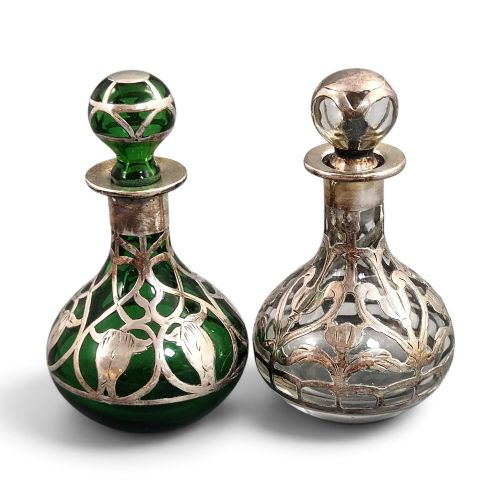
Metalwork craftsmanship also varies, from plain sterling silver collars to intricate Art Nouveau silver overlays and multi-coloured guilloche enamel. Complete sets, matching pairs, and pieces retaining clear Birmingham or Chester hallmarks carry distinct artisanal merit.
Gorham·Harold Bushell and Co·Rene Lalique·G H James and Co·Barnsley and Co·George Unite
The Edwardian Vanity Bottle Glossary
- Sterling silver
- A silver alloy containing 92.5 percent pure silver by mass, widely utilised for bottle caps, collars, and mounts.
- Cranberry glass
- A rich red glass created by adding gold chloride to the molten batch, popular for Victorian and Edwardian scent bottles.
- Guilloche enamel
- A decorative technique where a precise pattern is mechanically engraved beneath a translucent enamel layer.
- Overlay
- A manufacturing method featuring a coloured glass layer over clear glass, partially cut away to reveal contrast.
- Hallmark
- An official stamp applied by an assay office to indicate the metal purity, maker, and year of testing.
Edwardian Vanity Bottle: Frequently Asked Questions
How were these bottles used?
These vessels held perfume, cologne, or scented oils on dressing tables for daily grooming.
Travellers also packed smaller flask versions inside fitted leather cases for journeys.
Are the stoppers original?
Many surviving examples retain their matching inner glass stoppers beneath the outer silver caps.
Replacement stoppers occur frequently due to the fragile nature of small glass components.
How do I date an edwardian vanity bottle?
Silver mounts typically bear hallmarks indicating the assay office, city, and exact year of production.
Stylistic cues like Art Nouveau curves or Edwardian proportions help narrow the manufacturing decade.
How should I clean the silver and glass?
Glass bodies tolerate warm soapy water, but silver polish must avoid contact with enamel or tortoiseshell.
Gentle wiping preserves the aged patina on hallmarked metal mounts without causing abrasion.