


Edwardian Upholstery Project
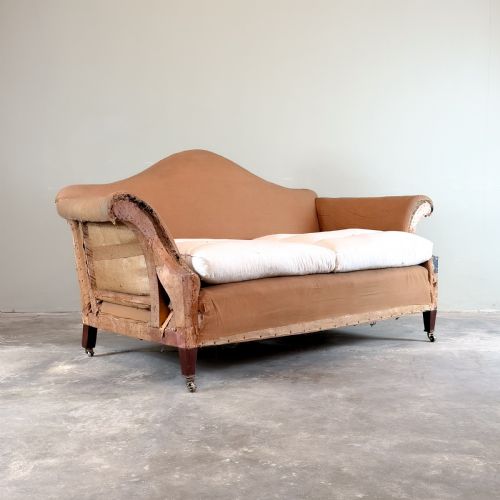
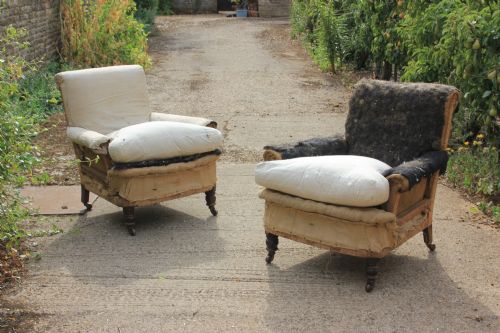
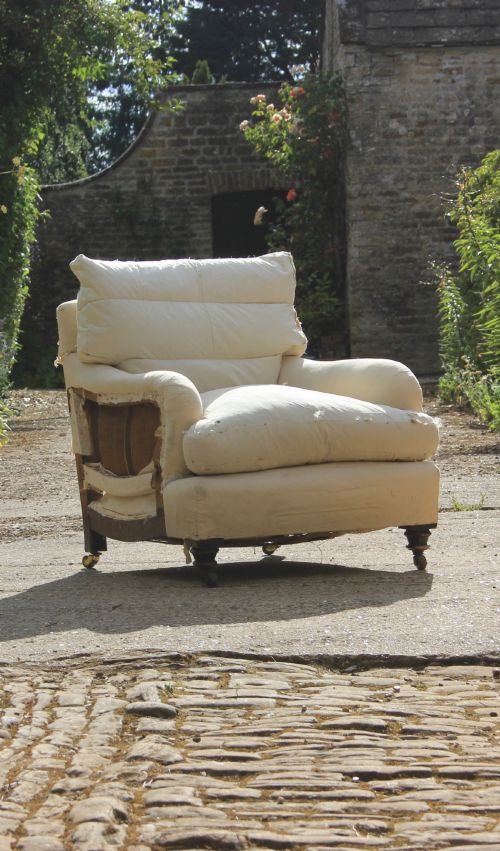
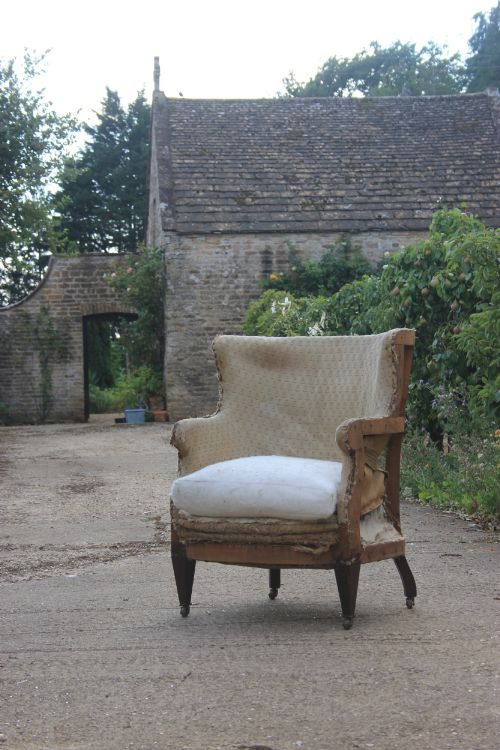
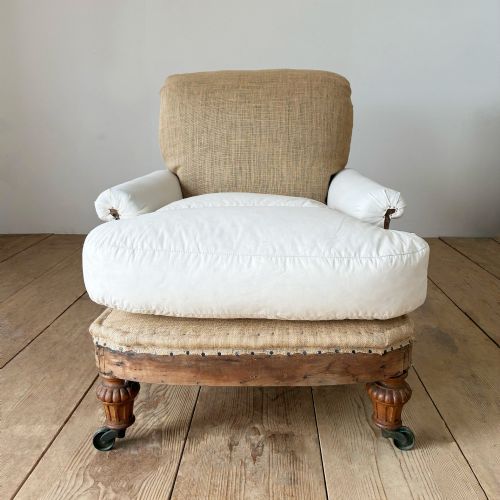
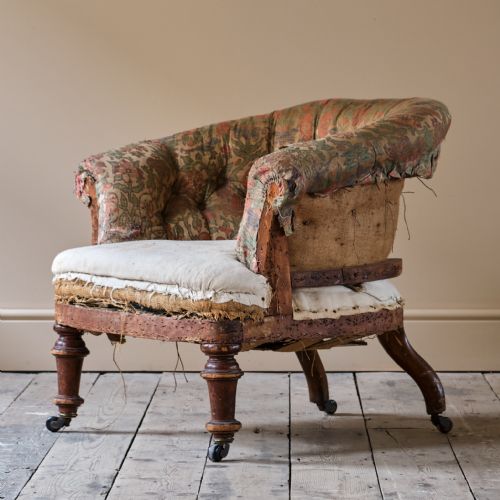
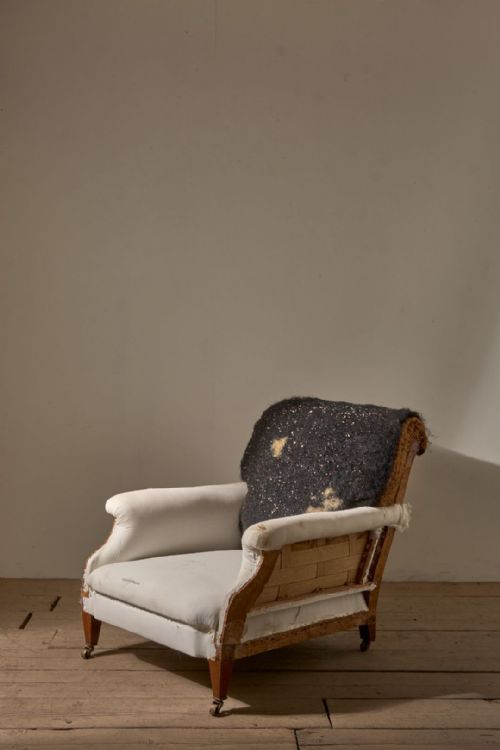
These pieces for an edwardian upholstery project are tired frames waiting for new textiles to reveal their classic forms.
Edwardian Upholstery Project
An edwardian upholstery project brings together sturdy seating frames from the nineteenth and early twentieth centuries that require complete re-covering. Buyers find deep-seated armchairs, camel back sofas, tub backs, and slipper chairs ready for fresh textile treatment.
The selections span from Victorian button backs and Queen Anne walnut wing chairs to grand country house seating and inlaid mahogany salon suites. Most pieces on this page date to the Edwardian period or the late nineteenth century.
These items exist for restoration, offering bare hardwood structures, exposed mahogany framing, or surviving base hessian and calico layers. Each piece demands the hand of a restorer to return to active use.
Materials and construction
The underlying architecture relies upon hardwood frames, frequently fashioned from mahogany or walnut, which provide the rigid skeleton for deep upholstery. Brass castors and turned wooden legs often support these heavy structural carcases.
Traditional internal stuffing builds upon foundation materials such as hessian, cotton calico, and raw cotton webbing. These historic textiles form the dense support layers beneath the final decorative top fabric.
Listings feature frames spanning from the eighteenth century through to the Edwardian era, constructed in mahogany, walnut, and hardwood.
Judging the underlying work
Quality rests in the integrity of the wooden frame and the precision of the joinery rather than the surface fabric. A superior piece exhibits solid hardwood construction that remains firm and square under pressure.
Proportion and scale distinguish finer examples, where the curve of a barrel back or the sweep of a camel back sofa flows naturally. The distinction lies in how well the raw frame balances structural strength with elegant lines.
Gillows·Howard and Sons
The Edwardian Upholstery Project Glossary
- Hessian
- A coarse woven fabric typically utilised as the foundational scrim or backing material beneath stuffing. It provides the tight base required to hold internal padding securely in place.
- Calico
- A plain-woven cotton cloth placed over the stuffing layers to compress and smooth the shape before the final cover goes on. This forms the tight skin that defines the crisp contours of the seat.
- Camel back
- A sofa or chair profile featuring a distinctive undulating top rail that rises in a gentle curve at the centre. This traditional shape demands precise upholstery work to follow the graceful arc.
- Tub back
- A seating form characterised by a continuous curved backrest that wraps around to form low arms. The enclosed circular shape creates a compact and supportive seating well.
Edwardian Upholstery Project: Frequently Asked Questions
What does an upholstery project include?
An upholstery project comprises a vintage or antique seating frame sold explicitly without its final decorative textile covering. These pieces retain their structural core and sometimes older calico or hessian layers.
Buyers receive a bare or partially stripped carcase that requires complete stripping, webbing, padding, and top-covering by a professional or skilled hobbyist.
How do I choose the right frame?
Selecting a frame depends on evaluating the exposed woodwork, the overall proportion, and the stability of the joints. Look for hardwood structures, such as mahogany or walnut, that show no structural wobble or severe woodworm.
Consider the intended room and seating posture, choosing between deep country house armchairs, compact slipper chairs, or expansive salon settees.
How are these frames dated?
Dating relies upon the timber species, turning styles of the legs, castors, and characteristic silhouettes associated with specific eras like the Edwardian period or Victorian reign. Stylistic markers such as inlay work or camel back profiles provide clear chronological clues.
Construction methods, including hand-cut joints and early fastening types, further verify whether a piece originates from the eighteenth, nineteenth, or early twentieth century.