




Curved Tub Armchair
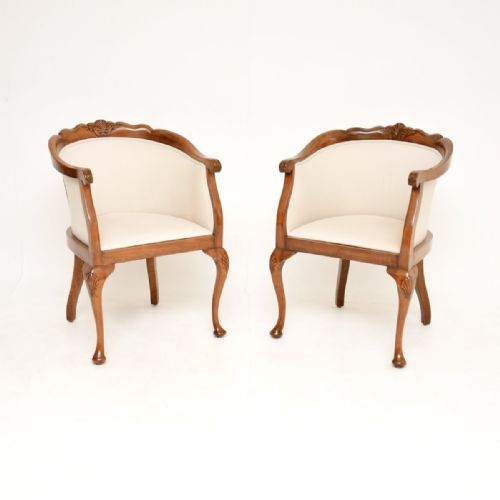
A curved tub armchair wraps the sitter in a continuous curved back and arms, offering intimate comfort and neat proportions.
Curved Tub Armchair
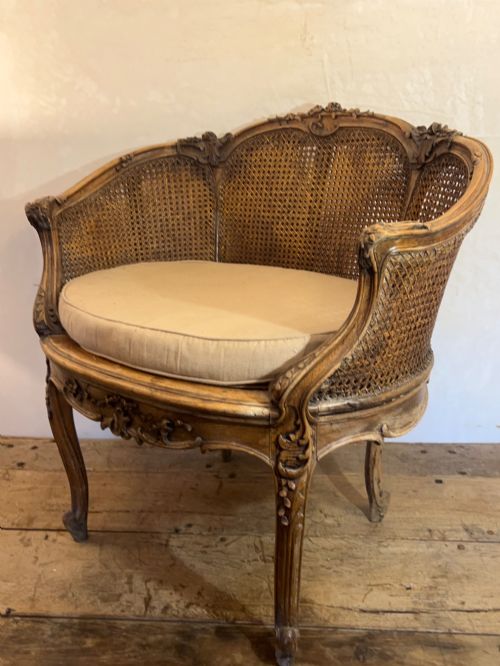
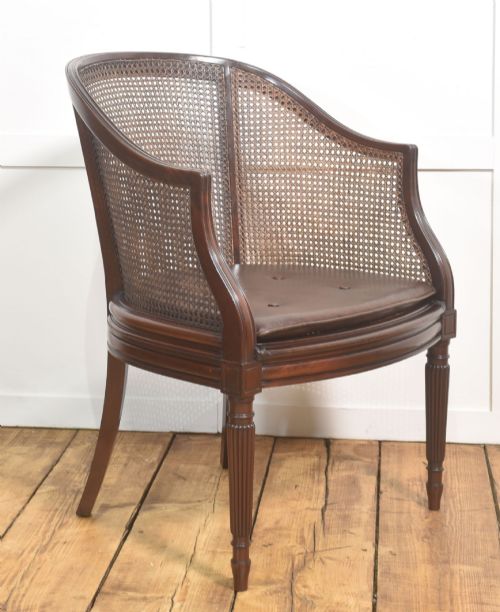
A curved tub armchair combines a rounded enclosing back with low-set arms, designed to hug the body while occupying minimal floor space. Buyers searching for a curved tub armchair will encounter numerous examples spanning the nineteenth and twentieth centuries, originating from British, French, and Anglo-Indian workshops.
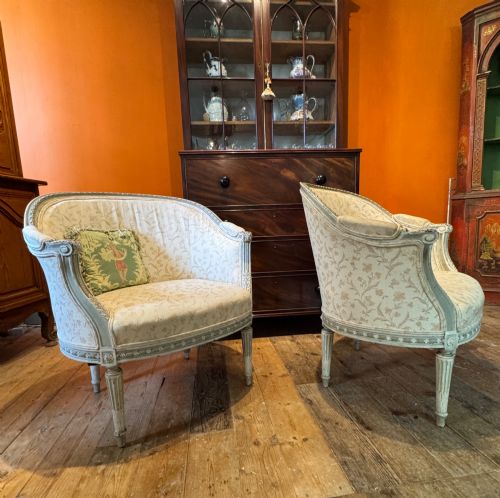
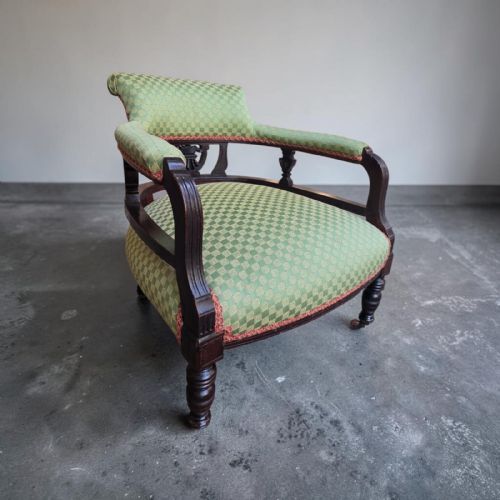
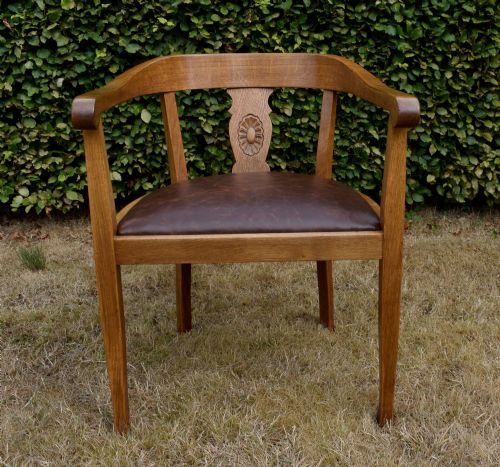
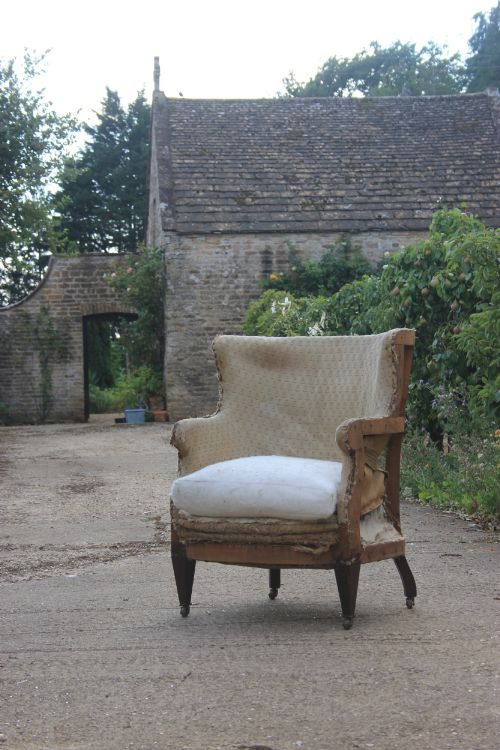
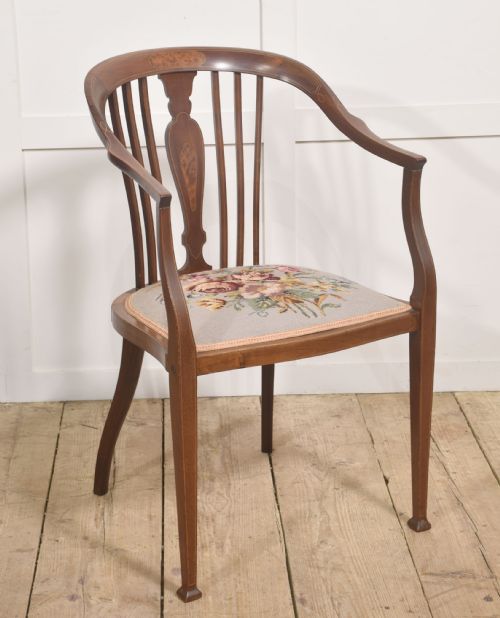
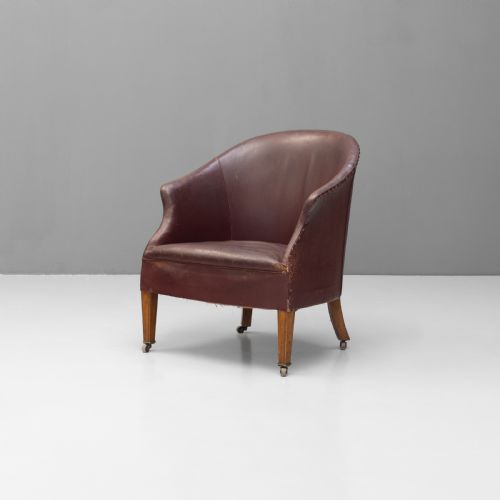
The selections on this page draw heavily from Edwardian and Victorian periods alongside Art Deco interpretations, appearing as single library seats, desk chairs, and matched pairs. Forms range from compact mahogany and cane variants to upholstered barrel back versions in leather, velvet, and original paint.
Makers and designers from diverse stylistic traditions adapted the curved tub form for studies, drawing rooms, and offices. Whether built for executive desks or as occasional salon seating, these chairs prioritise ergonomic support through their enveloping contours.
Materials and construction methods
Makers relied on sturdy hardwoods such as mahogany, walnut, oak, elm, and beech to form the robust frames necessary for continuous curved backs. Solid timbers were often steam-bent or carved from single pieces, while decorative details frequently incorporated satinwood inlay, brass accents, or ebonised and gilt finishes.
Upholstery techniques varied widely from traditional horsehair stuffing beneath leather and velvet to woven cane panels and modern fabric replacements. Caning required skilled hand-weaving around bentwood or hardwood perimeters, while library and office iterations frequently integrated swivel mechanisms or oil cloth cushions.
One remarkably cute Edwardian barrel back managed to survive a century without losing its charm or its original proportions.
Distinctions in craftsmanship and finish
The hierarchy of quality rests primarily on the integrity of the timber framing and the fluidity of the curved joinery. Superior pieces display seamless junctions where the back meets the arms, whilst lesser examples reveal heavy-handed pins or clumsy structural reinforcement.
Surface treatment further divides the range, separating factory-produced uniformity from master cabinetwork that retains rich patination and subtle carving. The precision of inlaid satinwood, the tightness of cane work, and the preservation of original paint or aged leather dictate the standing of each piece.
Hille
The Curved Tub Armchair Glossary
- Tub chair
- An armchair featuring a continuous semicircular back and arms that form a single enclosing shell. This design provides compact seating with a distinct cocooning effect.
- Barrel back
- A seating style where the upholstered back resembles the vertical stave construction of a wooden barrel. It curves sharply forward to form integrated armrests.
- Bergere
- An enclosed upholstered armchair with a wooden frame, frequently featuring cane work panels on the back and sides. It originated in France during the eighteenth century.
- Captain's chair
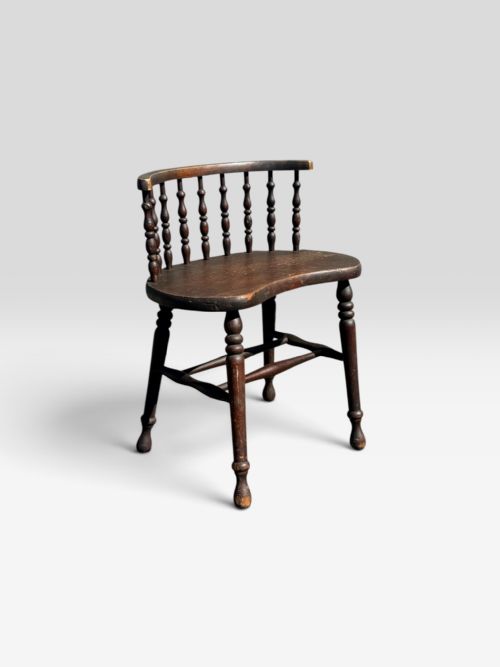
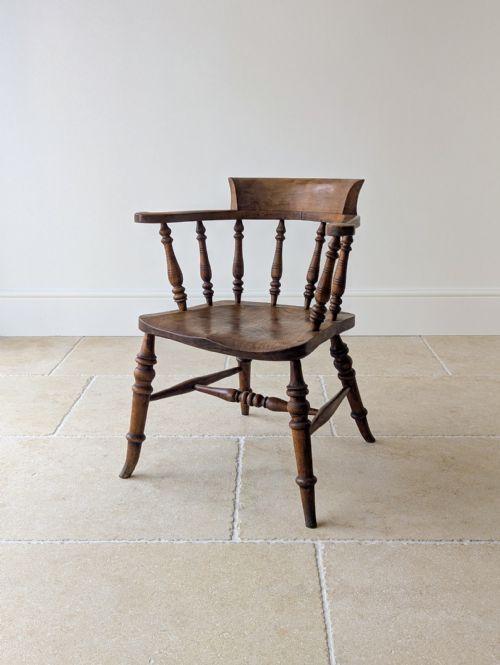
- A sturdy wooden chair with a rounded spindle back, designed for stability and prolonged desk work. They often incorporate swivel bases or writing arms.
- Corbeille
- A French term denoting a basket-shaped seat or armchair with a curved, enveloping back. These pieces typically reflect Louis XV or Louis XVI stylistic influences.
- Caning
- A method of weaving peeled rattan or cane through drilled holes in a wooden chair frame. It creates a resilient, lightweight, and breathable seating surface.
Curved Tub Armchair: Frequently Asked Questions
What is a curved tub armchair?
A curved tub armchair is an enclosed seat featuring a continuous rounded back and arms that wrap around the sitter. These chairs provide a deep, supportive sit while maintaining a compact footprint.
Historically utilised in libraries, studies, and drawing rooms, the form accommodates varied tasks from reading to writing. Their enclosed shape distinguishes them from standard open-arm chairs.
Were these chairs used at desks?
Many tub armchairs were specifically engineered as desk or captain's chairs for administrative and study use. Sturdy oak, mahogany, and elm variants frequently feature swiveling mechanisms or lower profiles to fit beneath writing tables.
Office and library examples often incorporated leather upholstery or oil cloth cushions to withstand daily use. Their rounded backs offered essential lumbar support during long working hours.
How should I clean a leather tub chair?
Leather surfaces benefit from gentle dusting with a soft cloth and occasional treatment with appropriate leather balms to maintain flexibility. Avoid harsh chemical detergents that strip natural oils and dry out the hide.
Preserving the original patination requires patience and minimal intervention. Professional conservation is recommended for antique leather showing deep drying or structural stress.
Are cane seats fragile?
Hand-woven cane panels are surprisingly resilient when treated with care, though they can become brittle in excessively dry environments. Occasional wiping with a damp sponge helps maintain the moisture of the rattan.
Weight distribution matters greatly with antique cane; heavy downward pressure on unsupported areas should be avoided. Replacements are possible, but original cane adds significant authenticity to period pieces.