



Edwardian Barrel Armchair
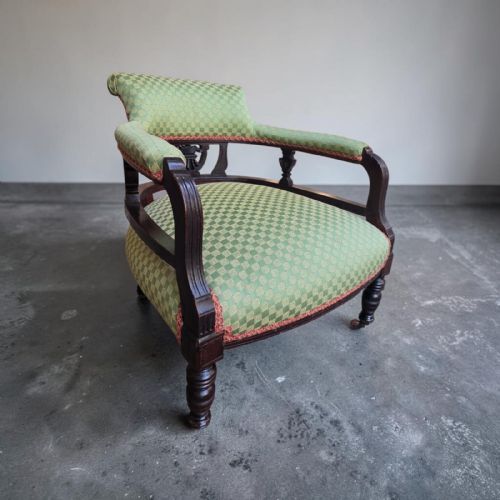
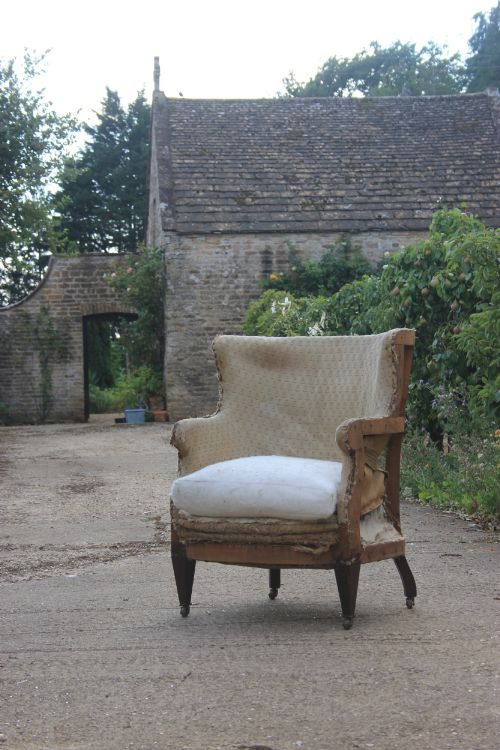
An Edwardian barrel armchair wraps the sitter in a continuous curved back, offering a deeply comfortable seat that defined early twentieth-century sitting rooms and studies.
Edwardian Barrel Armchair
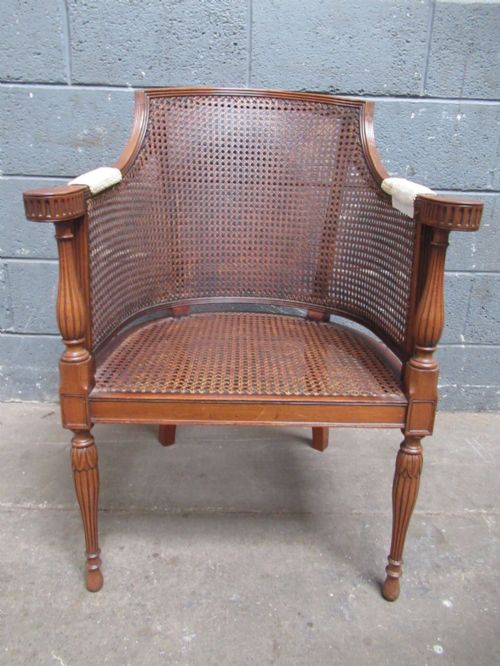
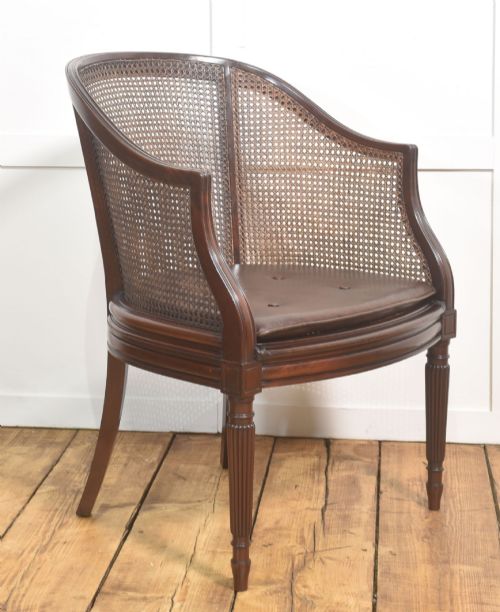
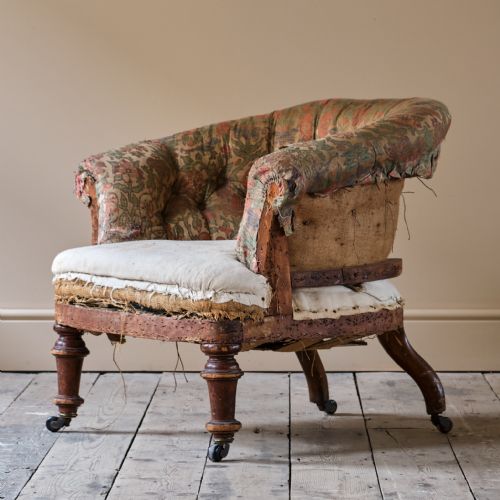
An edwardian barrel armchair takes its name from the rounded, enclosing shape of the backrest, which flows seamlessly into low arms. Buyers searching this phrase will find that the form often overlaps with tub chairs, bergères, and library chairs from the same period.
Most examples found on this page date from the Edwardian era and the early twentieth century, though older nineteenth-century Victorian antecedents also appear alongside later twentieth-century iterations. These chairs function equally well as desk seats, bedroom chairs, or low fireside seating.
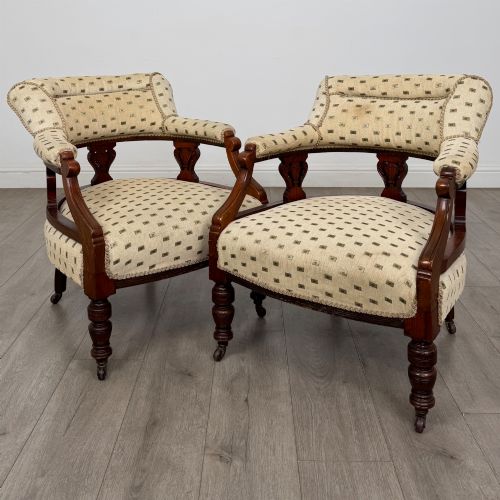
Makers and workshops of the period offered both plain timber frames and decorated versions featuring delicate marquetry inlay. Some pieces arrive as pairs or form part of larger settee and armchair suites intended for formal drawing rooms.
Materials and Construction
Frames rely primarily on solid mahogany, walnut, or oak, chosen for structural strength and grain quality. Timber components are frequently turned, carved, or inlaid with lighter woods to create decorative contrast on the back rail and legs.
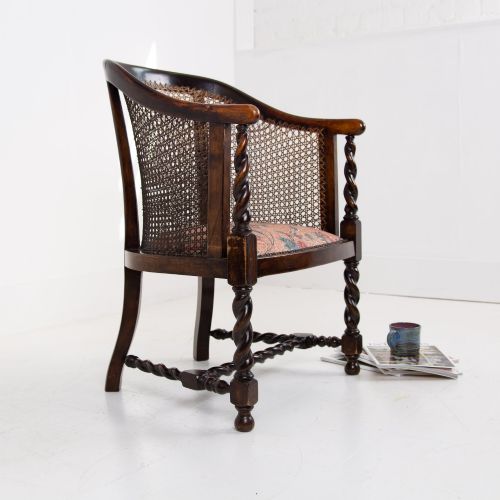
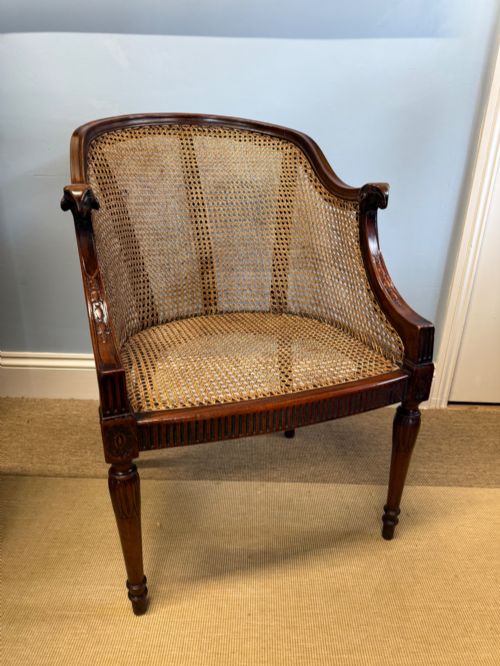
The characteristic curved back is achieved through steam-bending solid timber or by constructing a ribbed wooden skeleton upholstered to form a smooth cylinder. Caning and woven bergère panels appear frequently on the sides and back, providing a lighter visual weight.
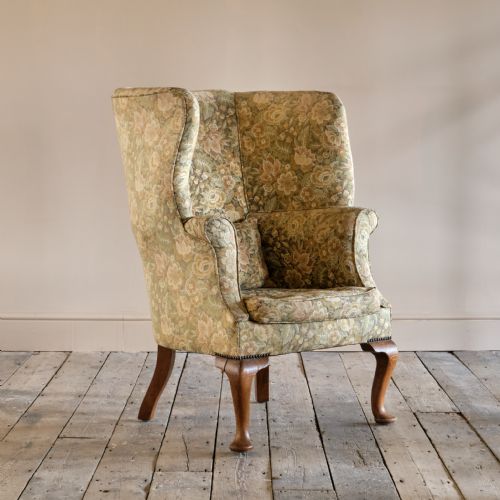
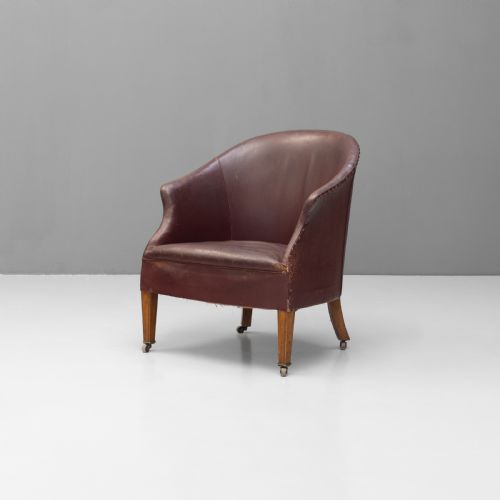
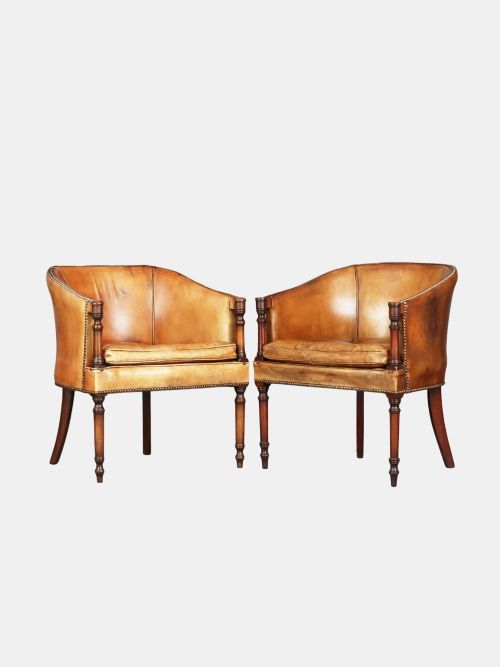
Upholstery materials include buttoned leather, velvet, traditional fabric, and brass nailhead trim. Seat foundations incorporate coiled springs and hair stuffing to maintain firm support over decades of use.
Judging Quality and Craftsmanship
The grade of an edwardian barrel armchair rests on the crispness of its timber framing and the integrity of the joinery where the curved back meets the seat rail. Superior examples show thoughtful selection of grain, particularly in mahogany and walnut veneers.
Seating comfort depends heavily on the original springing and the quality of the upholstery materials, whether supple leather or tightly woven cane. Hand-carved details, subtle line inlay, and sturdy, well-turned legs elevate a piece above standard utilitarian output.
The Edwardian Barrel Armchair Glossary
- Bergère
- A closed-arm armchair with cane panels set into the wooden frame. This French-inspired style lightens the heavy look of large wooden seating.
- Tub Chair
- A deep-seated chair with a continuous curved back and arms forming a protective enclosure. The term is frequently used interchangeably with barrel back designs.
- Inlay
- A decorative technique where contrasting woods or shell are inserted into hollowed-out spaces on the timber surface. Edwardian versions often feature delicate floral motifs or stringing.
- Mahogany
- A durable, reddish-brown tropical hardwood favoured by cabinetmakers for its stability and rich grain. It formed the primary structure for much formal Edwardian seating.
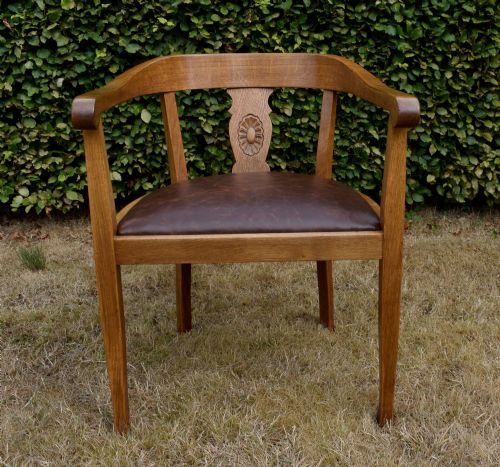
- Horseshoe Desk Chair
- A seat configured with a curved top rail shaped like a horseshoe to support the arms while working. These variants frequently swivel or stand on robust wooden legs.
Edwardian Barrel Armchair: Frequently Asked Questions
Where should I place an edwardian barrel armchair?
These versatile chairs suit studies, libraries, and bedrooms where their curved backs create a cosy reading nook. Their compact proportions also allow them to sit comfortably beside a fireplace without dominating the room.
Pairing a single chair with a small side table highlights its distinctive silhouette. Matched pairs work well flanking a hearth or placed opposite a sofa.
How do I care for leather upholstery?
Traditional leather upholstery requires occasional treatment with a quality wax or leather conditioner to keep the hide supple and prevent cracking. Keeping the chair away from direct sunlight and heat sources protects the natural finish.
Dusting the crevices regularly with a soft brush prevents grit from accumulating in the folds and button tufts.
Are these chairs comfortable for daily use?
The enclosing curved back and sprung seat provide robust ergonomic support designed for extended periods of sitting. Many examples were engineered specifically as library or desk chairs for working hours.
Comfort ultimately depends on the condition of the internal padding and springs rather than the external wooden frame.
How can I tell an Edwardian chair from a Victorian one?
Edwardian seating generally displays lighter proportions, simpler lines, and brighter mahogany or walnut tones influenced by Sheraton and neoclassical revivals. Victorian predecessors tend to feature heavier timbers, darker finishes, and more elaborate, dense carving.
Design styles often overlapped around the turn of the twentieth century, blurring the boundary between the late Victorian period and the early Edwardian era.