


Edwardian Upholstered Seating
Edwardian upholstered seating brings together mahogany frames, buttoned velvet, and deep-sprung comfort for formal parlours and country houses alike.
Edwardian Upholstered Seating
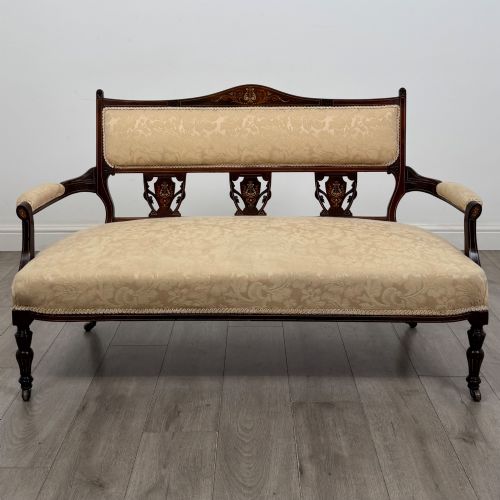
Edwardian upholstered seating encompasses armchairs, sofas, settees, footstools, and dining chairs originating from the early twentieth century and the surrounding decades. Buyers searching for edwardian upholstered seating encounter formal salon chairs alongside deep-seated country house armchairs and camel back sofas.
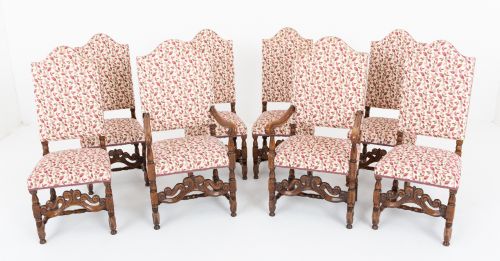
The selection ranges from large sets of mahogany dining chairs to single piano stools, ottoman seats, and window benches. Pieces span periods from the nineteenth century through the nineteen-thirties, with walnut, oak, and mahogany frames supporting various fabric coverings.
Materials and Technique
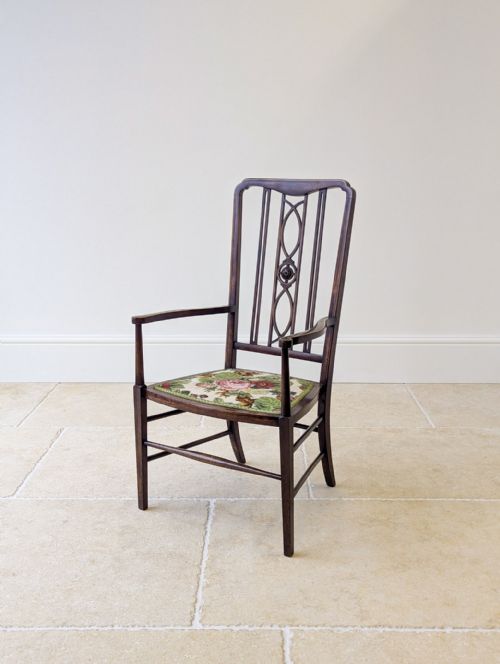
Frames rely on solid hardwoods such as mahogany, walnut, and oak, frequently shaped with carved details, satinwood inlay, or giltwood finishes. Joinery methods secure these wooden structures to withstand decades of daily use.
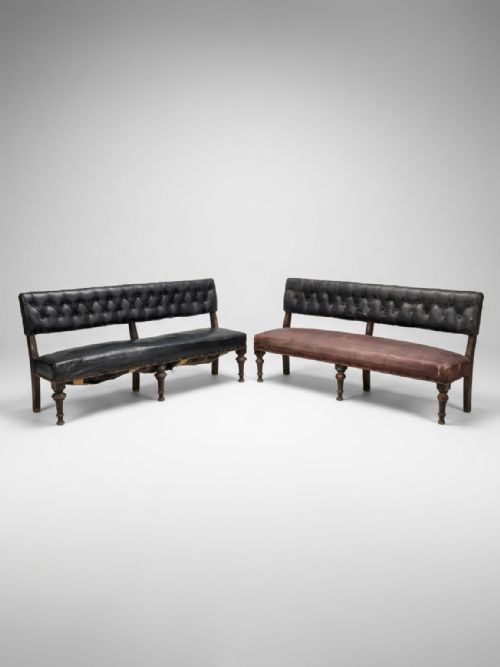
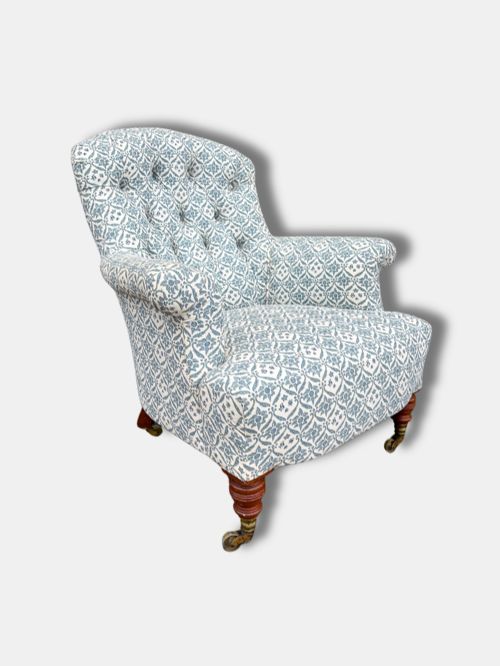
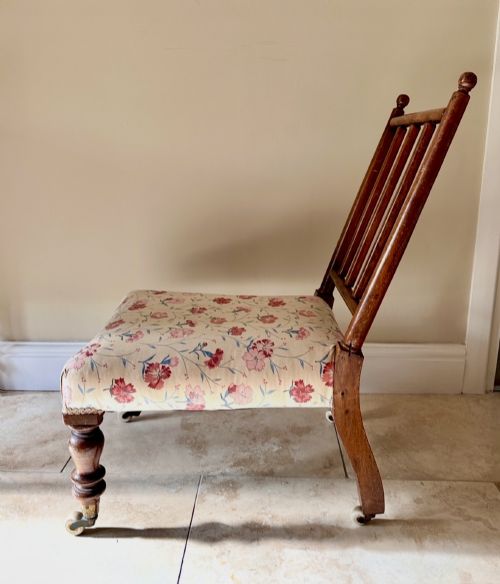
Upholstery incorporates traditional techniques using fabric, leather, velvet, and cane panels alongside buttoned padding. Brass castors and hardware often complete the lower framework of larger armchairs and sofas.
Listings feature mahogany, walnut, oak, and maple frames paired with leather, cane, velvet, and fabric upholstery.
Craftsmanship and Proportion
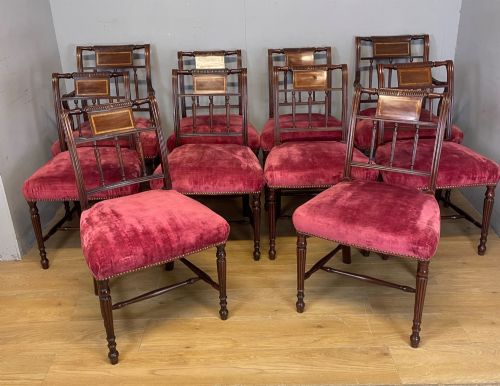
The distinction between standard seating and finer examples rests on the crispness of wood carving, the elegance of proportion in inlay work, and the integrity of the underlying frame. Superior sets exhibit uniform grain selection across multiple chairs and refined execution in stylistic revivals like the Queen Anne and Sheraton styles.
Upholstery depth and the retention of original supporting elements further divide the output. Pieces finished with meticulous buttoning, quality leather, or specialist fabric demonstrate the higher tiers of period production.
Charles Tozer·Maple and Co·Hampton and Sons·Whytock and Reid·SF Cullen
The Edwardian Upholstered Seating Glossary
- Bergere
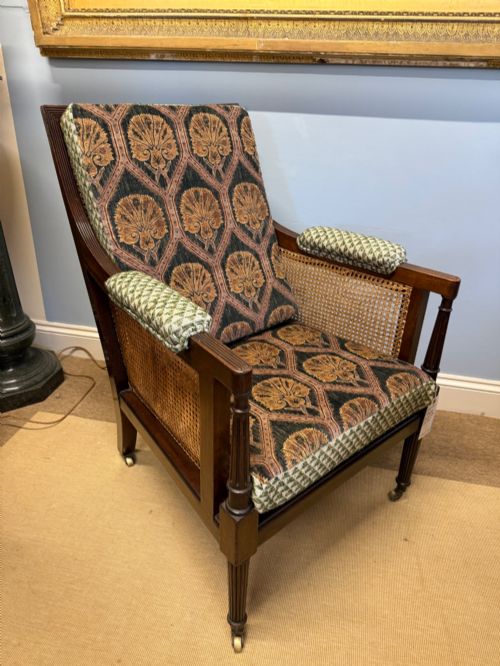
- A closed-arm armchair featuring cane panelling to the sides and back. This French-inspired form appeared frequently in early twentieth-century drawing rooms.
- Camel Back
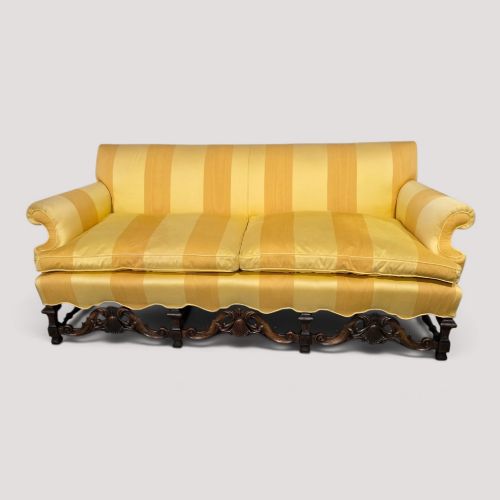
- A sofa design featuring a distinctive undulating top rail that curves upward in the centre like a camel's hump. It provides a graceful silhouette in formal settings.
- Inlay
- A decorative technique where contrasting woods or satinwood are inserted into recesses within the primary mahogany or walnut surface. It defines much of the refined cabinet work of the period.
- Settee
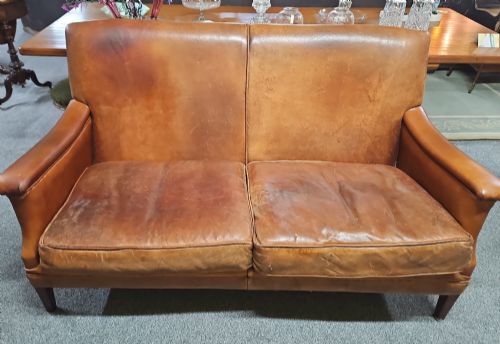
- A small upholstered sofa designed for two or more people. These pieces often feature exposed wooden frames and generous padded seating.
- Window Seat
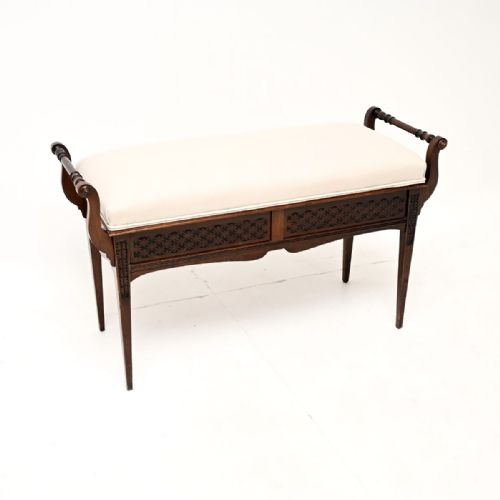
- An elongated stool or bench scaled specifically to sit beneath a window recess. They frequently incorporate cross stretchers and needlework or upholstered tops.
Edwardian Upholstered Seating: Frequently Asked Questions
How do I identify Edwardian seating?
Edwardian seating typically exhibits lighter woods such as mahogany and satinwood, often featuring delicate inlay work and revival styles. The proportions tend to balance comfort with formal elegance.
Examination of the frame construction and secondary timbers helps separate pieces from this era from earlier Victorian or later twentieth-century productions.
What is a Howard style armchair?
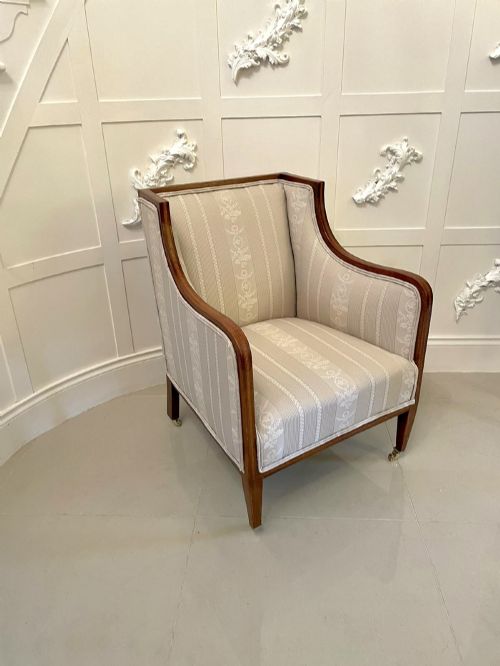
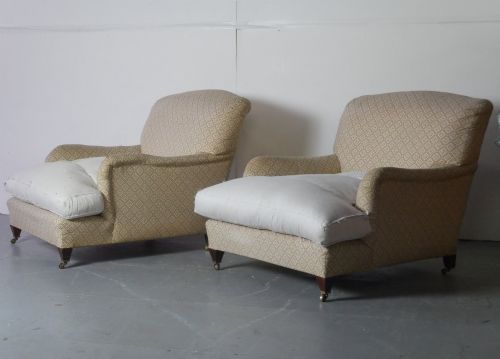
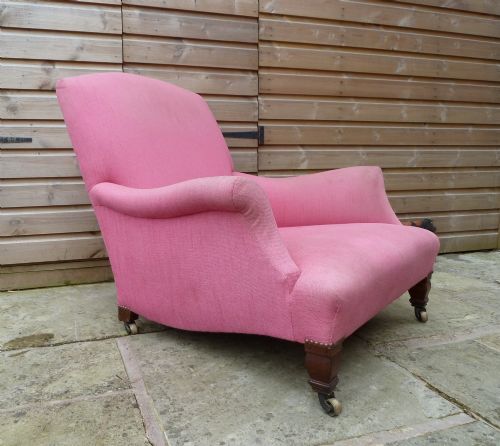
A Howard style armchair refers to a deeply comfortable, low-slung seat known for its generous proportions and sprung upholstery. These chairs were designed for maximum relaxation in country house libraries and drawing rooms.
They often sit on low wooden legs fitted with brass castors bearing manufacturer stamps.
Are these chairs suitable for daily use?
Most pieces are structurally robust, constructed from hardwoods like oak, walnut, and mahogany. Their solid joinery makes them well-suited for everyday seating in living spaces and dining rooms.
Upgraded internal cushioning or modern upholstery fabric is common while preserving the historic frame.
How should I care for antique upholstery?
Protection from direct sunlight prevents the fading of fabrics, velvets, and exposed wood surfaces. Regular light vacuuming removes dust from buttoned folds and crevices.
Leather components benefit from occasional conditioning to maintain suppleness across the arms and seats.