



Inlaid Mahogany Hall Chairs
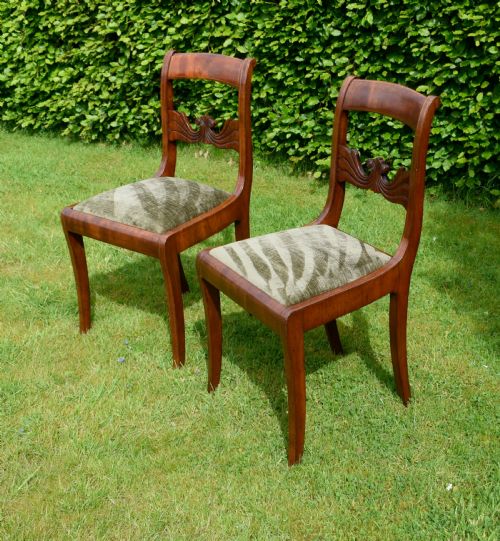
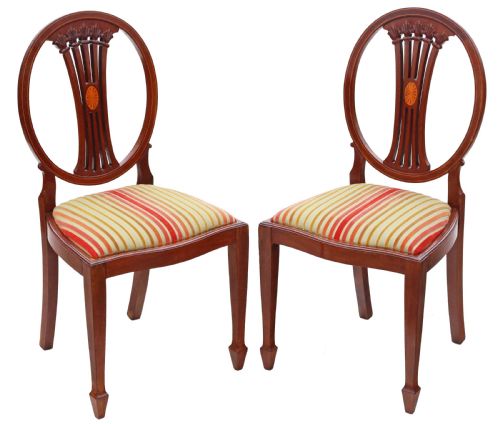
These inlaid mahogany hall chairs bring formal entrance hall seating into domestic interiors with crisp woods and contrasting details.
Inlaid Mahogany Hall Chairs
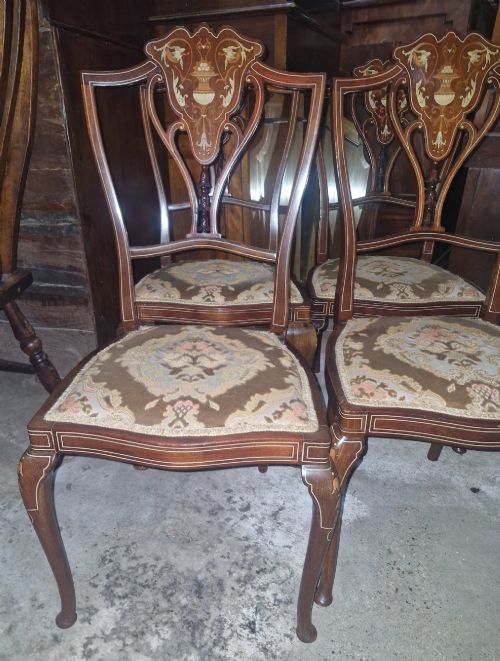
When you search for inlaid mahogany hall chairs, you encounter seating largely drawn from the Edwardian and Regency periods, alongside Victorian and later revivals. These items predominantly take the form of side chairs and occasional chairs constructed for hallways and reception spaces.
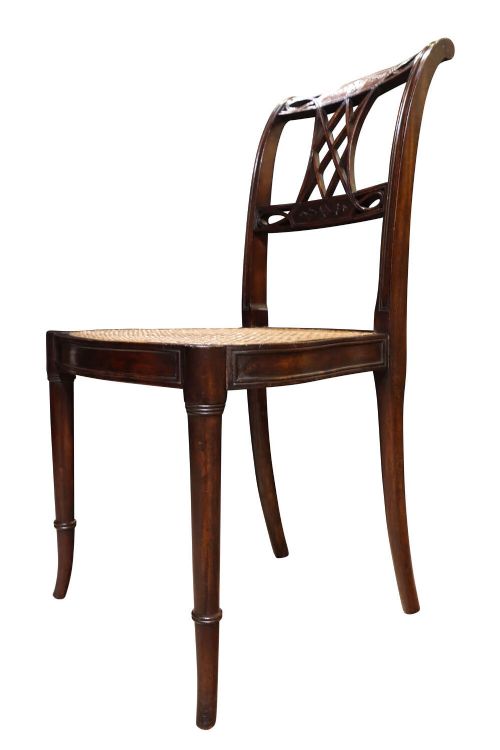
The selection ranges from simple Edwardian bedroom and hall chairs to brass-inlaid Regency examples and Georgian revival dining side chairs. Most pieces on offer date from around nineteen hundred, though earlier nineteenth century pieces appear alongside them.
How they were made
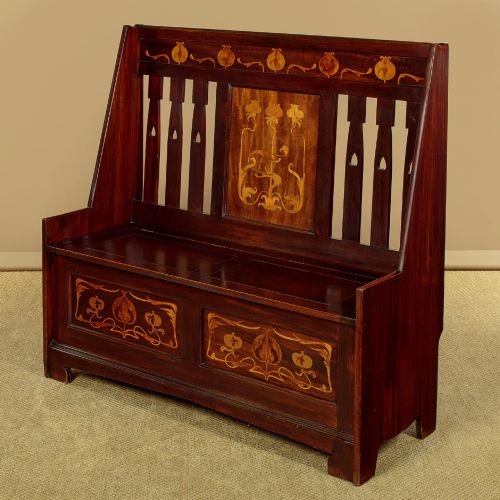
Cabinet makers utilised solid mahogany and mahogany veneers as the primary timber, adding contrasting wood inlay and satinwood to ornament the backs and rails. Brass inlay also appears on specific Regency pieces, providing metallic linear detail against the dark grain.
Seating pads vary according to the period and purpose, utilising cane work, fabric, silk and velvet upholstery. Bone inlay and scroll carvings further supplement the structural woodwork on select chairs.
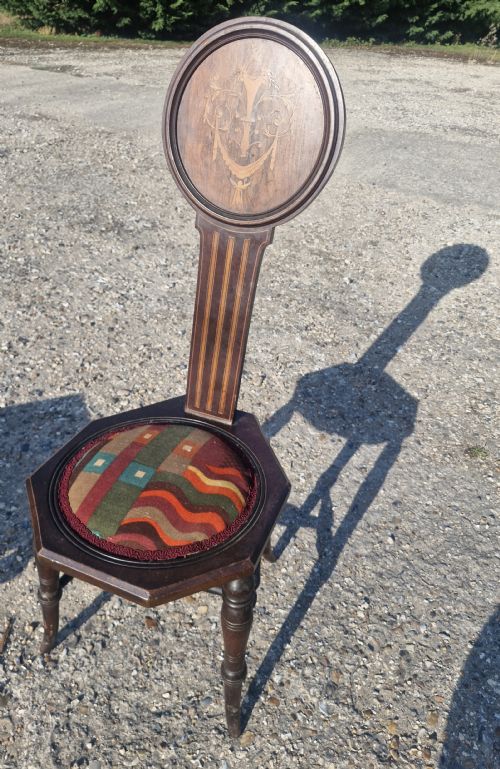
An unexpected spinning chair joins the heavy mahogany seating, offering a lower wooden perch for domestic textile work.
What varies in quality
Quality rests in the precision of the wood inlay and the crispness of the scroll carving on the chair backs. Sharp, clean contrasts between the mahogany and the lighter inlay woods indicate superior execution by the maker.
The structural integrity of the joints and the original condition of materials like cane or upholstered pads distinguish finer examples from standard production. Regency brass work and well-preserved Edwardian silk upholstery elevate individual items above plain utilitarian counterparts.
James Shoolbred And Co
The Inlaid Mahogany Hall Chairs Glossary
- Mahogany
- A durable tropical hardwood with a rich reddish-brown tone, utilised extensively for British cabinet making across multiple centuries.
- Wood Inlay
- The technique of fitting contrasting pieces of wood into recessed portions of a base panel to create decorative patterns.
- Satinwood
- A pale, hard timber from tropical trees, frequently utilised for fine stringing and contrasting inlay on mahogany furniture.
- Cane
- Woven material made from the peeled bark of rattan palms, employed for lightweight and resilient seat panels.
- Regency
- An English design period spanning the early nineteenth century, noted for classical restraint and occasional brass inlay details.
Inlaid Mahogany Hall Chairs: Frequently Asked Questions
Where were hall chairs placed?
These chairs stood primarily in entrance halls, corridors and landing spaces where guests waited briefly before entering main rooms. They served a functional role while displaying the taste of the household.
Because they occupied transitional areas, their designs often favoured upright backs and sturdy wooden seats over deep cushioning.
How do I spot an Edwardian piece?
Edwardian examples usually date from around nineteen hundred and often display delicate satinwood inlay on lighter mahogany frames. Their proportions tend to be lighter than earlier Victorian counterparts.
They frequently appear as bedroom or occasional chairs rather than heavy formal seating.
What is brass inlay?
Brass inlay involves embedding thin strips or motifs of brass into channels carved directly into the mahogany surface. This technique creates bright metallic lines that contrast against the dark timber.
It appears frequently on Regency pieces, lending a classical neoclassical aesthetic to the woodwork.
Can I use them daily?
Most of these chairs function adequately for normal sitting, though historic frames benefit from careful placement and gentle use. Cane and silk upholstered seats require particular attention to avoid excessive wear.
Their primary appeal remains decorative, making them well suited to light use in low-traffic spaces.