


Edwardian Tub Armchair
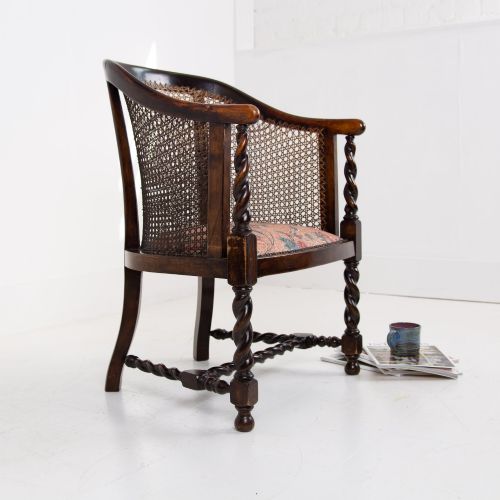
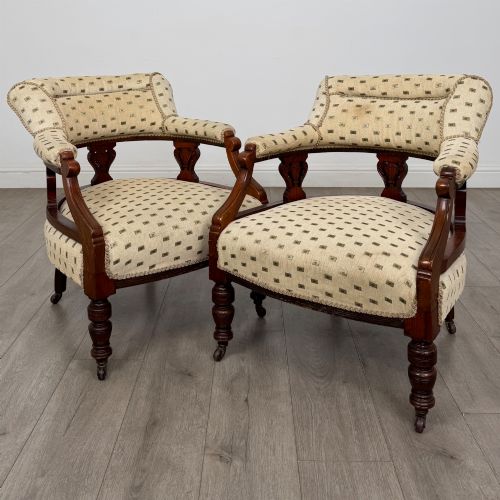
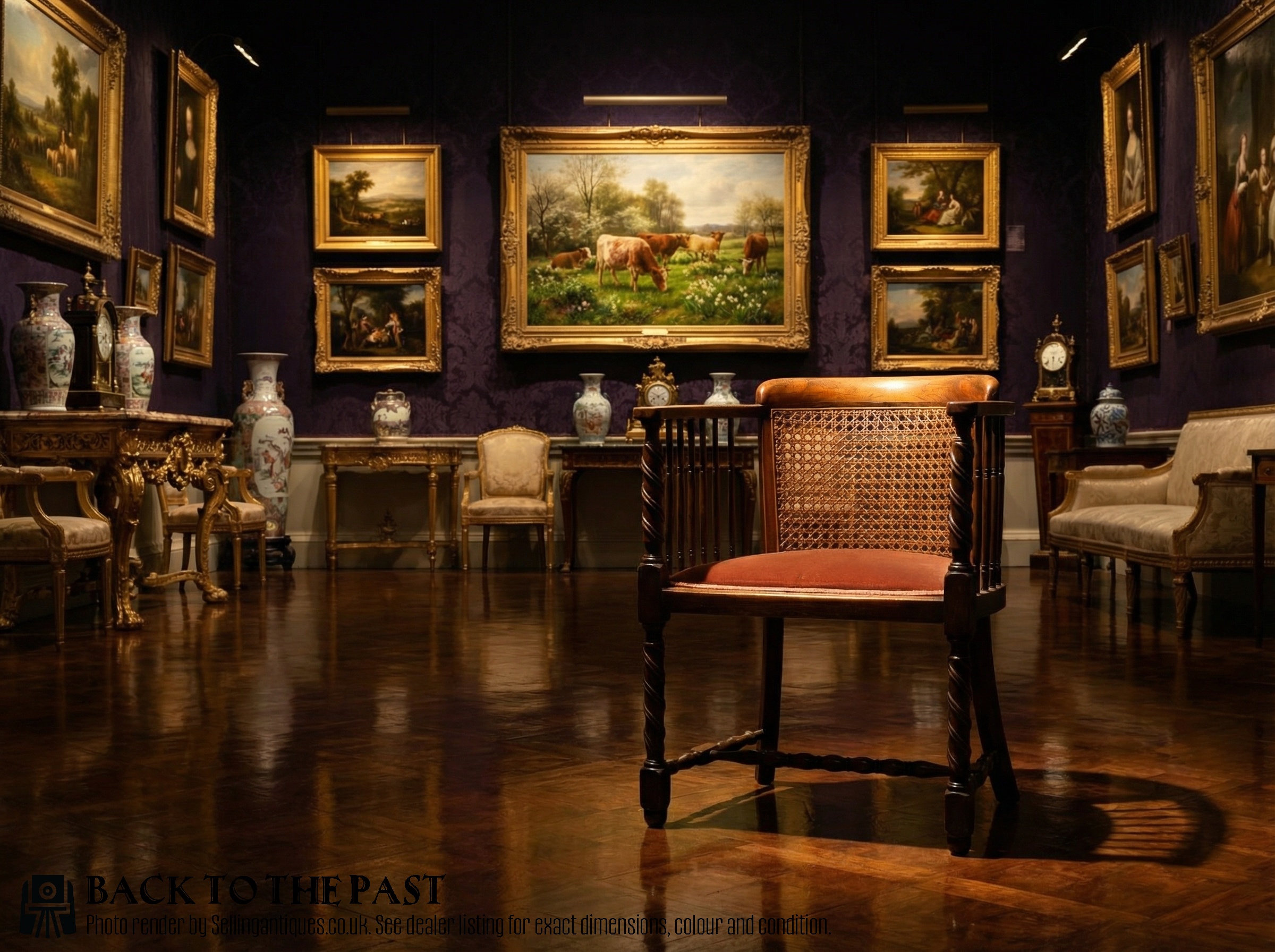
An Edwardian tub armchair offers a curving, enveloping back that merges seamlessly into low arms, providing a supportive sit rooted in early twentieth-century design.
Edwardian Tub Armchair
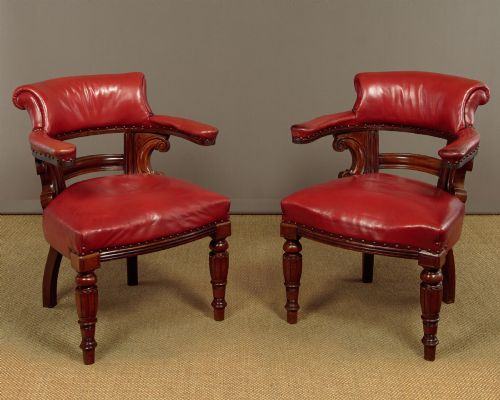
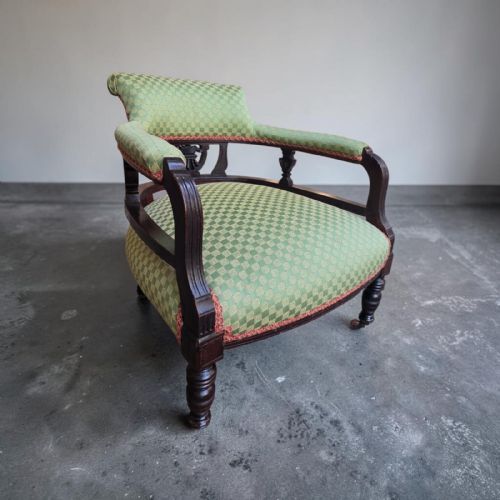
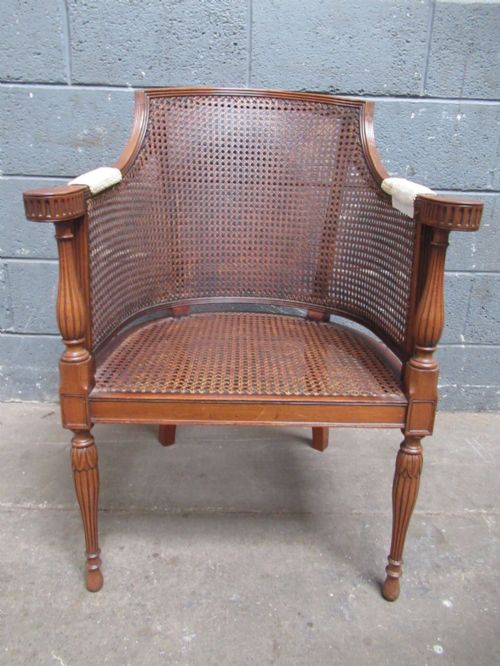
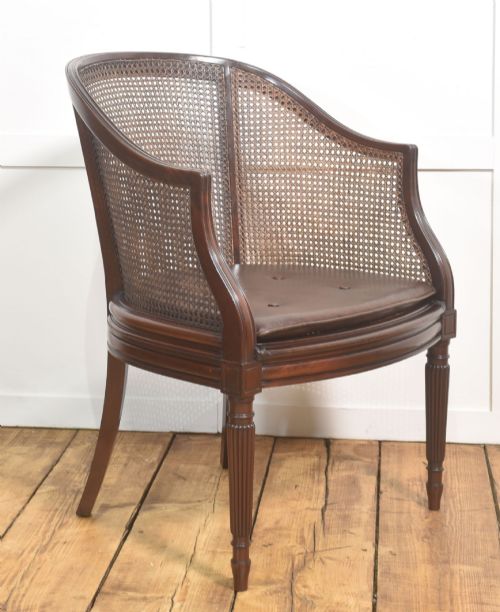
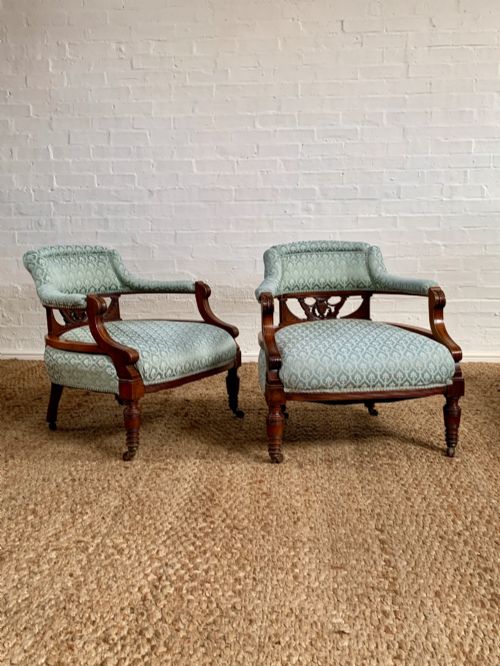
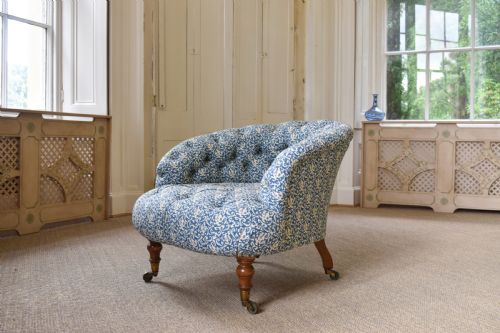
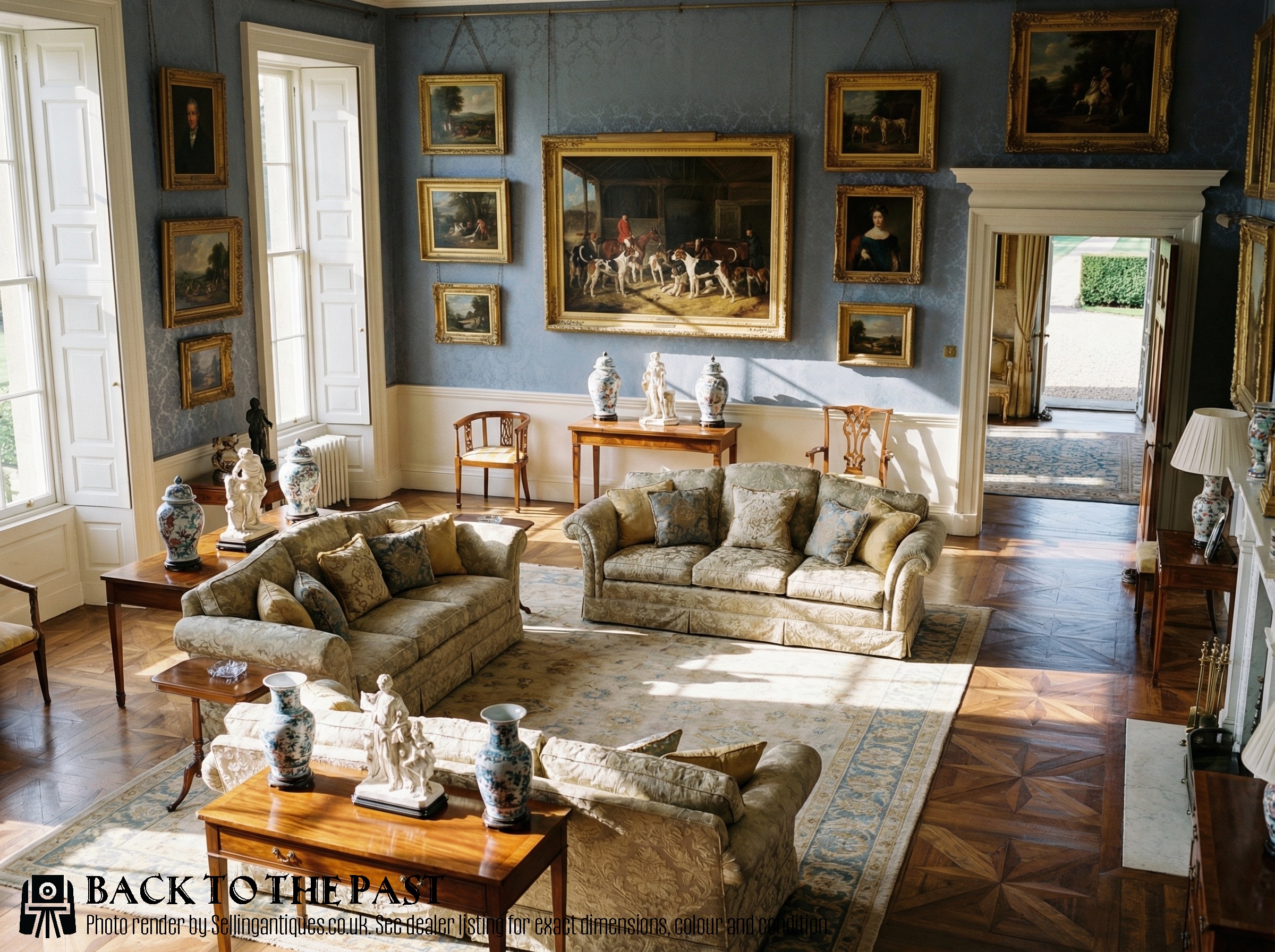
The edwardian tub armchair is defined by its rounded, semicircular backrest that wraps around the sitter to form an enclosed, supportive seat. These chairs frequently appear from the edwardian period alongside late victorian and early twentieth-century examples, maintaining a compact footprint suited for both studies and sitting rooms.
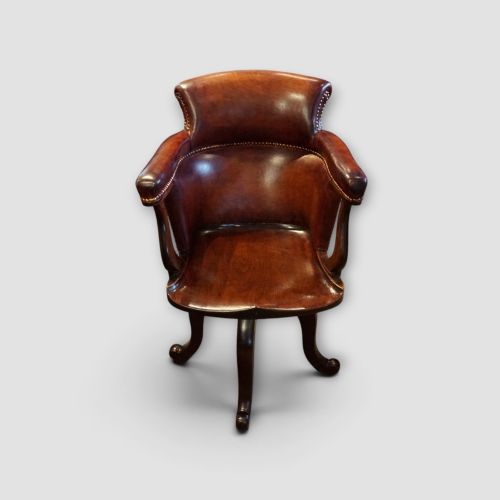
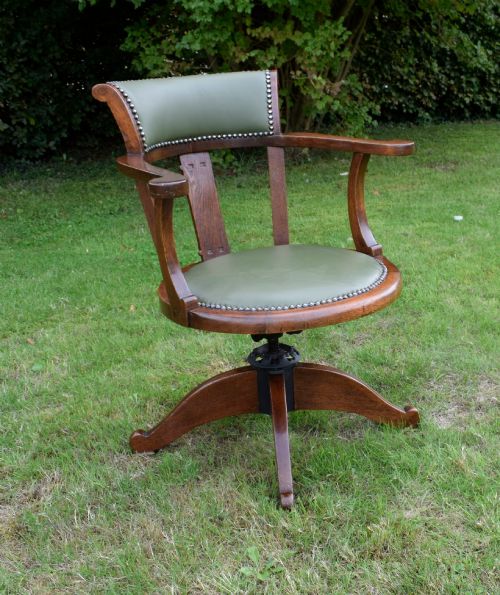
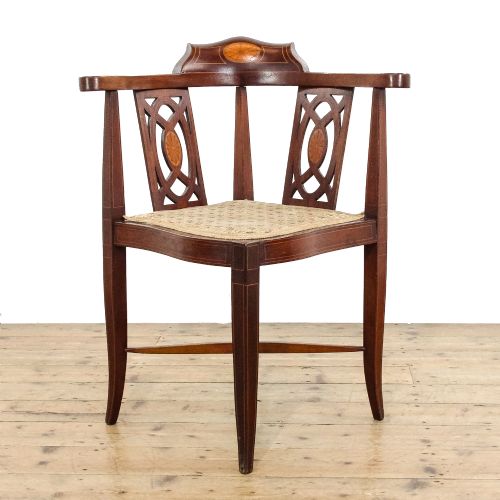
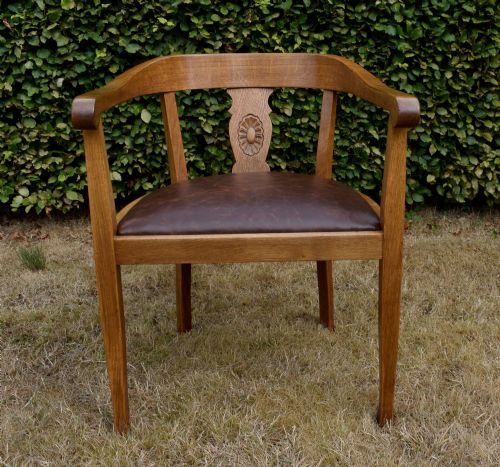
Makers often adapted this barrel-shaped frame for multiple functions, resulting in variants configured as desk chairs, swivel chairs, or low salon seats. While many examples are found framed in mahogany with subtle satinwood inlay, oak and beech versions also populate the inventory.
The seating itself varies considerably in construction, ranging from tightly upholstered leather and velvet pads to open caned panels and woven wicker rattan. Buyers encounter everything from simple corner armchairs to elaborate pairs resting on castors, reflecting diverse domestic uses across the nineteenth and twentieth centuries.
Materials and Construction Techniques
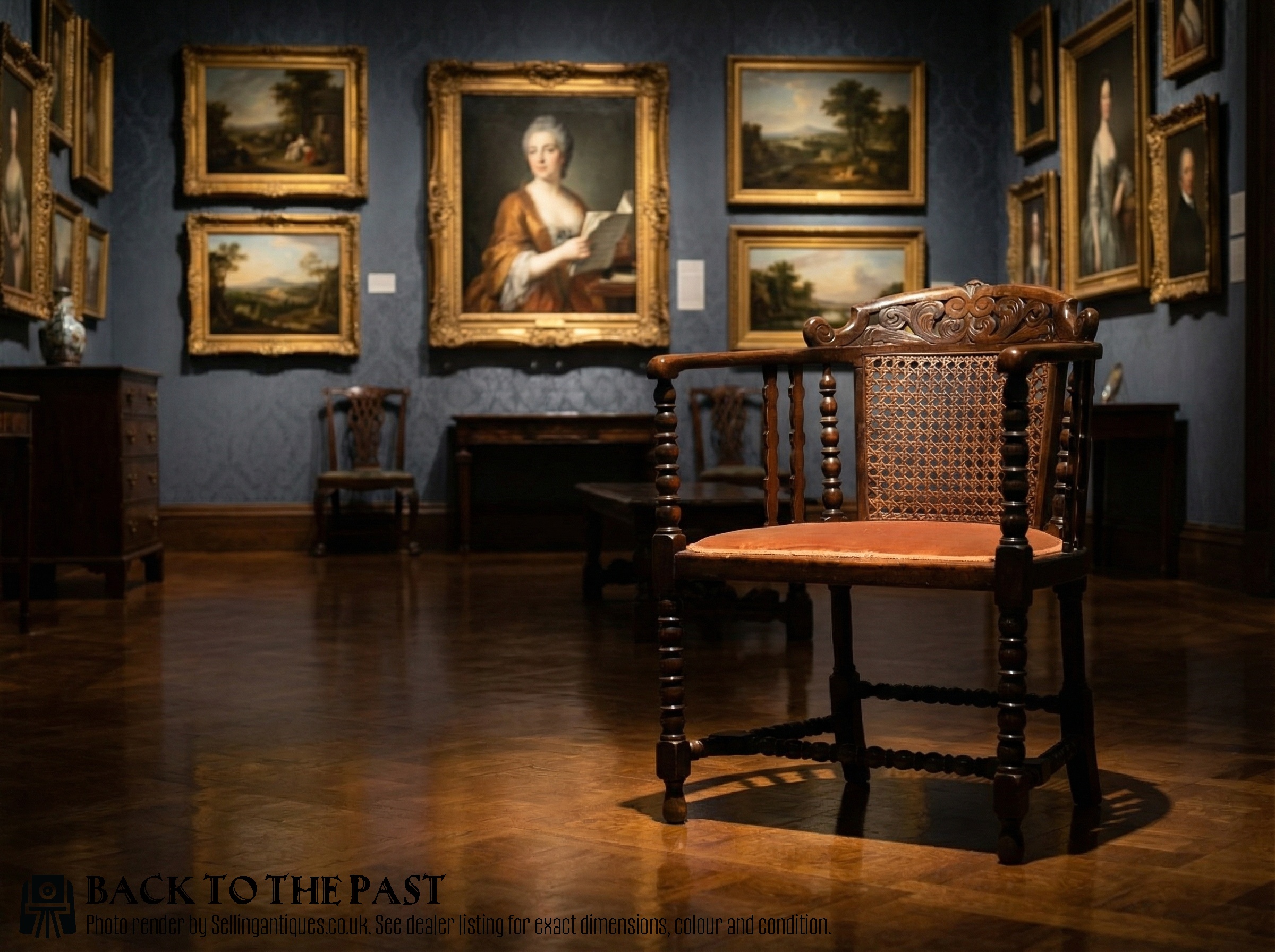
Frames rely predominantly on hardwoods such as mahogany and oak, shaped through steam-bending or curved joinery to create the continuous profile of the tub back. Inlaid decorative schemes utilise contrasting veneers like satinwood, while brass components frequently secure structural joints or provide mobility via castors.
Upholstered variants employ traditional stuffing covered in leather, fabric, or velvet, often finished with buttoning or brass nail tacks along the borders. Alternatively, caning and wicker work woven directly through pierced wooden rails provide a lighter, semi-transparent alternative to solid upholstery.
Edwardian Tub Armchair Retail Price Guide 2026
Typical asking prices for edwardian tub armchair among the pieces listed under this phrase on Sellingantiques today, from the lower quarter to the upper quarter. They describe what is for sale here now, not the wider market.
Listings feature mahogany, oak, and beech frames combined with leather, cane, and velvet upholstery across the edwardian and victorian periods.
Distinctions in Quality and Execution
The degree of craftsmanship shows clearly in the tightness of the curved joints and the subtlety of any inlaid satinwood decoration on the mahogany frame. Superior pieces maintain structural rigidity without relying on secondary corner blocks, ensuring the continuous hoop of the back absorbs pressure evenly.
Surface finish and material selection further separate standard examples from exceptional ones, particularly in the suppleness of the original leather hides or the uniform tension of hand-woven cane panels. The integration of functional elements, such as smooth-rolling brass castors or well-fitted swivel mechanisms, marks higher-tier production.
Howard And Sons·Maple And Co·Dryad And Co
The Edwardian Tub Armchair Glossary
- Tub chair
- An armchair featuring a low, rounded backrest that wraps around the sides in a continuous curve. This shape creates a sheltered, enclosed seat.
- Bergère
- An enclosed upholstered armchair with a wooden frame where the back and sides are typically filled with cane work. Such chairs often include a loose seat cushion.
- Inlay
- A technique where contrasting materials like satinwood are inserted into recesses within the primary mahogany or oak surface to create decorative patterns. This ornament sits flush with the surrounding wood.
- Smoker's bow
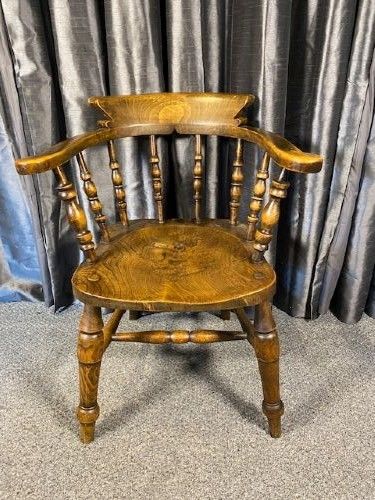
- A sturdy wooden elbow chair with a rounded rail top supported by turned spindles, originating in the nineteenth century. These seats frequently served in country houses and studies.
- Castor
- A small wheel mounted on a swivel attached to the foot of a chair leg. It allows heavy armchairs to move easily across floor coverings.
Edwardian Tub Armchair: Frequently Asked Questions
Where should I place an edwardian tub armchair?
These compact seats fit easily beside a fireplace, in a bedroom corner, or pulled up to a writing desk. Their enclosed shape makes them practical for reading without dominating the room.
Because the rounded back creates a finished profile from all angles, they work well floating in the middle of a study rather than pushed flat against a wall.
How do I distinguish an edwardian tub armchair from a victorian one?
Edwardian versions generally display lighter proportions, brighter mahogany framing, and often subtle satinwood stringing or classical inlay. Victorian precursors tend to be heavier, relying on darker timbers and deeper, more buttoned upholstery.
Examining the construction underneath and the style of any carved ornamentation helps clarify whether the piece belongs to the late nineteenth or early twentieth century.
Can I use an edwardian tub armchair at a desk?
Many examples from this era were specifically built as desk or swivel chairs, featuring lower wooden arms that slide comfortably beneath a desktop. Those fitted with castors offer added mobility for office work.
Check the seat height and arm clearance against your desk measurements to ensure a proper fit for daily use.
How do I care for leather and cane upholstery?
Leather surfaces benefit from occasional conditioning to maintain suppleness and prevent cracking over time. Keeping them away from direct heat sources preserves the natural hide.
Caned panels require gentle dusting and occasional light moisture to prevent the dried cane from becoming brittle. Avoid pressing heavily on unsupported woven sections.