



Edwardian Travel Coffer
An Edwardian travel coffer is a sturdy piece of luggage built for transit, offering rugged character and practical storage for the modern home.

Edwardian Travel Coffer
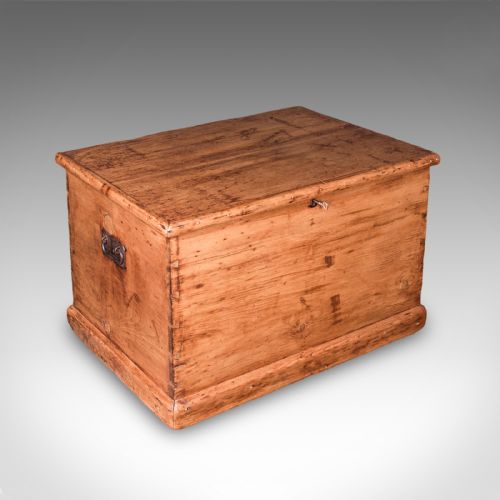
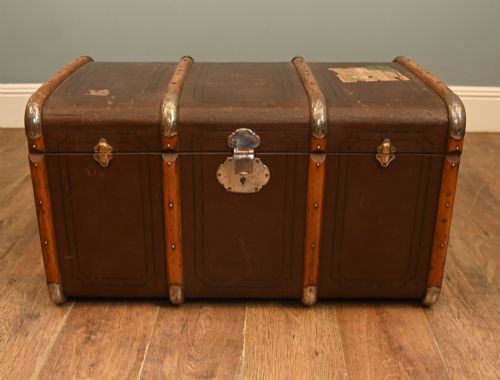
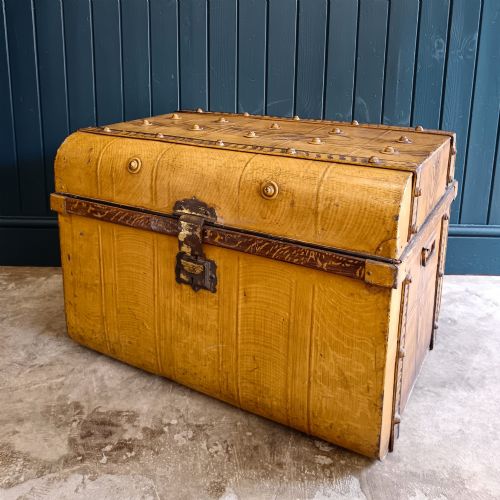
When you search for an Edwardian travel coffer, you encounter sturdy luggage designed for journeys by rail, ship or carriage during the late nineteenth and early twentieth centuries. These pieces encompass campaign chests, steamer trunks and heavy-duty storage boxes constructed to withstand rough handling.
The selections on this page span the Victorian, Edwardian and early twentieth century periods, showing influences from military campaign furniture and transcontinental travel. You will find forms ranging from dome-top chests to flat-topped luggage cases intended for stacking in the hold.
How they were made
Makers utilised durable timbers such as oak, teak and camphor wood, often pairing them with structural framing in iron, brass or steel. Leather, canvas and painted metal frequently covered the exterior to protect the contents from moisture during long voyages.
Reinforced corners, sturdy carrying handles and secure metal latches formed standard construction methods to endure transit. Internal fittings sometimes included lift-out trays, fabric linings and specialised compartments for hats or silverware.
Edwardian Travel Coffer Retail Price Guide 2026
Typical asking prices for edwardian travel coffer among the pieces listed under this phrase on Sellingantiques today, from the lower quarter to the upper quarter. They describe what is for sale here now, not the wider market.
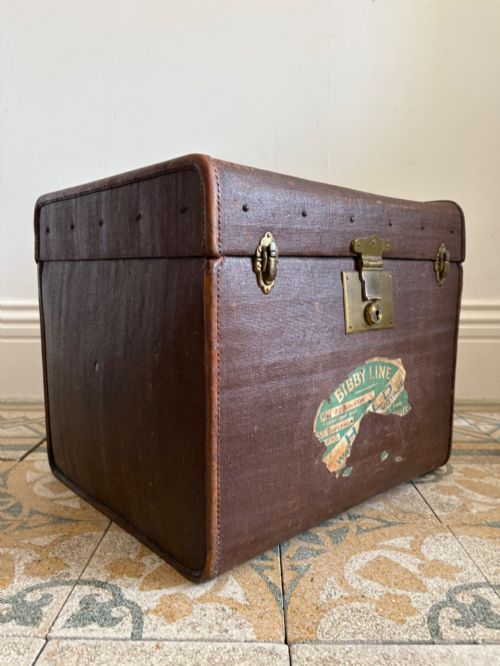
Some trunks retain original travel labels and monograms, whispering tales of long steamship voyages and grand Edwardian hotel arrivals.
What varies in quality
The distinction between standard utility luggage and finer pieces rests on the choice of materials and the integrity of the original hardware. Solid hardwoods like teak and camphor wood paired with substantial brass mounts indicate high-grade construction intended for officers or wealthy travellers.
Integrity of survival also shapes the standing of a piece, particularly the presence of original leather coverings, working brass locks and legible travel labels. Altered interiors or replaced exterior panels diminish the historical character compared to untouched examples.
Army and Navy
The Edwardian Travel Coffer Glossary
- Campaign chest
- Portable furniture designed to dismantle or travel easily, typically featuring recessed brass handles and reinforced corners for military officers on the move.
- Steamer trunk
- A lower-profile luggage chest built to fit beneath the berth in a ship's cabin or to meet strict shipping height restrictions during transatlantic travel.
- Dome top
- A curved lid design on a chest or trunk that allowed rainwater to run off easily when stored on the deck of a ship or carriage.
- Portmanteau
- A large leather suitcase or travel case that opens into two distinct compartments, often associated with Edwardian luxury journeys.
- Campaign trunk
- A heavy-duty storage box constructed for military or long-distance travel, frequently lined in metal or zinc to protect contents from damp climates.
Edwardian Travel Coffer: Frequently Asked Questions
What is an Edwardian travel coffer?
An Edwardian travel coffer is a heavy-duty storage trunk or chest built for transit during the early twentieth century. These pieces were constructed to protect clothing and personal belongings on long journeys.
They combine robust wooden frames with metal bindings, leather coverings and sturdy carrying handles. Today, they serve as practical storage furniture with distinct historical character.
How were these trunks used?
Travellers packed these chests with garments, hats and valuables for voyages by steamship, train or carriage. Some featured internal trays and specialised compartments to keep items organised during transit.
Military officers and diplomats utilised specialist campaign variants designed for frequent relocation across colonies and borders. Their durable construction ensured contents survived rough handling by baggage handlers.
How do I live with a travel coffer?
You can position a travel coffer at the foot of a bed, use it as a coffee table in a living room or place it in a hallway for concealed storage. Their flat tops provide useful surface space while the interior holds bulky items like blankets or winter clothes.
They pair well with both traditional and contemporary interiors, adding texture and a sense of history to a room. Placing them away from direct heat sources helps preserve the original leather, canvas and wood.
How do I tell periods apart?
Victorian and nineteenth-century examples often feature heavy brass bindings, exposed dovetails and dense hardwoods like teak or camphor wood. Edwardian pieces from the early 1900s frequently introduce lighter canvas coverings, aluminium panels and simpler hardware.
Looking at internal labels, lock mechanisms and construction details helps narrow down the manufacturing era. Canvas and leather finishes became particularly refined as mass travel expanded toward 1910 and 1920.