

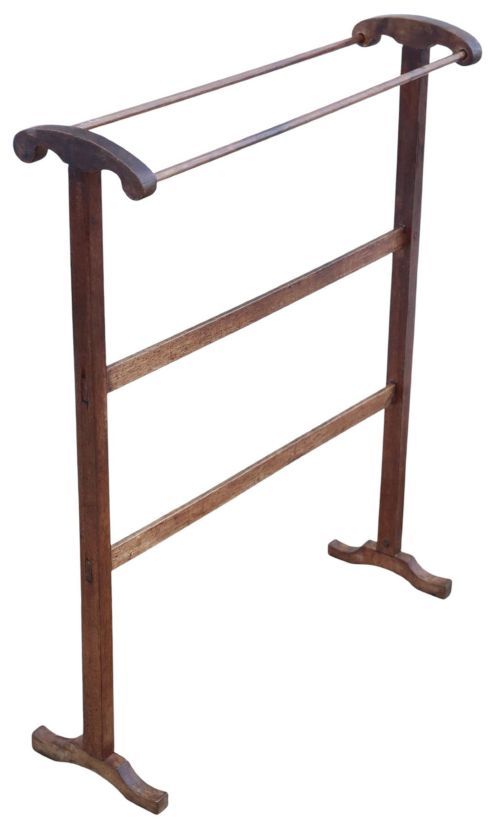
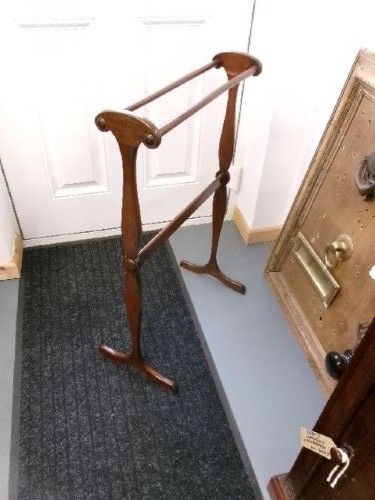
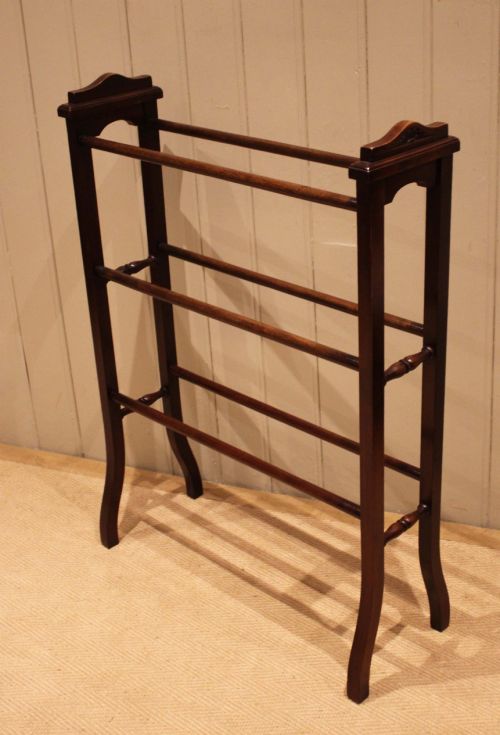
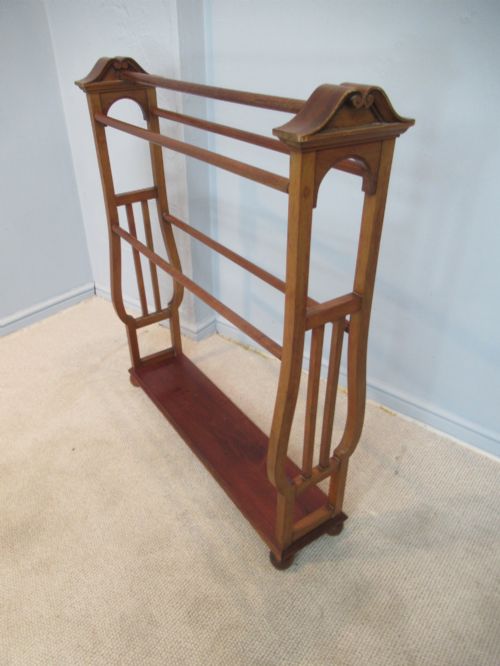



Edwardian Towel Rail
An Edwardian towel rail brings functional charm to a bathroom, offering sturdy rails for daily drying.
Edwardian Towel Rail
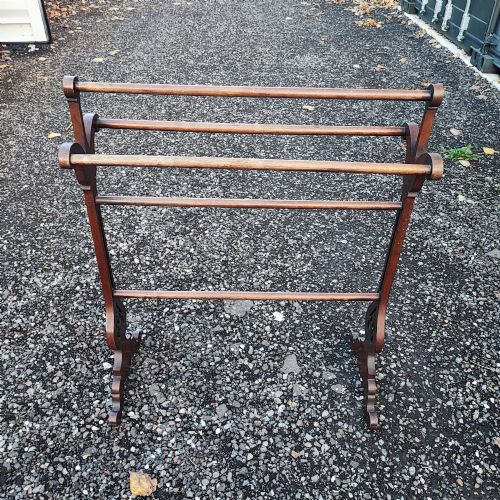
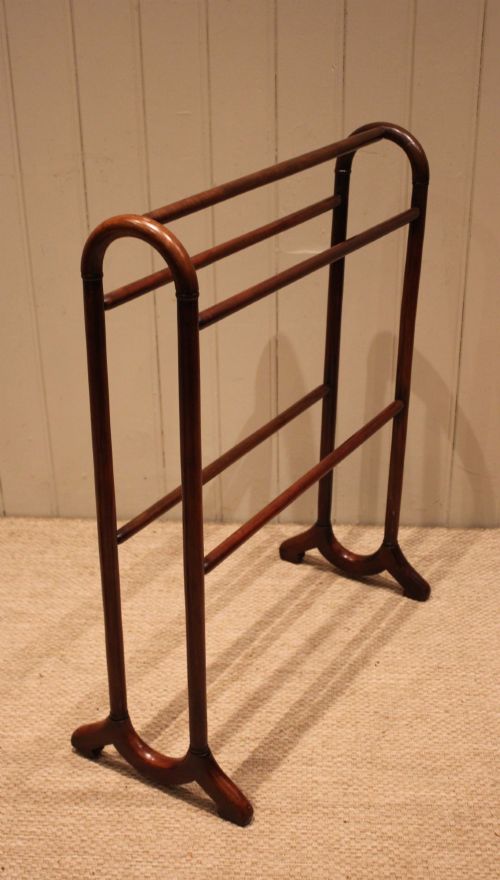
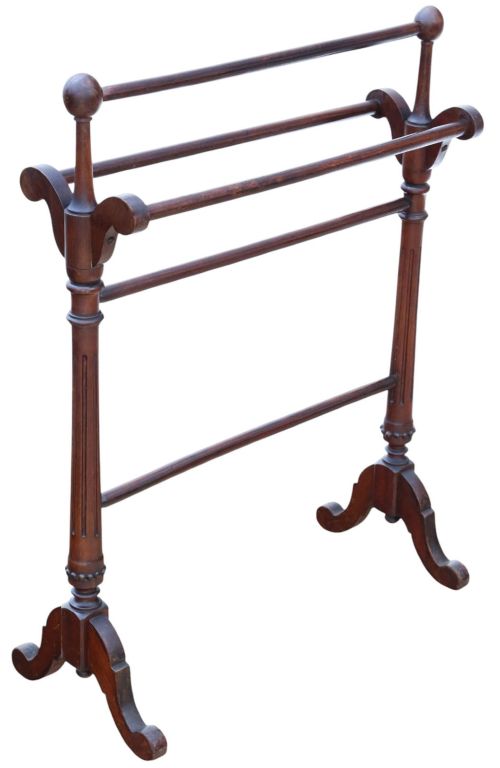
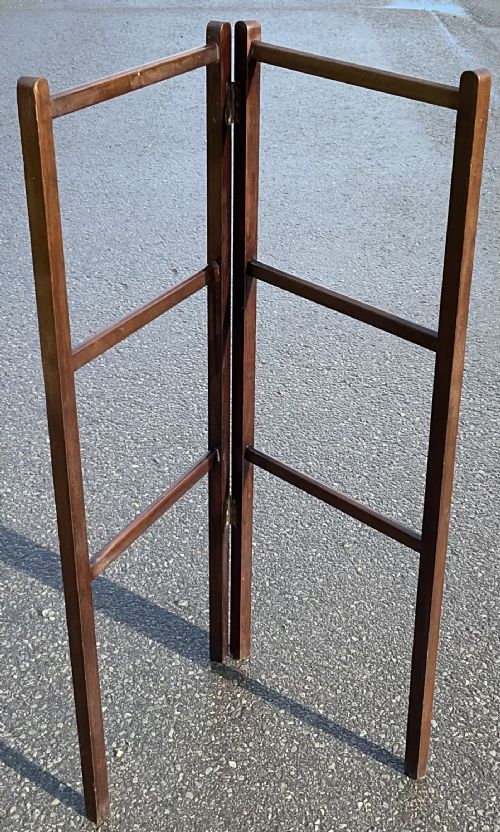
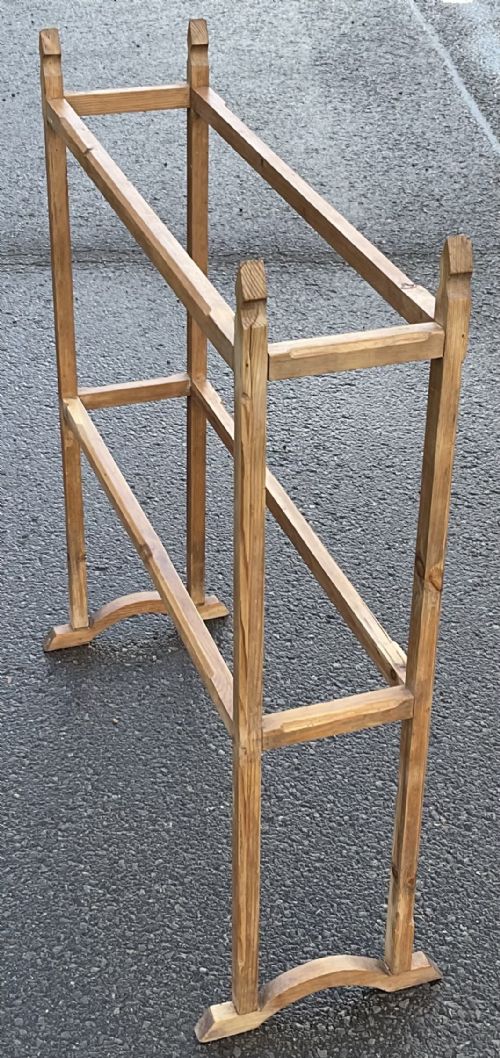
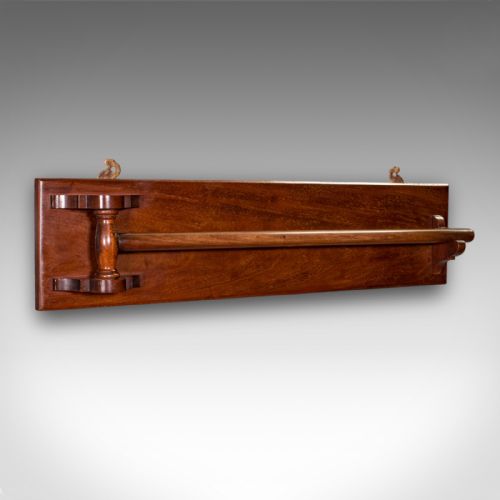
An edwardian towel rail provides a practical drying rack for domestic spaces, drawing heavily on the prevailing tastes of the early twentieth century. These pieces appear frequently in mahogany, oak, walnut, beech, pine, and satinwood, constructed as standing frames or folding stands.
Most examples originate from the Edwardian period or around nineteen hundred, while earlier pieces stretch back through Victorian eras to the Regency period. Designs range from simple single bars to double folding rails, five bar frames, and gate action clothes horses.
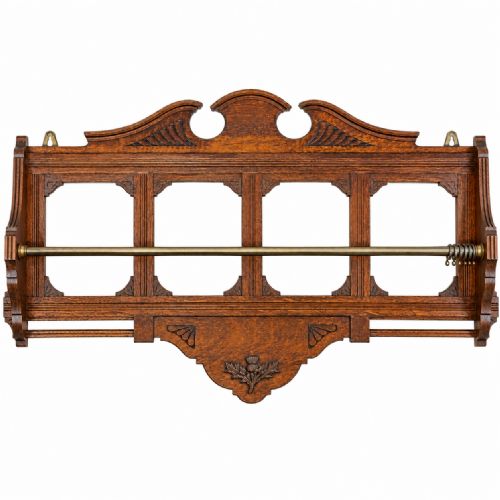
Specialised variations include ship rails, maritime drying racks, robe rails, rug stands, and country house pieces, alongside architectural items and labelled cupboard combinations. They serve primarily in bathrooms and dressing rooms for airing textiles.
Construction and Materials
Cabinet makers utilised solid timbers such as mahogany, oak, walnut, beech, and pine, frequently shaping them into standing or folding frames. Selected pieces incorporate satinwood details or intricate inlay work to elevate the visual appeal of the wood grain.
Hardware elements like brass and polished steel appear on specific maritime or unusual designs, providing robust mechanical joints and functional fittings. Folding mechanisms utilise hinges and gate action frames to allow the rails to expand or collapse.
Edwardian Towel Rail Retail Price Guide 2026
Typical asking prices for edwardian towel rail among the pieces listed under this phrase on Sellingantiques today, from the lower quarter to the upper quarter. They describe what is for sale here now, not the wider market.
The records show materials spanning mahogany, oak, walnut, beech, pine, satinwood, brass, and polished steel.
Distinctions in Quality
The choice of primary timber and secondary woods establishes the foundational grade of the piece, with richly figured mahogany and quarter-sawn oak sitting above standard pine or beech. Subtle decorative additions, such as fine wood inlay or architectural framing, elevate certain domestic rails into country house statement pieces.
Structural integrity depends upon the tightness of the joints and the smoothness of any folding mechanism, whether a simple double rail or a complex gate action clothes horse. Maker attribution, such as original workshop labels, further distinguishes exceptional items from standard production models.
Heals
The Edwardian Towel Rail Glossary
- Gate action
- A folding mechanism that allows sections of the rail to swing outward like a gate, expanding the hanging space for laundry or garments.
- Inlay
- The technique of embedding contrasting strips or pieces of wood into the primary surface to create decorative patterns.
- Maritime drying rack
- A specialised standing rail designed for stability in damp or moving environments, often featuring robust brass or steel elements.
- Standing towel rail
- A self-supporting floor-standing frame with one or more horizontal bars intended for holding and drying towels.
- Robe rail
- A tall standing frame utilised for hanging garments, rugs, or towels in bedrooms and country house dressing rooms.
Edwardian Towel Rail: Frequently Asked Questions
What is an edwardian towel rail?
An edwardian towel rail is a standing or folding wooden frame designed to hold and dry towels or garments in domestic interiors.
These pieces typically date from the early twentieth century and utilise timbers like mahogany, oak, and walnut.
How do folding towel rails work?
Folding towel rails use hinged sections or gate action mechanisms that let the frame expand for hanging laundry and collapse for compact storage.
Multiple bars provide ample space for drying towels simultaneously in a bathroom or bedroom.
Where were these rails used?
These items were placed in Victorian and Edwardian bathrooms, dressing rooms, and bedrooms to air clothing and dry household linens.
Larger country house versions and maritime racks served similar practical drying functions in specialised domestic quarters.
What woods are used in these pieces?
Makers constructed these towel rails primarily from mahogany, oak, walnut, beech, pine, and satinwood.
Finer examples feature decorative wood inlay, while others incorporate brass or polished steel hardware.