





Edwardian Tilting Mirror
An Edwardian tilting mirror brings a balanced, adjustable reflection to a dressing room through classic freestanding frames.
Edwardian Tilting Mirror
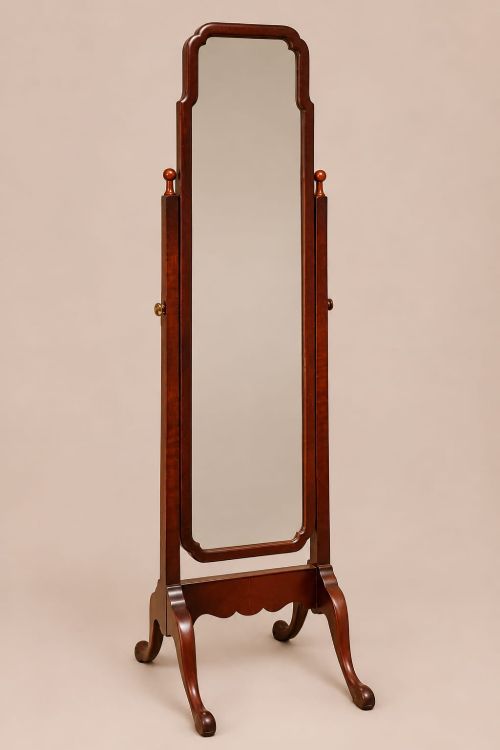
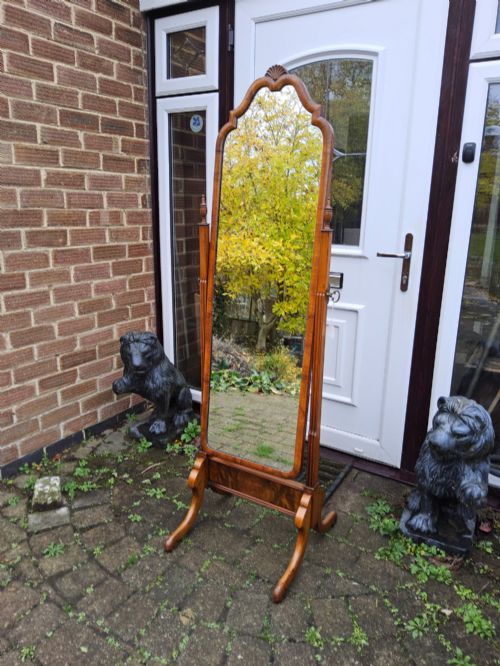
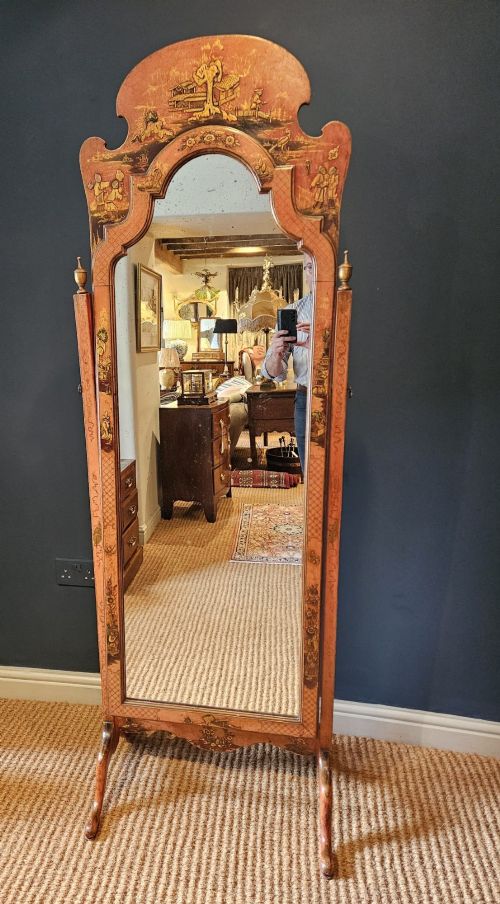
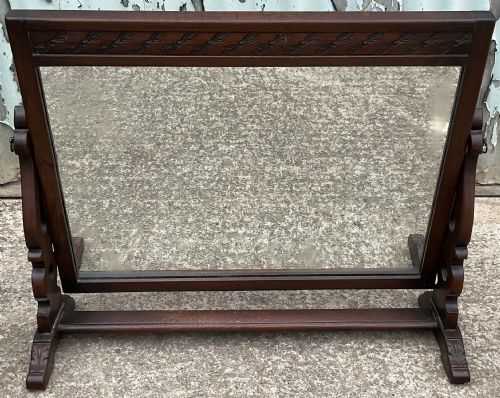
When searching for an Edwardian tilting mirror, collectors examine freestanding cheval and dressing table mirrors designed for personal grooming. The Edwardian examples on this page sit alongside Victorian, Georgian, and Regency antecedents, offering both full-length floor standing pieces and compact table top variations.
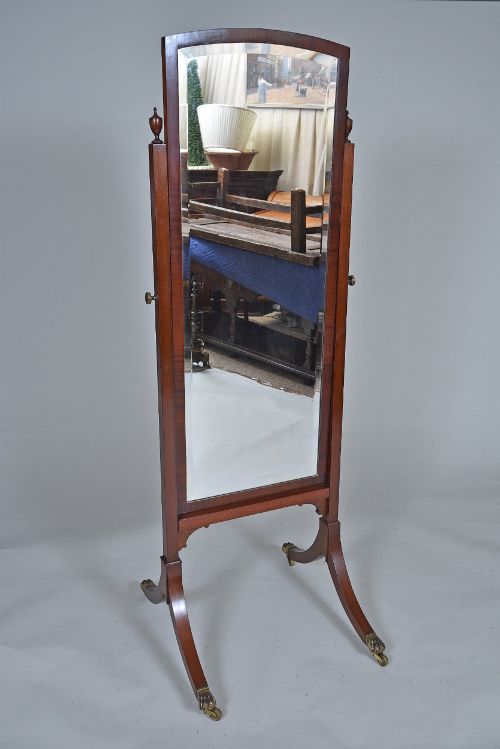
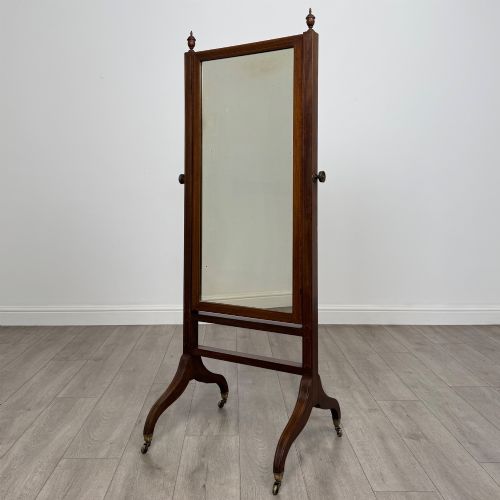
Mahogany and walnut form the backbone of these pieces, alongside oak, pitch pine, and lacquered wood finished with Chinoiserie decoration or inlay. Brass castors and adjustable pivot mechanisms allow the glass frame to tilt smoothly to the desired angle.
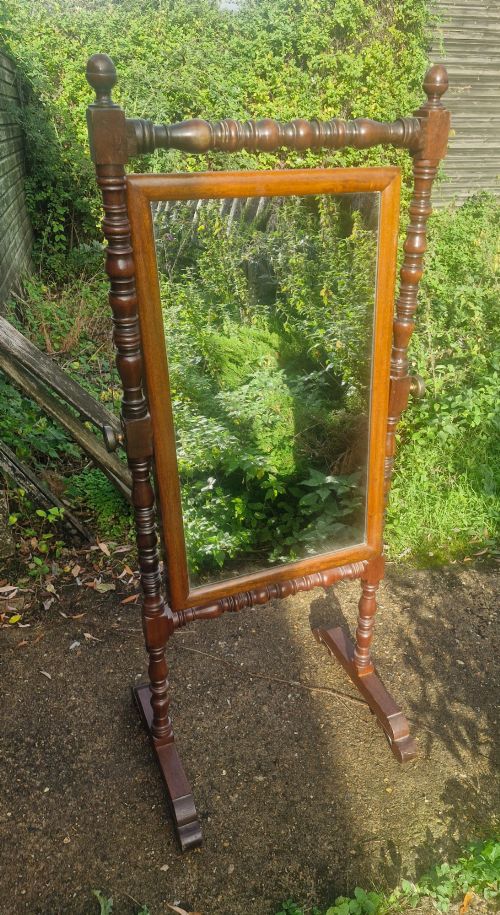
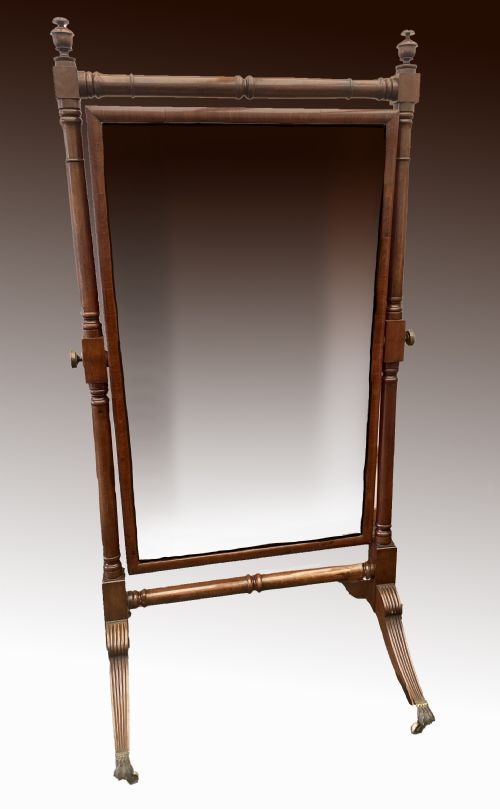
The selection ranges from simple turned frames to grander styles influenced by earlier George III and Regency aesthetics. Buyers frequently encounter floor-standing cheval mirrors equipped with supporting side uprights and sturdy cross-stretchers.
Materials and Construction
Cabinetmakers constructed the frames using solid timbers and veneers of mahogany, walnut, and oak, frequently adding satinwood inlay or intricate lacquered finishes. Brass fittings, including pivot screws and castors, provided the necessary mechanical support for the swinging glass plate.
Joinery methods relied on traditional mortise and tenon joints to secure the upright standards to the base supports. Turned columns and shaped wooden brackets were hand-carved to hold the heavy mirror glass securely within its rebate.
Edwardian Tilting Mirror Retail Price Guide 2026
Typical asking prices for edwardian tilting mirror among the pieces listed under this phrase on Sellingantiques today, from the lower quarter to the upper quarter. They describe what is for sale here now, not the wider market.
Assessing Quality and Design
The distinction between standard examples and finer pieces lies in the selection of timber figures and the crispness of the inlay work. Finer mirrors exhibit superior joinery in the turning of the uprights and the thickness of the original brass hardware.
Proportion and stability dictate the merit of a floor-standing cheval mirror, where a well-balanced base prevents any listing when the glass tilts. Original mirror plates showing honest age distinguish untouched examples from later replacements.
The Edwardian Tilting Mirror Glossary
- Cheval mirror
- A freestanding full-length mirror suspended on a frame with vertical pivots that allow it to swing. This design originated in France and gained popularity for dressing rooms.
- Toilet mirror
- A smaller mirror designed to sit upon a dressing table or chest of drawers. These often incorporate small storage drawers in the base plinth.
- Pivot
- The central metal pin or screw on each side of the mirror frame that secures it to the upright supports. It allows the glass to tilt at various angles.
- Inlay
- Decorative wood or brass ornamentation embedded into the surface of the timber frame. Edwardian pieces often utilised satinwood or lighter woods for contrast.
- Castor
- A small wheel attached to the base of the mirror frame to aid movement across the floor. Brass versions are common on heavier mahogany and walnut pieces.
Edwardian Tilting Mirror: Frequently Asked Questions
What is a cheval mirror?
A cheval mirror is a tall, freestanding glass plate mounted inside a pivoting frame that allows the entire reflection to tilt. These pieces were designed primarily for bedrooms and dressing rooms to view full outfits.
The word derives from the French term for horse, referencing the four-legged frame supporting the structure. They range from compact table versions to grand floor-standing variations.
How do you adjust the tilt?
The glass frame hangs between two vertical upright posts secured by metal pivot screws on either side. Tightening or loosening these side fixtures holds the mirror at the chosen angle.
Original brass hardware ensures the mechanism functions smoothly without slipping. Proper adjustment relies on balanced weight distribution within the frame.
Where were they placed?
These mirrors stood in bedrooms, dressing chambers, and hallways where natural light helped with daily grooming. Tabletop versions sat securely atop matching chests of drawers or dressing tables.
Floor-standing cheval models required enough clearance room to swing fully on their bases. Their mobility allowed users to catch the best available daylight.
How do I care for the wood?
Maintenance involves applying appropriate wax polish to nourish the mahogany, walnut, or oak timber surfaces. Avoiding direct sunlight prevents the polished wood grain from fading over time.
Metal parts such as brass castors and pivots benefit from gentle dusting to keep the hardware clean. Standard glass cleaner applied to a cloth protects the surrounding frame from moisture.