
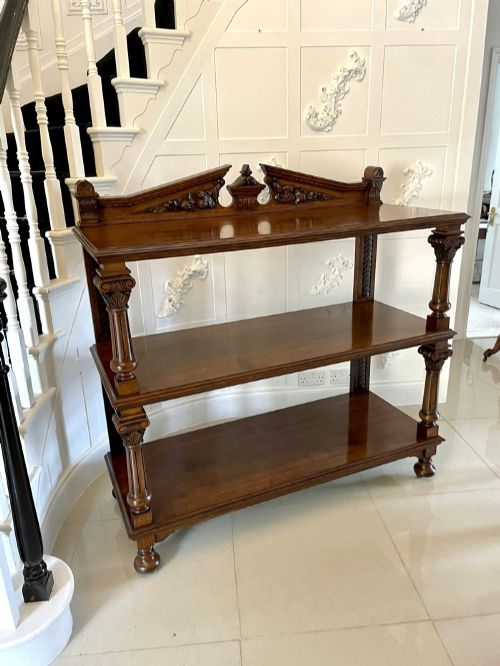
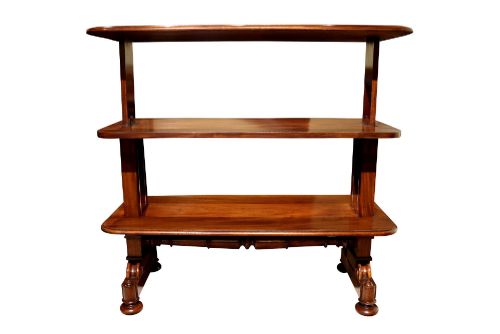
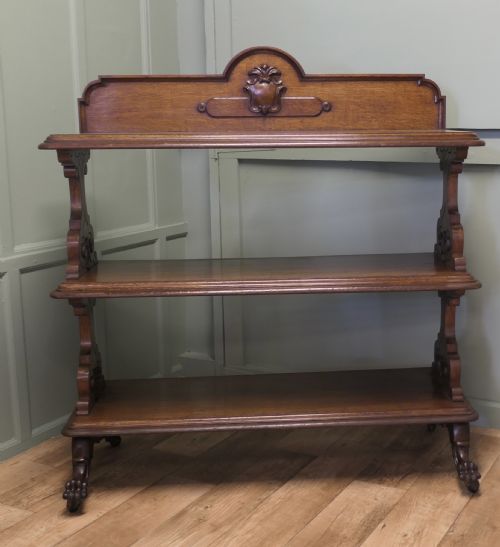
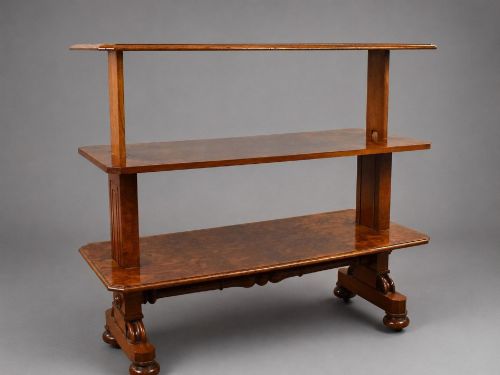
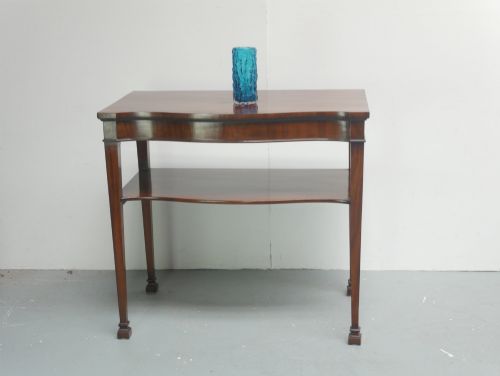
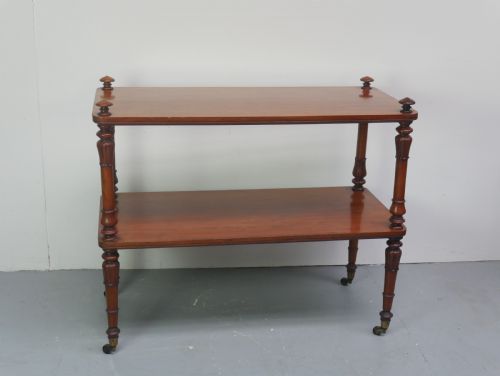


Edwardian Tier Server
Edwardian tier servers and related multi-level display pieces combine formal serving utility with compact proportions suited to period reception rooms.
Edwardian Tier Server
The term edwardian tier server encompasses multi-level wooden and marble display furniture, alongside related serving tables, buffets, and dumbwaiters spanning the nineteenth and early twentieth centuries. Pieces appearing in these listings range from compact etagere tables with marble tops to rising dumbwaiters, music cabinets, and carved oak serving furniture.
While specific examples draw on Victorian, William IV, and Arts and Crafts traditions, buyers encounter variations in tier count, wood type, and mechanical adjustment mechanisms. The underlying purpose remains the presentation and service of food, drinks, or decorative objects across multiple levels.
Materials and Construction
Cabinetmakers utilised hardwoods such as mahogany, oak, walnut, burr walnut, and pollard oak, often selecting figured grains for prominent surfaces. Structural elements balance substantial weight with operational parts, particularly in telescopic or rise-and-fall dumbwaiters that rely on internal wooden or brass mechanisms.
Secondary materials include sterling silver for miniature items, inset marble slabs on etagere tables, and glass components. Joinery traditions span heavy carved relief work on Gothic Revival oak pieces to refined mahogany turning and polished veneer applications.
Current listings feature pieces spanning the nineteenth century, the Victorian era, and the Edwardian period, constructed in mahogany, oak, walnut, and marble.
Assessing Quality and Execution
Quality rests upon the selection of timber veneers, the crispness of hand carving, and the precise operation of any mechanical rising or telescopic parts. Superior items maintain structural rigidity across multiple tiers without wobble or sag.
Proportion and decorative restraint separate standard utility pieces from finer examples. Finer servers display balanced grain patterns, integrated brass hardware, and well-executed joinery that conceals internal adjustments cleanly.
The Edwardian Tier Server Glossary
- Dumbwaiter
- A multi-tiered serving piece or stand designed to hold dishes or drinks without requiring a dedicated servant. These items often feature graduating circular shelves or adjustable rising columns.
- Etagere
- A set of open shelves for displaying small objects, typically freestanding and constructed with slender upright supports. Examples in these records pair mahogany frames with marble surfaces.
- Pollard oak
- Timber taken from trees that have been pollarded, producing a dense, knotty grain pattern with rich figuring. Cabinetmakers utilised this wood for decorative drawer fronts and panel inserts.
- Rise and fall
- A mechanical mechanism allowing tiers or shelves to be adjusted in height via a central screw or ratchet column. This engineering permits variable clearance between shelves.
- Buffet
- A side table or low sideboard designed for food preparation and service in dining spaces. The form merges with servers and dumbwaiters across the nineteenth-century listings.
Edwardian Tier Server: Frequently Asked Questions
What is an edwardian tier server used for?
These pieces were built for presenting food, afternoon tea, or beverages in domestic entertaining spaces. Multiple levels allowed hosts to maximise surface area while keeping the footprint compact.
Today, they function as display furniture for plants, books, or decorative objects in living rooms and hallways.
How do I operate a telescopic dumbwaiter?
Telescopic or rise-and-fall dumbwaiters use an internal screw or friction mechanism operated by rotating or lifting the central tier. Users should support the weight of the shelf evenly when adjusting height to avoid straining the central column.
Many examples include brass thumb screws or catches to lock the shelves securely into position once adjusted.
What woods were commonly used for servers?
Makers relied heavily on mahogany, oak, walnut, and pollard oak depending on the prevailing style and period. Figured timbers such as burr walnut appeared on decorative cabinets and refined serving pieces.
Heavier carved oak was favoured for Gothic Revival and late nineteenth-century items, whilst mahogany persisted across multiple decades.
Are these pieces suitable for small rooms?
Many tier servers, etagere tables, and miniature stands offer vertical storage without demanding significant floor space. Their multi-level design packs substantial display capacity into a narrow footprint.
Careful placement away from direct heat sources helps preserve vulnerable veneered surfaces and polished hardwoods.