


Edwardian Telescopic Standard Lamp
An edwardian telescopic standard lamp brings adjustable height and polished metal presence to a room, offering both practical lighting and period character.
Edwardian Telescopic Standard Lamp
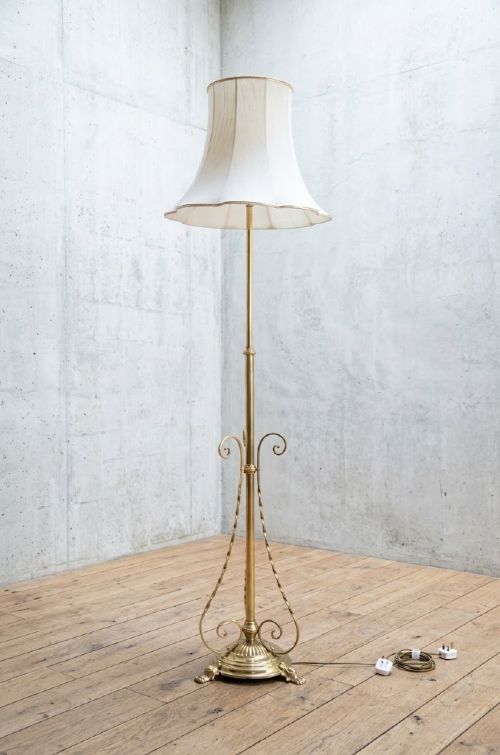
An edwardian telescopic standard lamp is a tall floor-standing lighting piece designed to alter in height using an internal sliding mechanism. Most examples seen here date from the Edwardian period or around 1900, with related pieces spanning the nineteenth century through to the 1930s.
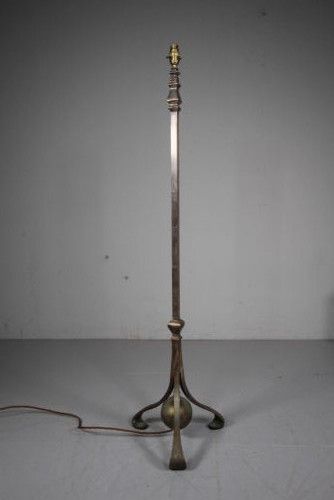
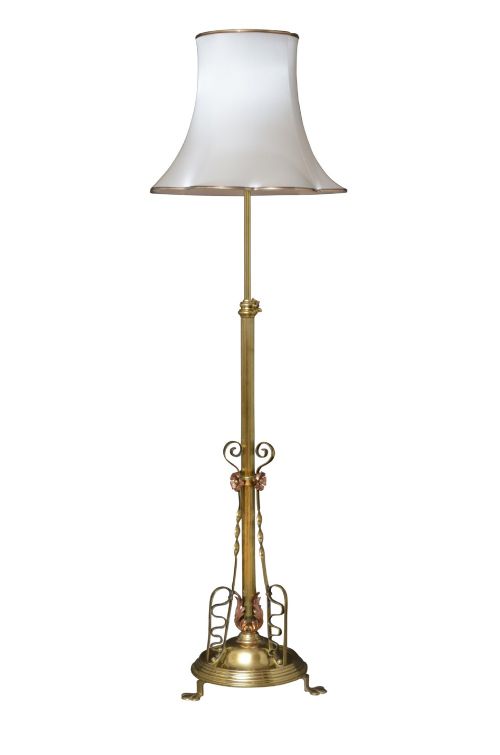
The form originates from tall oil lamps that were later adapted or originally built for electricity, alongside standard floor lamps. You will frequently encounter brass columns, often paired with copper, marble bases, or wrought iron elements.
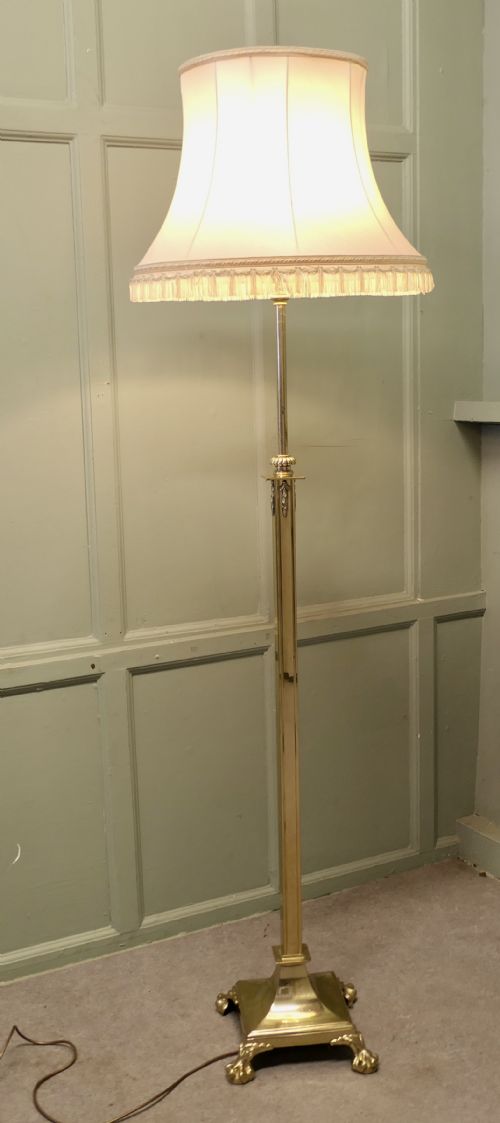
Makers and designers drew upon various stylistic influences, including Arts and Crafts, Art Nouveau, and Neoclassical Revival styles such as Corinthian column designs. These pieces range from simple functional shafts to heavy, imposing uprights with detailed metalwork.
How they were made
Construction relies heavily on brass and copper, utilised for their strength, malleability, and ability to take a bright polish. Many examples combine solid brass shafts with heavier bases of marble or iron to ensure stability when extended.
The telescopic action depends on precision metal tubing that slides smoothly within an outer column, secured by a screw key or collar. Surface treatments include plain polished metal, silver plating, and ebonised finishes on wood or metal components.
Some tall oil-lamp stands retain their original heavy brass fuel reservoirs long after the wicks gave way to wiring.
What varies in quality
The distinction between standard examples and the finest pieces lies in the weight of the metal and the complexity of the casting. Solid brass construction with substantial gauge tubing and heavy bases commands greater presence than lighter tubular alternatives.
Decorative ambition also defines the tier of a piece, separating plain utilitarian shafts from those with classical Corinthian capitals, mixed copper and brass elements, or integrated oil-lamp reservoirs. The precision of the telescopic adjustment mechanism and the integrity of the original joints complete the picture.
The Edwardian Telescopic Standard Lamp Glossary
- Telescopic
- An adjustable mechanism allowing the upper shaft of the lamp to slide upward and lock at various heights. This feature provided flexibility for reading or general illumination in period rooms.
- Corinthian column
- A classical architectural column style featuring an ornate capital decorated with acanthus leaves. It appears frequently on formal brass standards from the Victorian and Edwardian eras.
- Art Nouveau
- A decorative style characterised by fluid, organic lines and stylised plant motifs. It manifests in the curving brackets and decorative collars of period lighting.
- Standard lamp
- A traditional British term for a floor lamp designed to stand independently in a room. They typically support a fabric shade or glass oil reservoir at the top.
Edwardian Telescopic Standard Lamp: Frequently Asked Questions
How do I adjust the height?
The upper shaft moves up and down inside the lower column, held in place by a tightening key or collar screw.
Loosen this fastener gently, slide the lamp to your preferred height, and retighten it carefully to secure the position.
Were these originally for oil or electricity?
Many examples began life as oil lamps, featuring burners and reservoirs at the summit before later conversion to electricity.
Others were built specifically as tall electrical standards or uplighters from the start.
How do I place one in a room?
Their tall, vertical profile makes them suitable for corners or beside seating areas where adjustable overhead light is useful.
Ensure the heavy base rests firmly on a level floor, particularly when extended to maximum height.
How do I distinguish Edwardian from Victorian examples?
Victorian models often lean towards heavy Neoclassical Revival designs, such as fluted Corinthian columns and solid brass or silver plate.
Edwardian and 1900s pieces frequently incorporate Arts and Crafts simplicity, lighter proportions, or combinations of brass and copper.