




Classical Brass Standard Lamp
A classical brass standard lamp brings stately columns and warm metalwork into a room, offering adjustable height and steady illumination.
Classical Brass Standard Lamp
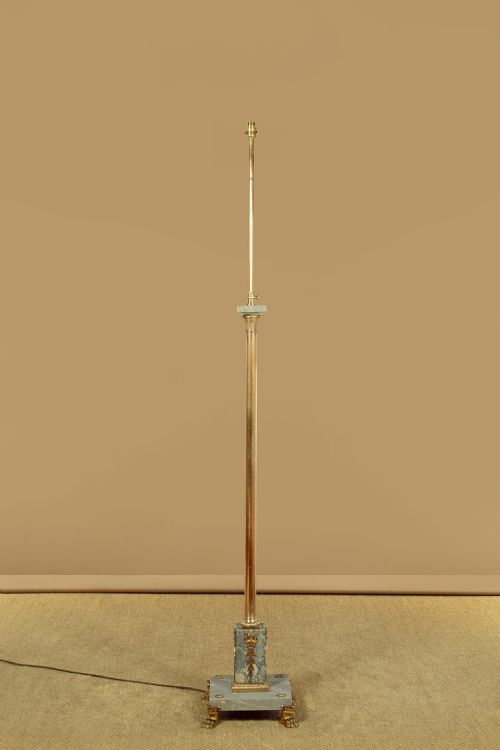
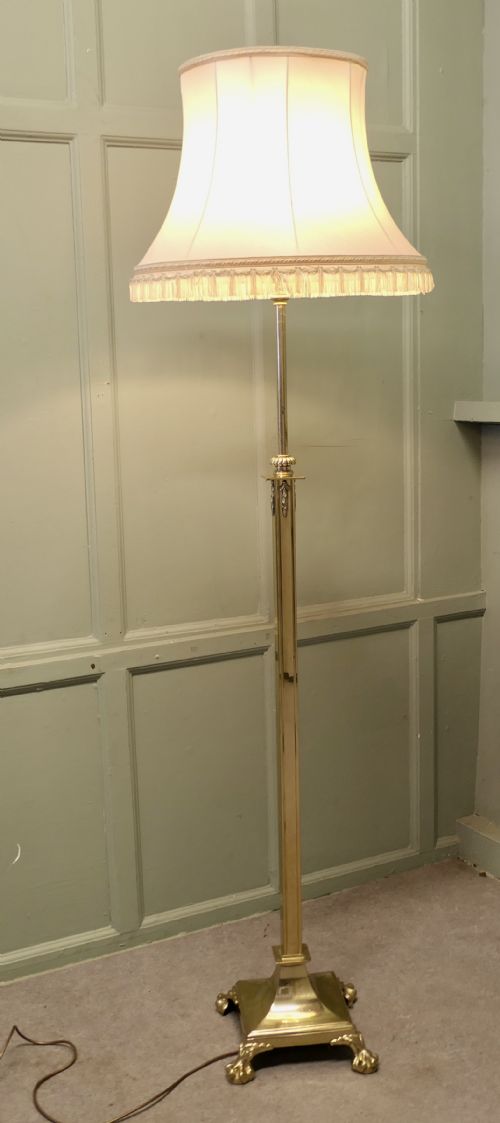
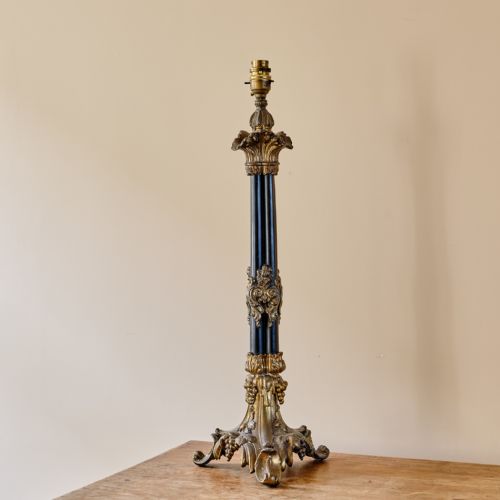
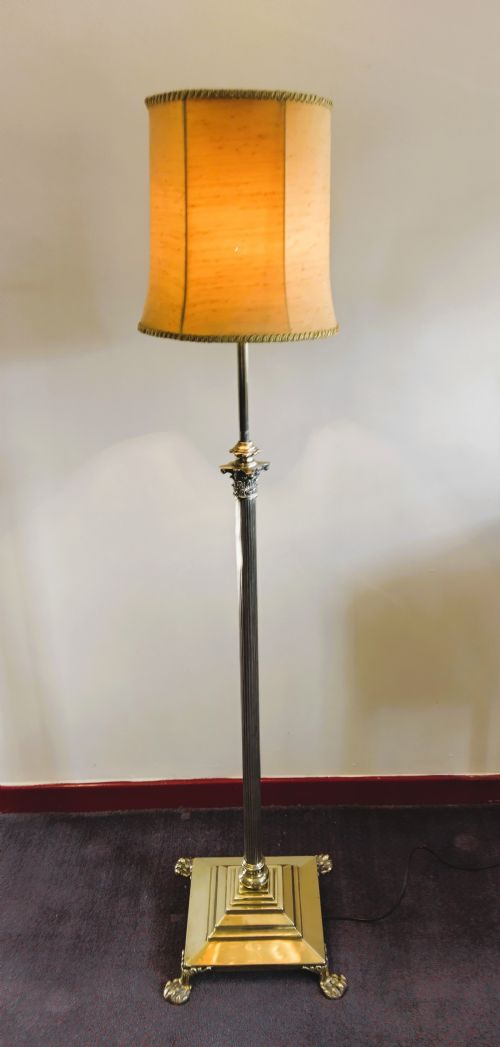
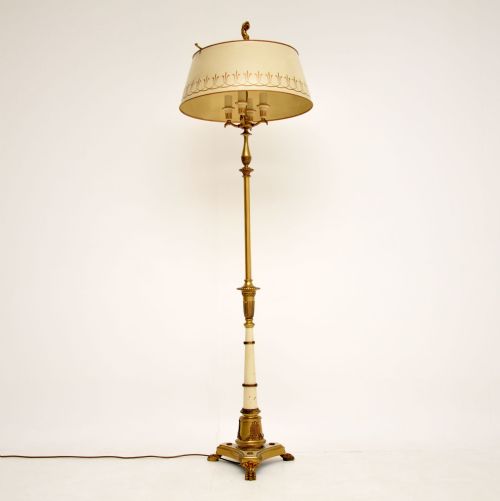
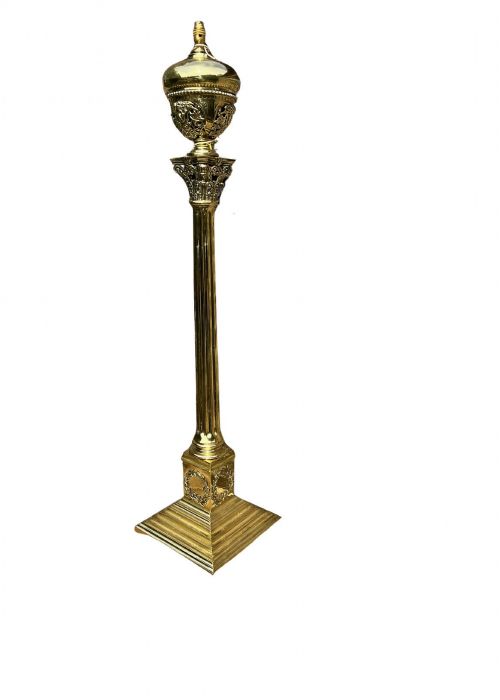
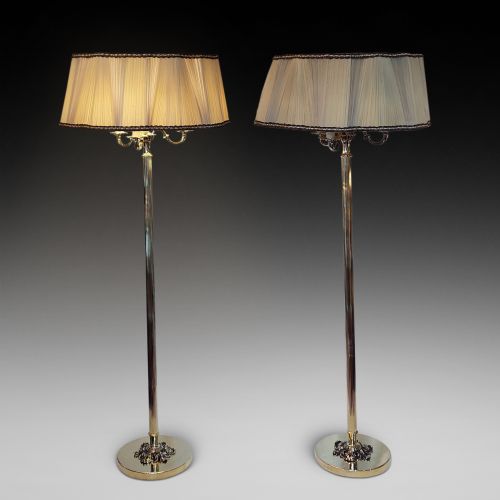
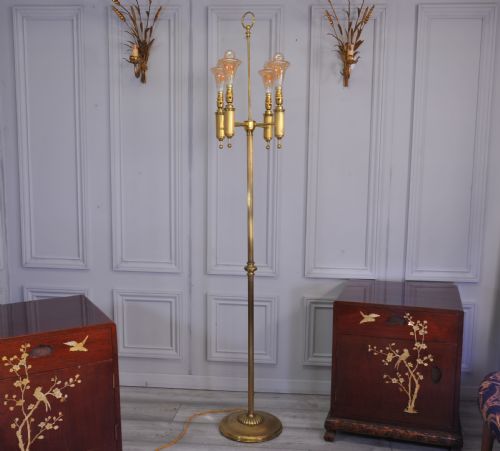
A classical brass standard lamp stands tall in a room, drawing on architectural orders and historical revivals from the Victorian era through the early twentieth century. Buyers seeking a classical brass standard lamp will encounter numerous column forms, particularly Corinthian capitals and fluted shafts.
The selection ranges from simple turned brass shafts to elaborate telescopic columns with cast detailing. Edwardian and 1920s examples frequently appear, alongside Victorian pieces and mid-twentieth-century French Empire interpretations.
How They Were Made
Maker's workshops built these standard lamps primarily from brass, often pairing the metal with heavy marble bases for stability or incorporating gilt bronze, bronze, and ebonised wood. Telescopic mechanisms allowed the central shaft to extend, requiring precise engineering of inner brass tubes.
Cast ornamentation such as rams heads and Corinthian capitals demanded skilled metal casting and chasing before final assembly. Fabric shades, glass components, and toleware sections completed the construction of these substantial floor-standing pieces.
Classical Brass Standard Lamp Retail Price Guide 2026
Typical asking prices for classical brass standard lamp among the pieces listed under this phrase on Sellingantiques today, from the lower quarter to the upper quarter. They describe what is for sale here now, not the wider market.
Some Edwardian brass columns arrive with cast rams heads glaring outward, silently judging the evening reading habits of the room.
What Varies in Quality
Quality rests upon the weight of the metal and the crispness of the cast ornamentation on the column and base. Superior examples display sharply defined acanthus leaves on Corinthian capitals and solid brass construction that prevents listing or wobbling.
The sophistication of the engineering separates standard production from finer pieces, particularly in the smooth operation of telescopic height adjustment mechanisms and the integration of heavy marble foundations.
The Classical Brass Standard Lamp Glossary
- Telescopic
- A design allowing the central shaft of the standard lamp to extend or retract in height. This mechanism uses inner and outer metal tubes secured by a key or screw.
- Corinthian Column
- An architectural support column featuring an ornate capital decorated with carved acanthus leaves. Many standard lamps adopt this classical order for their main shaft.
- Tole
- Painted or lacquered sheet metal, often used for decorative canisters or shade elements on French standard lamps. The finish provides a contrasting texture to polished brass.
- Uplighter
- A lighting configuration designed to cast illumination upward toward the ceiling rather than downward through a traditional shade. Pairs of these appear frequently in 1920s brass standard lamps.
- Gilt Bronze
- Bronze metal treated with a fine layer of gold or gold-coloured wash to give a rich, bright finish. It appears on finer revival pieces alongside standard brass elements.
Classical Brass Standard Lamp: Frequently Asked Questions
How do I adjust a telescopic brass standard lamp?
Loosen the central collar or thumb screw on the shaft gently to allow the inner brass tube to slide upward or downward. Support the top section with one hand while securing the fastener to set the desired height.
Avoid forcing the mechanism if it sticks over time, as accumulated dust inside the brass tubing can impede smooth movement. A light wipe can help maintain the adjustment action.
Where should I place a standard lamp in a room?
Position the lamp beside a reading chair or in an empty corner where the tall brass column can draw the eye upward. The height makes them suitable for framing seating groups or lighting darker architectural recesses.
Ensure the heavy base rests firmly on an even floor surface so the tall structure remains stable, particularly if you are using an adjustable telescopic model.
How do I clean antique brass safely?
Dust the metal regularly with a soft, dry cloth to prevent grime build-up on the fluted columns and cast capitals. Avoid harsh abrasive cleaners that can strip historical patination from the brass.
If polishing is necessary, use a mild metal cleaner approved for vintage brass, applying it sparingly and buffing it gently away from fabric shades and marble bases.