

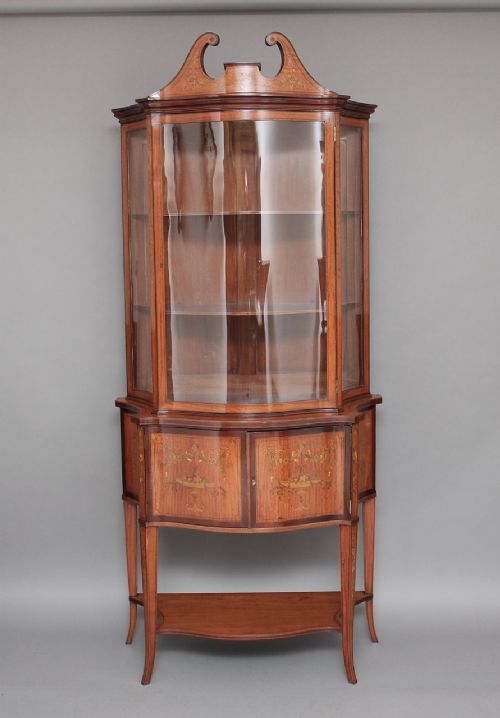

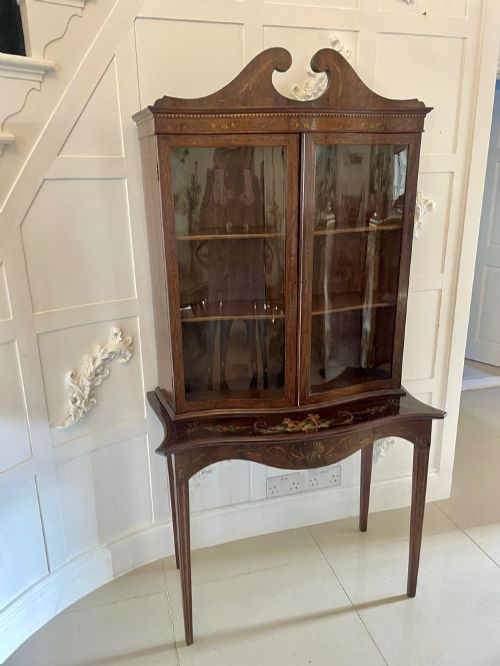
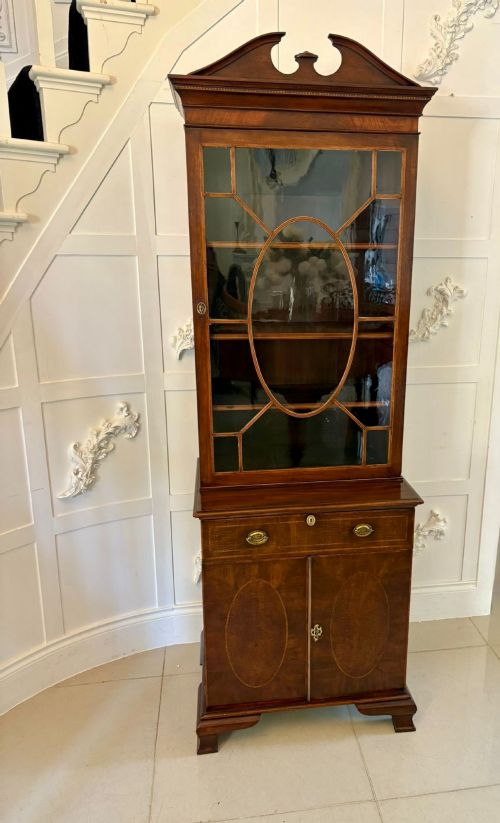
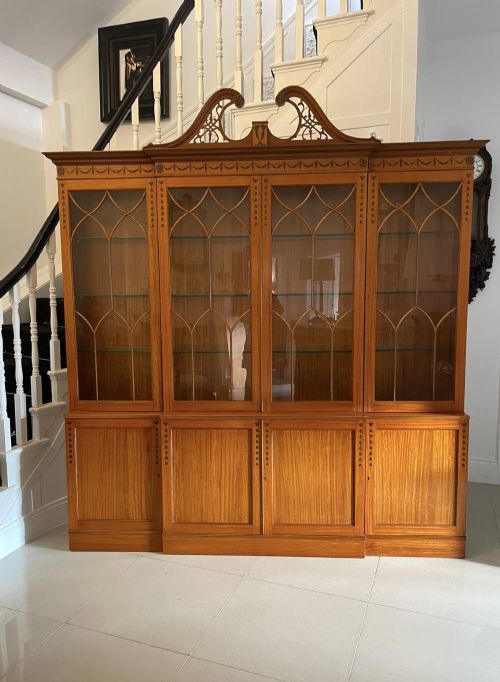
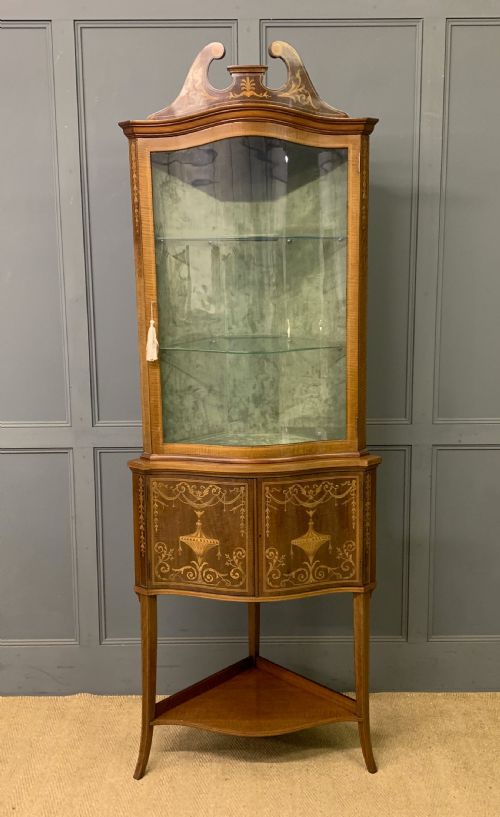
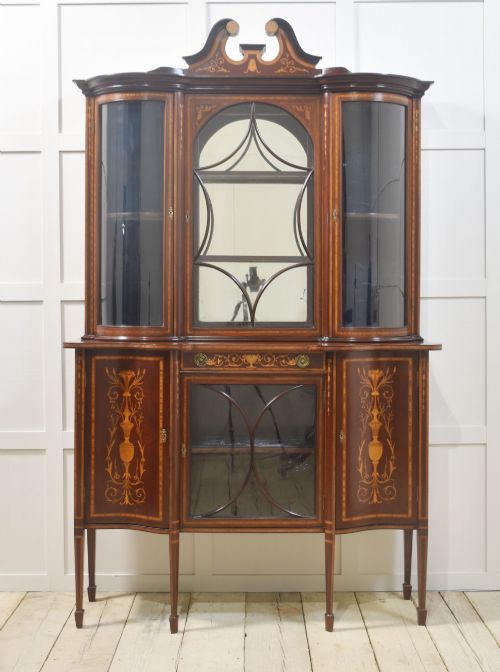
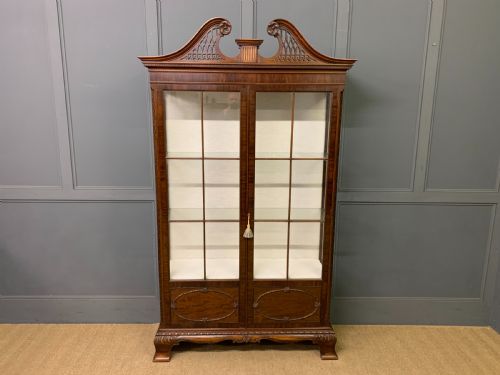


Edwardian Swan Neck Cabinet
An edwardian swan neck cabinet brings refined display space to a room, uniting delicate mahogany frames with classic glazing.
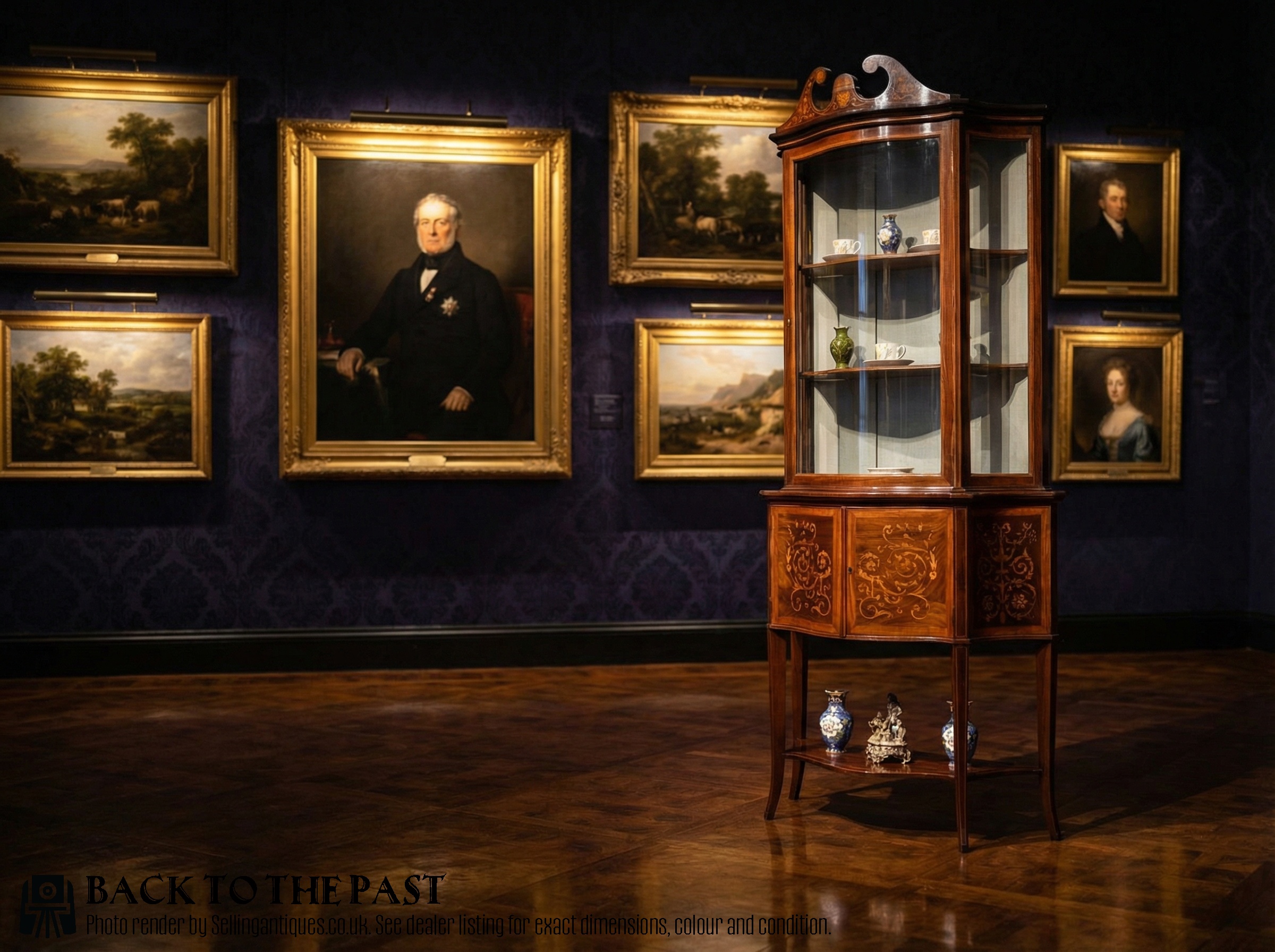
Edwardian Swan Neck Cabinet
An edwardian swan neck cabinet combines display functionality with the polished wood aesthetics characteristic of the early twentieth century. Buyers seeking an edwardian swan neck cabinet typically encounter corner cupboards, hanging display pieces, and upright bookcases finished with fine stringing or marquetry.
The pieces present on this page originate predominantly from the Edwardian era, alongside related nineteenth century revival pieces influenced by Sheraton and Chippendale designs. These forms serve to exhibit china, books, or small collections while anchoring a corner or wall with restrained proportion.
Materials and construction
Cabinet makers built these pieces using solid mahogany and satinwood veneers over secondary timbers, often embellished with boxwood stringing and marquetry details. Brass hardware secures the doors and supports internal shelving, while glass panels protect the interior contents from dust.
Surface finishes rely on traditional polishing techniques that highlight the grain patterns of the primary woods. Painted decoration appears on select satinwood pieces, adding a decorative layer to the structural woodwork.
Edwardian Swan Neck Cabinet Retail Price Guide 2026
Typical asking prices for edwardian swan neck cabinet among the pieces listed under this phrase on Sellingantiques today, from the lower quarter to the upper quarter. They describe what is for sale here now, not the wider market.
Display cabinets and corner cupboards dominate the available forms, accompanied by bureau bookcases.
Distinctions in craftsmanship
Quality rests upon the precision of the marquetry inlay, the crispness of the carved details, and the selection of figured mahogany or satinwood veneers. Pieces exhibiting hand-painted motifs and balanced proportions stand apart from simpler utilitarian cupboards.
Structural integrity, including the fit of the glazed doors and the preservation of original brass fittings, distinguishes superior examples. The execution of revival styles demonstrates the cabinet maker's adherence to Georgian proportions.
Edwards and Roberts·S and H Jewell London
The Edwardian Swan Neck Cabinet Glossary
- Astral glazed
- A term describing doors fitted with narrow wooden bars that divide the glass into geometric panes. This arrangement provides structural support while offering an unobstructed view of the interior shelves.
- Marquetry
- The decorative craft of applying small pieces of veneer to form pictorial or geometric patterns on a wooden surface. Makers utilised contrasting timbers such as boxwood and satinwood to create these designs.
- Serpentine
- A curved shape characterised by a convex centre flanked by concave ends, frequently seen on the fronts of cabinets. This flowing contour requires precise woodworking skill.
- Satinwood
- A durable, lustrous timber native to the tropics, prized for its golden yellow colour and reflective grain. It was heavily utilised during the Sheraton Revival period.
- Breakfront
- A cabinet design where the central section projects forward from the flanking wings. This architectural arrangement adds depth and visual interest to larger bookcases and display pieces.
Edwardian Swan Neck Cabinet: Frequently Asked Questions
Where should I place a corner cabinet?
A corner cabinet fits neatly into unused room angles, making efficient use of space while drawing the eye upward.
These pieces work well in dining rooms or drawing rooms to display porcelain or glassware without dominating the floor area.
How do I care for mahogany furniture?
Keep mahogany pieces away from direct sunlight and heat sources to prevent the wood and delicate veneers from drying out.
Dust regularly with a soft, dry cloth and apply traditional beeswax polish sparingly to maintain the lustre.
How do I distinguish Edwardian from Victorian pieces?
Edwardian furniture generally exhibits lighter proportions, simpler lines, and brighter satinwood or inlaid mahogany surfaces compared to heavier Victorian predecessors.
Revival styles often blur these lines, employing earlier decorative vocabulary within early twentieth century construction methods.