


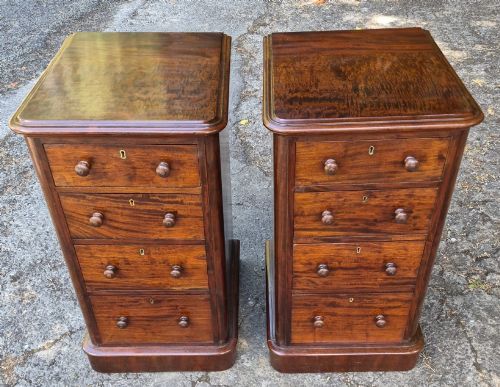
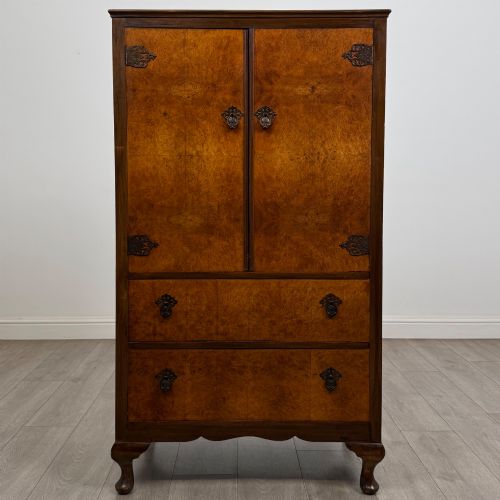
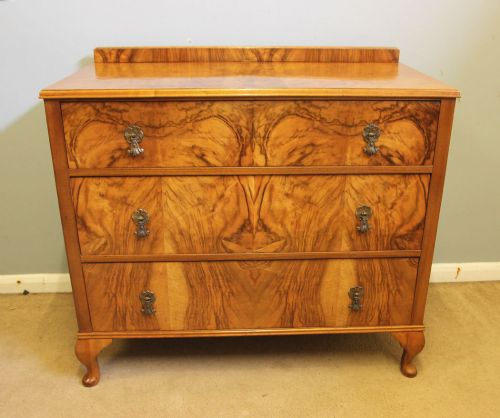
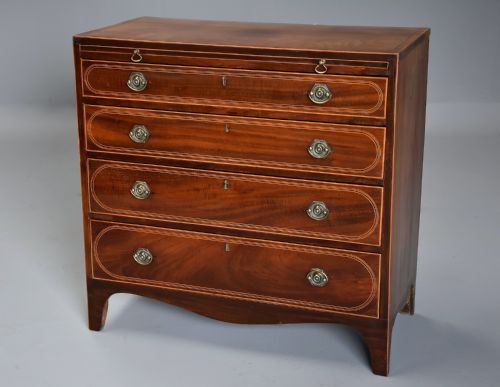
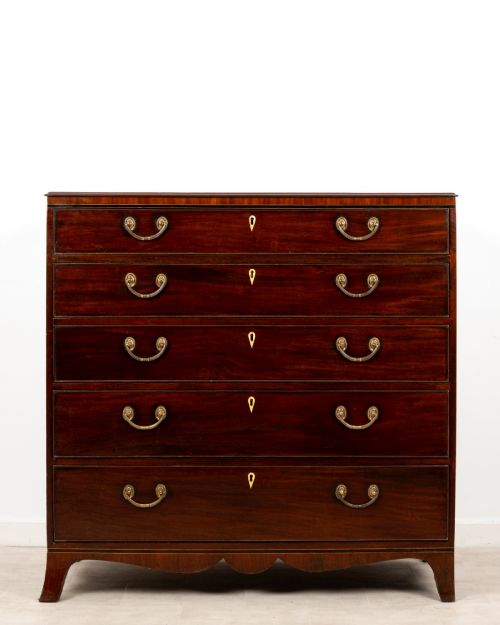

Edwardian Style Tallboy Chest
An edwardian style tallboy chest brings vertical storage and timber grain into a bedroom without dominating the floor space.
Edwardian Style Tallboy Chest
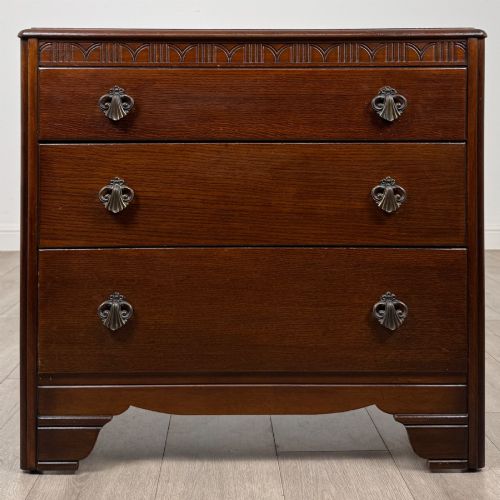
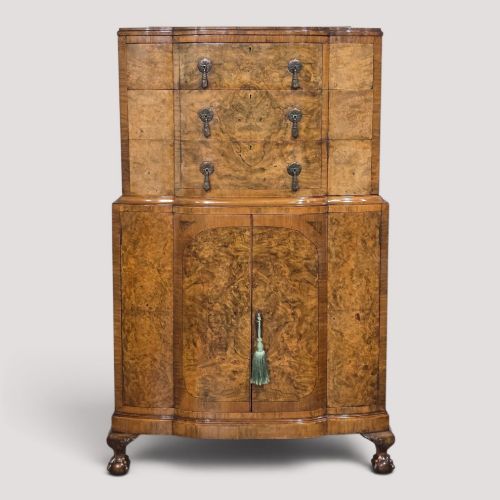
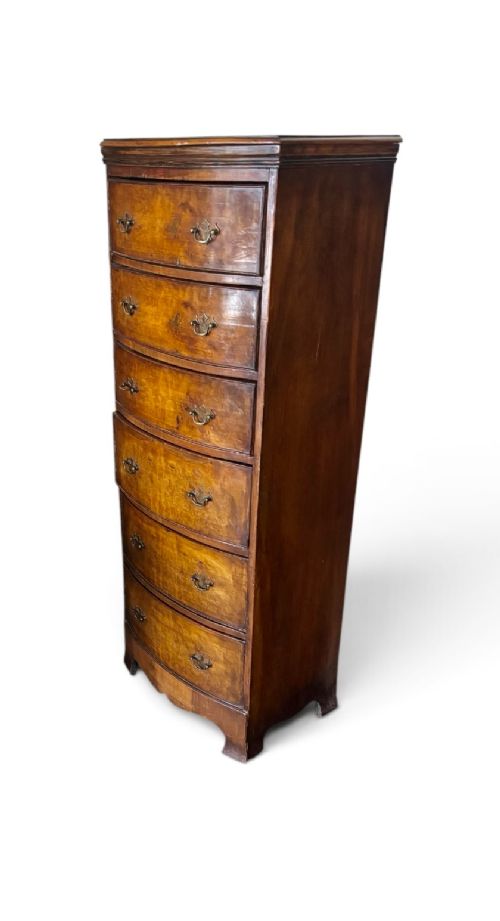
An edwardian style tallboy chest combines the vertical storage of a tall chest with the refined proportions seen across the Edwardian period and revival eras. These pieces typically take the form of tall, narrow drawer configurations or chest on chest designs.
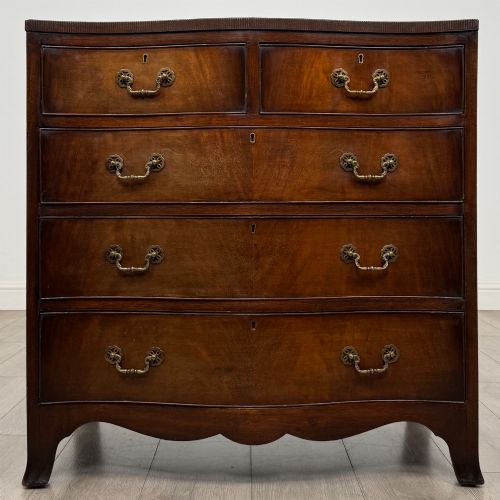
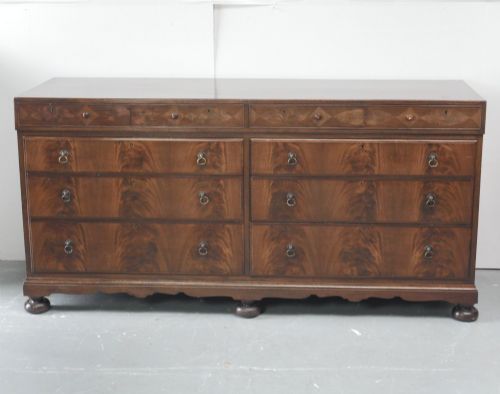
The selections here range from authentic Edwardian pieces to Georgian Revival interpretations and early twentieth century walnut or mahogany variants. Makers working in these styles adopted earlier proportions to suit the bedroom storage needs of the period.
How They Were Made
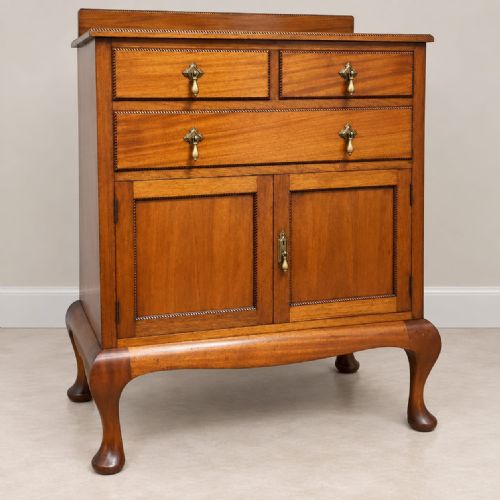
Cabinet makers utilised solid timbers alongside figured veneers such as burr walnut, flame mahogany, and satinwood, often applying satinwood inlay to accent drawer borders and cornices. Oak and yew wood also appear in specific craft traditions.
Construction relied on traditional joinery methods, housing multiple drawers within a sturdy carcase whilst supporting the upper sections with moulding details like caddy tops.
Listings feature woods including oak, mahogany, walnut, burr walnut, satinwood, and yew wood across Edwardian, Victorian, and Georgian Revival periods.
What Varies in Quality
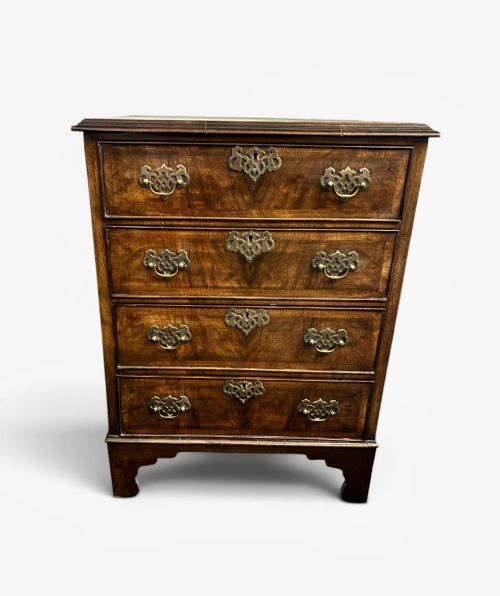
The visual strength of an edwardian style tallboy chest depends heavily on the choice of timber veneer symmetry and the crispness of any inlay work. Matched grain patterns across multiple drawer fronts indicate deliberate material selection by the maker.
Proportion and execution separate standard commercial items from finer workshop pieces. Refined mouldings, well-fitted drawers, and intact brass hardware elevate the overall presence of the cabinet.
Whytock & Reid·Druce & Co·Waring & Gillow·Edward Barnsley
The Edwardian Style Tallboy Chest Glossary
- Tallboy
- A tall chest of drawers, often built as a single tall carcase or as a chest on chest arrangement. This form maximises vertical storage capacity while maintaining a compact footprint.
- Caddy top
- A raised, moulded tabletop edge resembling the lid of a tea caddy. This detail frequently caps fine Georgian Revival and Edwardian case pieces.
- Inlay
- Pieces of contrasting timber or satinwood fitted flush into the primary wood surface to create decorative borders. It defines many Sheraton Revival and Edwardian designs.
- Bow front
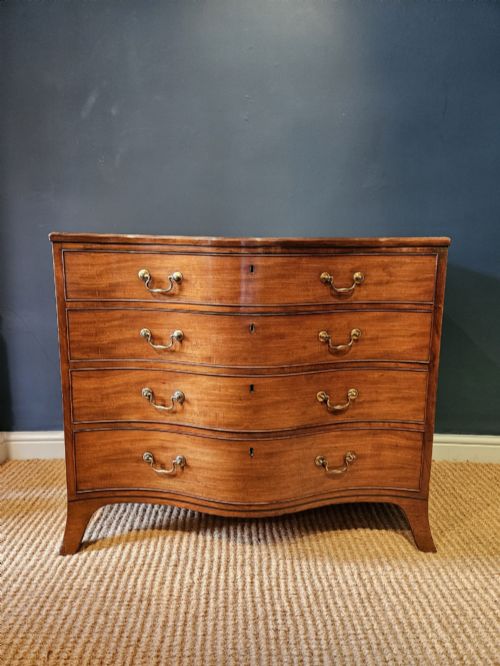
- A convex, curved front to a chest of drawers that softens the rectangular profile of the cabinet. It requires precise woodworking to shape timber or veneer to the curve.
Edwardian Style Tallboy Chest: Frequently Asked Questions
Where does an edwardian style tallboy chest fit best?
These tall cabinets suit bedrooms and dressing rooms where floor space is limited but vertical storage capacity is required. Their narrow proportions allow them to sit comfortably in alcoves or beside larger furniture.
Matching the timber tone with existing bedroom furniture helps the piece anchor the room without overpowering the surrounding layout.
How do I distinguish Edwardian pieces from earlier revivals?
Authentic Edwardian pieces date from around the early twentieth century, utilising lighter timbers, satinwood inlay, and Edwardian hardware conventions. Revival pieces often borrow heavier Georgian or Chippendale proportions while retaining early twentieth century construction methods.
Examining the secondary timbers inside the drawer linings and the style of the internal drawer construction often clarifies the precise era of manufacture.
What is the difference between a tallboy and a standard chest?
A tallboy offers a greater number of stacked drawers within a taller, narrower frame than a standard low chest of drawers. Some configurations stack one cabinet directly on top of another.
This vertical rise provides significantly more storage for folded linens or garments while occupying a minimal amount of wall and floor space.
How should I care for figured walnut and mahogany surfaces?
Polishing timber surfaces with a traditional beeswax maintains the natural lustre of mahogany, walnut, and satinwood veneers without building up heavy synthetic layers. Keeping the wood away from direct heat sources prevents timber shrinkage and veneer lifting.
Dusting regularly with a soft, dry cloth protects the delicate grain patterns and inlay work from abrasive particles.