
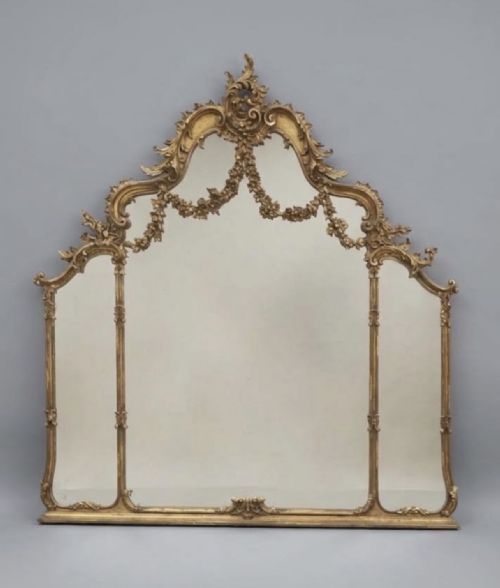
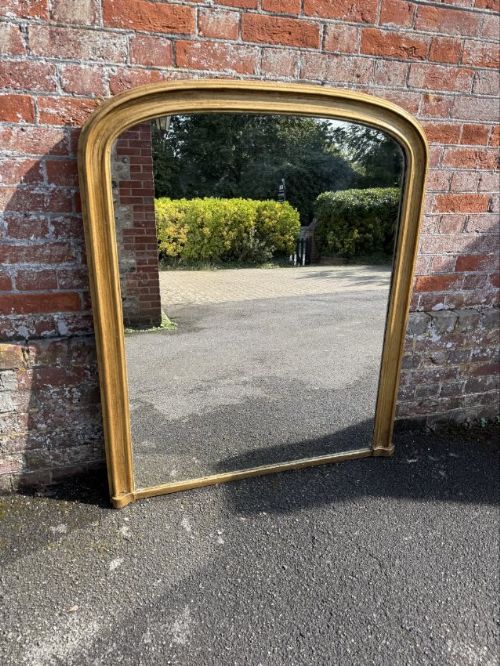


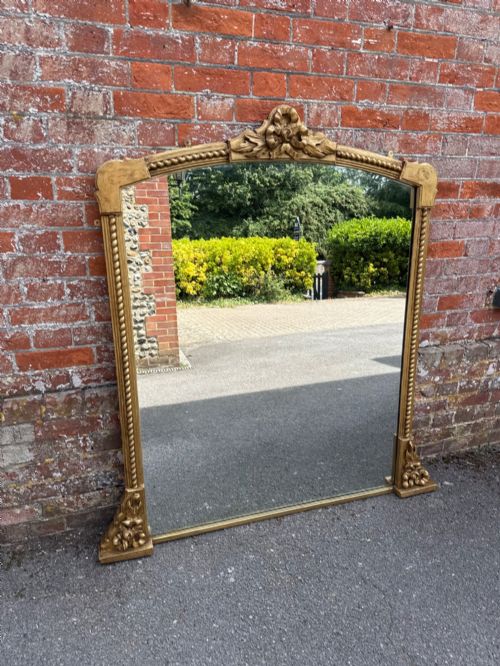
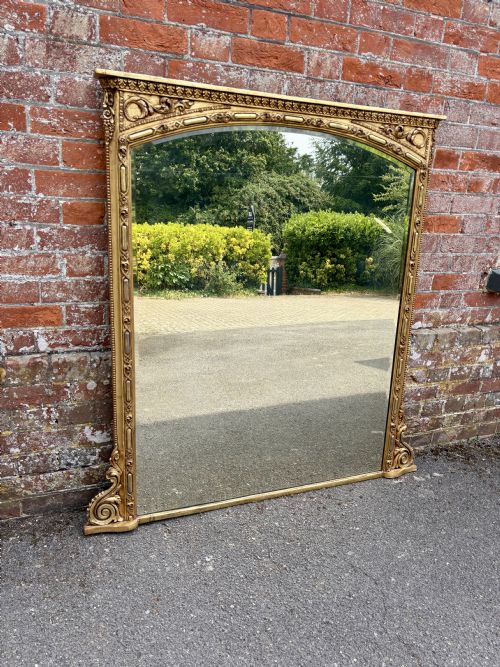
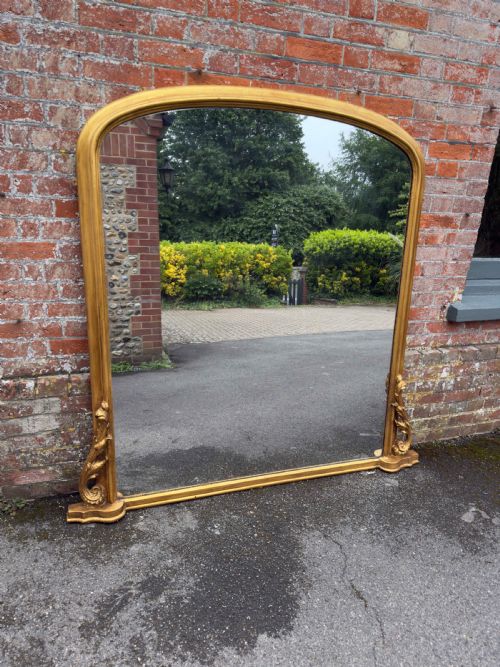

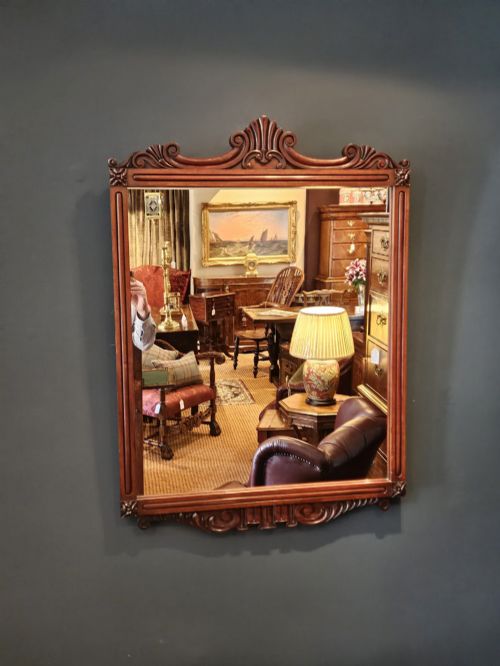

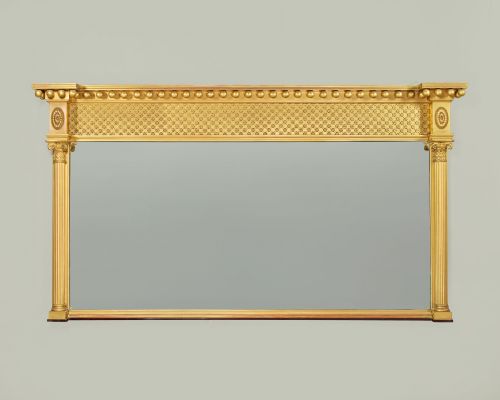


Edwardian Style Overmantel Mirror
An edwardian style overmantel mirror brings architectural presence to a fireplace, offering substantial glass framed in period detail.
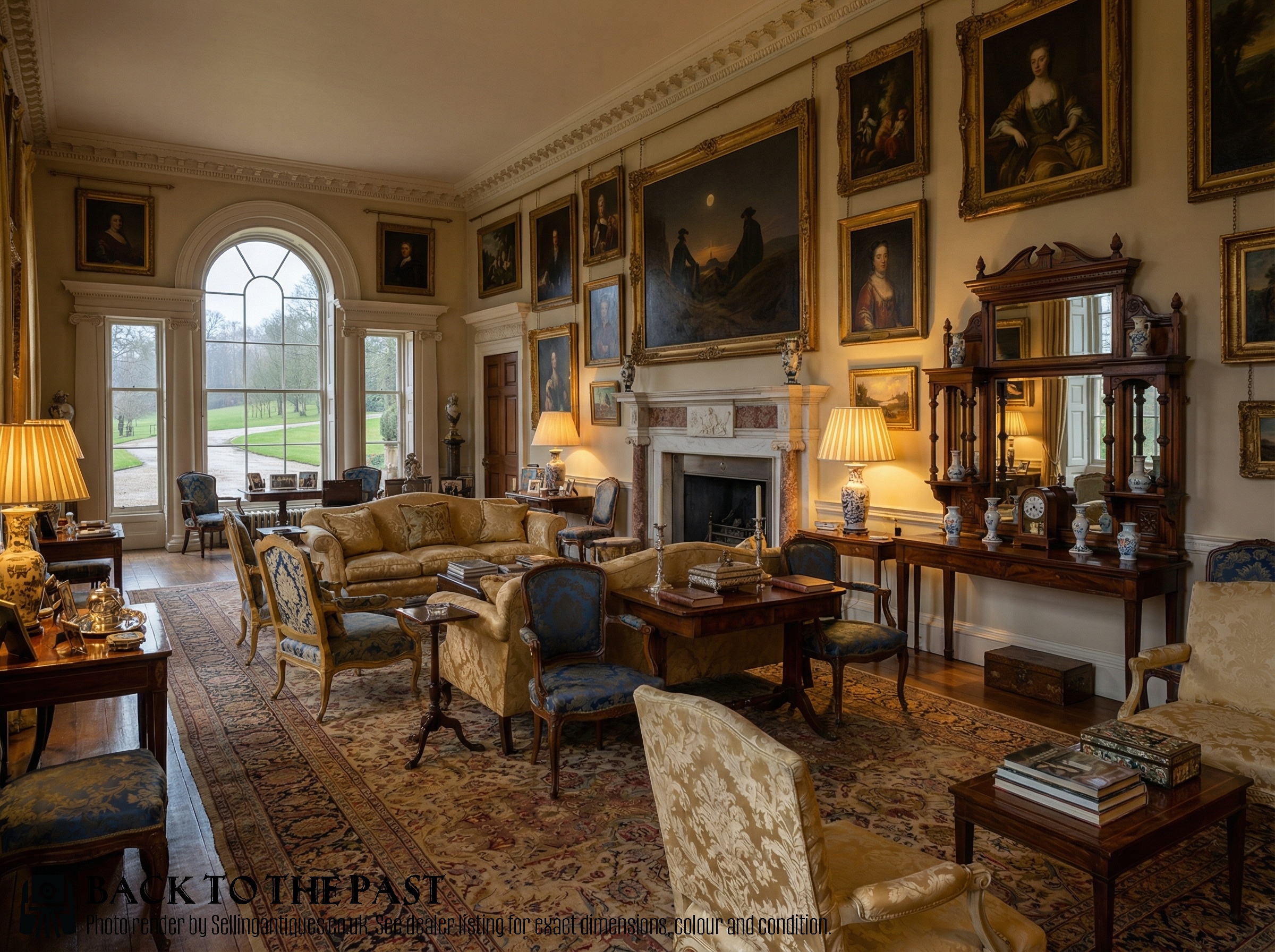
Edwardian Style Overmantel Mirror
An edwardian style overmantel mirror typically spans a generous width designed to sit above a mantelpiece, drawing the eye upward with arched, shaped, or rectangular tops. The selection includes pieces spanning from the Victorian and Edwardian eras into the early twentieth century, reflecting varied revivals of past aesthetics.
Makers and designers drew upon established vocabularies, resulting in pieces shaped by Adam Revival, Chinese Chippendale, Regency Revival, and Moorish influences. Alongside true Edwardian examples, nineteenth-century English and French chateau styles provide the core architectural shapes found on this page.
The primary forms balance domestic utility with decorative gravitas, functioning as focal points in reception rooms. Whether finished with a simple cushion frame or elaborate cresting, each object relates directly to the proportions of period hearths.
Materials and Technique
Carved wood provides the structural foundation for the most elaborate frames, often paired with composition or gesso layers moulded into ornate foliage and classical motifs. Artisans applied gold leaf or liquid gilding over these surfaces to achieve a luminous reflective quality.
Mahogany and oak appear in solid timber constructions, sometimes painted or parcel-gilded to accentuate carved mouldings. Mirror glass is set within these frames, supported by traditional backboards that protect the silvering.
Design influences span Adam Revival, Chinese Chippendale, and Moorish styles applied to standard wall and overmantel formats.
Craftsmanship and Detailing
The crispness of the carved wood and the depth of the gesso ornamentation distinguish finer examples from simpler production. Superior pieces exhibit hand-finished detailing in the scrolls and laurel leaves rather than uniform cast composition.
The integrity of the original gilding and the preservation of the mirror plate determine the visual weight of the object. Heavier framing timbers and substantial wooden backing boards indicate robust original construction.
Liberty & Co
The Edwardian Style Overmantel Mirror Glossary
- Overmantel
- A large mirror specifically proportioned to hang on the wall directly above a fireplace mantel. These pieces were historically designed to reflect light from the hearth into the room.
- Gesso
- A plaster-like mixture applied to wood frames and carved or moulded into decorative reliefs before gilding. It allows for intricate surface ornamentation.
- Giltwood
- Timber that has been coated with gold leaf or metallic paint. This finish creates a bright, reflective surface popular in formal period interiors.
- Chinoiseire
- European decorative art influenced by Chinese artistic traditions. It often incorporates painted motifs and asymmetrical landscapes.
Edwardian Style Overmantel Mirror: Frequently Asked Questions
How do I hang a heavy overmantel mirror?
These heavy frames require secure fixing directly into wall studs or masonry using appropriate brackets that match the weight of the timber and glass.
Professional installation ensures the substantial load is distributed evenly across the frame structure.
Where should an overmantel mirror be placed?
Traditionally hung above a fireplace, an overmantel mirror can also serve as a focal point on any large blank wall in a reception room.
Placement should consider the reflection of natural light from windows to brighten the interior space.
How do I identify an Edwardian mirror?
Edwardian mirrors often feature lighter neoclassical revivals, such as Adam style motifs, combined with crisp machine-sawn backing timbers.
Stylistic cues frequently lean towards refined symmetry and restrained ornamentation compared to heavier Victorian predecessors.
Can I clean the original mirror glass?
Original mirror glass should be cleaned gently with a soft microfibre cloth and mild solution, avoiding harsh ammonia-based chemicals that might damage the silvering.
Care must be taken around the edges where the reflective backing is most vulnerable to moisture.