
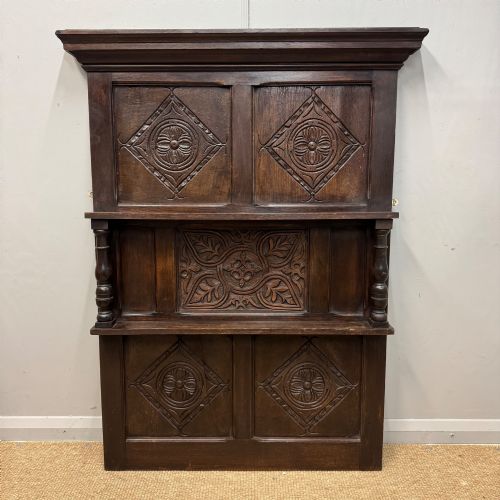


Victorian Wooden Overmantel Shelf
A victorian wooden overmantel shelf brings architectural weight to a chimney breast, offering a display ledge above the hearth.
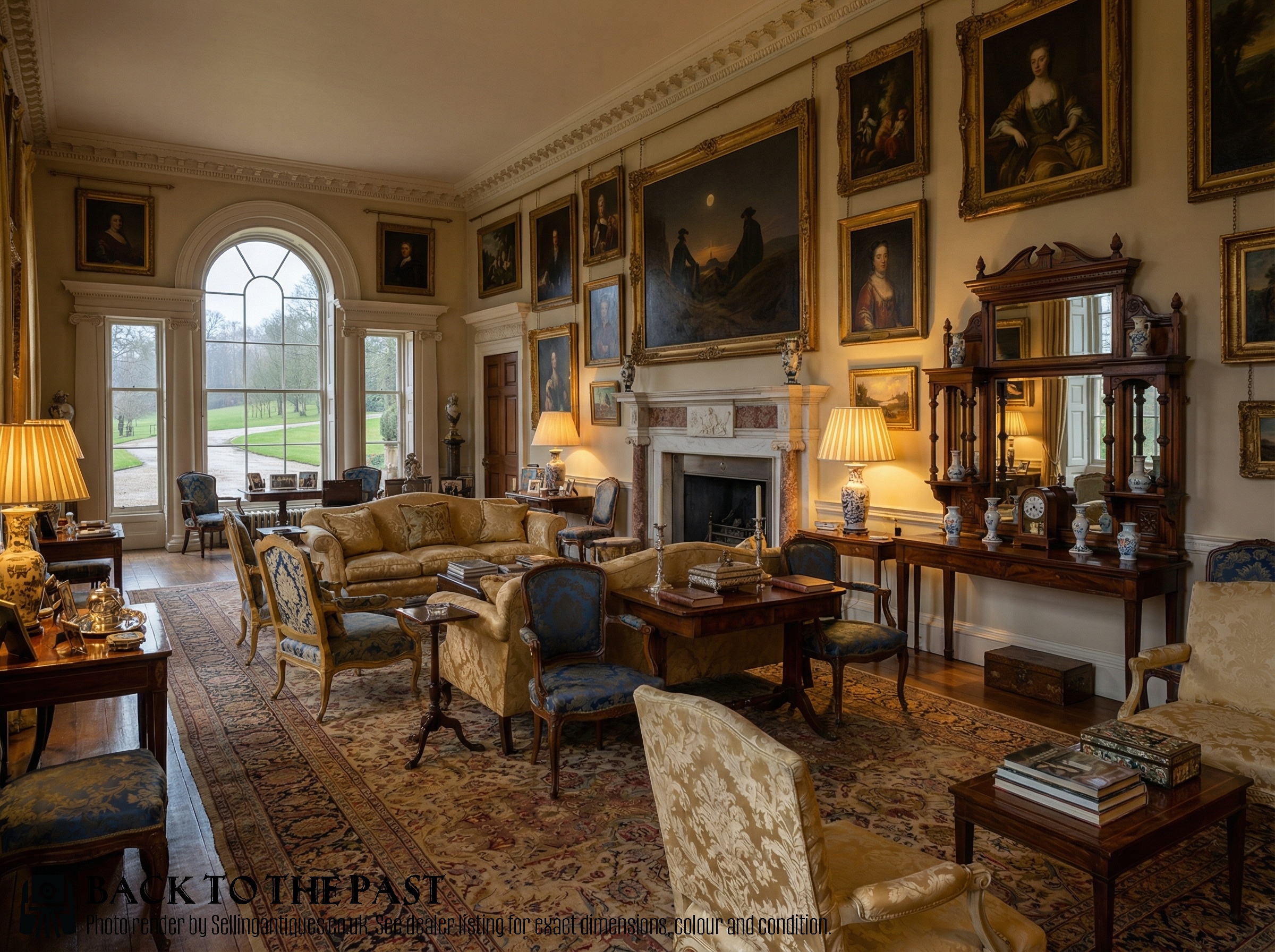
Victorian Wooden Overmantel Shelf
A victorian wooden overmantel shelf sits above a fireplace, anchoring the room with a substantial timber frame and integrated mirror glass. You will most frequently meet solid oak and mahogany pieces from the nineteenth century, often carved or fitted with internal shelves.
The form spans simple architectural panels and grander wall mirrors with gilded brackets. Styles on this page range from plain William IV frames to decorative Moorish Revival and Arts and Crafts interpretations.
How They Were Made
Cabinetmakers constructed these frames using dense hardwoods like oak, mahogany, and rosewood, frequently incorporating boxwood stringing and applied gesso ornamentation. Many examples feature integrated mirrored glass plates secured within deep timber rebates.
Surface decoration relies on hand carving, dark polishing, and strategic gilding to catch the light of the room. Brass fixings and specialised brackets support the heavy overmantel structures against the wall.
The design styles recorded span William IV, Victorian Gothic Revival, Moorish Revival, and Arts and Crafts.
What Varies in Quality
The caliber of an overmantel rests on the selection of timber and the depth of the carving. Finely figured mahogany and quarter-sawn oak demonstrate superior material selection compared to plain secondary woods.
Design ambition separates standard mirrors from exceptional works. Pieces featuring complex inlay, integrated brackets, and distinct stylistic details such as Moorish Revival fretwork or Arts and Crafts carving represent the higher tier of production.
Liberty & Co
The Victorian Wooden Overmantel Shelf Glossary
- Overmantel
- A large mirror or shelf designed to be hung specifically above a mantelpiece. These frames were central to nineteenth-century interior decoration.
- Gesso
- A plaster-like material applied to wooden frames as a base for gilding or painting. It allows for crisp, moulded surface enrichment.
- Boxwood
- A dense, pale wood frequently used for contrasting inlay and fine stringing lines on dark cabinet furniture. It provides sharp linear detail.
- Moorish Revival
- An architectural and decorative style drawing on Islamic design motifs, popular in late nineteenth-century British interiors through retailers like Liberty.
Victorian Wooden Overmantel Shelf: Frequently Asked Questions
Where should an overmantel be placed?
The traditional placement is directly centred above a drawing room or dining room fireplace chimney breast, where the frame balances the hearth below.
They also function effectively on large blank walls where the integrated mirror plate can reflect natural light across the room.
How do I clean antique mirror glass?
Wipe the glass gently with a soft cloth dampened slightly with distilled water, avoiding harsh commercial chemical sprays that can damage the surrounding wooden frame.
Take care near the edges of the mirror plate where the historic silvering is delicate and vulnerable to moisture penetration.
Are these shelves deep enough for display?
Most overmantel ledges provide a shallow platform intended for small decorative objects, framed photographs, or small ceramics rather than heavy books.
The depth varies according to the architectural style of the specific frame, with larger nineteenth-century examples offering slightly more substantial display space.