
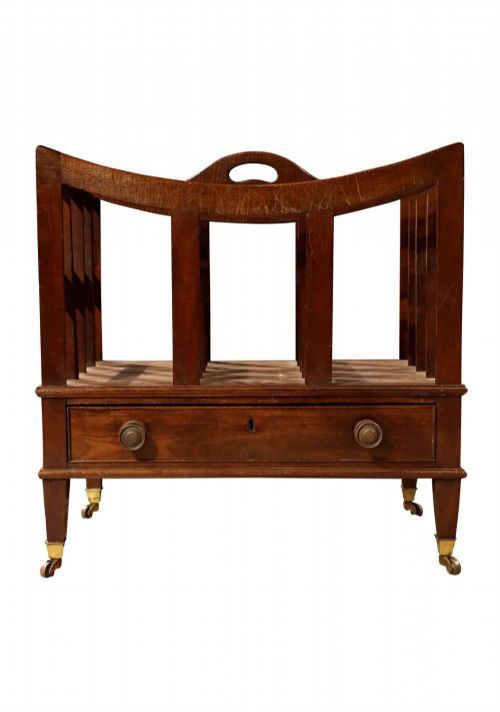


Edwardian Style Music Stand
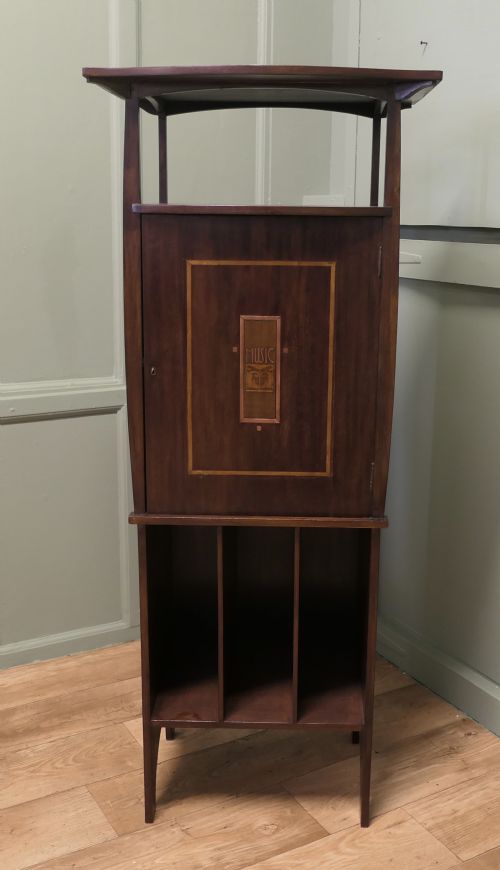
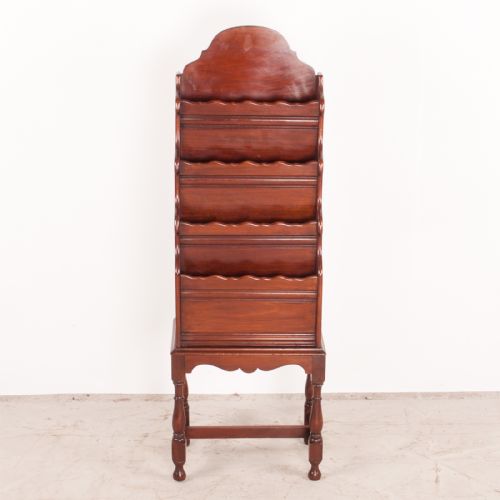
These Edwardian style music stand pieces are sturdy timber cabinets and racks designed to hold sheet music.
Edwardian Style Music Stand
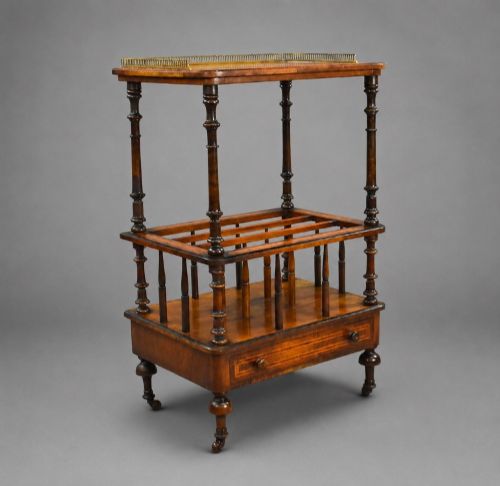
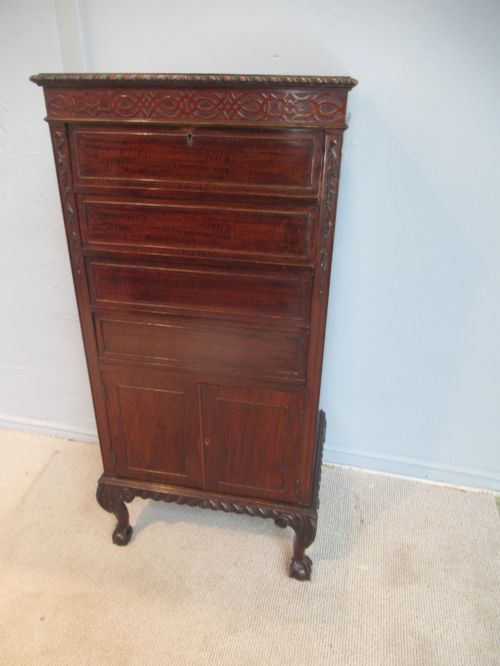
An edwardian style music stand encompasses timber cabinets, canterburys, and racks designed to organise folios and papers. You are most likely to meet mahogany examples from the Edwardian period or the 1920s.
The selection includes pieces with inlaid satinwood, boxwood, and distinct revival styles ranging from Arts and Crafts to Georgian Revival. These items served domestic musical pursuits and paper storage in period homes.
How they were made
Maker construction relies heavily on solid mahogany and burr walnut, frequently ornamented with delicate wood inlay and satinwood banding. Brass fittings appear on drawers and handles.
Joinery includes fitted drawers, fall fronts, and slatted partitions for holding sheets and magazines securely.
Some cabinets possess fall fronts that drop down smoothly, letting you hide your sheet music before unexpected callers arrive.
What varies in quality
Quality rests on timber selection and the precision of the wood inlay, where contrasting satinwood and boxwood elevate simpler carcasses. Burr walnut variations show more intricate grain patterning than standard mahogany builds.
Refined detailing in revival styles, such as Arts and Crafts or Chippendale motifs, distinguishes workshop pieces from simpler commercial output.
GM Elwood for JS Henry·Liberty
The Edwardian Style Music Stand Glossary
- Canterbury
- A low stand with divisions for holding sheet music, folios or books, usually fitted with a drawer below. This form dates back to the late eighteenth century and remained popular through the Edwardian era.
- Fall Front
- A hinged panel that drops forward to reveal interior shelves or storage compartments for papers. It provides easy access to music cabinets.
- Inlay
- A technique where pieces of contrasting timber such as satinwood or boxwood are inserted into the main surface to form decorative patterns. This ornament defines many Edwardian pieces.
- Folio Cabinet
- A tall or low piece designed specifically to store large loose sheets of paper, music, or prints. They often feature multiple shallow drawers or vertical compartments.
Edwardian Style Music Stand: Frequently Asked Questions
What is a music cabinet used for?
Music cabinets provided dedicated storage for sheet music, folios, and scores in period sitting rooms and parlours. Their internal compartments kept paper sorted and flat.
Many designs also incorporated lower drawers for smaller accessories or writing materials, making them versatile furniture for the home.
How do you date an Edwardian music stand?
Dating relies on timber choices, characteristic revival styles, and construction methods. Edwardian examples often feature lighter mahogany with subtle boxwood or satinwood inlay.
Earlier Victorian iterations tend to use heavier burr walnut, while 1920s pieces reflect simplified post-war cabinet making.
Are these stands suitable for modern magazines?
Canterburys and open racks accommodate contemporary magazines and daily newspapers quite naturally. The vertical partitions keep publications upright and tidy.
Enclosed music cabinets work well for storing notebooks, documents, or flat files in a study.
What timber was most commonly used?
Mahogany remains the dominant timber across these listings, appearing in both plain and inlaid variants. Walnut and burr walnut also feature prominently in earlier or more decorative pieces.
Details often include contrasting stringing in satinwood and boxwood to accent the primary wood.