

Edwardian Style Dining Seats
Edwardian style dining seats are practical seating options from the early twentieth century and revival periods that bring historical character to modern dining spaces.
Edwardian Style Dining Seats
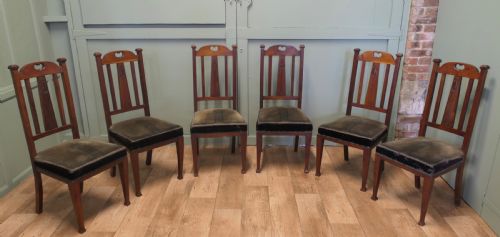
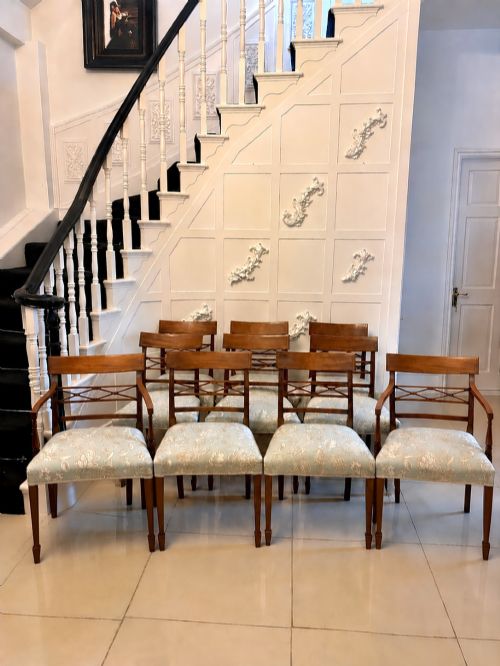
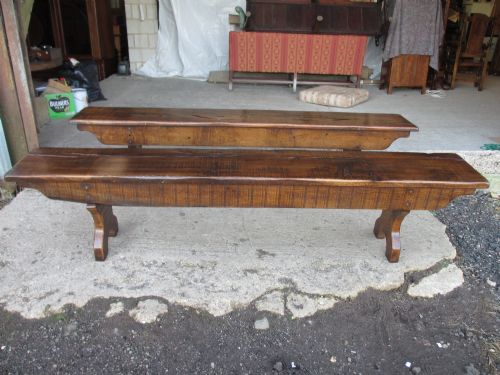
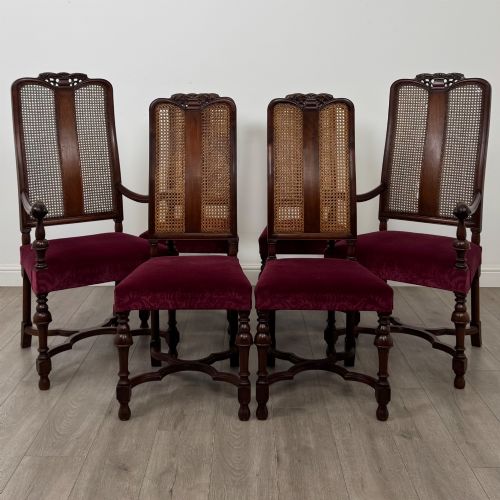
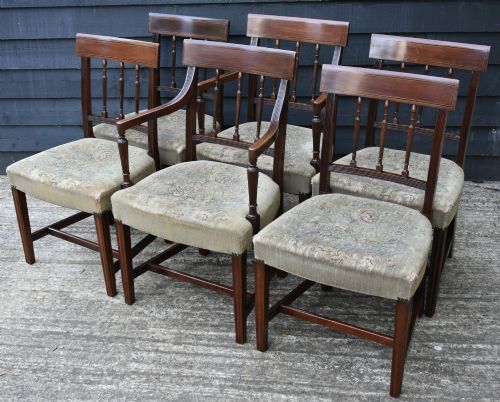
When you search for edwardian style dining seats, you encounter a variety of forms including individual dining chairs, carver armchairs, side chairs, and occasionally benches or dining tables. The pieces span periods from the nineteenth century through the 1930s, with a strong emphasis on Edwardian production and various historical revivals.
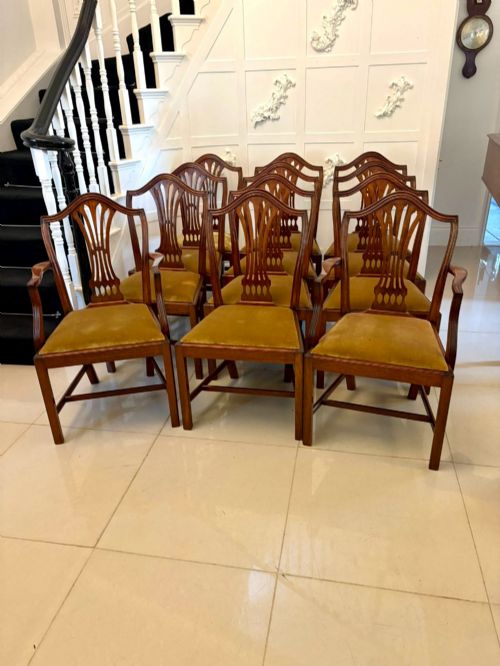
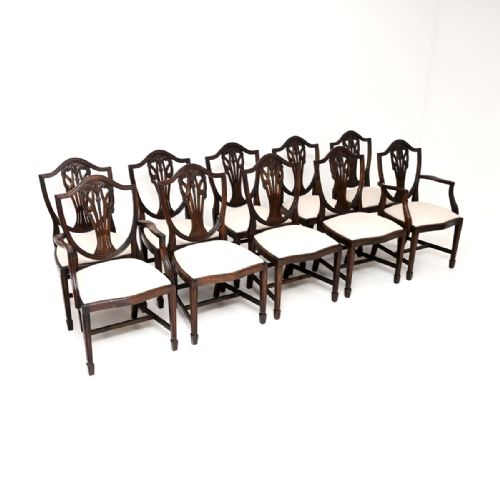
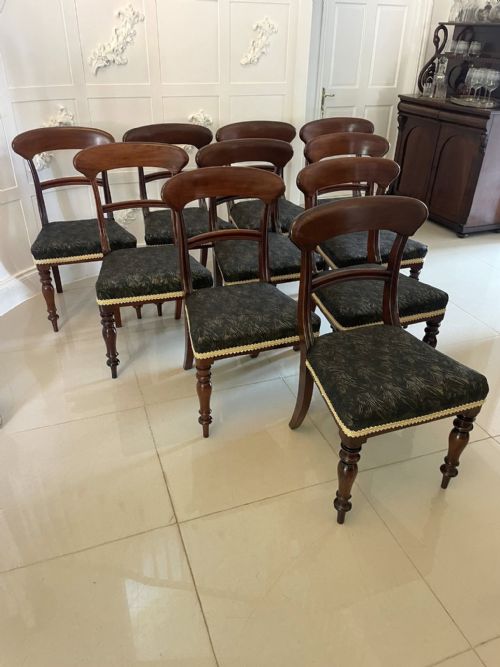
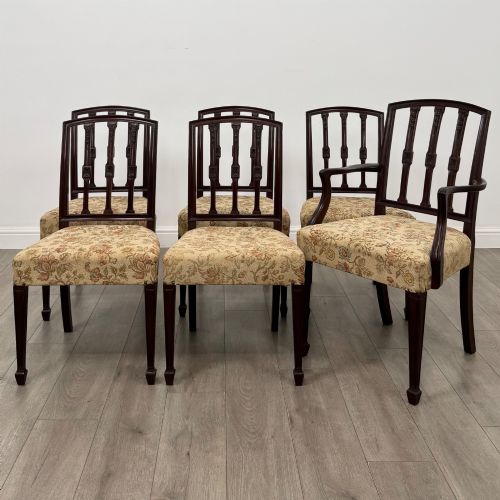
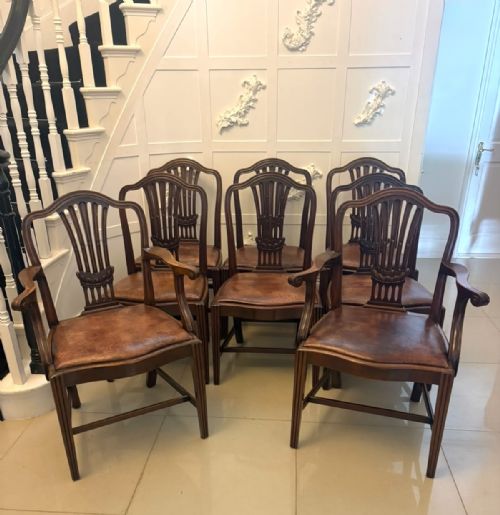
Sets are common, ranging from small groups of four up to extensive sets of ten or twelve chairs, frequently paired with carver armchairs for the heads of the table. The designs draw heavily on earlier cabinet-making traditions, reinterpreting Georgian, Queen Anne, Chippendale, and Hepplewhite aesthetics for twentieth-century homes.
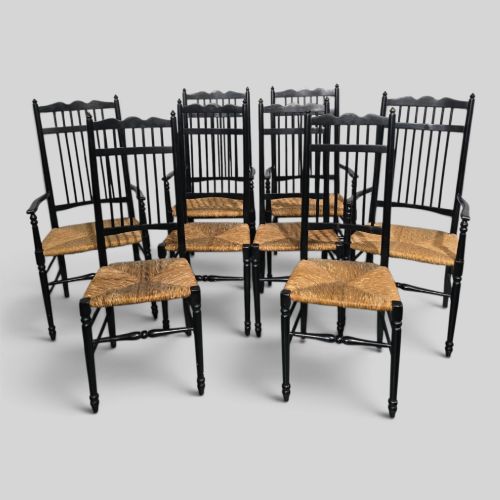
Oak and mahogany dominate the offerings, appearing alongside walnut, maple, and bentwood in forms that stretch from rustic Arts and Crafts models to formal revival dining chairs. Buyers select these seats to anchor a dining room with genuine period timber and established craftsmanship.
Materials and Construction
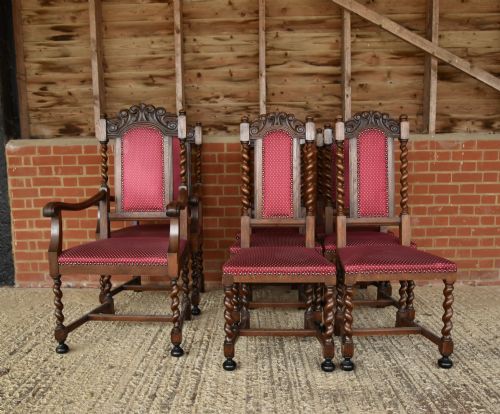
Makers relied primarily on solid timbers such as mahogany, oak, and walnut to build robust chair frames that could withstand daily use around the dining table. Woods were selected for grain pattern and strength, often shaped into curved backs, barley twist legs, or solid trestle ends.
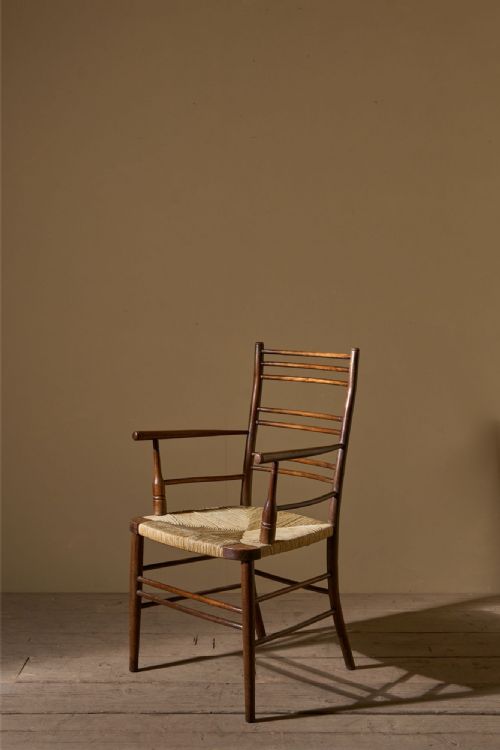
Upholstered elements utilised traditional materials including fabric, leather, velvet, and natural rush for seating pads. Brass fittings and detailed carving work completed the construction, uniting structural joinery with decorative revival styles.
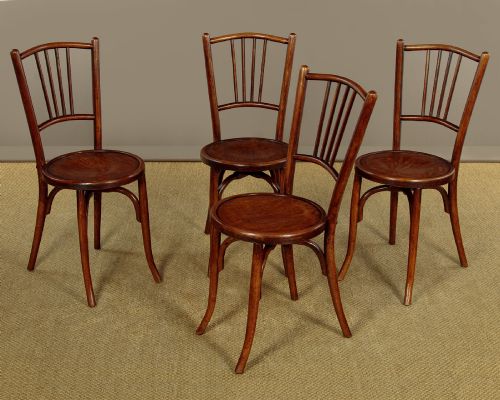
Bentwood bistro chairs introduce a Parisian cafe aesthetic directly alongside formal Edwardian mahogany dining sets.
Assessing Quality and Execution
Quality separates standard production from finer workshop output through the crispness of carved details, the selection of figured timber veneers, and the integrity of the underlying joinery. Superior sets display uniform grain matching across multiple chairs and robust frame construction that remains stable over decades of sitting.
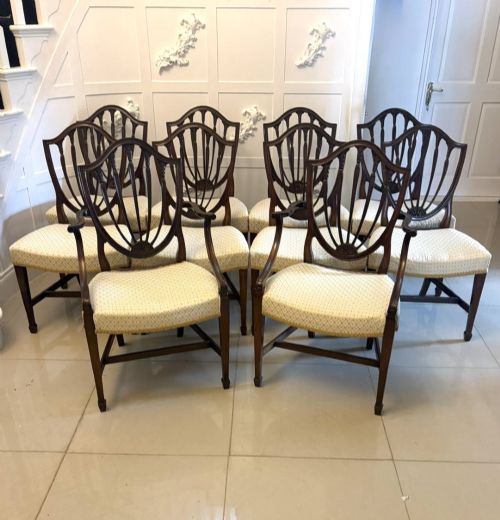
The sophistication of the stylistic revival also dictates standing, with detailed hand-carved shield backs or precise Chinese Chippendale fretwork representing higher artisanal input than simpler vernacular forms.
Charles Tozer·Maple and Co·Codina
The Edwardian Style Dining Seats Glossary
- Carver
- An armchair designed with armrests, typically placed at the head of a dining table to match a set of side chairs. These often formed part of larger dining seat sets.
- Shield back
- A chair back shaped in the outline of a heraldic shield, popularised by eighteenth-century designers and revived during the Edwardian period in mahogany.
- Barley twist
- A decorative turning technique resembling a twisted rope, commonly carved into the wooden legs and stretchers of oak dining chairs.
- Arts and Crafts
- A design movement favouring solid construction, visible joinery, and honest materials like oak and rush over mass-produced ornamentation.
- Hepplewhite revival
- A style reproducing the light, elegant chair designs associated with George Hepplewhite, featuring tapered legs and delicate back splats.
Edwardian Style Dining Seats: Frequently Asked Questions
How do I choose the right set size?
Consider the length of your dining table and the frequency of hosting guests to determine how many chairs are required. Sets appear in counts ranging from four up to twelve pieces, often including two carvers.
Matching the chair scale and arm height to the dimensions of the table ensures comfortable clearance and proper proportions within the room.
What is the difference between a side chair and a carver?
Side chairs are built without armrests to allow multiple seats to fit compactly along the sides of a dining table. Carver chairs feature integrated arms and generally sit at either end of the table.
Pets and larger sets usually combine matching side chairs with a pair of carvers for a balanced arrangement.
How do I care for antique wood and leather seats?
Maintain timber frames by dusting regularly with a soft cloth and applying appropriate wax polish sparingly to preserve the finish. Leather and fabric upholstery require gentle cleaning suited to their specific textile type.
Keeping dining seats away from direct heat sources and strong sunlight prevents the wood from drying out and protects the upholstery.
How can I identify Edwardian revival styles?
Edwardian revival furniture adapts earlier aesthetic periods such as Chippendale, Queen Anne, and Hepplewhite using early twentieth-century manufacturing techniques. Look at the timber finish, construction methods, and hardware to determine the era.
Details like shield backs, carved splats, and specific wood selections often point directly to revival workmanship from the 1900s to the 1930s.