




Edwardian Sterling Dining Decor
Edwardian sterling dining decor brings silver elegance to the table through napkin rings, menu holders, and candlesticks crafted to enhance formal meals.
Edwardian Sterling Dining Decor
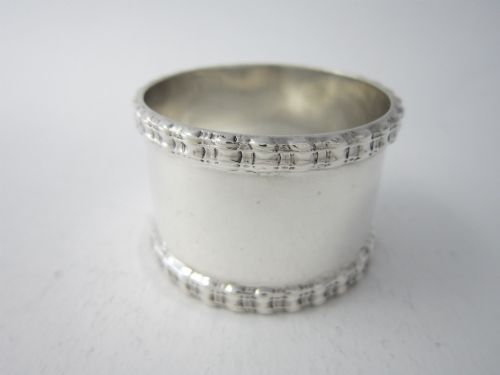
Edwardian sterling dining decor comprises small silver table accessories designed for formal entertaining during the early twentieth century. Napkin rings, menu holders, place card holders, and candlesticks form the core of what collectors find under this heading. The objects reflect a period of refined domestic display where matching sets and novel figural pieces graced the dining room.
Materials and Construction
These pieces rely on sterling silver as the primary medium, shaped through casting, piercing, and hammering techniques. Workshops utilised traditional silversmithing methods to create holloware items such as napkin rings and candlesticks, often adding weighted bases where stability was required. Details on figural menu holders and decorative centrepieces demonstrate skilled modelling and hand-finishing.
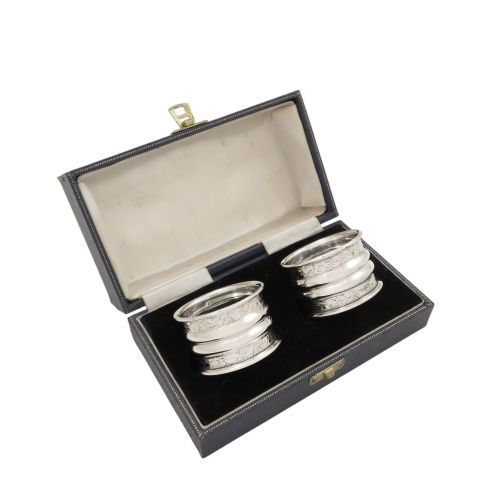
Interior elements and presentation cases incorporate secondary materials including leatherette, velvet, and silk to house boxed silver sets. The combination of solid sterling silver with delicate textile linings ensures both durability and tactile contrast. Pierced work and engraved detailing showcase the precise hand tool methods typical of early twentieth-century British silversmiths.
Edwardian Sterling Dining Decor Retail Price Guide 2026
Typical asking prices for edwardian sterling dining decor among the pieces listed under this phrase on Sellingantiques today, from the lower quarter to the upper quarter. They describe what is for sale here now, not the wider market.
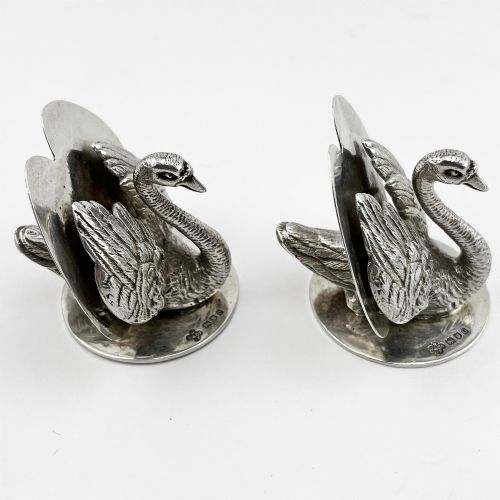
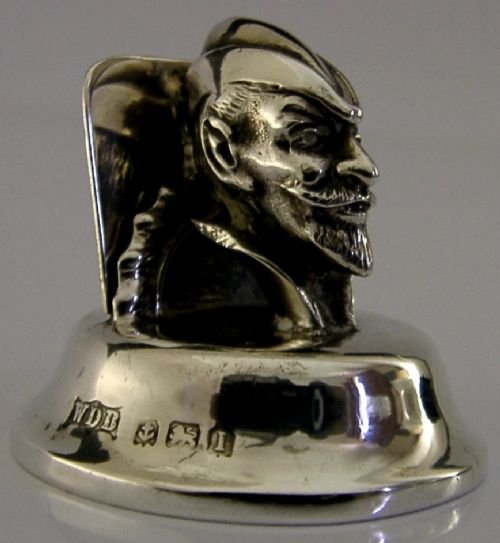
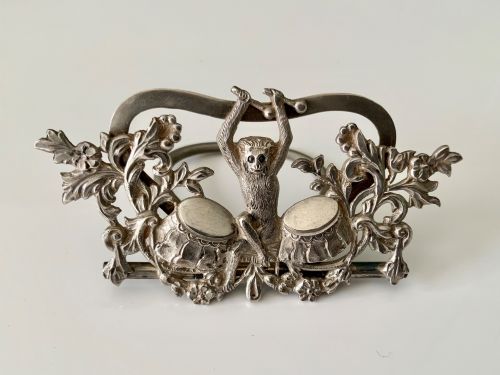
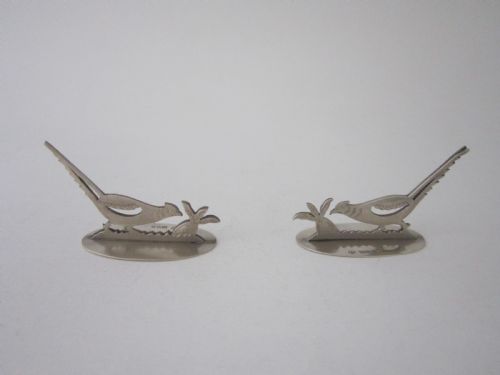
A monkey playing drums joins Robin Hood and swans as unexpected figures holding up dinner menus.
Assessing Quality and Execution
Quality in this category rests on the crispness of casting and the weight of the silver used in construction. Substantial gauge metal prevents denting in daily use, while sharply defined figural subjects distinguish superior menu holders and napkin rings from simpler production pieces. Maker attribution also plays a role, as output from established firms shows superior finishing.
The integration of decorative styles, whether restrained Edwardian Neoclassical lines or bold Arts and Crafts hammering, dictates the aesthetic success of an object. Pierced centrepieces and pairs of candlesticks achieve distinction through balanced proportions and clean piercing work. Presentation boxing and original fitted linings further elevate the standing of matched sets.
Mappin & Webb·Thomas Bradbury & Sons Ltd·Guild of Handicraft·Liberty·James Dixon & Sons
The Edwardian Sterling Dining Decor Glossary
- Sterling silver
- An alloy of silver containing 92.5 percent pure silver and 7.5 percent other metals, usually copper. This standard composition provides the necessary hardness for functional dining accessories while maintaining a bright metallic lustre.
- Hallmark
- An official mark stamped on precious metals in Britain to indicate the standard of purity, the assay office, and the date letter. These stamps offer precise historical context for dating dining silver.
- Holloware
- Tableware items such as napkin rings and candlesticks that are formed with a hollow interior rather than being cast as solid metal. This technique reduces weight and cost while preserving structural volume.
- Pierced work
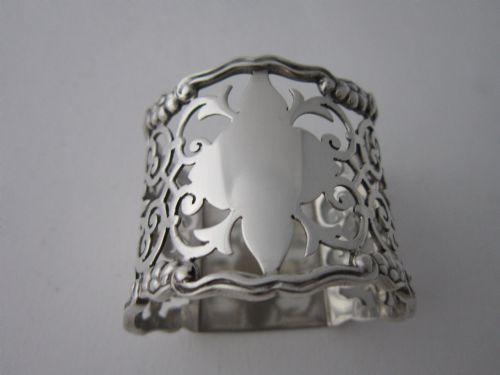
- A decorative technique where portions of the metal are cut away to create openwork patterns and geometric designs. Silversmiths used this method to lighten heavy pieces like centrepieces and napkin rings.
- Figural
- Representation of human, animal, or narrative subjects in sculptural form. Menu holders in this category frequently employ figural elements such as birds, animals, or characters.
Edwardian Sterling Dining Decor: Frequently Asked Questions
What is included in edwardian sterling dining decor?
This category encompasses small silver items used for table service and presentation during meals. Typical forms include napkin rings, candlesticks, menu holders, place card holders, and pierced centrepieces.
Pieces often feature Edwardian, George V, or Arts and Crafts styling, reflecting the aesthetic preferences of the early twentieth century.
How were menu holders used at Edwardian dinners?
Hostesses placed menu holders and place card holders on the dining table to inform guests of the courses to be served and their assigned seating positions. These items added an element of organised luxury to formal banquets.
Figural designs also served as conversational pieces, ranging from animals to literary characters.
How do I identify George V pieces?
George V pieces carry British hallmarks indicating the reign that began in 1910, alongside date letters corresponding to specific years of manufacture. The stylistic vocabulary often bridges late Edwardian elegance with simpler post-war forms.
Makers active during this era frequently utilised traditional casting and piercing techniques.
Are these silver items suitable for daily use?
Solid sterling silver items are durable and intended for practical service as well as display. Napkin rings and candlesticks function well in contemporary settings when given proper cleaning and care.
Delicate figural menu holders and lined presentation boxes benefit from more careful handling to preserve their original condition.