



Edwardian Sterling Candlesticks
Edwardian sterling candlesticks bring the bright silver and neoclassical columns of the early twentieth century directly to the dining table.
Edwardian Sterling Candlesticks
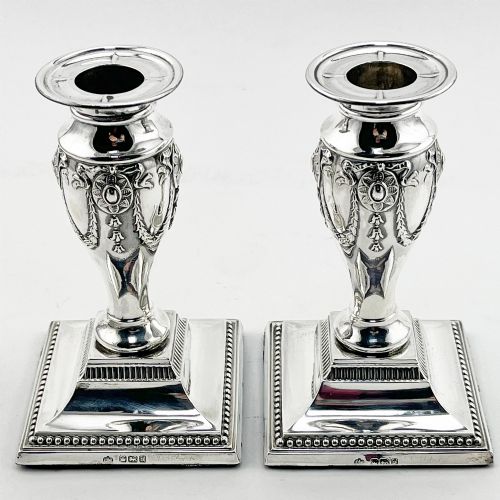
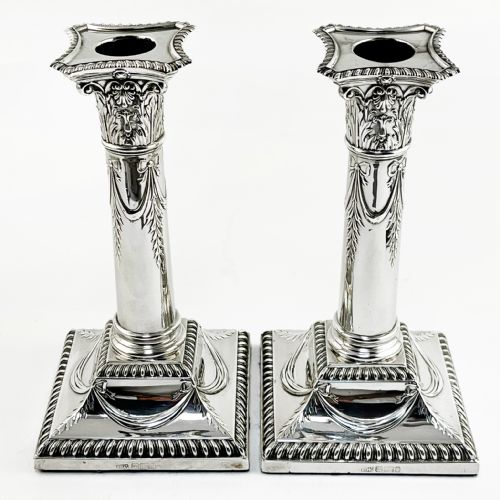
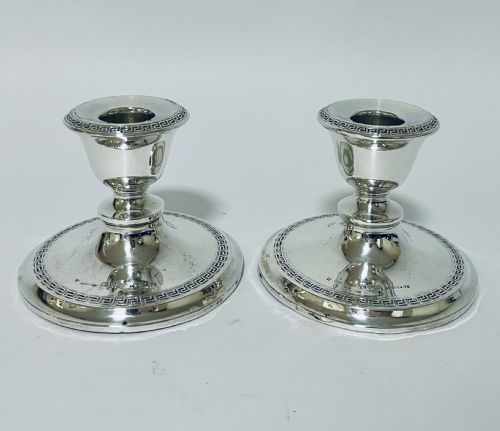
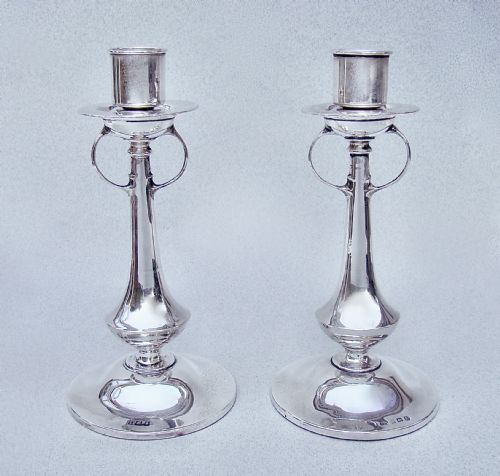
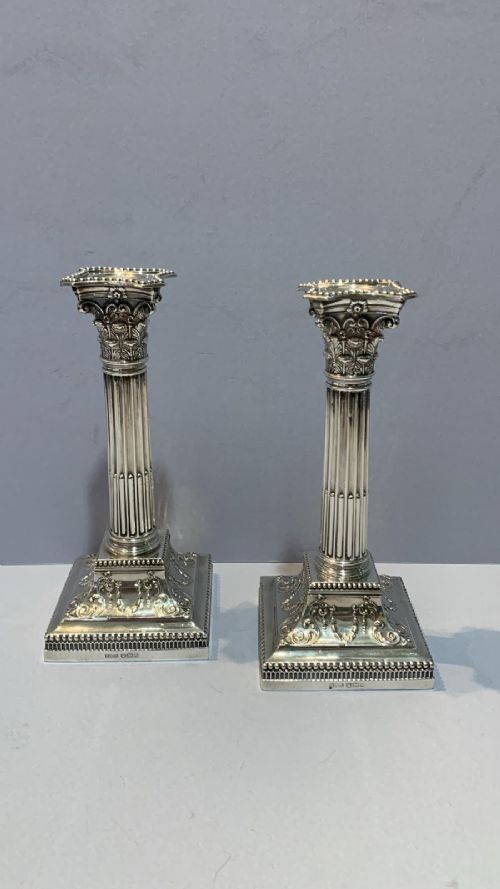
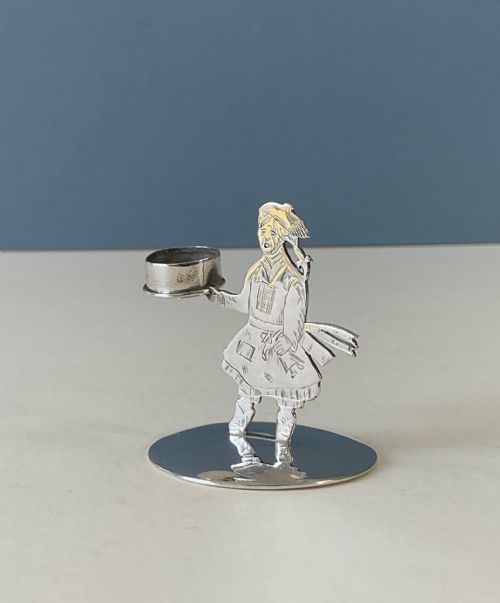
When you search for Edwardian sterling candlesticks, you look at silver lighting pieces created around the turn of the twentieth century. These objects include pairs of column candlesticks, dwarf models, desk accessories, and chambersticks designed for domestic use.
The pieces on this page mostly span the Edwardian period proper, with occasional overlapping examples from late Victorian years and the early reign of George V. Pairs dominate the selection, alongside smaller sets and occasional single items intended for specific desk or table placements.
Makers drew heavily on classical vocabularies, producing works in the Corinthian style, geometric hexagonal formats, and neoclassical revival motifs such as rams heads. Forms range from compact six-inch table lights to tall eighteen-inch column lamps.
What varies in quality
Quality rests primarily on the crispness of the cast ornamentation, such as the acanthus leaves on Corinthian capitals or the definition of rams head appliqués. Sharply struck hallmarks and well-preserved structural integrity separate standard domestic production from finer workshop outputs.
The weight distribution and balance of the candlestick alter the tactile experience of handling the piece. Heavier gauge silver and thicker column walls provide a more substantial feel in the hand compared to lighter, more economical domestic variants.
Edwardian Sterling Candlesticks Retail Price Guide 2026
Typical asking prices for edwardian sterling candlesticks among the pieces listed under this phrase on Sellingantiques today, from the lower quarter to the upper quarter. They describe what is for sale here now, not the wider market.
Listings feature periods spanning from Victorian and Edwardian to George V, constructed primarily in sterling silver alongside cut glass elements.
James Fenton·Thomas Bradbury & Sons Ltd·William Hutton & Sons·Robert Pringle & Sons·Fordham & Faulkner·Nathan & Hayes·James Dixon & Sons
The Edwardian Sterling Candlesticks Glossary
- Sterling silver
- A silver alloy containing 92.5 percent pure silver by mass, with the remainder composed of other metals, usually copper. This standard alloy provides the durability required for domestic candlesticks.
- Hallmark
- An official mark or series of marks stamped on items made of precious metals in the United Kingdom. These marks verify the metal standard and indicate the assay office and year of testing.
- Corinthian column
- An architectural column style featuring an ornate capital decorated with acanthus leaves. Makers frequently adopted this classical order for tall silver candlesticks.
- Chamberstick
- A low candlestick fitted with a pan to catch dripping wax and a handle for carrying through a house. These portable items served bedroom and nighttime corridor use.
- Dwarf candlestick
- A shortened version of the standard table candlestick, standing close to the surface. They were often placed on low tables or desks where height was restricted.
Edwardian Sterling Candlesticks: Frequently Asked Questions
How do I clean them?
Use a soft cloth and a gentle silver polish formulated specifically for antique sterling silver. Avoid harsh abrasive pads that wear down raised details and remove the remaining evidence of age.
Take care around weighted bases and hallmarked areas to prevent excessive rubbing. Soft brushing helps remove polish residue from deep crevices within Corinthian capitals and neoclassical motifs.
Are they all weighted?
The majority of domestic silver candlesticks contain internal weighting materials such as resin or plaster to provide stability. Pure silver alone would be too soft and light to support a tall shaft safely.
This construction means the undersides are typically finished with a fitted baize or felt covering. Desk accessories and smaller chambersticks occasionally employ alternative construction methods without heavy base filling.
How do I date them?
Look for the struck hallmarks, which usually include a date letter corresponding to a specific assay office year. Comparing the stamp against official registers provides the exact year of testing.
Stylistic indicators such as neoclassical columns, Arts and Crafts simplicity, or Edwardian proportions offer a general timeframe when hallmarks are rubbed or illegible.