



Antique Sterling Candlestick Pair
An antique sterling candlestick pair brings balanced illumination and period presence to a dining table or mantelpiece.
Antique Sterling Candlestick Pair
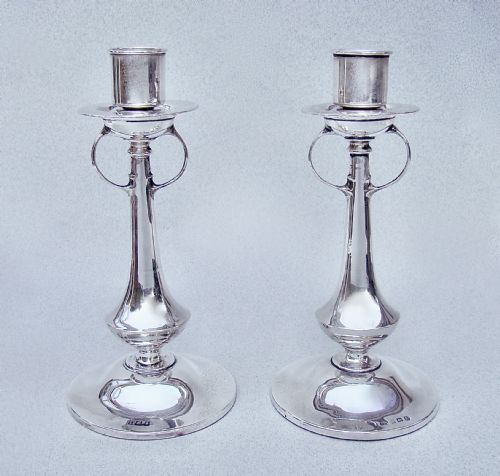
An antique sterling candlestick pair comprises matched lighting supports forged from solid silver, designed to hold taper candles upright in domestic interiors. These domestic items span periods from the Georgian era through to the mid-twentieth century, capturing shifts in ornamental design over two centuries.
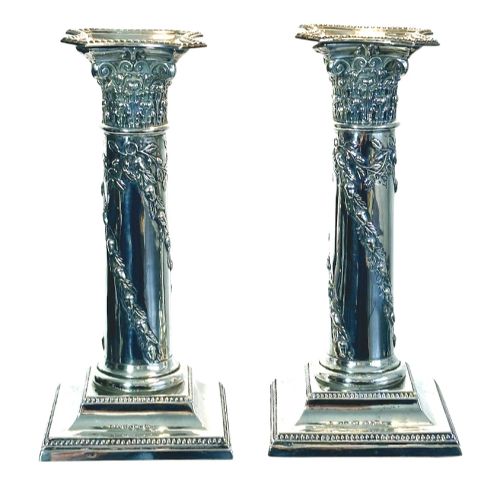
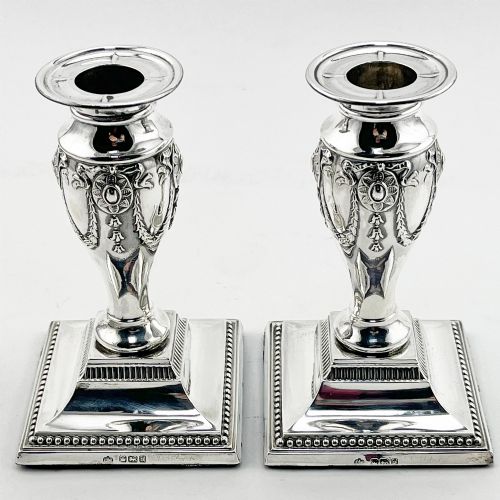
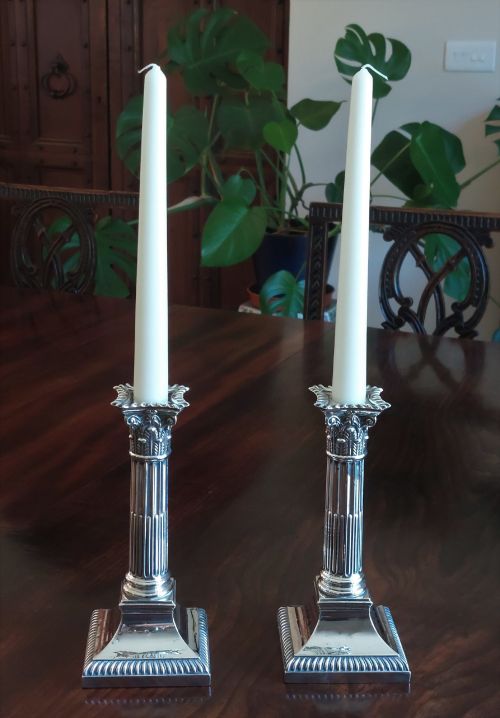
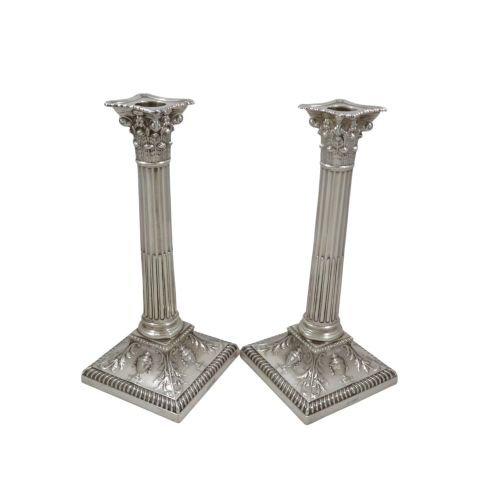
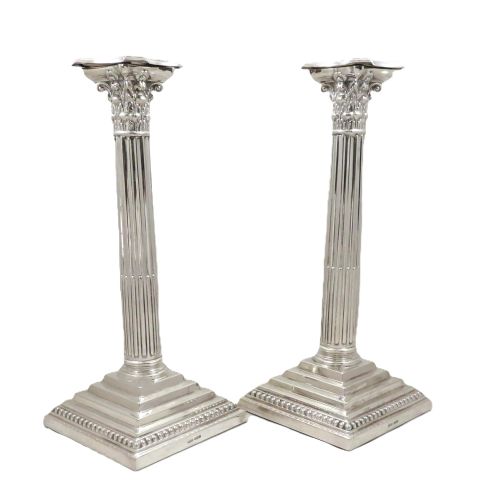
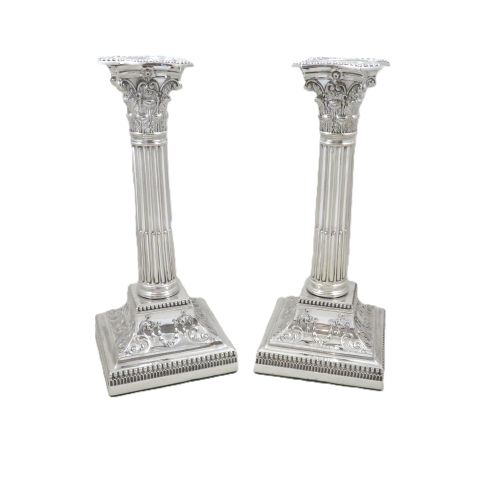
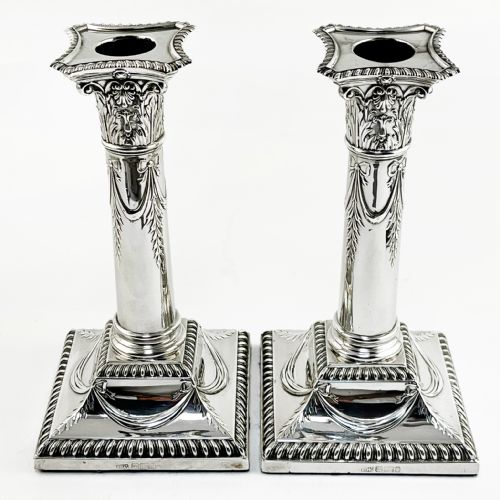
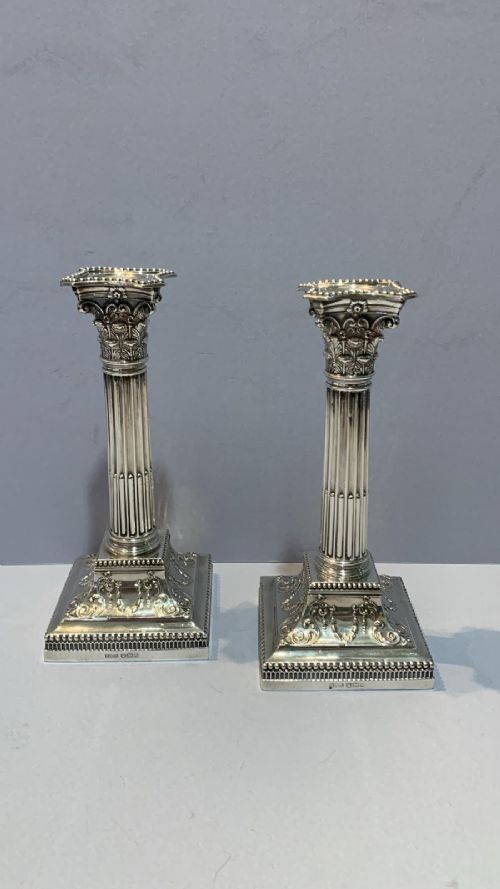
Victorian and Edwardian examples appear frequently on this page, often showing classical revival motifs or Corinthian column forms. Buyers also encounter heavier George V pieces alongside taller candelabra variants that incorporate detachable branching arms for multiple tapers.
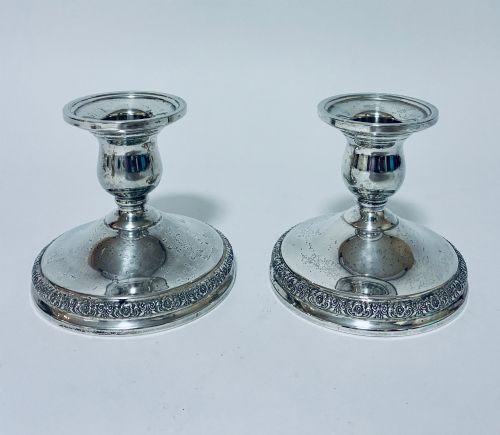
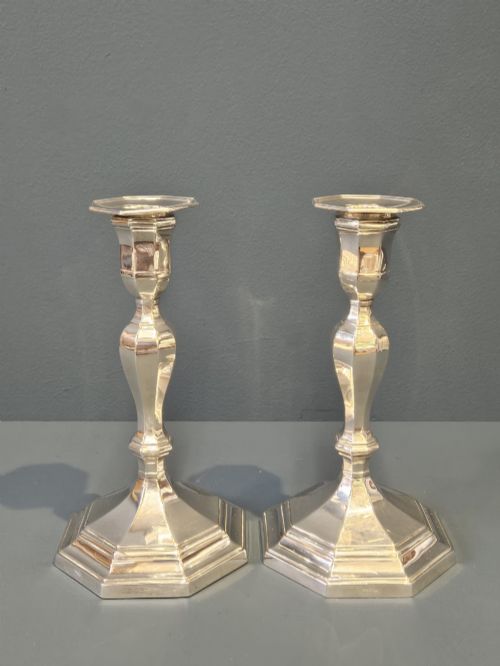
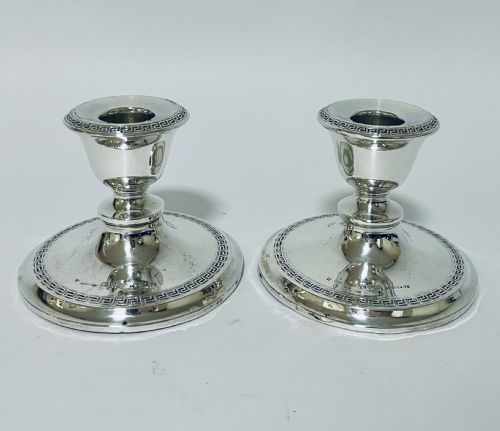
Forms range from small desk models and dwarf heights up to imposing military candlesticks with low centres of gravity. Each matching pair preserves the symmetry demanded by formal dining arrangements and period mantel displays.
Materials and construction methods
Silversmiths utilised sterling silver alongside silver gilt variations, shaping the metal through casting, spinning and hand-wrought techniques. Molten metal or sheet silver was formed into capitals, fluted shafts and weighted bases that provided structural stability for the upright candle.
Internal resin or loaded weighting materials were routinely added to the hollow bases of sterling candlesticks to prevent tipping during use. Hallmarks stamped directly into the silver surface record the assay office, city and date of manufacture.
Antique Sterling Candlestick Pair Retail Price Guide 2026
Typical asking prices for sterling candlestick pair among the pieces listed under this phrase on Sellingantiques today, from the lower quarter to the upper quarter. They describe what is for sale here now, not the wider market.
Object types range from single standard candlesticks to detachable multi-light candelabra and Corinthian columns.
Assessing quality in silver lighting
Quality rests upon the crispness of the cast ornamentation, the integrity of the structural joints, and the legibility of the hallmarks. Pieces featuring detailed neoclassical enrichment or hand-wrought surface treatment demonstrate superior silversmithing skill compared to plain commercial production.
The survival of original detachable drip pans and matching components elevates a pair's completeness. Balance and weight distribution also dictate standard, heavier weighted bases offering greater durability in daily positioning.
Garrard & Co·James Fenton·John Cafe·Thomas Bradbury & Sons Ltd·William Hutton & Sons·Goldsmiths & Silversmiths Co·Robert Edgar Stone·Hawkesworth Eyre & Co
The Antique Sterling Candlestick Pair Glossary
- Sterling silver
- A silver alloy containing 92.5 percent pure silver by mass and 7.5 percent other metals, usually copper, to add durability. This standard metal forms the primary body of the pieces listed.
- Hallmark
- An official stamp applied by an assay office certifying the purity of the metal, the maker, and the year of production. These marks allow precise dating across Victorian and Edwardian examples.
- Candelabra
- A branched candlestick holding multiple tapers from a single central stem. Certain pairs on this page feature convertible arms that transform single sticks into multi-light fixtures.
- Corinthian column
- A classical architectural column style featuring ornate acanthus leaf capitals, frequently adapted for candlestick shafts. This motif appears widely across Edwardian and later twentieth-century pieces.
- Silver gilt
- Sterling silver that has been coated with a thin layer of gold through a chemical or electrochemical process. This treatment gives the metal a rich warm tone rather than standard bright silver.
Antique Sterling Candlestick Pair: Frequently Asked Questions
How do I clean antique silver candlesticks?
Use a soft microfiber cloth with a dedicated silver polish to remove tarnish gently, avoiding excessive rubbing on engraved details or hallmarks.
Wash away residue with warm soapy water and dry thoroughly immediately after cleaning to protect the metal finish.
Were these pairs originally used on dining tables?
Dining rooms formed the primary setting for tall sterling candlesticks, providing ambient illumination during formal evening meals.
Shorter desk and dwarf variants were designed for reading writing desks and smaller parlour side tables.
How can I date my sterling candlesticks?
Locate the hallmark stamps usually found near the base rim or inside the drip pan, which display a specific date letter.
Compare this letter and the assay office symbol against official registry charts to determine the exact year of creation.
Why are silver candlesticks weighted at the bottom?
Solid silver would make large candlesticks excessively heavy and expensive, so makers used hollow construction filled with resin or plaster.
This weighted interior lowers the centre of gravity, keeping the tall column stable when holding a burning candle.