





Edwardian Star Setting Ring
An edwardian star setting ring brings together old cut stones flush into yellow gold, offering a low-profile piece built for daily wear.
Edwardian Star Setting Ring
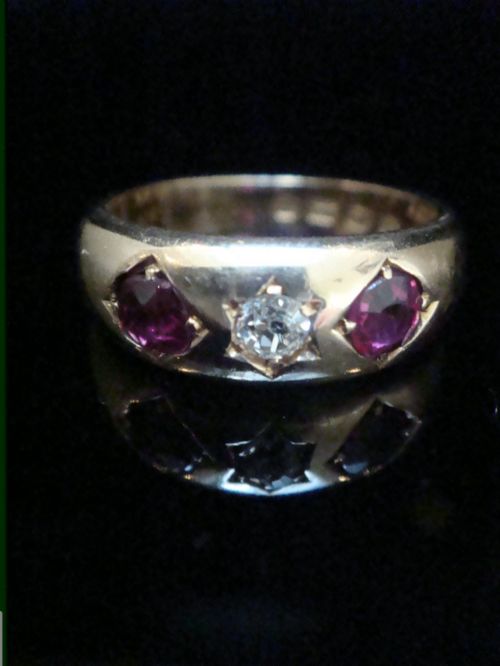
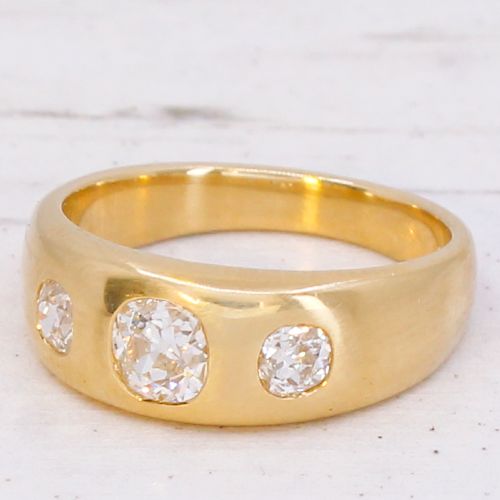
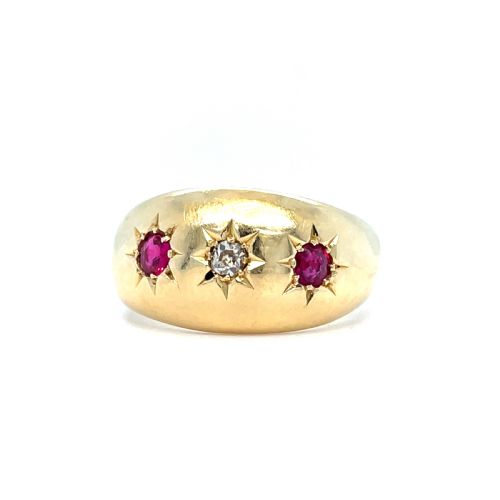
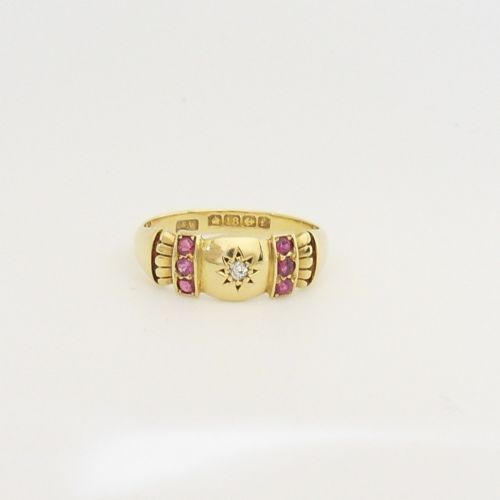
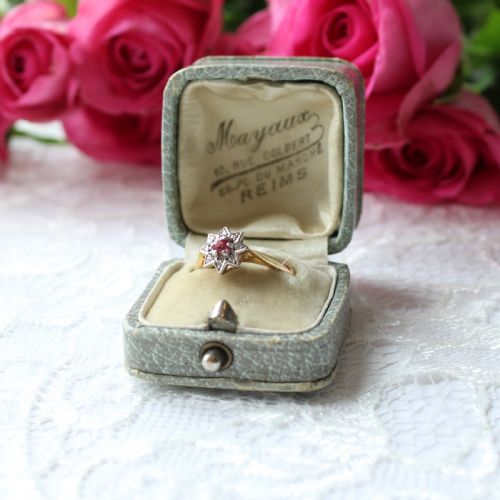
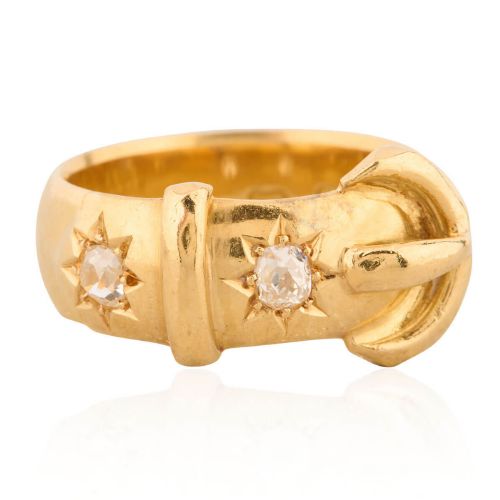
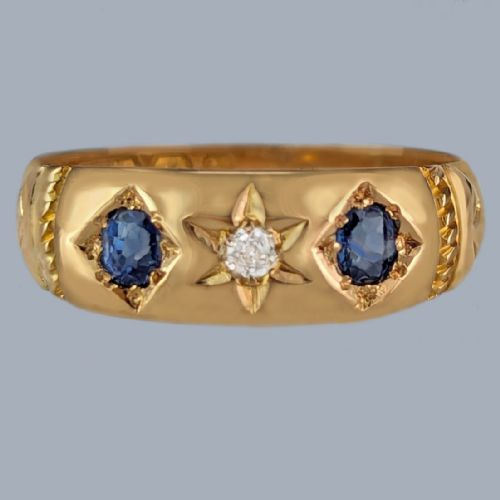
An edwardian star setting ring sits low to the hand, often taking the form of a gypsy ring or a wide band where stones are flush-set into the metal. The star motif radiates outwards from the diamond or ruby centre, engraved directly into the surrounding gold.
Most examples you encounter stem from the Edwardian period and the late Victorian era, though related forms stretch into the subsequent decades. These bands frequently incorporate rubies, sapphires, or old cut diamonds set singly or in multi-stone layouts.
The profile is smooth and rounded, designed to catch less on fabric while displaying a distinct celestial pattern. Yellow gold dominates the material palette, forming heavy gypsy bands or ornate pierced hoops.
Materials and Making
Goldsmiths worked primarily with 18ct yellow gold and 9ct gold, hammering and casting thick shanks capable of holding flush stones securely. The metal around the gem was pushed up and engraved with sharp rays to form the signature starburst pattern.
Stones were cut by hand rather than by machine, resulting in old cut diamonds with soft facets and deep pavilions that sit entirely level with the gold surface.
The listings span from the Victorian era through the Edwardian period into the mid-twentieth century, predominantly rendered in 18ct yellow gold.
Judging Quality
The crispness of the engraved starburst rays defines the finer examples, showing deliberate hand-chiselling rather than a soft or worn impression. Heavier gold weight in the shank also distinguishes substantial pieces from lighter commercial bands.
The calibre of the central gemstone dictates the upper tier, particularly where clear rubies, sapphires, or well-matched old cut diamonds are secured firmly within the thick gold walls.
The Edwardian Star Setting Ring Glossary
- Star setting
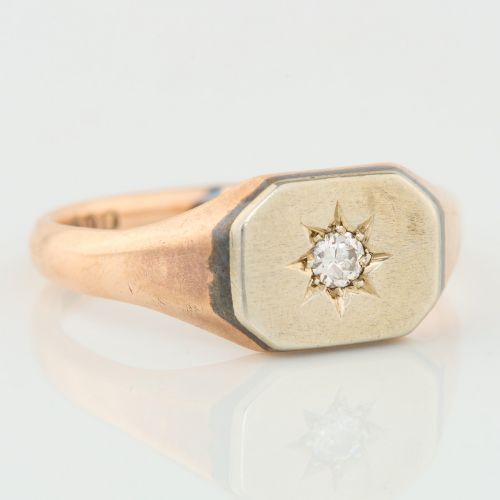
- A technique where a diamond or coloured stone is set flush into the metal, surrounded by hand-engraved triangular rays resembling a star. This method protects the girdle of the stone.
- Gypsy ring
- A ring style featuring a heavy band that tapers towards the shoulders, with stones set flush into the thick central metal. It gained widespread popularity during the late nineteenth and early twentieth centuries.
- Old cut
- A diamond cutting style prevalent before the modern brilliant cut, characterised by a smaller table, higher crown, and open culet. These stones display a softer, chunkier sparkle under candlelight.
- Belcher ring
- A ring featuring a rounded, protruding setting where the metal claws or walls pull the stone slightly proud of the band. It shares the heavy shank typical of nineteenth-century designs.
- Trilogy ring
- A ring set with three stones, often representing a past, present, and future motif. In this selection, they appear combined with star settings and gypsy bands.
Edwardian Star Setting Ring: Frequently Asked Questions
Can I wear an Edwardian star setting ring every day?
The flush mounting protects the stones significantly, making these rings robust companions for daily wear.
However, the weight of the gold shank and the thickness of the star engraving should be checked periodically by a jeweller to ensure the stones remain secure.
What is the difference between a gypsy ring and a star setting?
A gypsy ring refers to the overall shape of the band, which is thick in the middle and tapers smoothly toward the back.
A star setting is the specific decorative engraving radiating from the stone flush within that band, though the two terms frequently overlap in these pieces.
How do I identify an Edwardian ring?
Edwardian jewellery often exhibits lighter, more graceful ornamentation than heavy Victorian pieces, frequently utilising platinum or high-karat yellow gold.
Look for hand-engraved starburst patterns and old cut diamonds that reflect the transition of style into the early twentieth century.
Are these rings usually stamped with hallmarks?
Many British pieces carry traditional hallmarks indicating the gold purity, assay office, and date letter.
Some rings lose part of their marks over generations of sizing and wear, while others retain crisp stamps inside the shank.