







Antique Starburst Dress Ring
An antique starburst dress ring brings together celestial design and glittering stones, offering a timeless piece of history for your hand.
Antique Starburst Dress Ring
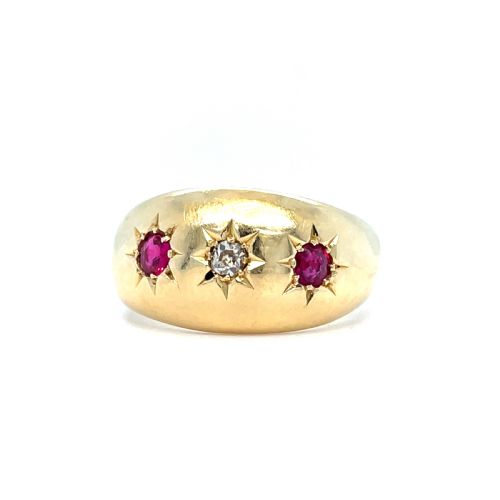
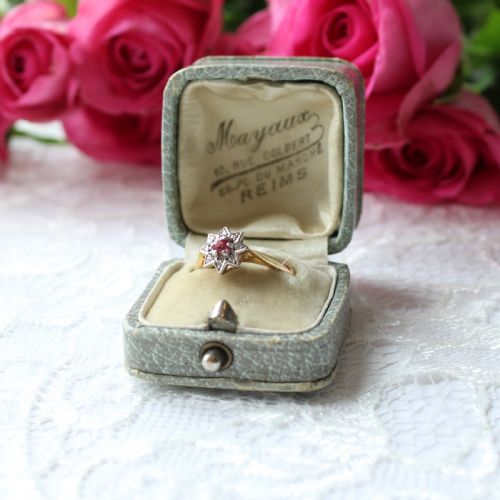
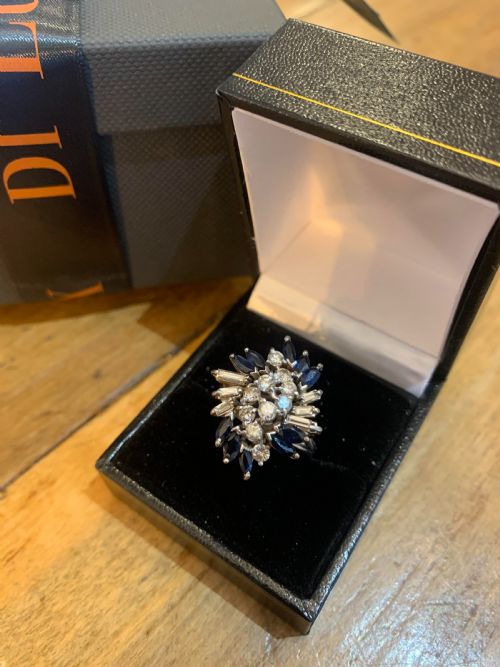
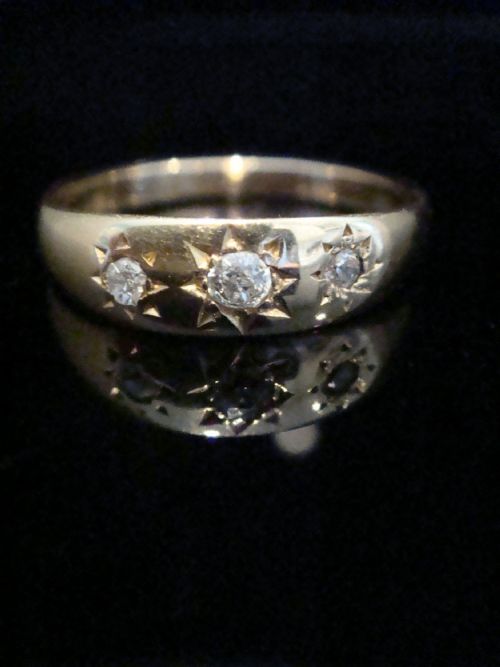
An antique starburst dress ring combines historical charm with striking celestial motifs, frequently appearing in forms like cluster rings and gypsy bands. You will regularly encounter designs originating from the Victorian and Edwardian eras, alongside later pieces from the Art Deco period and mid-century. These rings showcase central gemstones arranged to mimic twinkling stars, often set against polished gold bands.
The materials span from rich 18ct yellow gold and 9ct gold to platinum settings, housing sparkling diamonds, deep rubies, sapphires, garnets, and occasional blue enamel details. Such variety ensures that collectors find distinct expressions of this stellar theme across different decades. Each piece reflects the aesthetic preferences of its time, moving from ornate nineteenth-century work to cleaner twentieth-century geometry.
Crafting methods and materials
Jewellers typically utilised 18ct yellow gold and 9ct gold to fashion the foundational bands and settings, sometimes incorporating platinum for enhanced security around stones. These metals provided both durability and a warm backdrop for contrasting gems.
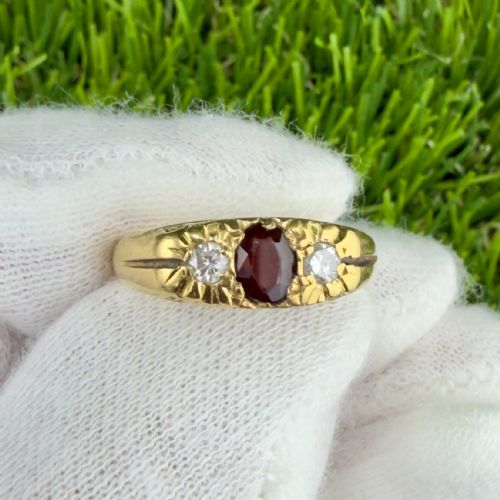
Craftsmen set diamonds, rubies, sapphires, and garnets into the metal using techniques suited to gypsy bands and cluster arrangements, occasionally pairing them with blue enamel. The reliance on old-cut diamonds and secure flush or claw settings defined the structural integrity of these celestial designs.
Even metal bands needed to sparkle, turning ordinary fingers into private night skies.
Distinctions in quality
The standard of a piece rests upon the precision of the stone setting and the preservation of the delicate star motifs engraved or formed into the metal. Finer examples maintain crisp lines in their starburst patterns and secure flush or claw mountings that protect the central gems without clutter.
Material selection also dictates the hierarchy, with heavier gold weights and well-matched, lively gemstones commanding greater appreciation. The integration of accent materials, such as contrasting enamel or superior old-cut diamonds, elevates a piece from a simple band to a masterclass in period lapidary work.
The Antique Starburst Dress Ring Glossary
- Starburst
- A decorative motif radiating outwards from a central stone to resemble a twinkling star. This design was particularly popular in Victorian and Edwardian jewellery.
- Gypsy ring
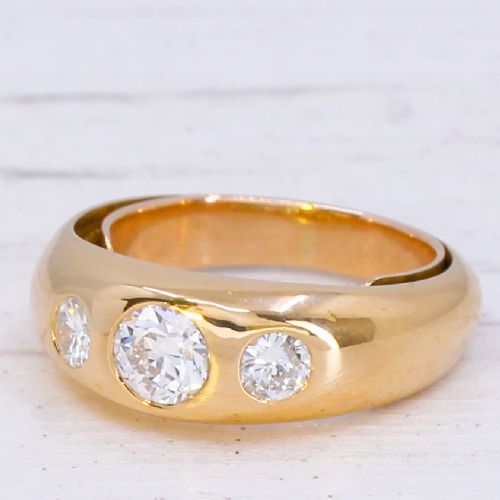
- A ring style where the stones are flush-set into the thick band of the metal. They emerged strongly in the nineteenth century for both men and women.
- Old-cut
- A diamond cut characteristic of older periods, featuring smaller tables and larger culets than modern brilliant cuts. They produce a softer, distinctive glow under candlelight.
- Trilogy ring
- A ring featuring three main stones, often interpreted as representing the past, present, and future. They appear frequently alongside star and cluster motifs in the listings.
- Cabochon
- A gemstone shaped and polished with a smooth, rounded surface rather than faceted. This form is often seen in coloured stones and blue enamel combinations.
Antique Starburst Dress Ring: Frequently Asked Questions
Can I wear these rings daily?
Most of these gold and gemstone pieces tolerate everyday wear if treated with reasonable care. However, rings featuring softer stones or delicate enamel require more mindful attention during manual tasks.
Removing your jewellery before heavy lifting, gardening, or swimming protects the metal and stones from unnecessary impact and wear. Proper precautions ensure the historical integrity of the piece remains undisturbed.
What defines an Edwardian ring?
Edwardian pieces generally date from the early twentieth century and lean towards lighter, more delicate aesthetics. They frequently utilise platinum and yellow gold to create airy, lace-like patterns.
In the context of starburst designs, Edwardian examples often pair old-cut diamonds with refined gold bands. This era valued elegance and intricate detailing above heavy, solid masses.
How do I identify a Victorian piece?
Victorian jewellery spans a lengthy reign and encompasses diverse styles, from robust gypsy bands to sentimental gem-set motifs. These pieces often feature heavier 18ct or 9ct yellow gold and occasionally incorporate rich details like blue enamel.
Assessing the hallmarks and the specific stone arrangements helps narrow down the decade of creation within the nineteenth century. The craftsmanship typically displays a robust approach to mounting and metalwork.