
Edwardian Standing Bookstand
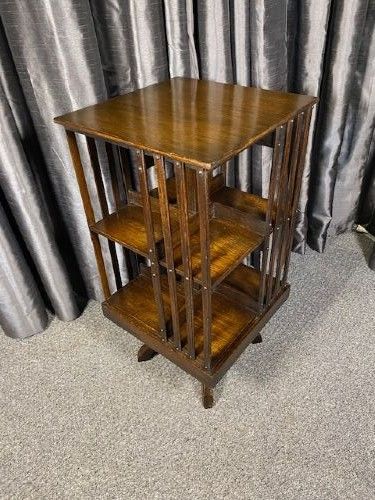
An edwardian standing bookstand is a practical domestic piece designed to hold volumes close to hand, combining utility with refined timber work.
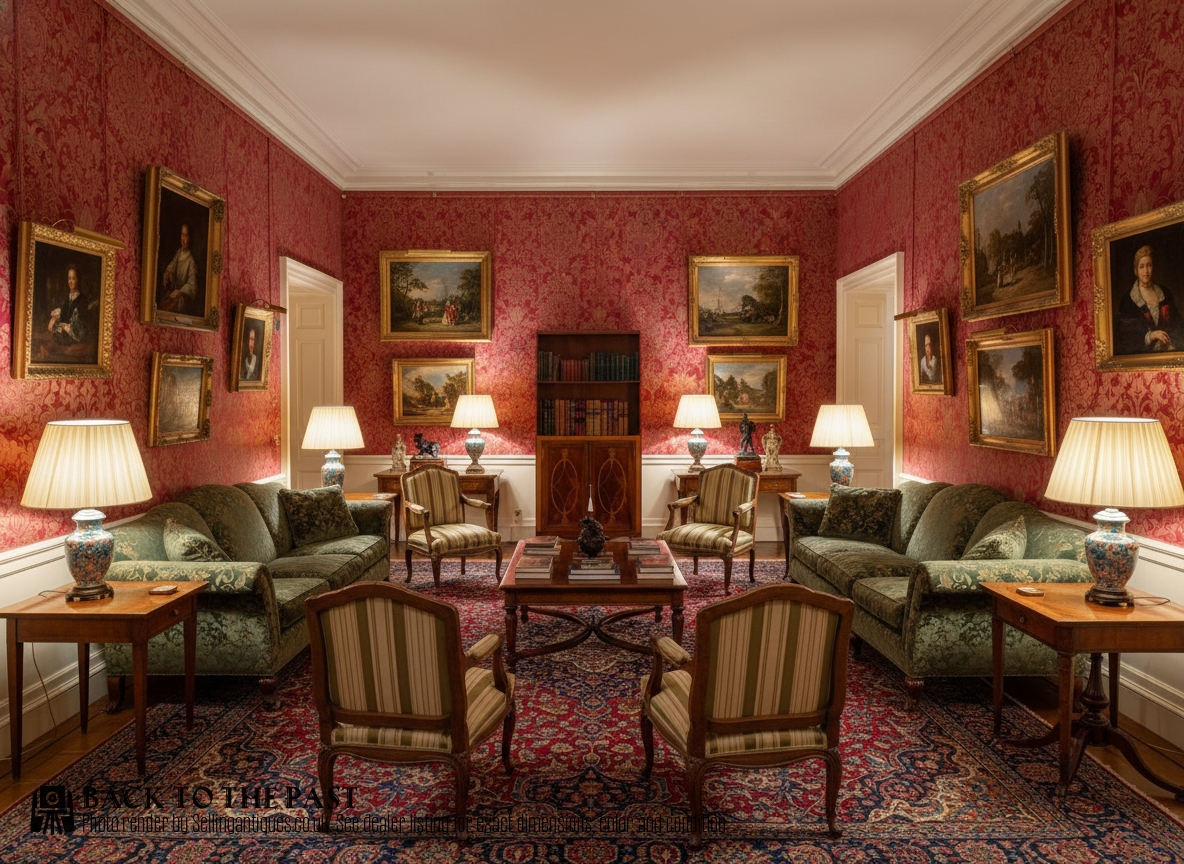
Edwardian Standing Bookstand
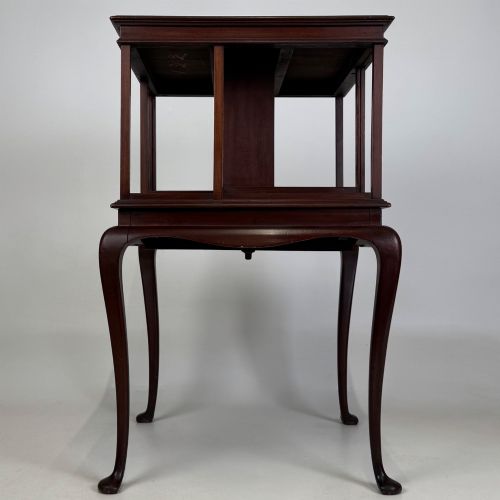
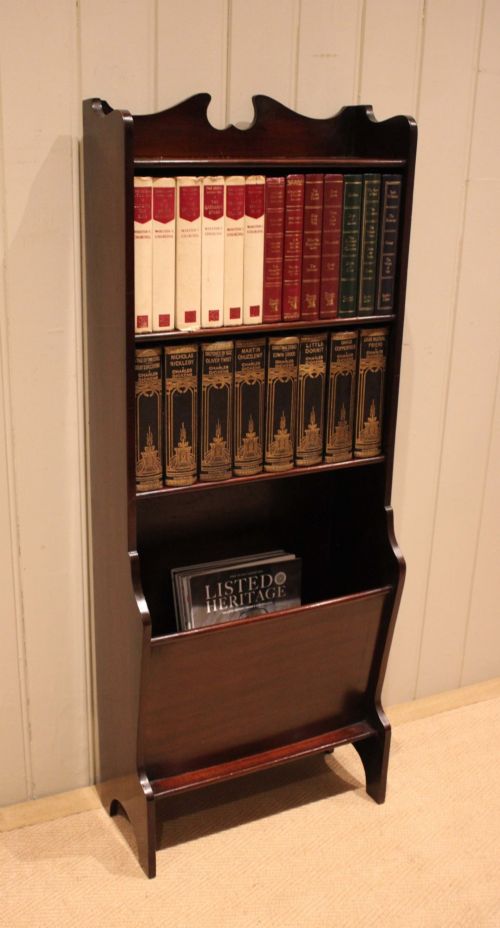
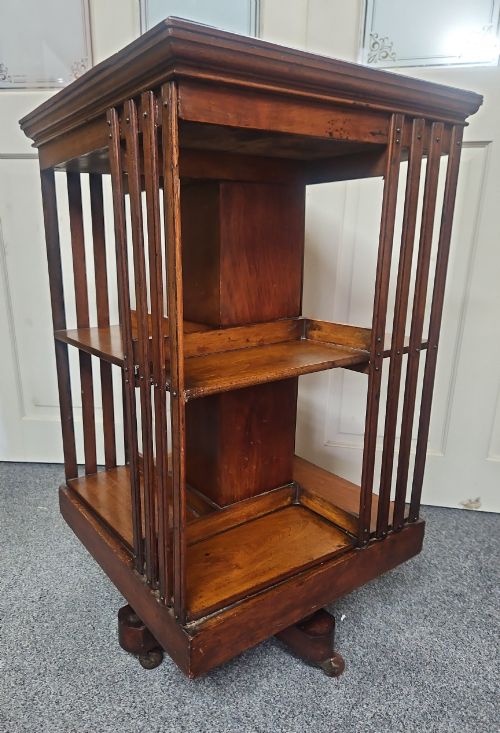
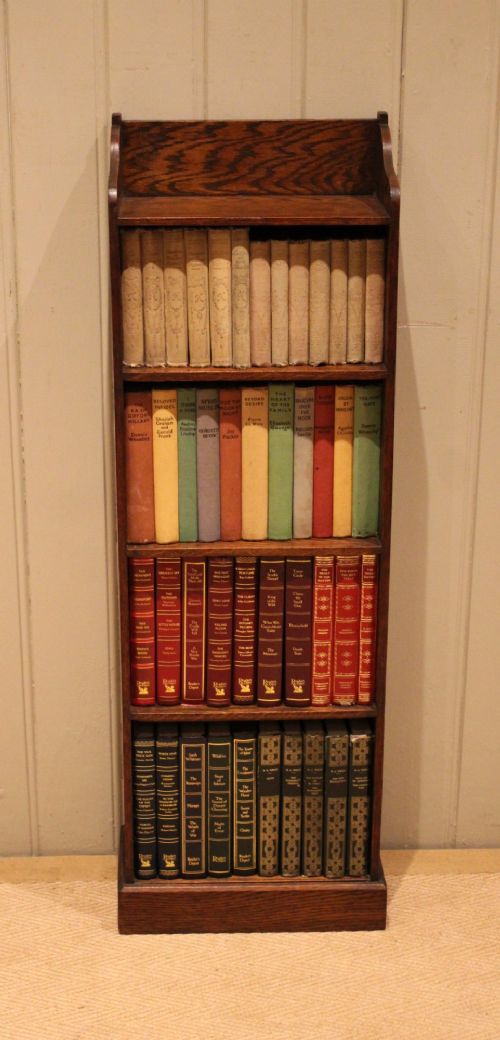
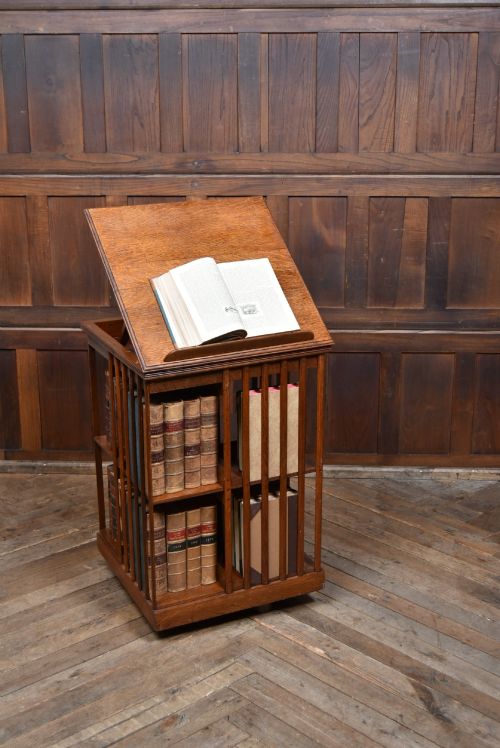
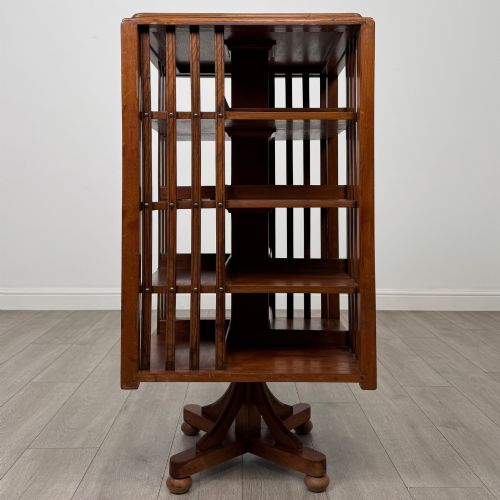
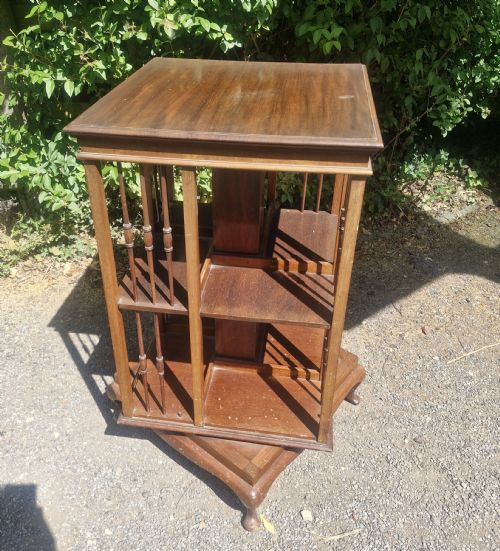
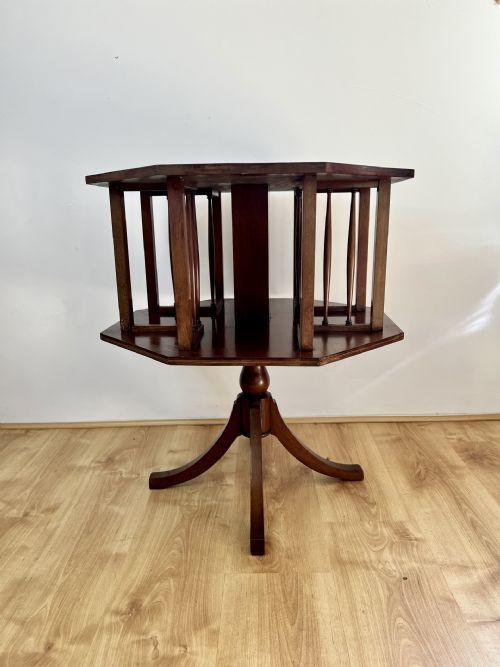
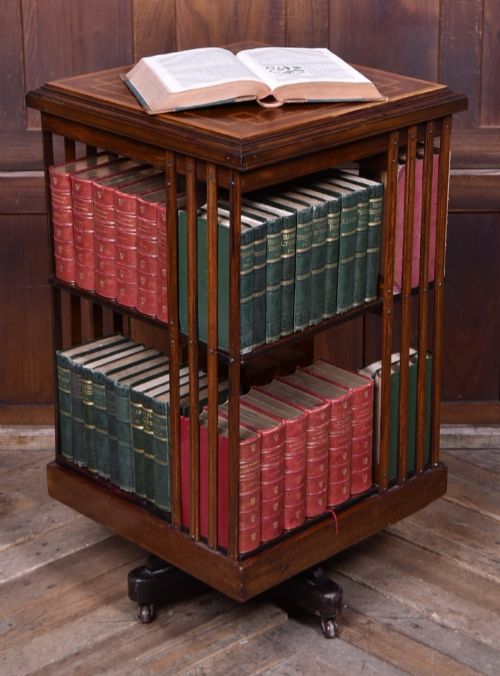
When searching for an edwardian standing bookstand, buyers typically encounter revolving models and open shelf forms designed for domestic libraries and studies. These pieces originate predominantly from the Edwardian period and the early twentieth century, alongside examples from the late nineteenth century. Forms range from compact table top versions to large floor-standing revolving bookcases and tiered storage units.
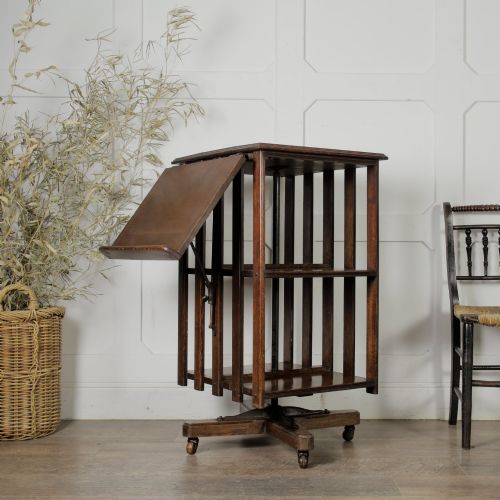
The construction frequently incorporates revolving mechanisms that allow users to access volumes from a seated position. Alongside standard revolving cases, the selection includes open bookcases, library book troughs, and extending book slides. Oak and mahogany serve as the primary woods, often enhanced by decorative detailing.
Materials and construction methods
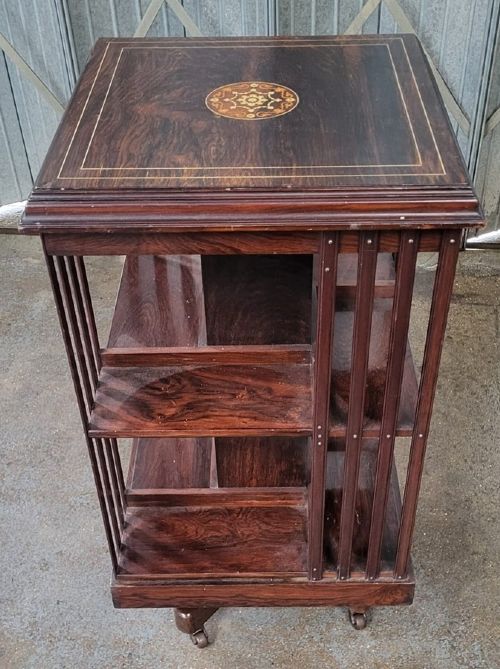
Makers constructed these stands primarily using solid and veneered timbers such as mahogany and oak, selected for their structural stability and grain. Satinwood and brass often appear as contrasting inlay elements and hardware details. Joinery techniques ensured that revolving tiers rotated smoothly upon internal wooden or metal pivot mechanisms.
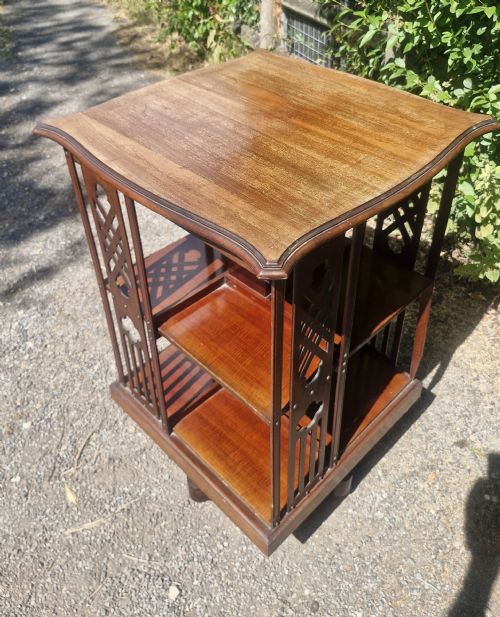
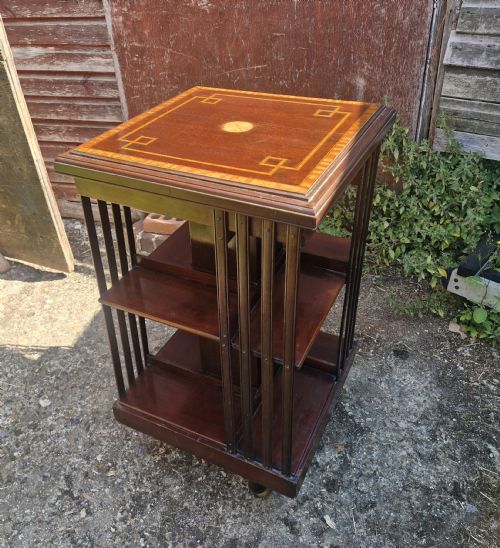
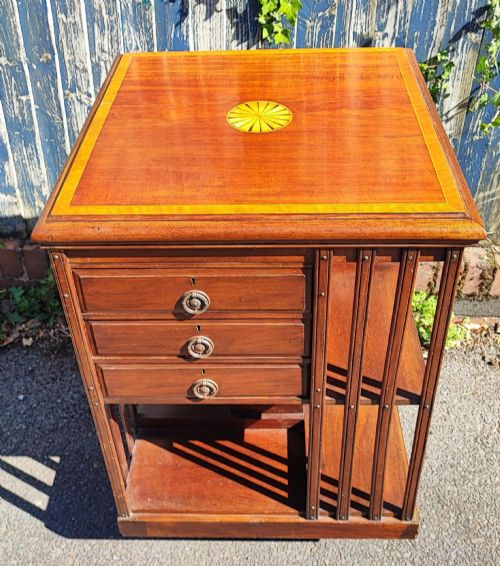
Surface ornamentation relied on satinwood inlay, fret-cut panels, and decorative cut-outs characteristic of the Arts and Crafts influence. Cabinetmakers finished the timber surfaces with traditional polishes that highlighted the natural figure of the mahogany and oak.
Assessing quality in construction and detail
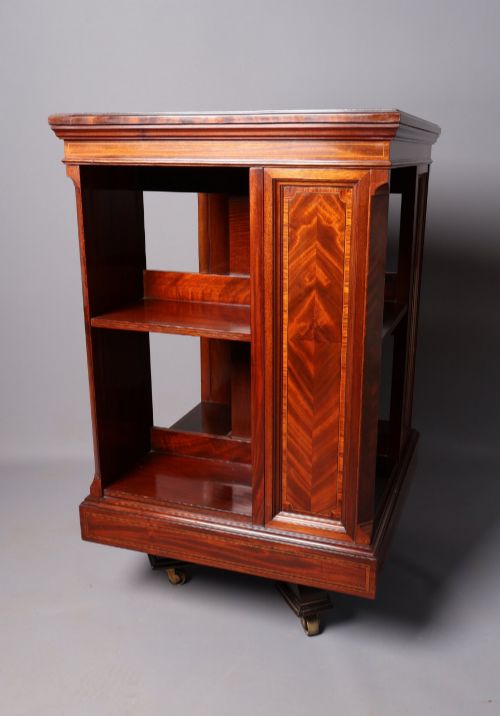
Quality in these pieces depends heavily on the selection of timber and the precision of the rotating mechanism. Finer examples display carefully matched mahogany or oak veneers, robust internal pivot engineering, and crisp inlay work without gaps. Lesser pieces utilise plain construction with simpler joints and minimal decorative enrichment.
The presence of thoughtful embellishments such as Sheraton-style satinwood inlay, fret-cut woodwork, or Arts and Crafts decorative elements elevates a piece above standard utility items. The integration of solid brass hardware rather than base metal further distinguishes superior workshop output.
The Edwardian Standing Bookstand Glossary
- Revolving bookcase
- A freestanding bookcase built upon a central pivot mechanism allowing it to spin freely. This design enabled readers to access multiple shelves of books from a single stationary position.
- Book trough
- A V-shaped open receptacle designed to hold a selection of books upright on a desk or table. These containers kept current reading material organised and easily portable.
- Inlay
- A decorative technique where contrasting woods or metals are inserted into recessed portions of a timber base. Satinwood was frequently utilised in this manner on mahogany surfaces during the Edwardian era.
- Fret-cut
- woodwork pierced with intricate patterns using a fine saw. This technique appeared on panels and sides of Arts and Crafts stands to add visual lightness.
- Book slide
- An adjustable rack designed to sit on a desk or table, expanding or contracting to hold a small row of volumes securely between two upright ends.
Edwardian Standing Bookstand: Frequently Asked Questions
How do I use a revolving bookstand?
Place the stand beside an armchair or desk where books are frequently consulted. The rotating mechanism allows you to spin the tiers effortlessly to find your volume.
Ensure weight is distributed evenly across the shelves to maintain balance when turning the case.
Are table top versions common?
Smaller variations designed to sit on tables or desks appear regularly alongside floor-standing models. They served the same revolving function on a reduced scale.
These compact items suited smaller studies and bedrooms with limited floor space.
How do I distinguish Edwardian from Victorian pieces?
Edwardian examples tend to display lighter timber tones, refined satinwood inlay, and a generally less ornate aesthetic than mid-Victorian furniture. Influence from the Sheraton revival and Arts and Crafts movements also marks this later era.
Late Victorian pieces often utilise heavier timbers and more robust, formal carvings.