




Edwardian Stackable Tables
Edwardian stackable tables are compact sets of graduated tables designed to slide neatly beneath one another, offering versatile surface space for homes short on room.
Edwardian Stackable Tables
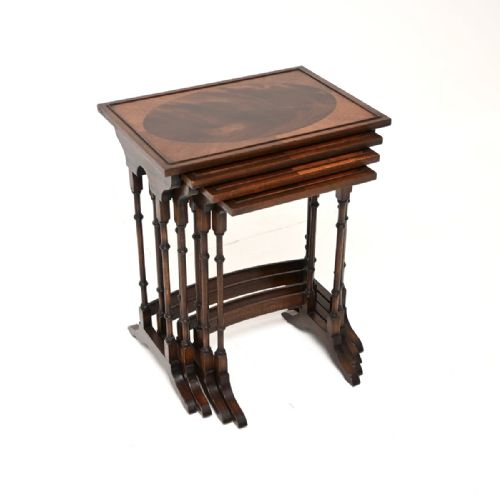
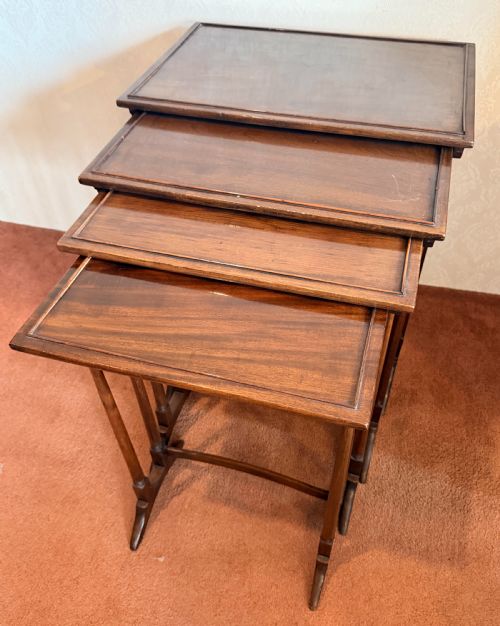
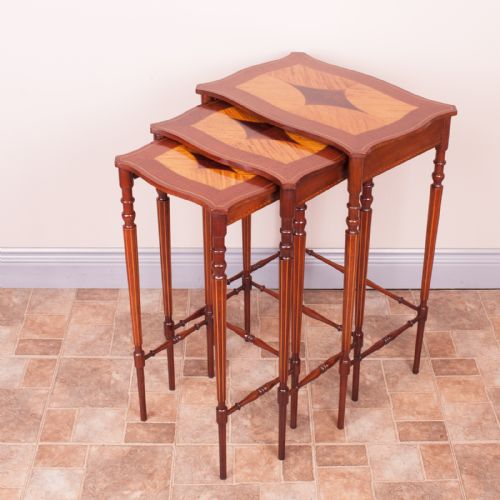
When you search for edwardian stackable tables, you encounter sets of three or four occasional pieces designed to fit within each other to save floor space. These pieces appear primarily in mahogany, often featuring marquetry or satinwood inlay work.
The selections range from traditional rectangular quartetto sets to oval top coffee tables spanning the Edwardian period, late Victorian era, and early twentieth century. Most examples operate as nesting tables, allowing the smaller units to slide smoothly beneath the largest main table.
Materials and construction
Makers utilised solid mahogany and mahogany veneers as the primary timber, complemented by decorative boxwood and satinwood inlay details. Selected pieces incorporate alternative hardwoods such as amboyna and burr walnut to highlight specific geometric or floral motifs.
The tables rely on sturdy yet slender supports to ensure the graduated sizes fit tightly together without binding. Joinery techniques from the period permit lightweight frames that remain stable when pulled out for daily use.
Factors in quality
The refinement of the timber and the precision of the inlay work distinguish finer sets from standard production pieces. Finishes that preserve the natural grain of the mahogany without masking the underlying wood indicate careful workshop execution.
Fit and proportion matter significantly in nested sets, where the graduation must allow each smaller table to slide under its predecessor with minimal clearance. Pieces exhibiting crisp marquetry details and balanced proportions represent the higher tier of the range.
The Edwardian Stackable Tables Glossary
- Quartetto
- A set of four tables designed to nest together. This traditional term frequently appears in descriptions of stacking tables from the Edwardian period.
- Inlay
- A technique where contrasting woods like satinwood or boxwood are inserted into recesses in the primary mahogany surface to create decorative patterns.
- Marquetry
- Elaborate veneer patterns arranged in pictorial or geometric designs. Craftsmen applied these across the tabletops to enhance visual appeal.
- Veneer
- A thin layer of superior wood applied over a secondary timber base. This method allowed makers to utilise figured grain patterns economically.
Edwardian Stackable Tables: Frequently Asked Questions
What are edwardian stackable tables used for?
These tables provide temporary surface space for tea, drinks, or books without permanently cluttering a room. Users pull out the smaller units as needed and slide them away when floor space is required.
Their compact nature made them particularly popular in smaller drawing rooms and parlours where flexibility in furniture arrangement was essential.
How do you arrange a nest of tables?
A nest can be kept fully assembled as a single small side table with the smaller pieces tucked completely underneath. Alternatively, individual tables can be separated around a seating area to serve multiple guests simultaneously.
When returning them to storage, the tables must be inserted in descending order of size to ensure proper fit.
How can you tell an Edwardian set from a Victorian one?
Edwardian examples tend to display lighter framing and more restrained inlay work compared to heavier late Victorian pieces. The transition from nineteenth century heaviness to Edwardian grace influences the overall delicacy of the legs and tops.
Examination of the secondary woods and construction methods often confirms the production era.
Are these tables suitable for daily use?
Mahogany construction provides adequate durability for everyday placement in modern living spaces. Normal care involves protecting surfaces from excessive moisture and heat.
Regular handling of the nesting mechanism causes minimal wear if the tables slide freely without scraping.