
Edwardian Slope Desk
An edwardian slope desk combines compact utility with refined woodwork, offering a practical writing surface suited to period studies.
Edwardian Slope Desk
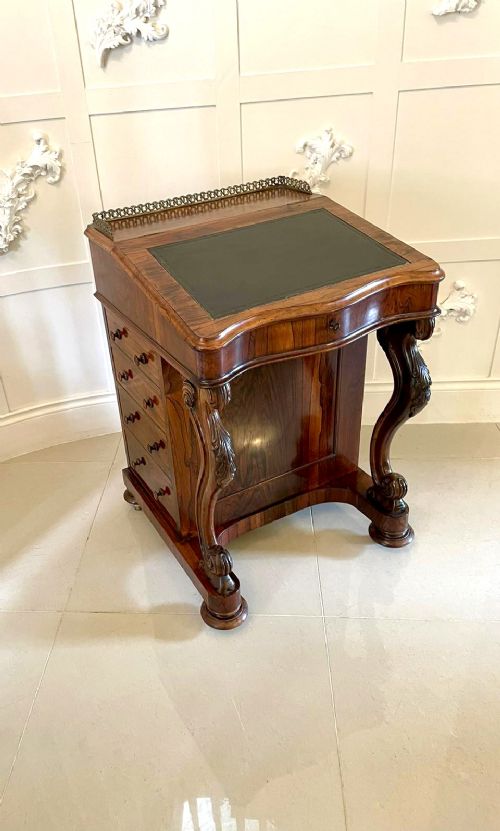
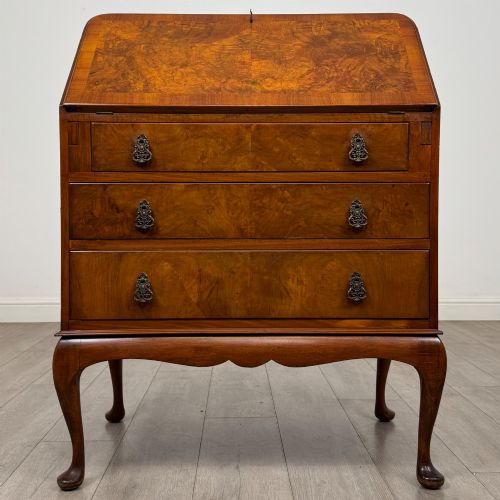
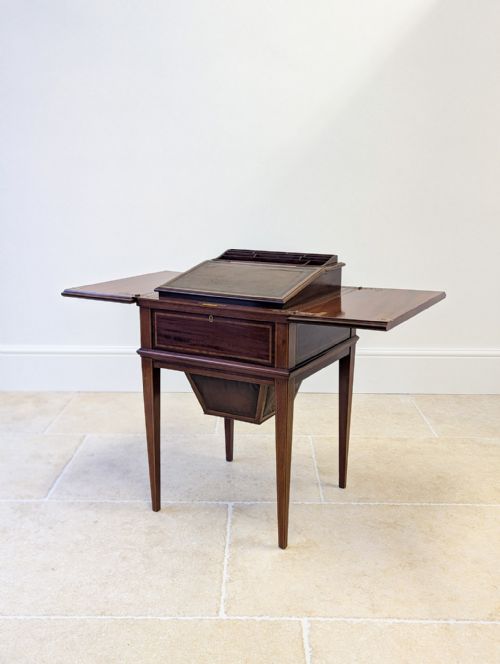
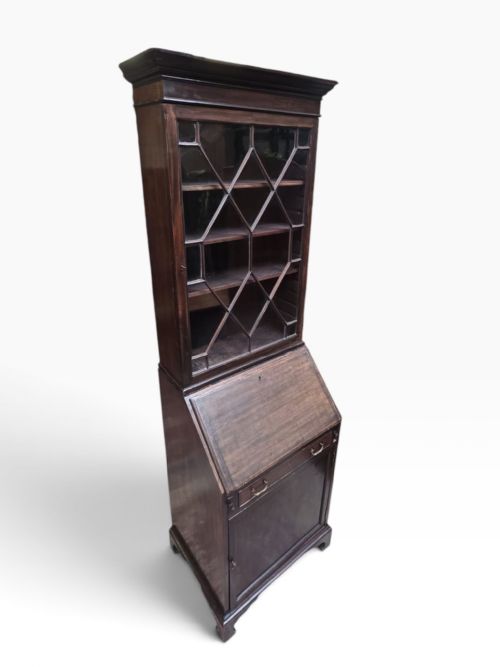
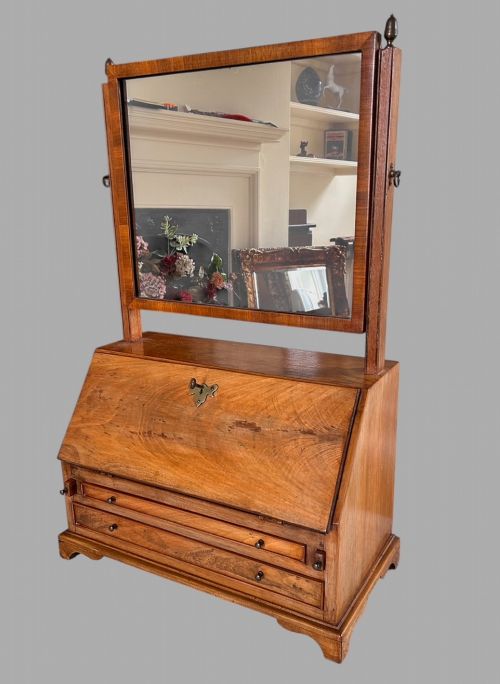
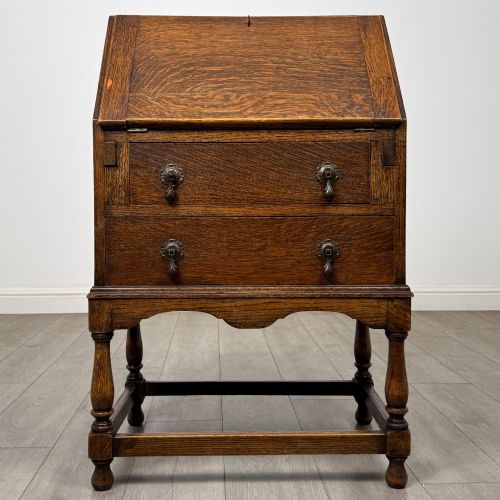
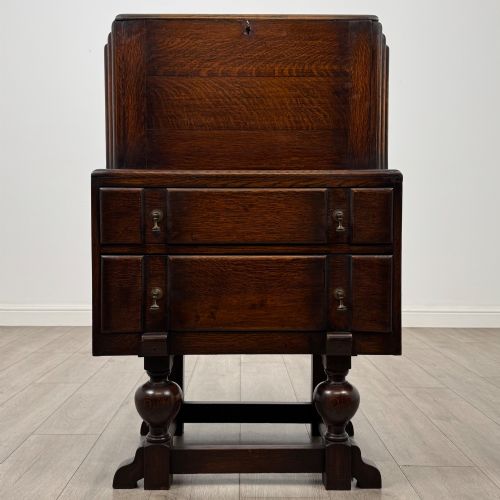
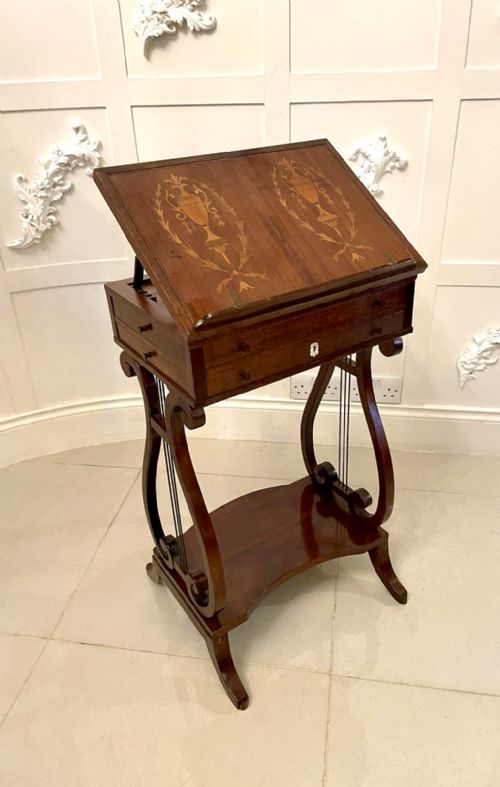
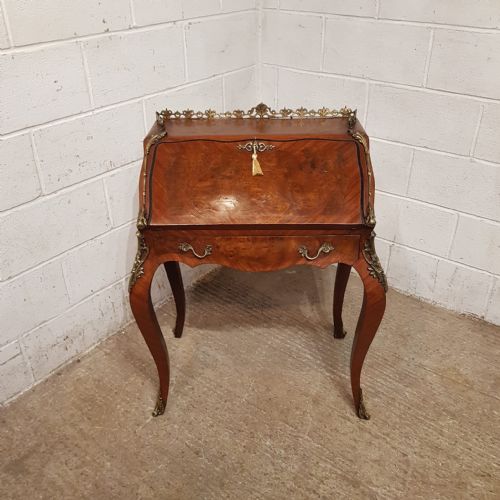
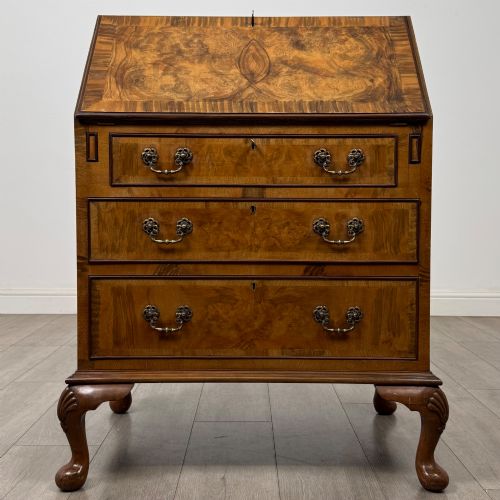
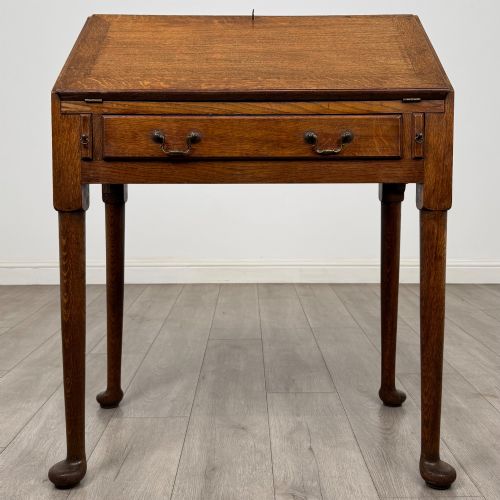
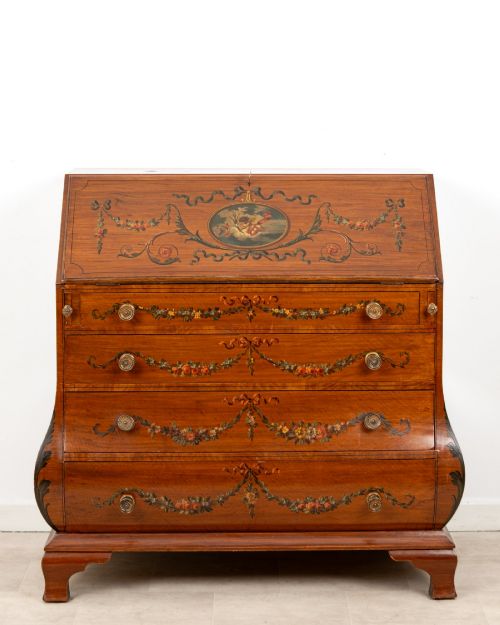
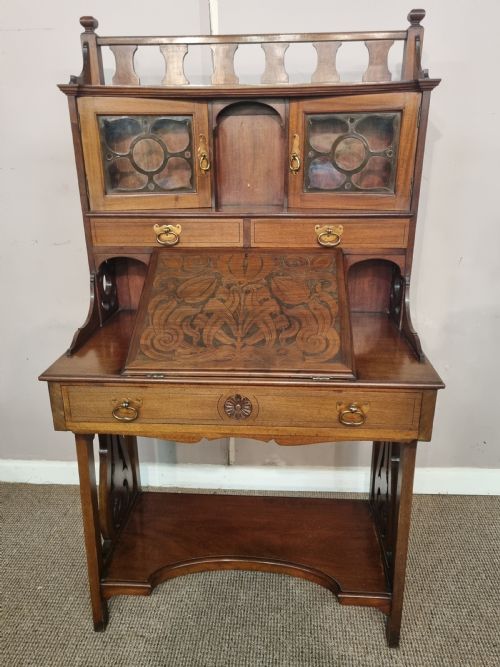
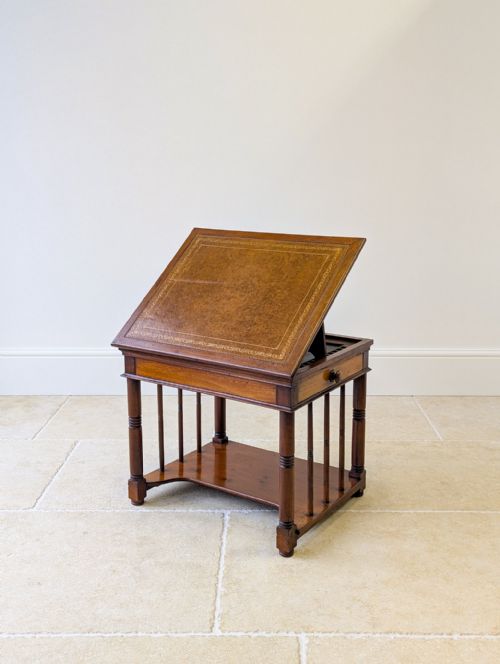
When you search for an edwardian slope desk, you encounter various compact writing forms including bureaux, davenports and table-top chests. These items originate predominantly from the Edwardian period and the broader nineteenth century, featuring formats designed for domestic correspondence.
The selection on this page relies heavily on Edwardian mahogany and walnut pieces alongside Victorian antecedents. You will frequently find fitted interiors with small drawers and pigeonholes tucked beneath hinged or sloping lids.
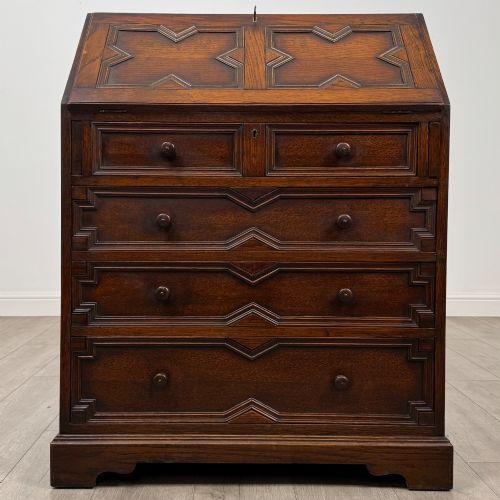
Many examples incorporate revival styles such as Sheraton, Queen Anne and Jacobean motifs. These historicist touches link the domestic writing furniture of the early twentieth century directly to earlier design vocabularies.
How they were made
Cabinetmakers utilised dense timbers including mahogany, walnut, burr walnut, rosewood and oak for the primary carcases and structural frames. Satinwood frequently appeared as a contrasting veneer or solid timber for decorative interior components and banded borders.
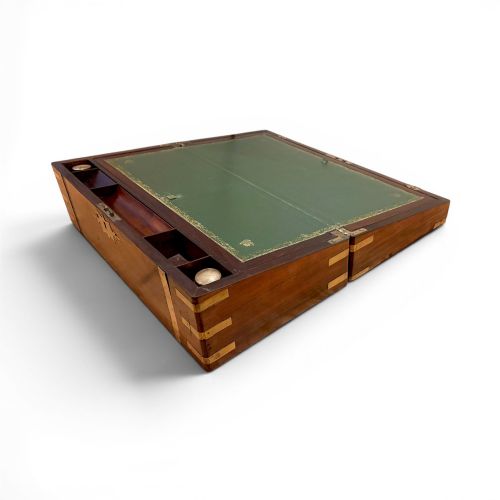
Inlaid decoration and painted details added surface pattern to mahogany and satinwood surfaces, while brass hardware secured hinges, locks and corners. Leather writing surfaces, often gold-tooled, provided a durable and smooth plane for penwork.
Object forms include standard bureaux, davenports, writing slopes, reading tables and stationery boxes.
What varies in quality
Quality reveals itself in the selection of figured wood veneers and the crispness of inlaid banding. Superior pieces display book-matched burr walnut or figured mahogany where grain patterns mirror each other precisely across the slope and drawer fronts.
Internal construction standards distinguish finer desks from standard production items. Dovetailed drawer joints, well-fitted stationery compartments and original brass hardware indicate meticulous workshop execution.
The Edwardian Slope Desk Glossary
- Bureau
- A writing desk featuring a sloping hinged lid that opens to reveal internal drawers and pigeonholes. This form often sits atop a chest of drawers.
- Davenport
- A compact writing desk featuring a sloping top and drawers opening to one side. It frequently incorporates a stationery compartment on the upper rear section.
- Writing Slope
- A portable or table-top box that opens to form an inclined writing surface. These boxes traditionally house compartments for inkwells, pens and paper.
- Satinwood
- A lustrous, hard timber native to the tropics utilised for fine furniture making. It provides a pale, golden yellow surface highly receptive to painted decoration.
Edwardian Slope Desk: Frequently Asked Questions
What is an Edwardian slope desk?
An Edwardian slope desk is a compact writing furniture piece from the early twentieth century featuring an inclined surface for correspondence.
These desks often incorporate fitted internal compartments for stationery and rest upon legs or drawer chests.
How do I use a slope desk?
The sloping lid opens to provide a sturdy writing angle while exposing small drawers and letter slots inside.
Many examples include leather writing inserts and spaces for inkwells or pen rests.
What woods were used for desks?
Cabinetmakers built these pieces using hardwoods such as mahogany, walnut, oak and rosewood. Burr walnut and satinwood veneers added decorative contrast to the exterior surfaces.
Brass fittings and leather inserts frequently completed the construction.
How can I tell the period?
Dating relies on timber selection, construction methods and stylistic revival motifs present in the woodwork. Edwardian items often combine lighter woods with Sheraton revival inlay patterns.
Victorian antecedents tend to employ heavier rosewood or burr walnut constructions with bolder proportions.