
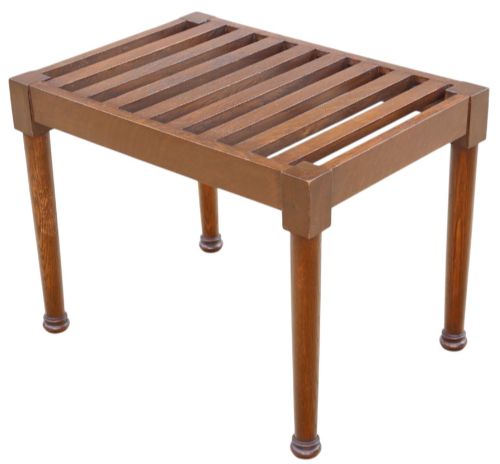
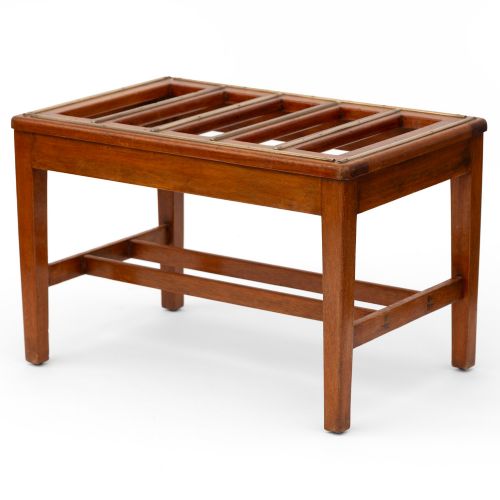
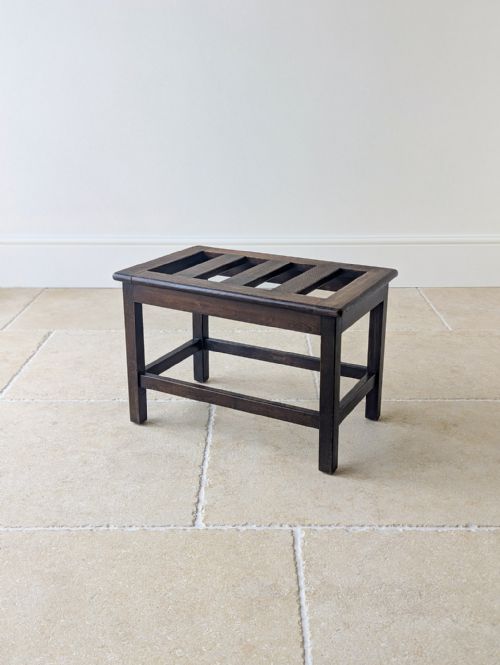
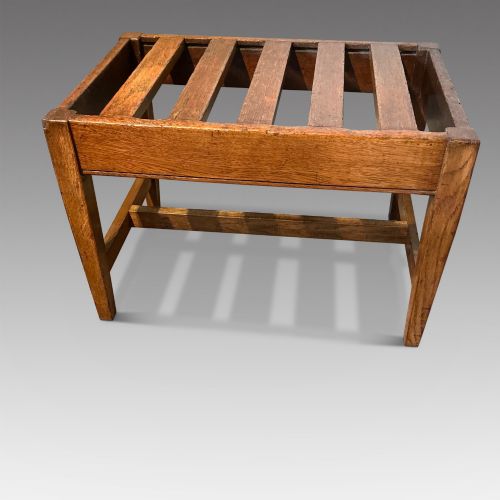
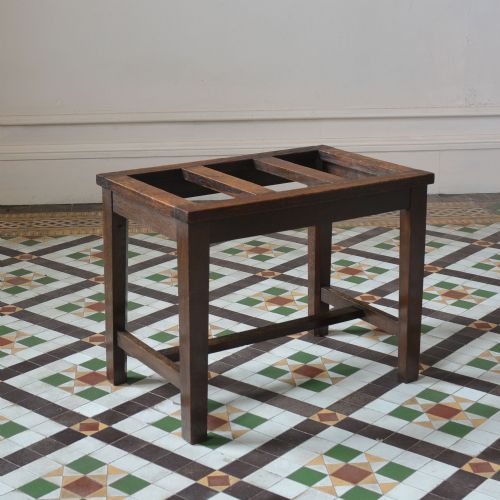
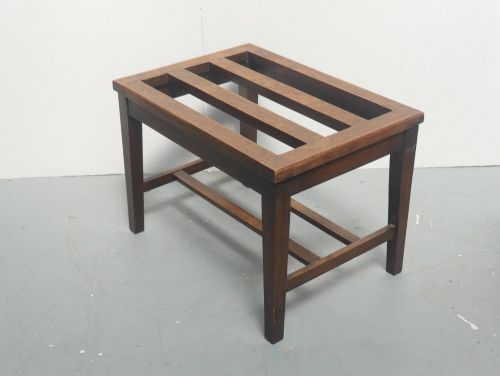
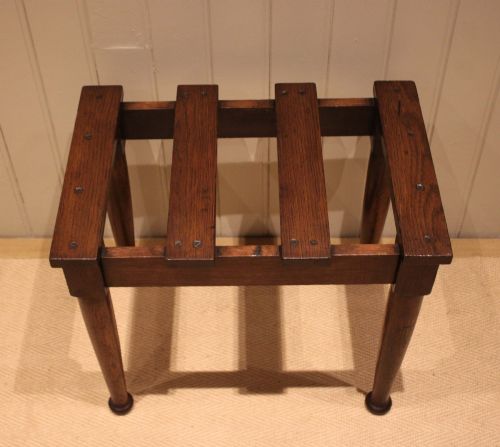
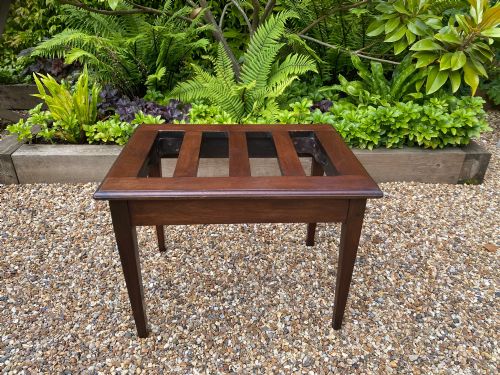
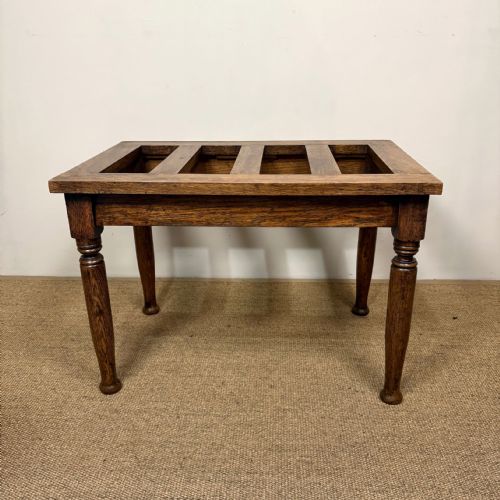
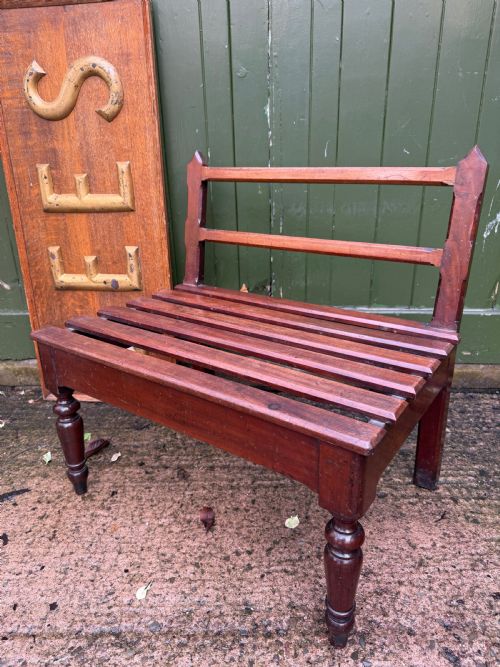


Edwardian Slatted Luggage Stand
An Edwardian slatted luggage stand is a practical piece of bedroom furniture designed to hold a suitcase, and people buy them to add period utility to a guest room.
Edwardian Slatted Luggage Stand
The edwardian slatted luggage stand is a practical bedroom furnishing designed to hold a trunk or suitcase at a convenient height for packing and unpacking. These pieces appear in forms such as luggage racks, luggage stands, trunks, and luggage, reflecting their original purpose in domestic chambers and hotels.
Most examples found here date from the edwardian and victorian periods, with pieces spanning the nineteenth century into the early twentieth century. They often display stylistic influences from english country house and traditional cabinet-making traditions.
How they were made
Makers constructed these stands using domestic and imported hardwoods such as oak, mahogany, ash, and pine, selected for their strength under heavy luggage loads. Joints were joined securely to withstand the weight of trunks, while wooden slats were spaced evenly across the top surface.
Hardware played an essential structural and decorative role, with brass fittings, hinges, and stamps appearing on many pieces. Some examples incorporate canvas or leather strapping alongside traditional wooden slats to support the weight of heavy travel chests.
Listings feature oak, mahogany, ash, pine, brass, canvas, and leather across the nineteenth and early twentieth centuries.
What varies in quality
Quality in these stands rests upon the selection of timber and the substantial nature of the proportions. Denser hardwoods like mahogany and oak provide superior rigidity compared to lighter pine or secondary woods.
Fine construction is evident in the joinery of the frame and the finish of the slats, whether polished to a high sheen or left with a simple polished surface. Details such as raised rear upstands or maker stamps elevate certain pieces above standard utility items.
Waring & Gillow·Louis Vuitton
The Edwardian Slatted Luggage Stand Glossary
- Upstand
- A raised barrier at the back of the luggage stand designed to prevent luggage from sliding off or marking the wall behind it.
- Slats
- The parallel strips of wood forming the horizontal surface upon which a trunk or suitcase rests.
- Luggage rack
- An alternative term for a stand, often denoting a folding or open-framed structure used in guest bedrooms or hotels.
- Malle penderie
- A wardrobe trunk designed for vertical storage of clothing during travel, often featuring internal compartments and drawers.
Edwardian Slatted Luggage Stand: Frequently Asked Questions
What was a luggage stand used for?
These stands were placed in guest bedrooms to hold a visitor's trunk or suitcase at a comfortable height for unpacking.
This kept heavy luggage off the floor and away from delicate carpets while keeping personal belongings accessible during a stay.
How do I date an oak luggage stand?
Dating relies on observing construction methods, timber choice, and the overall style of the frame. Victorian examples often feature deeper proportions and heavier turnings, while Edwardian pieces lean towards lighter woods and cleaner lines.
Maker stamps and brass hardware can also provide specific clues to the period of manufacture.
Are these stands sturdy enough for modern suitcases?
Most stands were built from solid hardwoods like oak and mahogany to support heavy nineteenth-century travel trunks. They easily accommodate modern luggage weight when the frame and joints remain solid.
Where should I place a luggage stand at home?
They fit naturally in a spare bedroom or dressing area to offer guests a convenient spot for bags. Their compact footprint also suits hallways or boot rooms as a striking decorative accent.