



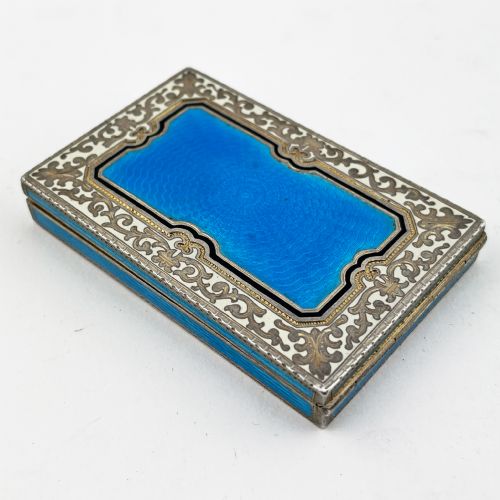

Edwardian Silver Snuff
Edwardian silver snuff boxes and small containers offer pocket-sized refinement, combining polished sterling metal with enamel, mother of pearl or gilt interiors.
Edwardian Silver Snuff
When searching for Edwardian silver snuff, you encounter small personal containers spanning the Victorian, Edwardian, and George V periods, alongside continental European pieces from around 1900. These items primarily take the form of snuff boxes, pill boxes, tobacco boxes, and card cases.
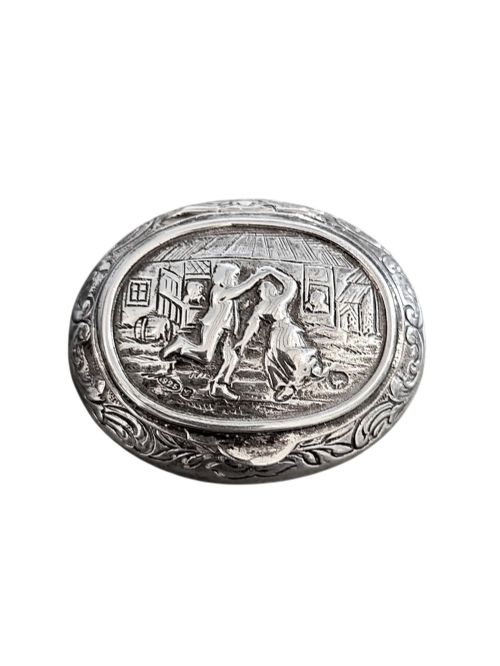
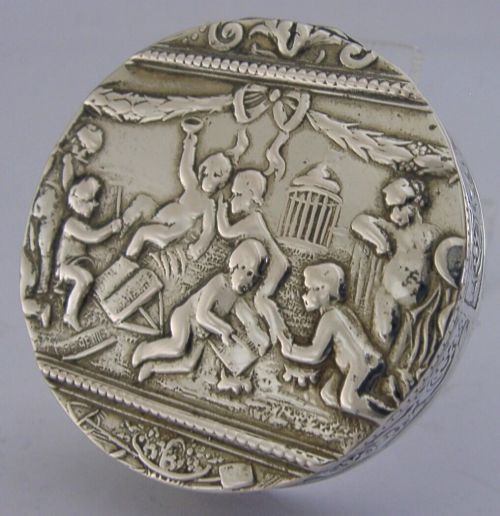
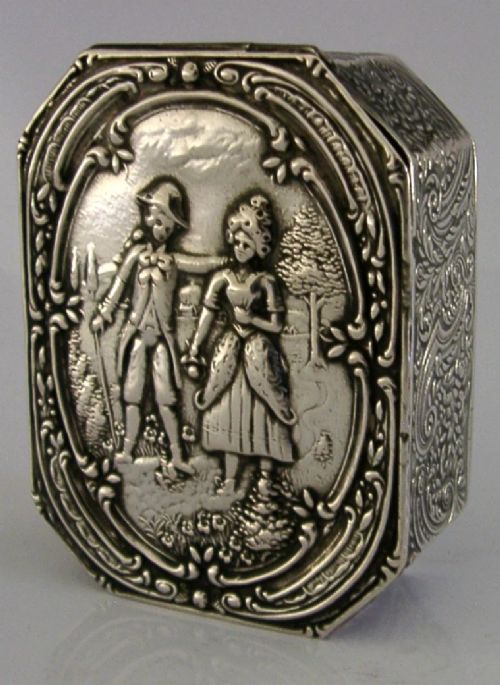
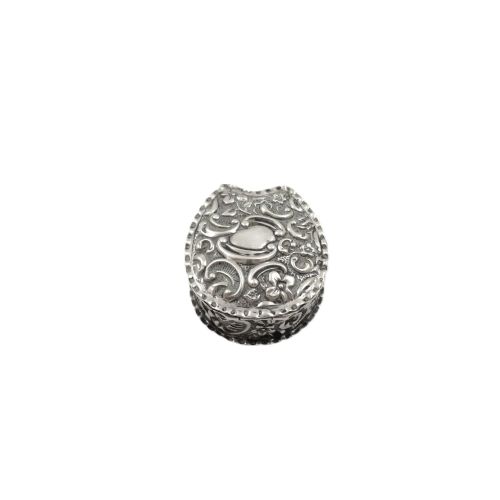
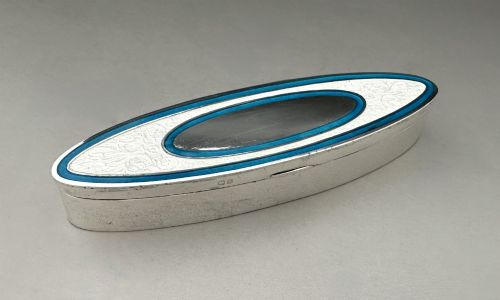
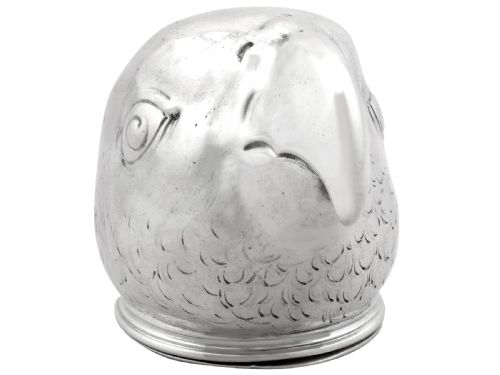
The Edwardian pieces on this page frequently include novelty animal shapes such as dogs, cows, and parrots, as well as figural cherub scenes and squeeze tobacco pebbles. Alongside plain or engine-turned sterling silver, many examples incorporate vitreous enamel, guilloche enamel, agate, and amethyst.
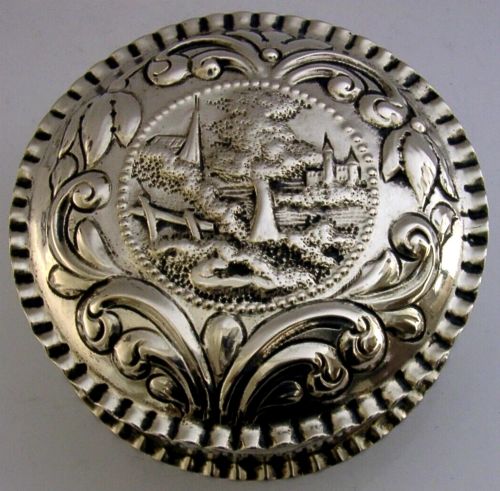
Continental workshops, particularly German Hanau and Austrian makers, contributed heavily to the heavier table boxes and enamel pieces seen alongside English sterling items. The selection ranges from small daily pocket boxes to substantial cast castle top table boxes.
Materials and construction
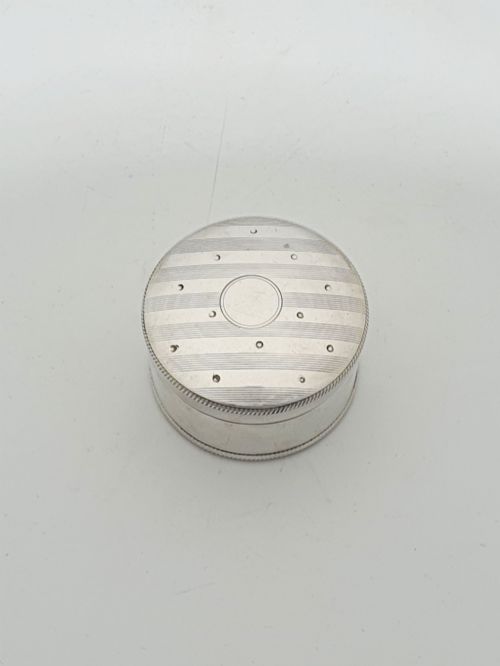
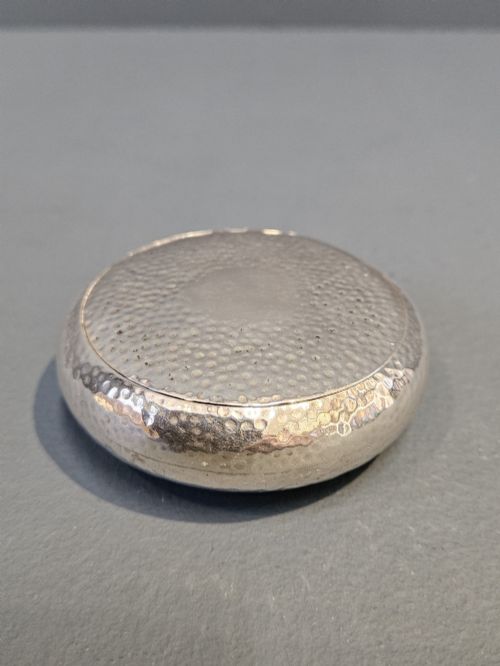
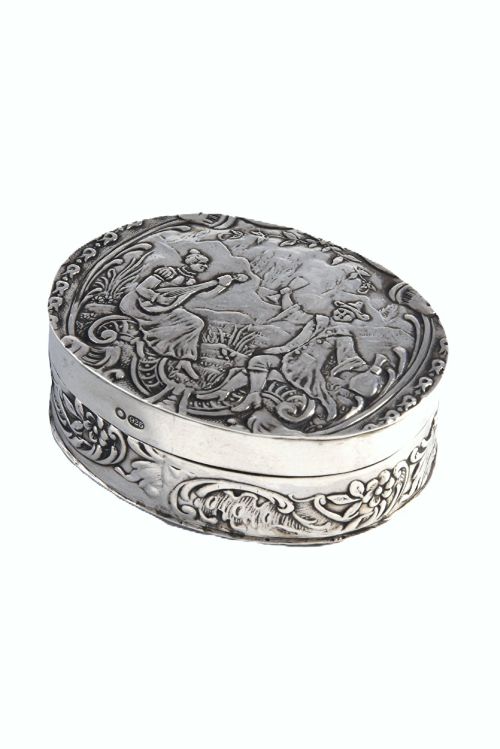
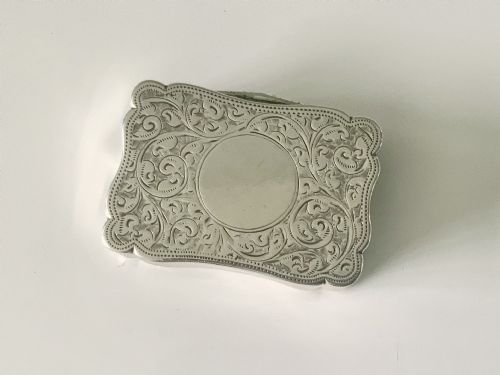
Silversmiths utilised sterling silver and solid silver as the primary body material, frequently applying gold gilt to the interiors of snuff and tobacco boxes to prevent corrosion from tobacco leaf oils. Planished surfaces, repoussé relief work, and engine turning provide textural contrast across the metal bodies.
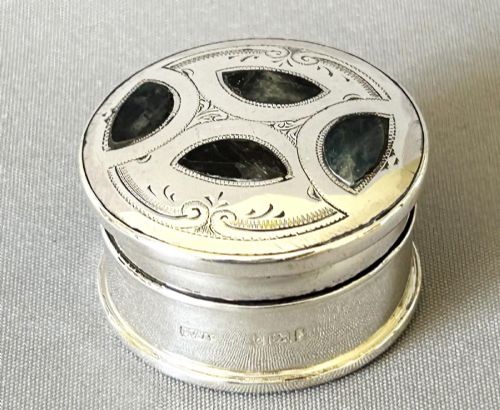
Decorative elements involve setting natural materials such as mother of pearl, agate, and amethyst directly into the silver housings, or fusing coloured vitreous and guilloche enamel onto the metal surface. Hinged lids and tight-fitting bezels require precise metalworking to ensure a secure closure for personal contents.
Edwardian Silver Snuff Retail Price Guide 2026
Typical asking prices for edwardian silver snuff among the pieces listed under this phrase on Sellingantiques today, from the lower quarter to the upper quarter. They describe what is for sale here now, not the wider market.
Silversmiths captured everything from farmyard cows to French bulldogs in solid silver, proving that Edwardian pockets needed plenty of animal company.
Assessing quality in silver boxes
Quality separates simple stamped production from superior hand-finished craftsmanship through the crispness of repoussé detailing and the complexity of engine-turned geometric patterns. Heavier gauge silver and cast figural elements indicate higher production standards than thin sheet metal pressings.
In enamelled pieces, the clarity and even application of vitreous or guilloche enamel without surface cracking distinguish finer studio work. The integration of fitted natural hardstones like agate or carved mother of pearl further elevates the standard of an individual box.
Hilliard & Thomason·W Comyns
The Edwardian Silver Snuff Glossary
- Engine turned
- A method of mechanical decoration that cuts intricate geometric patterns into the silver surface. This technique provides both visual texture and a tactile grip on pocket containers.
- Repoussé
- A metalworking technique where the silversmith hammers the silver from the reverse side to form raised relief designs on the front. It is frequently seen on Victorian and Edwardian box lids.
- Guilloche enamel
- A decorative process where enamel is layered over a metal surface that has been machine-turned with an engraved pattern. The underlying design shows through the translucent coloured glass.
- Gilt interior
- A thin layer of gold applied to the inside of a silver box. This coating protects the silver from the chemical reaction caused by stored tobacco or snuff.
- Castle top
- A box lid featuring a detailed architectural view of a specific building or castle, usually cast or engraved in high relief. These represent a distinct collectible sub-category of nineteenth and early twentieth-century table boxes.
Edwardian Silver Snuff: Frequently Asked Questions
What is the difference between a snuff box and a pill box?
Snuff boxes were traditionally designed to hold dry powdered tobacco for nasal ingestion, requiring a tight-fitting hinged lid to preserve freshness and prevent spills. They tend to be slightly larger or shaped specifically to fit easily into a waistcoat pocket.
Pill boxes share similar hinged construction and materials but are generally smaller in scale, intended originally for personal medications. In modern collections, the two terms often overlap depending on the box dimensions and internal volume.
How can I tell an Edwardian box from a Victorian one?
Differentiating these periods relies heavily on assay office hallmarks, date letters, and stylistic shifts in design. Victorian pieces often display heavier repoussé work and ornate floral motifs.
Edwardian items frequently lean towards lighter, refined forms, novelty animal shapes, or clean geometric engine turning influenced by early twentieth-century tastes. Continental imports from around 1900 share aesthetic traits with both British eras.
What are novelty silver boxes?
Novelty boxes are small silver containers fashioned into whimsical or realistic shapes rather than standard geometric forms. Common subjects include animals like bulldogs, cows, and parrots, designed to surprise and delight the user.
These pieces required skilled silversmiths to shape the metal bodies while retaining functional box lids and internal storage space. They served as both practical accessories and conversational desk items.
How do I care for antique silver and enamel boxes?
Antique silver boxes require gentle cleaning with a soft microfibre cloth to manage tarnish without wearing down fine hallmarks or engraved surface details. Polishing compounds should be kept away from hinged mechanisms and inset stones.
Enamelled and hardstone panels need particular care, avoiding liquid silver dips entirely to protect the glass and mineral settings. Storing them away from direct sunlight preserves the vibrant colours of the enamel work.