


Edwardian Silver Powder Jar
An edwardian silver powder jar is a dressing table essential, pairing precious metal mounts with glass or crystal to hold cosmetics in style.
Edwardian Silver Powder Jar
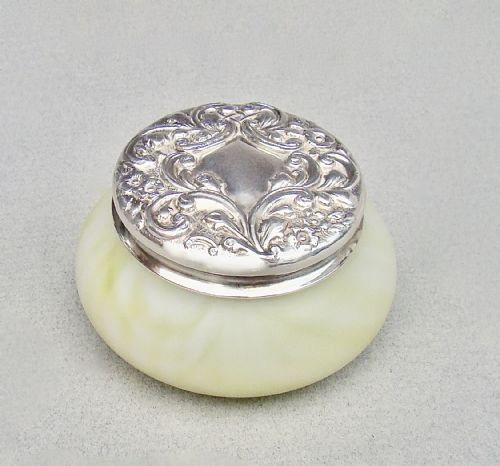
An edwardian silver powder jar sits on the dressing table as part of a vanity set, designed for creams, cosmetics or pins. These vessels appear in forms from simple lidded bowls to heavy heart-shaped boxes.
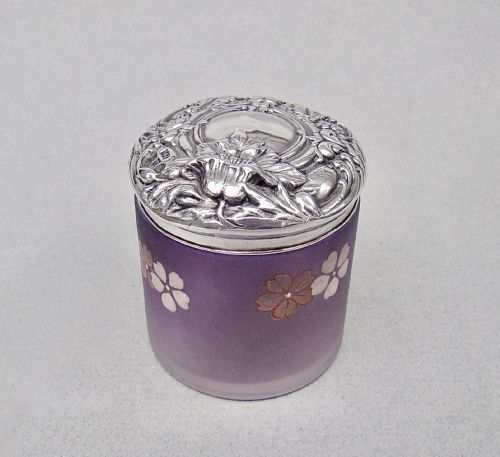
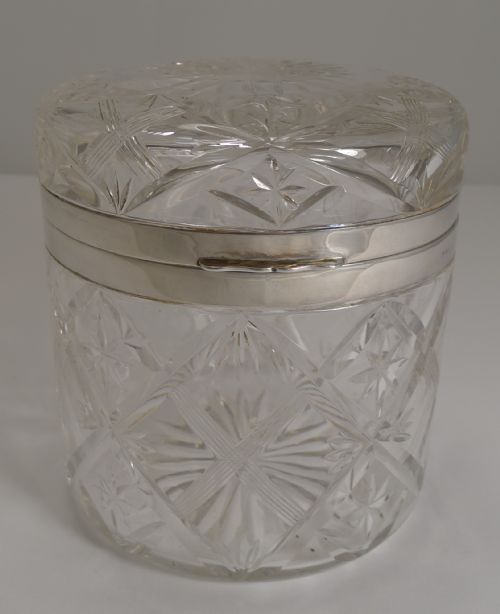
The pieces on this page span the Edwardian era alongside George V, Art Nouveau, and Art Deco designs. Makers housed these mounts upon bodies of cut glass, satin glass, and cranberry glass.
Origins stretch across the early twentieth century, capturing the transition from ornate floral motifs to geometric lines. You will frequently encounter vanity jars paired with matching trinket boxes.
Materials and construction
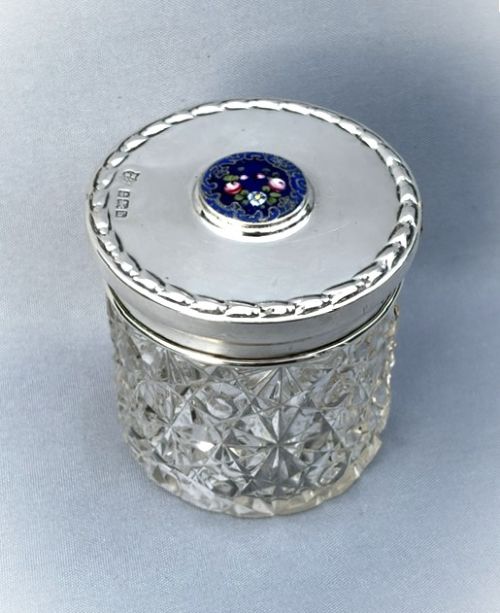
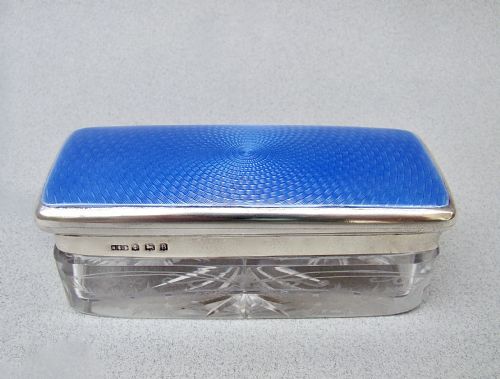
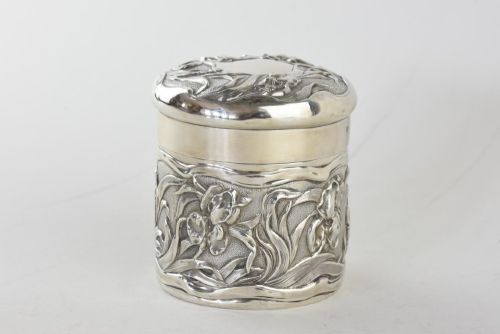
Silversmiths formed the lids and collars from sterling silver, often applying repousse decoration, pique work, or guilloche enamel directly to the metal surface. These mounts sit securely upon heavy vessels of cut crystal or moulded glass.
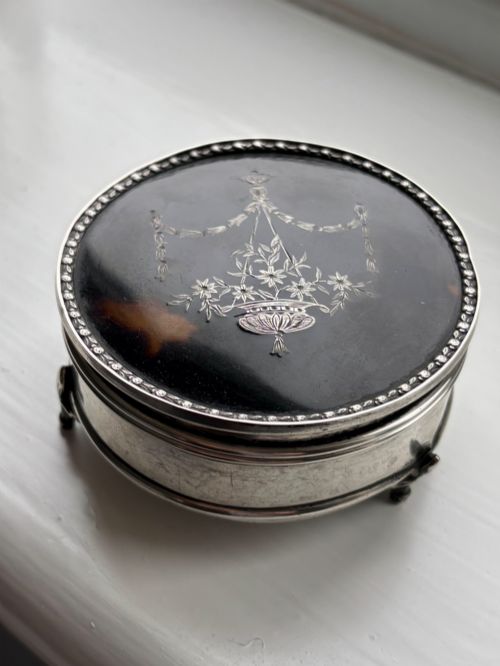
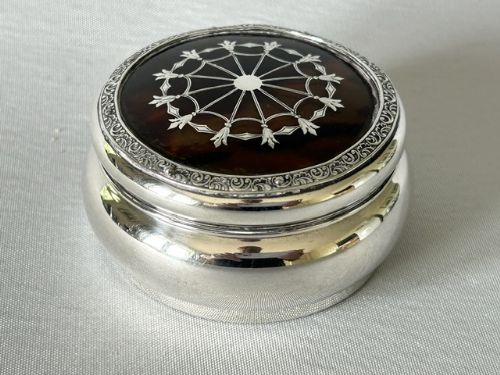
Makers integrated organic elements such as tortoiseshell and faux tortoiseshell into the silver frame, creating contrast with the translucent glass beneath. Enamel work brings vibrant colour to the top of the jar.
Glass bodies rely on deep cutting, frosting, or overlay techniques to catch the light on the dressing table. Each lidded box combines metalworking and glass production typical of early twentieth-century workshops.
Listings feature sterling silver combined with cut crystal, enamel, and tortoiseshell across Edwardian and Art Deco periods.
Evaluating the pieces
Quality rests on the crispness of the silversmith's stamp and the weight of the crystal body. Thicker glass vessels with deep hand-cut facets distinguish finer vanity jars from simpler pressed glass alternatives.
The condition of delicate elements like enamel and tortoiseshell dictates the standing of a piece. Intricate repousse work and signed maker's marks elevate a lidded box above standard factory output.
Ollivant and Botsford·Henry Clifford Davis·Goldsmiths and Silversmiths Company·A. Bromet and Co·Asprey and Co·Hasset and Harper
The Edwardian Silver Powder Jar Glossary
- Repousse
- Metalworking technique where the silver is hammered into relief from the reverse side. This creates raised floral and scroll patterns on the lid.
- Guilloche
- Decorative engine-turned engraving beneath a translucent layer of enamel. It produces repeating geometric patterns on the silver top.
- Pique work
- Inlay technique using tiny gold or silver pins pressed into tortoiseshell. It forms delicate motifs across the surface of the box.
- Sterling silver
- Alloy comprising pure silver and other metals to ensure durability. British pieces bear hallmarks indicating the assay office and year.
- Satin glass
- Type of glass treated with hydrofluoric acid to produce a velvety texture. It diffuses light softly across the vanity jar.
Edwardian Silver Powder Jar: Frequently Asked Questions
What is an edwardian silver powder jar?
An edwardian silver powder jar is a small vanity container featuring a sterling silver lid paired with a glass or crystal base.
These pieces were kept on dressing tables to hold loose powder, creams, or hairpins during the early twentieth century.
How do I clean the silver lid?
Clean the silver lid gently with a soft cloth designed for precious metals, taking care to avoid any enamel or tortoiseshell inset.
Keep polishing agents away from the glass body and organic materials to preserve the original surface.
Are these jars marked with hallmarks?
Most pieces carry British hallmarks stamped onto the silver rim or the edge of the lid, indicating the assay office and date.
These tiny marks help identify the maker and confirm the purity of the metal used in the mount.
How do I date these vanity pieces?
Dating relies on the date letters found within the silver hallmarks and the prevailing design style of the vessel.
Edwardian and Art Deco pieces show distinct shifts from flowing floral motifs to geometric lines.