



Edwardian Silver Plated Pair
When hunting an edwardian silver plated pair, collectors find matching candlesticks, candelabras, and entree dishes designed for formal dining.
Edwardian Silver Plated Pair
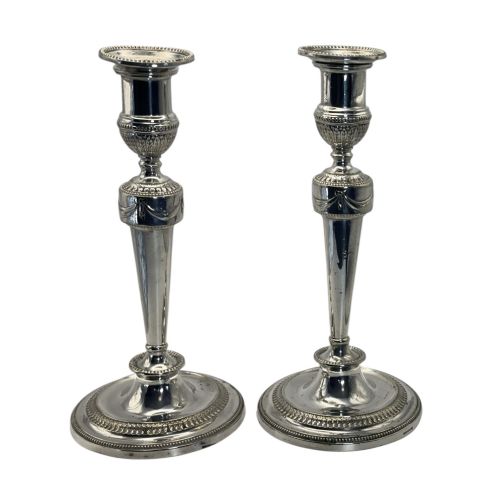
An edwardian silver plated pair encompasses matching dining and decorative accessories created around the turn of the twentieth century. These items include candlesticks, candelabras, entree dishes, claret jugs, and wine coasters that furnished polite households.
The objects frequently display historical revival styles such as Neoclassical, Rococo, and Adam alongside organic Art Nouveau or Jugendstil motifs. Most pieces originate from the Edwardian period, supplemented by items from adjacent Victorian and early twentieth-century decades.
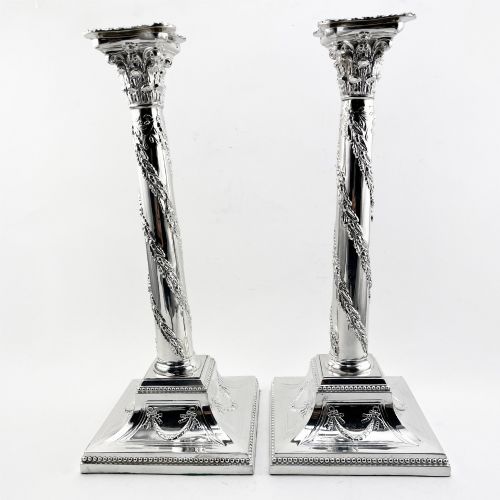
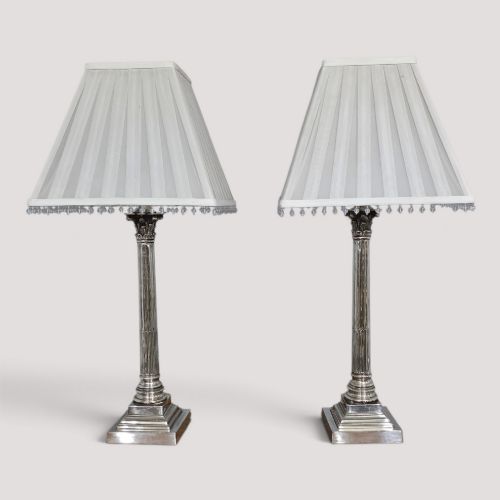
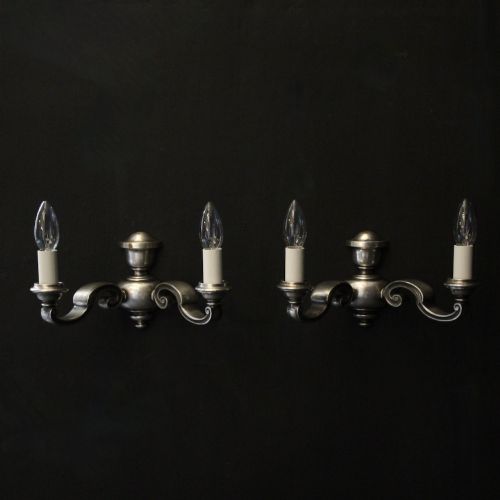
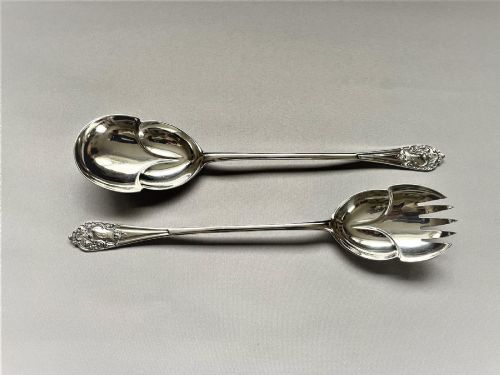
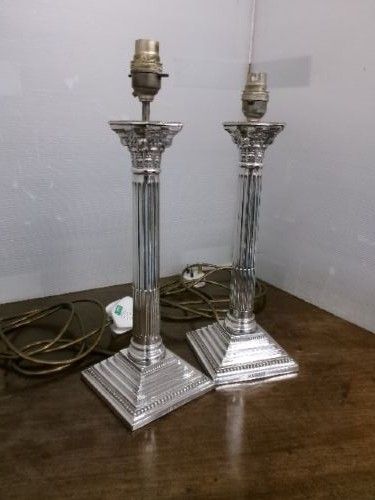
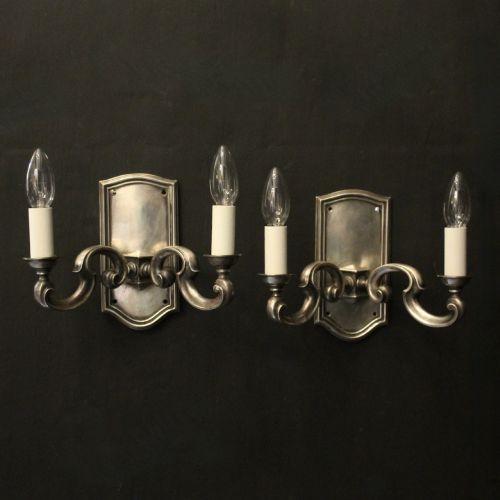
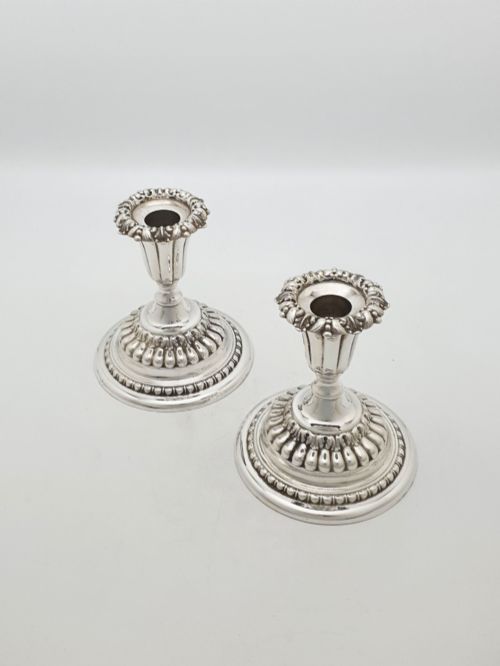
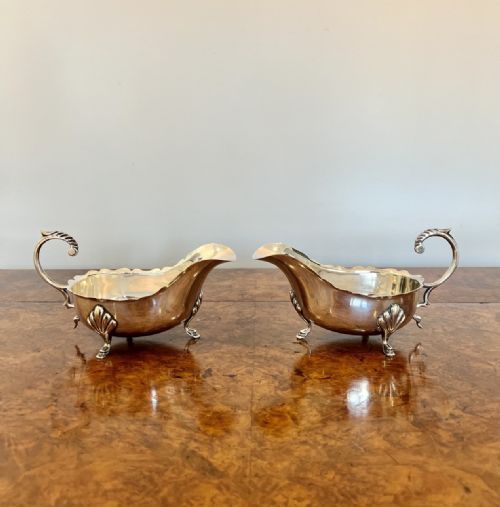
Candlesticks and table lighting feature prominently among surviving examples, often taking the form of Corinthian columns or sconces. Serveware such as sauce boats, salt cellars, grape scissors, and steak or fish servers also appear in matched sets.
How They Were Made
Manufacturers produced these objects primarily using base metals such as nickel silver, brass, or electroplated nickel silver as a foundation for a micro-layer of pure silver. This electroplating technique allowed workshops to create durable decorative pieces with the visual appeal of solid silver at a lower cost.
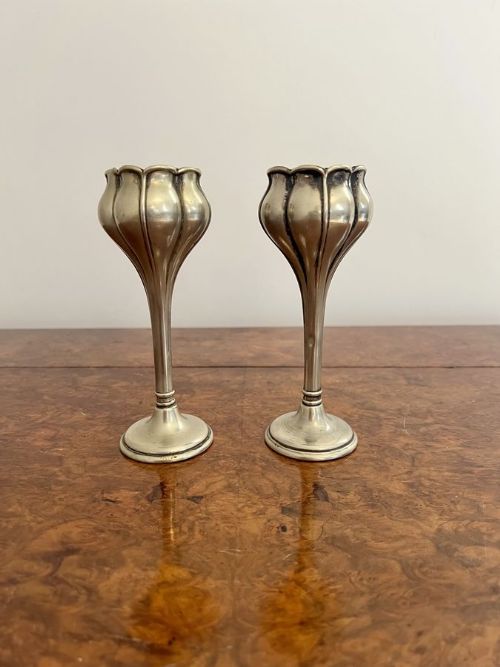
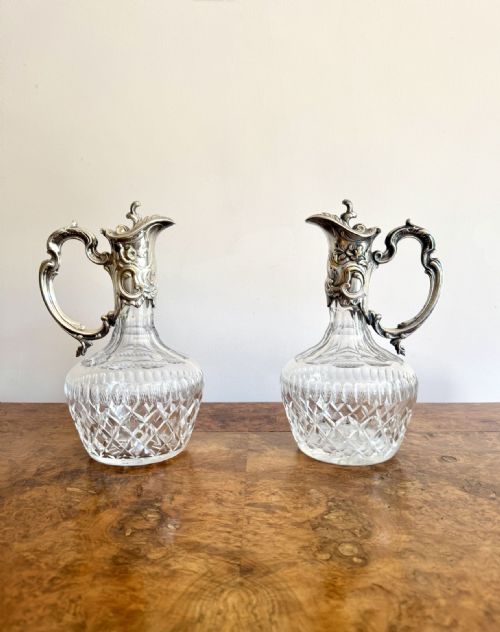
Many items incorporate cut glass or crystal components, particularly claret jugs, decanters, and condiment dishes, which paired with plated mounts and handles. Makers also utilised pewter and mahogany in specific decorative items like vases and wine coasters.
Decoration relied on hand-engraving, casting, and applied reeded or ornate borders following revivalist or contemporary aesthetic designs.
Edwardian Silver Plated Pair Retail Price Guide 2026
Typical asking prices for edwardian silver plated pair among the pieces listed under this phrase on Sellingantiques today, from the lower quarter to the upper quarter. They describe what is for sale here now, not the wider market.
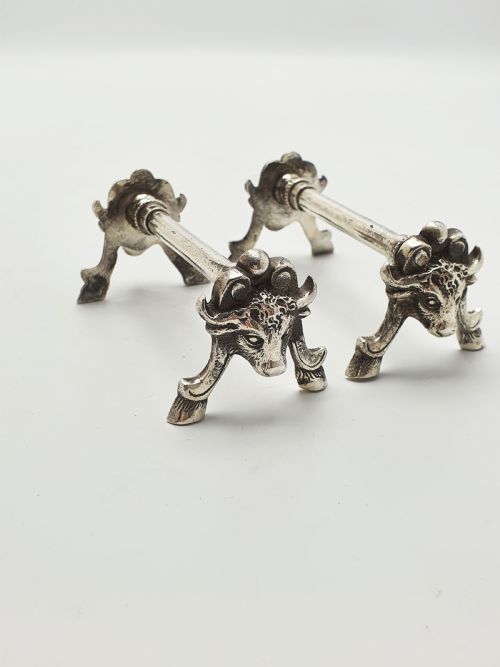
Squirrel nut dishes and bull head knife rests provide a whimsical touch to Edwardian dining tables.
What Varies in Quality
Quality depends on the crispness of cast ornamentation and the depth of hand-engraving on the silver plated surfaces. Pieces produced by recognised makers demonstrate superior weight, heavier gauge metal, and more refined proportional balance.
The integrity of the underlying plating and the retention of the silver layer determine the overall preservation of the piece. Superior examples maintain intact plating without base metal bleeding through high points or edges.
Mappin & Webb·Thomas Bradbury·Hamilton & Inches·John Pound & Co·WMF·Asprey
The Edwardian Silver Plated Pair Glossary
- Electroplated Nickel Silver
- A base alloy of copper, nickel, and zinc coated with a thin layer of silver through an electrolytic process. This material served as the primary substrate for the majority of manufactured dining wares.
- Entree Dish
- A covered serving vessel used for presenting main courses at the dining table. These typically feature removable handles allowing the base to function as two separate dishes.
- Claret Jug
- A pouring vessel designed for serving red wine, combining a glass or crystal body with a silver plated handle, collar, and hinged lid.
- Candelabra
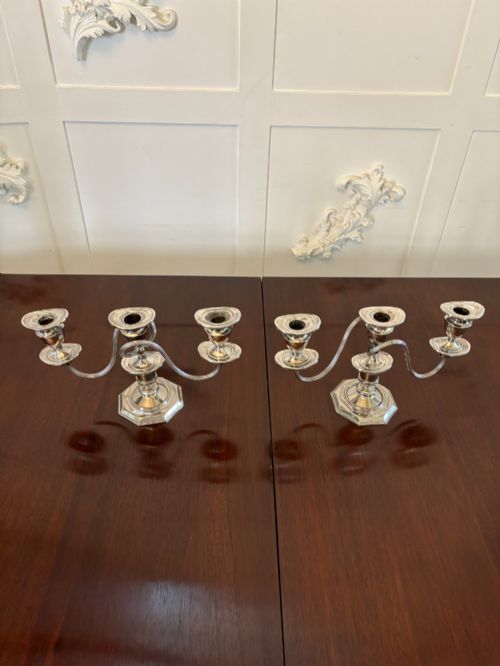
- A multi-branched lighting device holding two or more candles, often designed with removable arms to convert into a standard single candlestick.
Edwardian Silver Plated Pair: Frequently Asked Questions
Were these pieces used daily?
Middle and upper-class households utilised these items extensively for formal dining, entertaining guests, and daily household service. Matching sets ensured a unified tablescape during breakfast, dinner, and evening gatherings.
Over time, regular polishing caused minor wear on raised edges, revealing the yellowish nickel or brass base beneath the silver coating.
How do I date an Edwardian piece?
Examine the style signatures, ornamentation motifs, and any maker marks stamped onto the underside or rims of the metal. Edwardian designs often blend classical revival aesthetics with early manifestations of Art Nouveau.
Items from this era typically date between nineteen hundred and nineteen ten, sitting chronologically between late Victorian production and the First World War.
Can I use these for modern dining?
These serving dishes, coasters, and lighting fixtures integrate easily into contemporary homes for hosting dinner parties or everyday use. Candlesticks and wine coasters require minimal adjustment to serve modern tables.
Care should be taken with acidic foods or liquids left inside plated vessels to protect the historical surface from permanent tarnishing.