

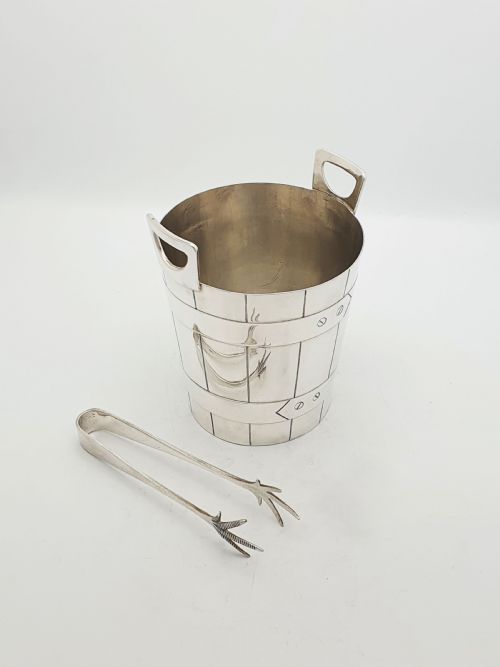


Edwardian Silver Plate Barware
Edwardian silver plate barware brings together claret jugs, ice buckets, and spirit flasks designed for entertaining.
Edwardian Silver Plate Barware
Edwardian silver plate barware encompasses serving pieces intended for the dining table and drinks cabinet, ranging from claret jugs and champagne holders to large cocktail trays and locking spirit flasks. Buyers searching this phrase look for functional drinking accessories that date primarily from the early twentieth century, though examples span from the late Victorian period into the Art Deco era.
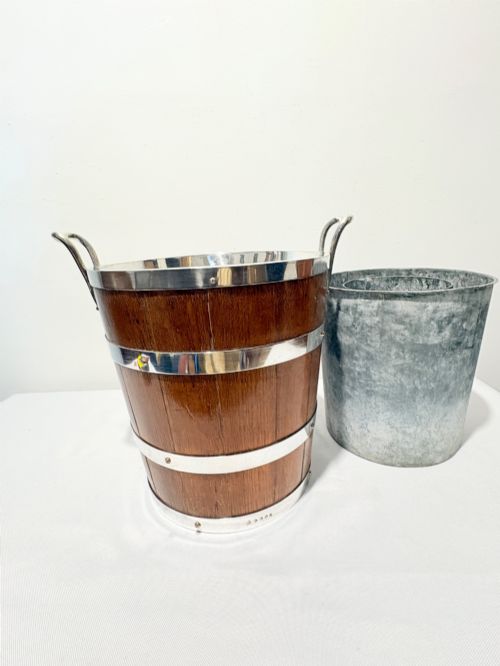
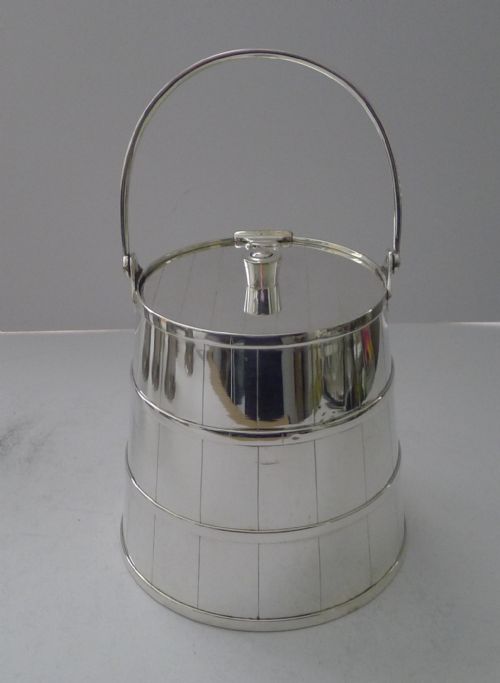
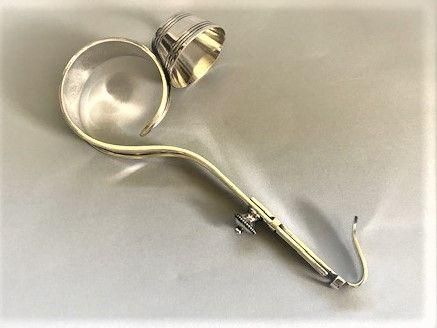
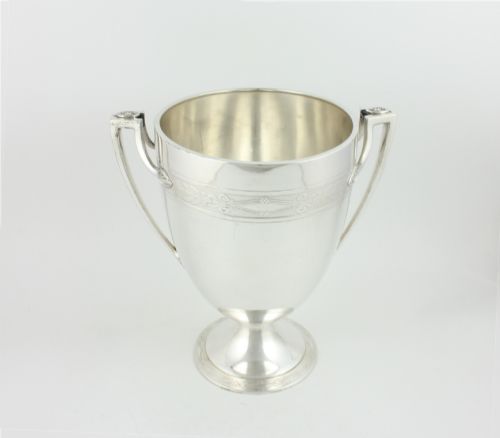
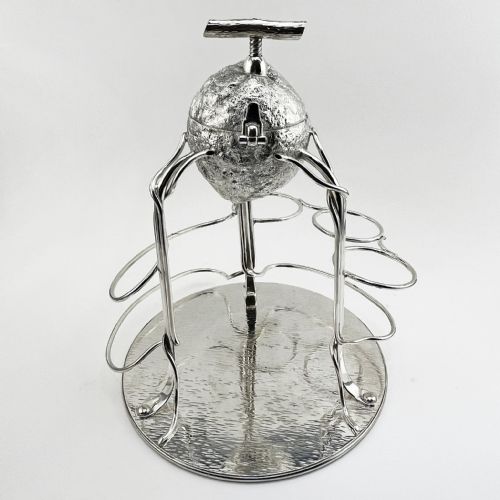
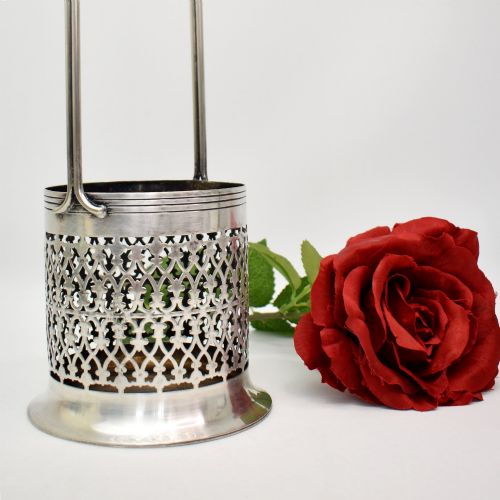
The objects on this page reflect the formal hospitality of their time, including multi-bottle tantalus frames, ice buckets with cut glass or ceramic liners, and specialised lemon squeezers. These pieces combine silver plate with materials such as oak, cut glass, and cranberry glass to serve wine, spirits, and mixed drinks.
How They Were Made
Manufacturing methods rely heavily on electroplated nickel silver, known as EPNS, which provides a durable base metal coated in a layer of silver. Artisans combine this plated metal with turned oak bodies, cut glass inserts, and ceramic creamware liners to create practical containers for ice and liquids.
Decorative details involve casting, chasing, and glass cutting, visible in handles shaped as claws, hinged lids on tankards, and geometric Art Deco facets on cocktail shakers. Silver mounts are fitted securely to glass and wood components using collars and locking mechanisms.
Listings feature barware spanning the late nineteenth century through the Art Deco period, incorporating oak, cranberry glass, and cut crystal.
What Varies in Quality
Quality in these drinking vessels rests upon the crispness of the casting, the weight of the silver plate over the base metal, and the integrity of any fitted glass or ceramic liners. Substantial gauge metal and well-balanced handles distinguish superior examples from lighter commercial production.
Maker attribution and design complexity also separate standard items from exceptional pieces, particularly when a functional object incorporates novelty forms such as thistles or barrels, or mechanical locking frames by recognised makers.
Christofle·Hukin & Heath·Brook & Son Edinburgh·J Dixon·Dawson·Walker & Hall·William Suckling·James Dixon & Sons·Harrods
The Edwardian Silver Plate Barware Glossary
- Silver Plate
- A base metal, often nickel silver or EPNS, coated with a thin layer of pure silver through an electrolytic process. This technique allowed Victorian and Edwardian manufacturers to produce affordable tableware with the appearance of solid silver.
- Tantalus
- A locking frame that holds decanters securely by their necks, preventing the removal of the stoppers and access to the contents without a key. The name derives from the mythological figure of Tantalus, as the drinks are visible yet physically withheld.
- Claret Jug
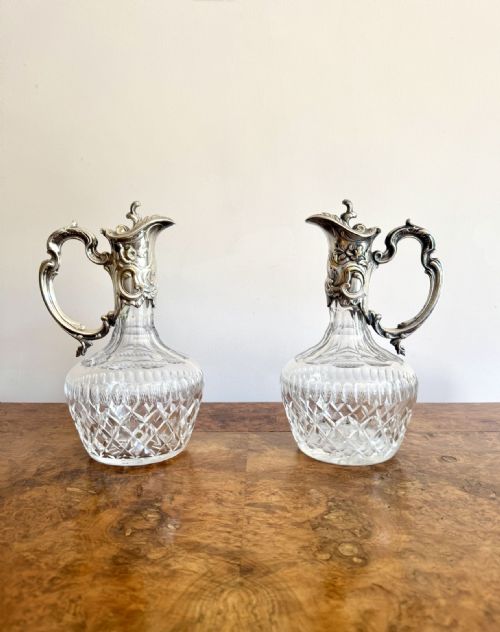
- A specialised vessel designed for serving red wine, typically featuring a glass body paired with a hinged silver plated lid, handle, and collar. Edwardian examples often display intricate cut patterns or cranberry glass.
- EPNS
- An abbreviation for electroplated nickel silver, denoting a common base alloy of copper, nickel, and zinc coated in silver. It provides the structural rigidity required for heavy barware items like ice buckets and trays.
Edwardian Silver Plate Barware: Frequently Asked Questions
What is a tantalus?
A tantalus is a locked wooden or metal frame designed to secure spirit decanters and prevent unauthorized pouring. The locking mechanism holds the stoppers firmly in place so the bottles cannot be removed.
These pieces were kept in studies or dining rooms during the Edwardian period. They allowed hosts to display fine whiskey and brandy while retaining control over the consumption of expensive spirits.
How do I clean silver plate barware?
Silver plate requires gentle cleaning with a specialised silver polish and a soft cloth to protect the underlying metal coating. Abrasive cleaners should be avoided because they strip away the thin layer of silver.
Items with glass liners or wooden elements need careful handling to keep moisture away from vulnerable joints. Wash glass components separately in warm soapy water before drying thoroughly.
How do I identify Edwardian pieces?
Edwardian items often feature specific stylistic traits that bridge late Victorian ornamentation and clean early twentieth-century lines. Makers marks, registration numbers, and retailer stamps can help narrow down the production date.
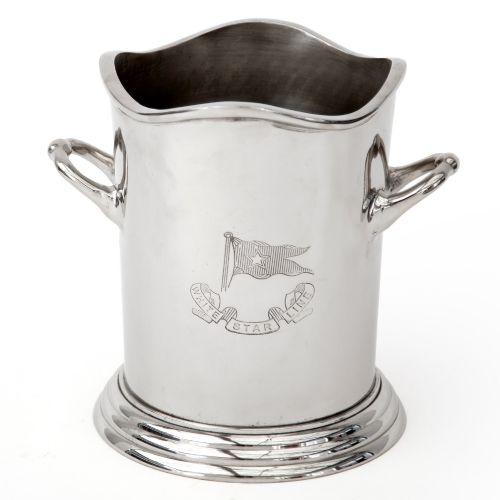
Design motifs from this era include Queen Anne revivals, simple geometric cocktail shakers, and maritime-themed vessels. The materials used, such as specific cuts of glass and oak mounts, also point toward the early 1900s.
Were these items used for cocktails?
Many Edwardian and later pieces accommodate the growing popularity of mixed drinks through specialised cocktail shakers, long serving trays, and citrus squeezers. Items by makers like Hukin & Heath and William Suckling directly catered to this shift in entertaining.
Traditional barware such as claret jugs and wine coolers sat alongside these newer forms on drinks trays. Together, they formed the complete equipment for hosting guests in the home.