



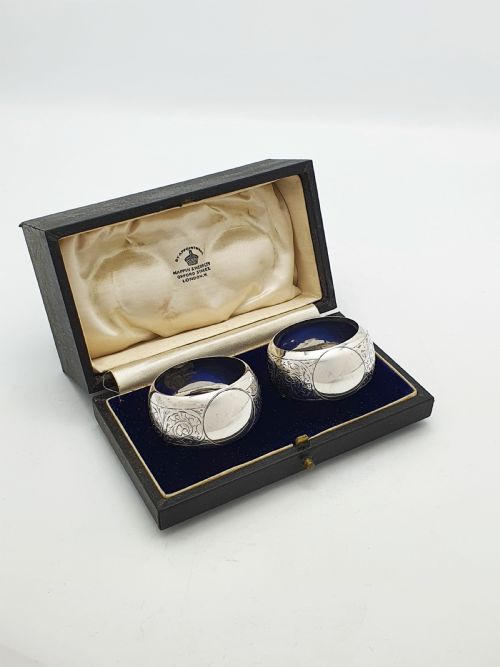

Edwardian Silver Napkin Rings
When you handle edwardian silver napkin rings, you hold small domestic markers of early twentieth-century dining habits that still function at the modern table.
Edwardian Silver Napkin Rings
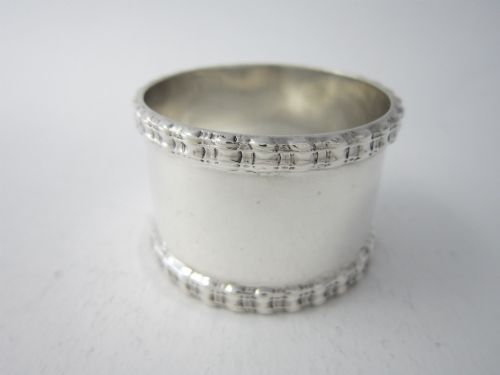
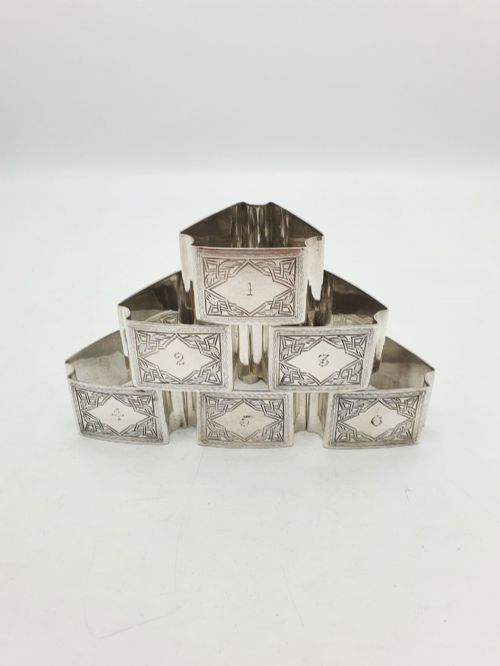
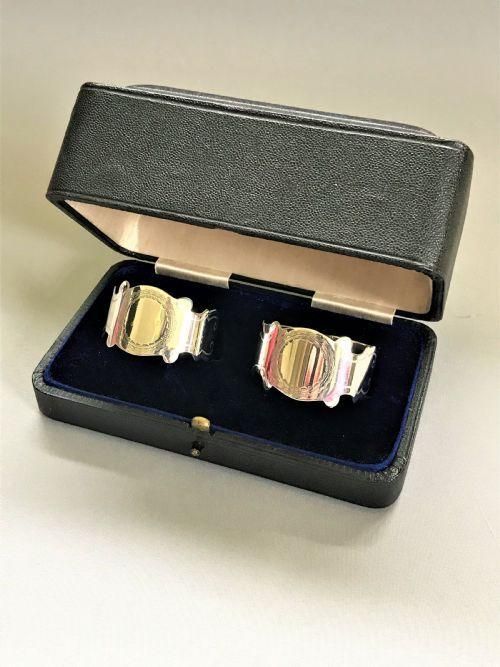
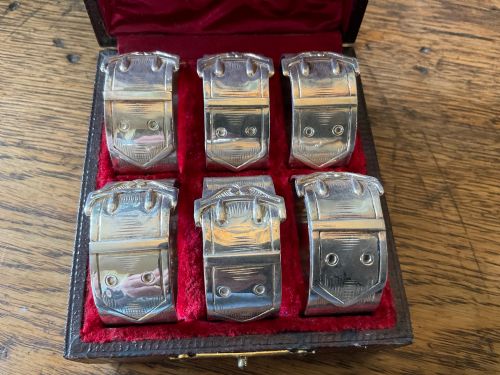
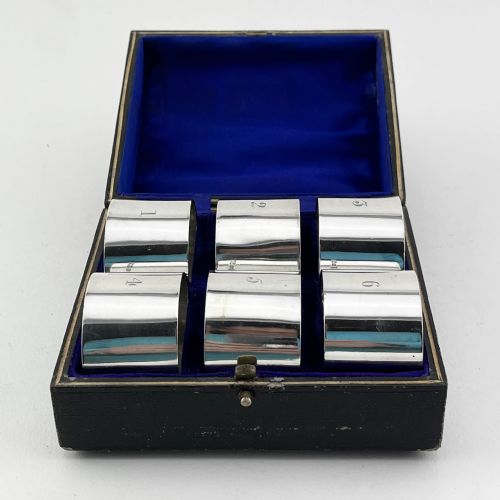
When searching for edwardian silver napkin rings, collectors encounter small cylindrical bands produced primarily during the first decade of the twentieth century. These domestic items frequently appear individually, in pairs, or as matched sets of four or six.
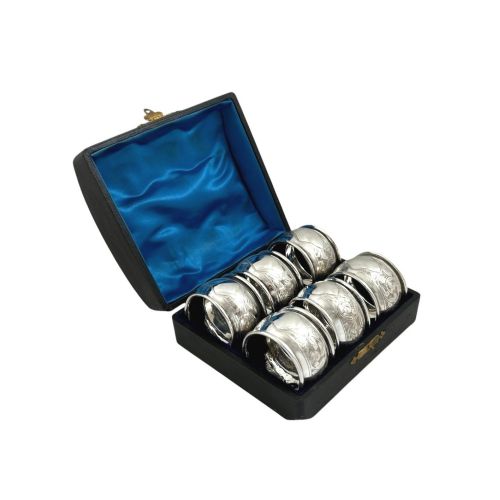
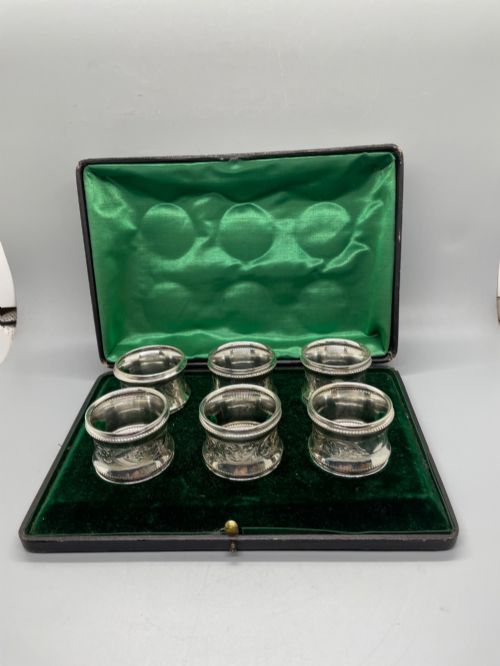
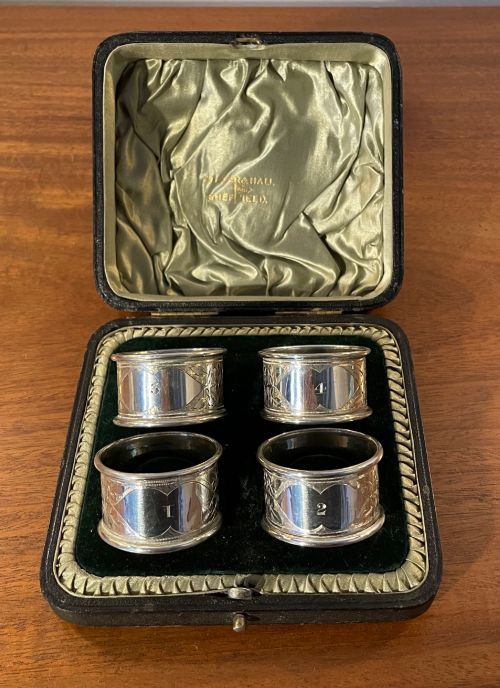
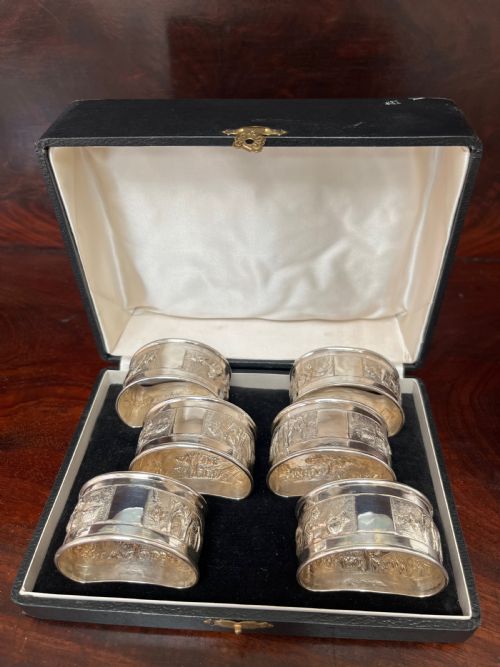
The common form on this page is the sterling silver band, often accompanied by its original fitted presentation case lined with silk, velvet, or leatherette. Many examples also survive in silver plate or incorporate decorative variations such as numbered sequences or engraved scroll borders.
Materials and Technique
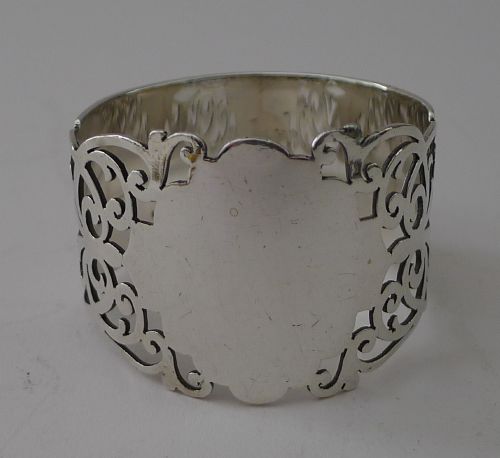
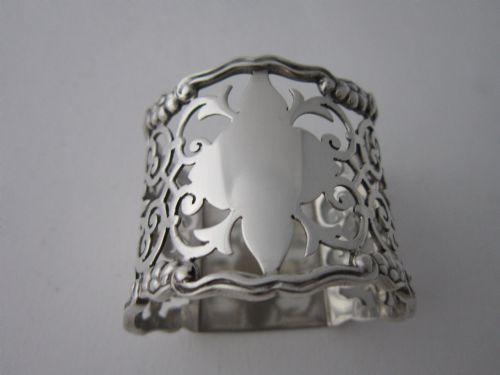
Makers fashioned these pieces predominantly from sterling silver or silver plate, utilising sheet metal formed into cylinders and soldered at the seam. Specialised workshops employed techniques such as piercing, engine-turning, and hand engraving to ornament the exterior surfaces.
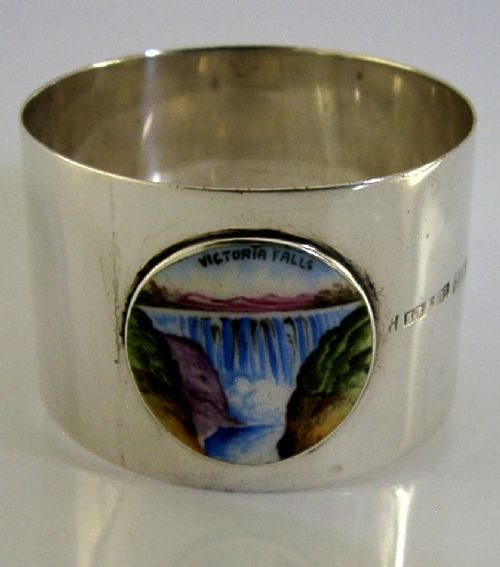
Arts and Crafts examples introduce alternative materials like pewter and vibrant champlevé enamel set into the metalwork. Presentation packaging relied on wooden frames covered in leatherette and lined internally with padded silk or velvet to cushion the rings.
Edwardian Silver Napkin Rings Retail Price Guide 2026
Typical asking prices for edwardian silver napkin rings among the pieces listed under this phrase on Sellingantiques today, from the lower quarter to the upper quarter. They describe what is for sale here now, not the wider market.
Distinctions in Quality
The distinction between ordinary production and superior work rests on gauge thickness and the crispness of decorative detail. Heavier silver gauges resist denting and provide a more substantial feel in the hand, whereas thin metal yields easily to pressure.
Provenance and presentation elevate certain pieces above standard utility items. Complete sets retained in their original silk-lined boxes by recognised makers command greater interest than loose, unboxed examples with worn or replaced linings.
C.T. Burrows & Sons·Liberty & Co·Archibald Knox·Mappin & Webb·Guild of Handicraft·Cooper Brothers·Robert Chandler·Rolason Brothers·Walker & Hall·William Henry Sparrow·William Oliver·Broadway & Co
The Edwardian Silver Napkin Rings Glossary
- Sterling silver
- An alloy containing 92.5 percent silver by mass, with the remainder consisting of copper or other metals. This standard grade is stamped with hallmarks indicating the assay office and date.
- Hallmark
- An official stamp or series of marks applied to precious metals in Britain to indicate the standard of purity, the maker, and the year of assay. These tiny punches provide the primary method for dating individual pieces.
- Pierced work
- A decorative technique where metal is cut through to create openwork patterns such as latticework, foliage, or geometric designs. This method lightens the visual weight of the object.
- Cased set
- A collection of items housed in a custom-fitted storage box designed specifically to protect them. These boxes usually feature hinged lids and internal fabric linings.
- Silver plate
- A base metal, such as copper or nickel brass, coated with a thin layer of pure silver. Plated items offer the appearance of solid silver at a lower manufacturing cost.
Edwardian Silver Napkin Rings: Frequently Asked Questions
How were napkin rings used?
Families utilised individual napkin rings at the dining table to identify and store cloth napkins between formal meals. This practice reduced laundry frequency in households before the widespread availability of modern washing machines.
Each member of the household possessed a designated ring, often distinguished by monograms, numbers, or specific decorative borders. At the conclusion of a meal, diners placed their folded napkins back into the respective rings until the next gathering.
How do I date a napkin ring?
Dating relies heavily upon the stamped hallmarks found on the rim or interior surface of sterling silver examples. These tiny impressions show specific letters for the assay year, alongside symbols for the maker and town.
Items lacking clear hallmarks require stylistic analysis, comparing the shape, engraving style, and fitted box to known pieces from particular decades. Edwardian examples typically display softer floral motifs or plain cylindrical bodies characteristic of the early twentieth century.
Are cased sets original?
Original presentation cases match the exact count and internal contours of the enclosed napkin rings. The velvet or silk lining usually shows minor impressions where the metal rested over decades of storage.
Substitutions become apparent if the rings rattle loosely within the slots or if the dimensions fail to align with the fitted partitions. Original boxes frequently feature retailer stamps inside the hinged lid from the period of manufacture.
How do I care for silver rings?
Regular handling helps maintain a natural shine on sterling silver by preventing heavy tarnish accumulation. When cleaning becomes necessary, a soft cloth and mild silver polish remove dark oxidation without scratching the surface.
Storage in dry, acid-free environments protects both the silver and any original fabric-lined boxes from moisture damage. Avoiding rubber bands and certain plastics prevents chemical reactions that accelerate tarnishing on the metal.