


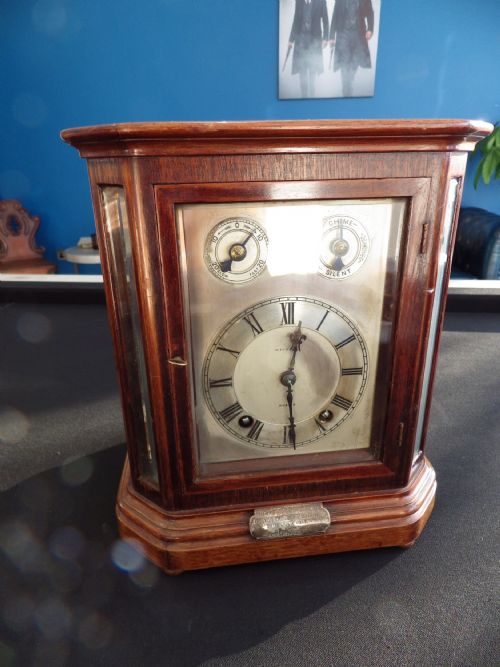


Edwardian Silver Mantel Clock
An edwardian silver mantel clock brings the precision of period horology together with the decorative grace of precious metal.
Edwardian Silver Mantel Clock
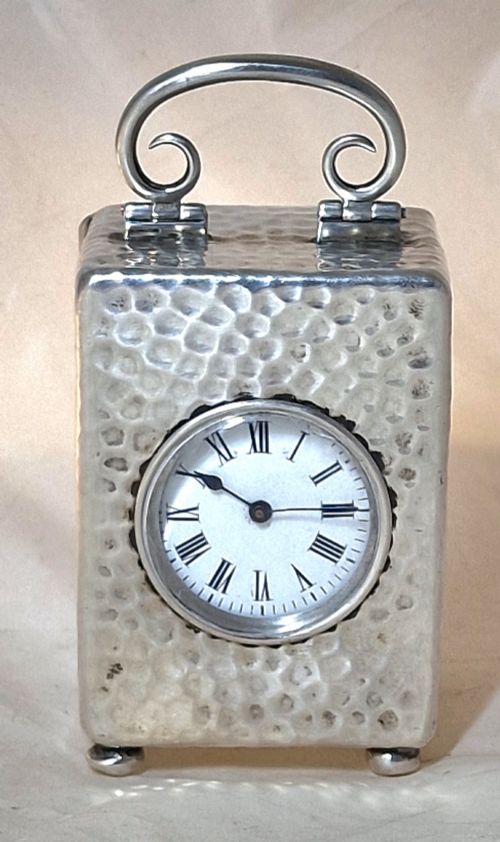
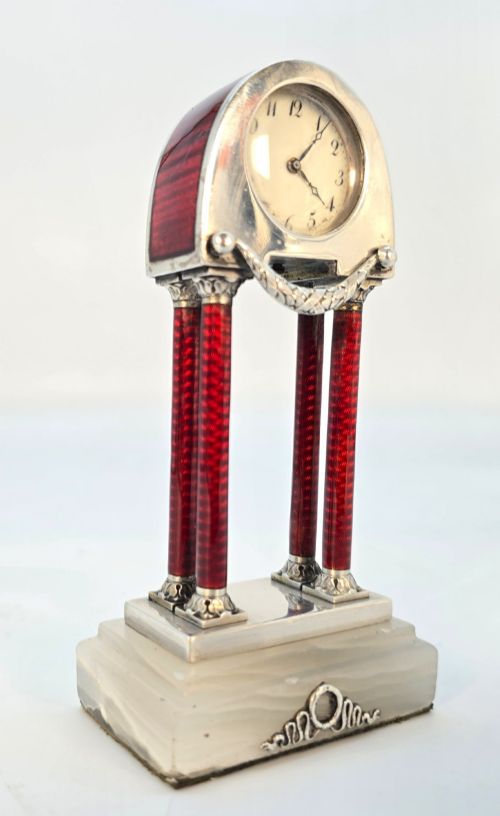
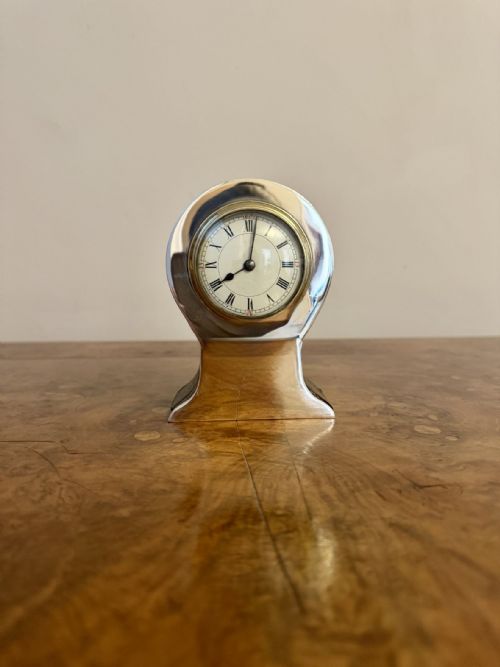
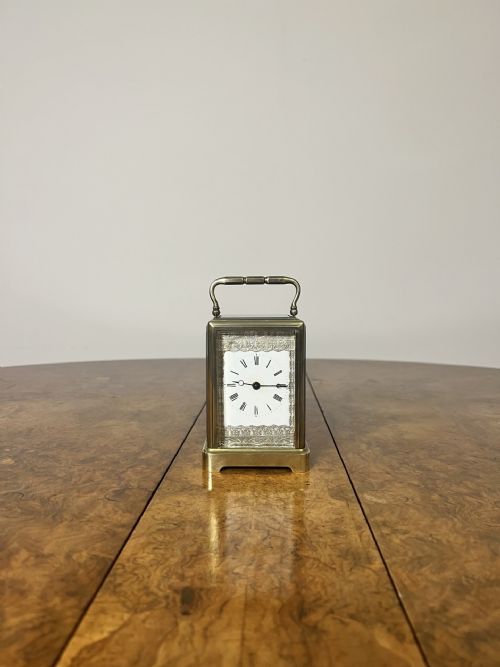
When you search for an edwardian silver mantel clock, you encounter timepieces housed in solid sterling silver, silver-fronted cases, or silver-plated designs from the early twentieth century. These pieces range from compact carriage clocks and boudoir timepieces to architectural mantel clocks and bracket clocks.
The version you are most likely to meet on this page is the silver carriage clock or silver-fronted mantel clock bearing hallmarks from London, Birmingham, or Chester during the Edwardian period and adjacent decades around nineteen hundred. They frequently feature white enamel dials with black Arabic or Roman numerals, sometimes accompanied by pierced or chased floral and scroll decoration in the case metal.
Alongside purely silver examples, related pieces emerge in oak, mahogany, and brass, demonstrating the diverse materials utilised by makers working in the Edwardian, Art Nouveau, and Arts and Crafts styles.
How They Were Made
Makers constructed these timepieces using precious metals, timber, and glass, combining sterling silver or silver-clad mounts with sturdy wooden carcases made from mahogany, oak, and burr yew. Silver components were frequently hallmarked, stamped, chased, or hammered by hand before being fitted to the clock chassis.
Mechanical movements relied on brass plates, steel pivots, and sometimes fusee or platform escapements, with enamel dials fired at high temperatures to produce a durable white surface for the painted numerals. Bevelled glass panels often protected delicate carriage clock movements, allowing a clear view of the internal gear trains and escapements in motion.
Materials span solid sterling silver, silver-clad copper, tortoiseshell, brass, and timber carcases in oak and mahogany.
What Varies In Quality
The distinction between ordinary production and superior work rests on the crispness of the silver chasing, the weight and gauge of the metal used in the case, and the complexity of the internal movement. Top-tier examples exhibit deep, unrubbed repoussé ornamentation, substantial silver framing, and high-specification movements such as fusee or quarter-striking mechanisms.
Lesser pieces rely on thin silver plating over base metals or simpler timepiece movements without striking trains. The integration of high-grade materials like enamel, tortoiseshell, or inlaid timber further separates standard domestic timepieces from exhibition-quality works.
Georg Adam Scheid·David Veasey for Liberty and Co·William Comyns·Winterhalder and Hofmeier·Henry Matthews
The Edwardian Silver Mantel Clock Glossary
- Carriage clock
- A portable spring-driven timepiece with a handle, originally designed for travel during the nineteenth and early twentieth centuries. They frequently feature glass panels on all sides.
- Fusee
- A conical pulley connected to the mainspring by a chain or cord, designed to equalise the torque of the spring as it unwinds to maintain steady timekeeping accuracy.
- Hallmark
- An official stamp applied by an assay office to indicate the purity of precious metal content, the place of testing, and the year of manufacture.
- Ting-tang
- A two-hammer striking mechanism that sounds on two different bells or gongs to mark the quarters or half-hours.
- Boudoir timepiece
- A small, decorative desk or mantel clock intended for private domestic rooms rather than principal reception spaces.
Edwardian Silver Mantel Clock: Frequently Asked Questions
How do I wind an edwardian silver mantel clock?
Most mechanical clocks of this era require a specific key inserted into the winding arbours on the dial or backplate. Turn the key gently until resistance is felt, taking care not to overwind the mainspring.
Some carriage clocks and fusee models require weekly winding, while others run for shorter or longer durations depending on the gear train configuration.
Where should I place a silver mantel clock?
Position your clock on a stable, level surface away from direct sunlight, moisture, and extreme temperature fluctuations. Mantelpieces, desks, and secure side tables provide ideal settings where vibrations are minimal.
Ensuring the surface is completely flat helps the pendulum or platform escapement beat evenly and maintain accurate time.
How do I clean the silver case safely?
Use a soft, dry microfibre cloth to remove dust from the silver surfaces regularly. Avoid abrasive polishes and liquid dips, which can damage delicate chasing, hallmarks, or adjacent glass and enamel.
If tarnish requires attention, apply a gentle, high-quality silver cream sparingly with a cloth, keeping it well away from the clock movement and dial.
How do I identify an Edwardian period piece?
Examine the hallmarks on the silver case for date letters corresponding to the reign of King Edward the Seventh, spanning nineteen hundred and one to nineteen ten. Stylistic indicators like Art Nouveau curves and specific maker marks also point directly to this era.
Comparing the dial typography and case architecture with documented examples from the same decade confirms the chronological attribution.