





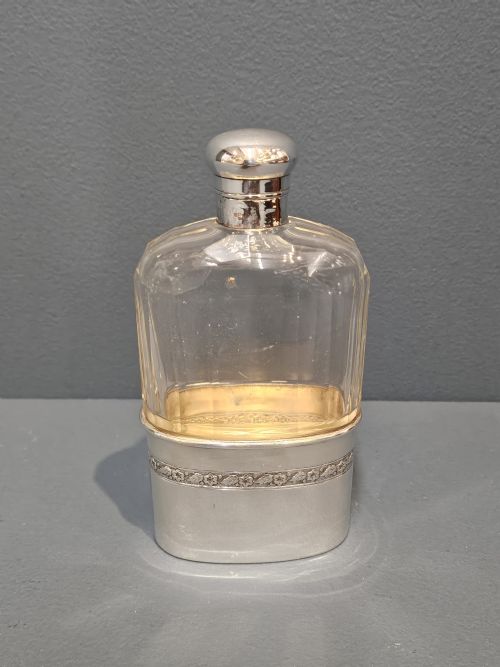


Edwardian Silver Hip Flask
An edwardian silver hip flask slips neatly into a pocket, offering a measured sip of spirit from a portable vessel shaped for travel.
What these flasks are
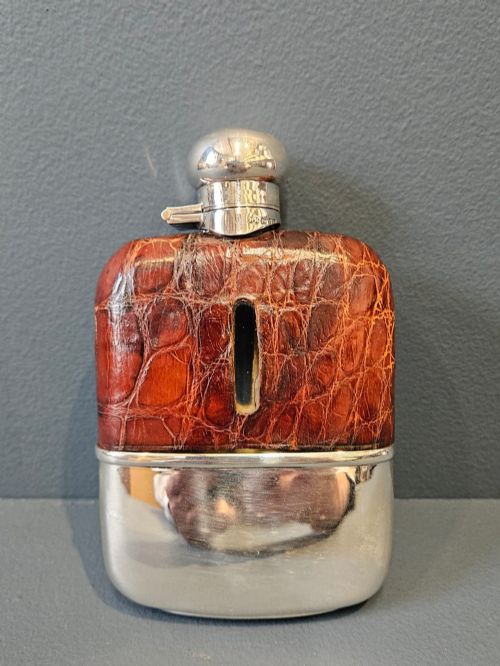
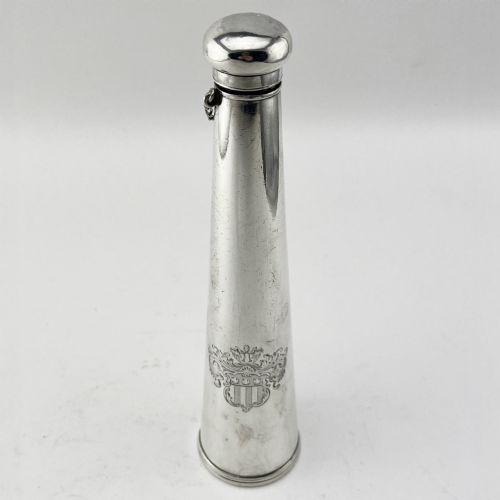
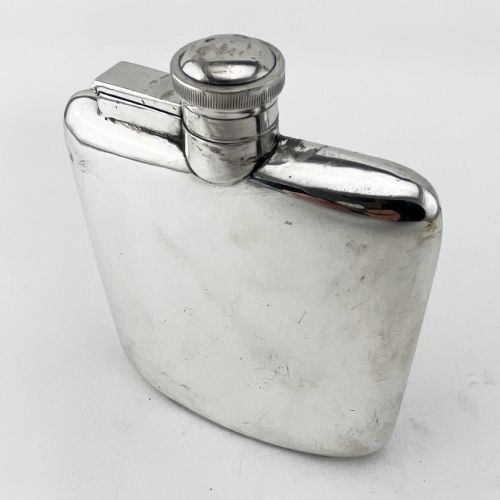
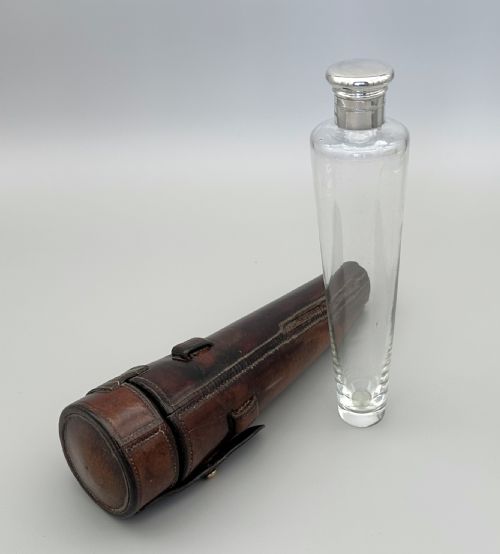
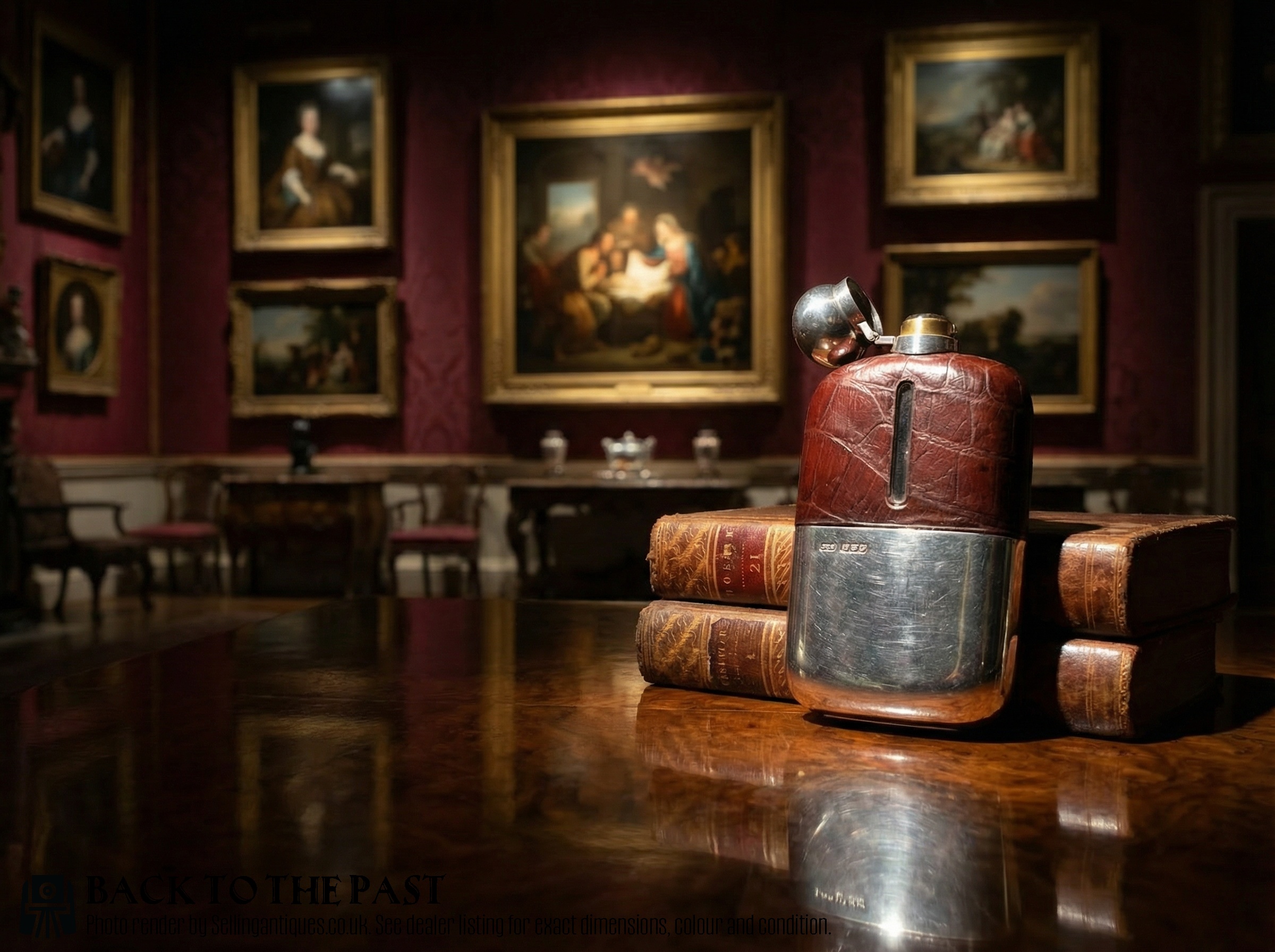
An edwardian silver hip flask takes several distinct forms, most frequently appearing as a solid sterling silver body or a combination of sterling silver and cut glass. Pieces often feature curved profiles designed to fit comfortably against the body, alongside variants wrapped in crocodile leather or fitted with a detachable cup.
The objects connect directly to period pastimes such as hunting and outdoor pursuits, serving as practical barware for carrying spirits. The evidence records examples produced across the broader Edwardian era alongside adjacent pieces from the George V and Art Deco periods.
How they were made
Silversmiths utilised sterling silver, sometimes applying a gilt finish, alongside components in cut glass and crocodile leather. Metal bodies were shaped through smithing and stamping, often finished with engine turning to texture the surface.
Lids incorporated secure bayonet fitting hinged mechanisms to prevent leakage during transit. Hallmarks stamped into the metal recorded the assay office, city, and year of manufacture.
Retail Price Guide 2026
Typical UK retail prices for edwardian silver hip flask, calculated from the Sellingantiques database of over a million retail prices indexed since 2003. This retail price guide relies exclusively on Sellingantiques data; no external sources or auction records are used, so the figures do not describe the wider market.
The archive records edwardian silver hip flask pieces incorporating sterling silver, glass, cut glass, and crocodile leather across multiple manufacturing years.
What varies in quality
Quality rests in the weight of the solid silver and the crispness of any engine turned patterning or armorial engraving. Finer examples display precise joinery around the hinged bayonet fittings and well-fitted detachable cups.
The choice of secondary materials marks another distinction, where clear cut glass and genuine crocodile leather elevate the piece above plain metal versions.
W A Ellwick Ltd·James Dixon·Deakin Francis Ltd·Drew & Sons·J C Vickery·Alfred Clark·G Nathan & R Hayes·Mappin & Webb·Elkington·Asprey
The Edwardian Silver Hip Flask Glossary
- Sterling silver
- A silver alloy containing 92.5 percent pure silver by mass and 7.5 percent other metals, usually copper. This standard composition provides the durability required for portable containers.
- Bayonet cap
- A type of bottle closure that pushes down and twists onto a pin to lock securely. It prevents accidental spills in a pocket.
- Engine turning
- A decorative technique using a machine to engrave intricate geometric patterns into metal. It adds grip and visual texture to the surface.
- Silver gilt
- Sterling silver that has been coated with a thin layer of gold on its surface. This treatment protects the silver from tarnishing in specific areas.
- Assay office
- A body that tests the purity of precious metals and stamps them with official hallmarks. Offices operate in cities such as London, Chester, and Sheffield.
Frequently Asked Questions
What were edwardian silver hip flasks used for?
These vessels carried spirits for personal refreshment during outdoor activities, particularly hunting and field sports.
Their curved shapes allowed them to sit discreetly inside a pocket or bag.
How do I identify an edwardian silver hip flask?
Examination of the metal often reveals hallmarks stamped with assay office symbols and date letters corresponding to the early twentieth century.
Stylistic cues include engine turned bodies, bayonet caps, and combinations of cut glass and leather.
What is a captive cap on a flask?
A captive cap remains attached to the flask by a small hinged arm so it cannot be misplaced during use.
Many period examples instead utilise a removable bayonet fitting lid.
How should I clean my silver flask?
Gentle washing with warm water and a mild soap preserves the antique metal surface without causing abrasion.
Avoid harsh chemical dips that strip away the character built up over decades.