




Edwardian Silver Desk Clock
An edwardian silver desk clock brings polished metal and steady ticking to a writing surface, offering the timeless utility of a portable timepiece housed in precious casing.
Edwardian Silver Desk Clock
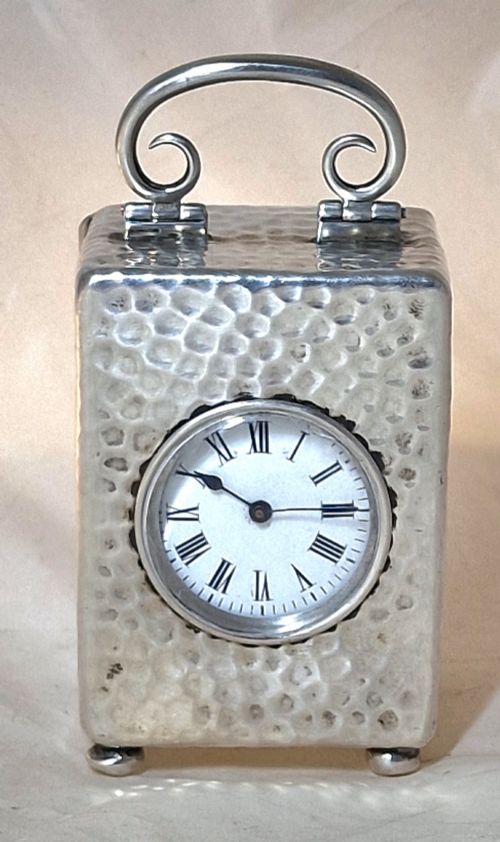
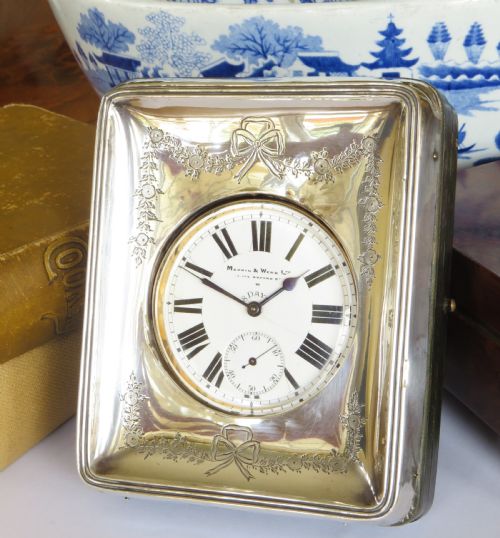
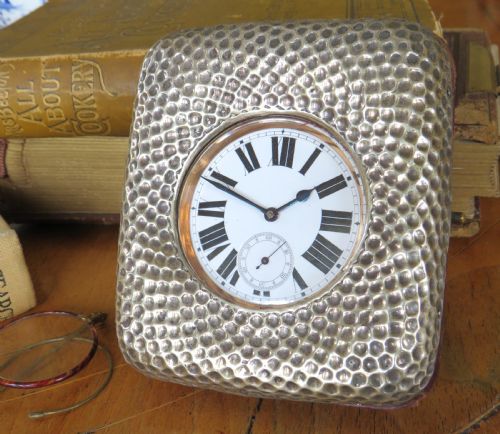
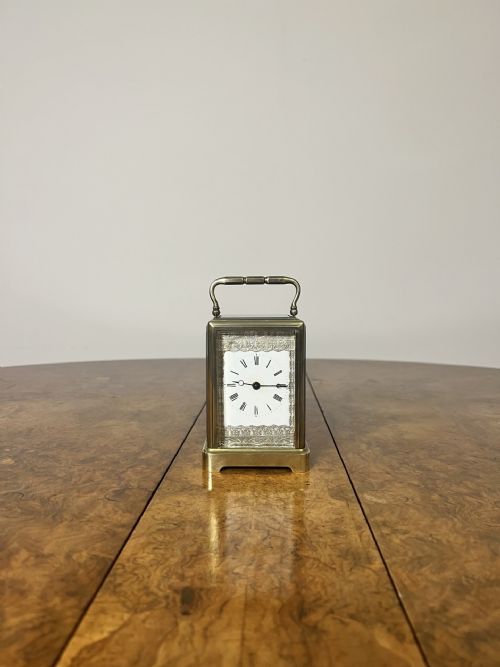
When you search for an edwardian silver desk clock, you encounter portable timepieces built for workspaces and travel, ranging from compact carriage clocks to folding travel cases.
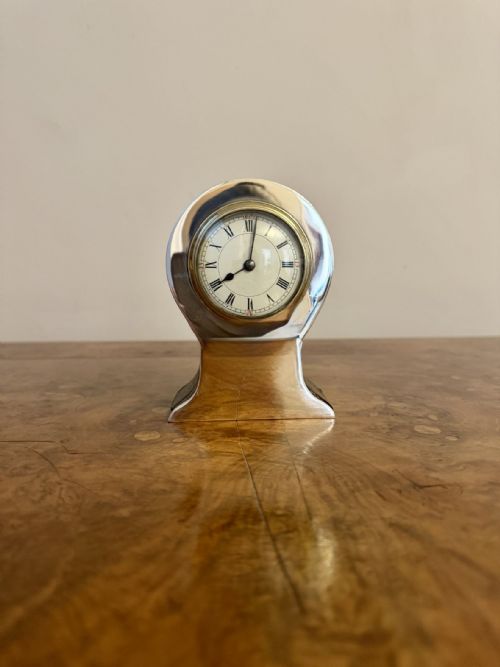
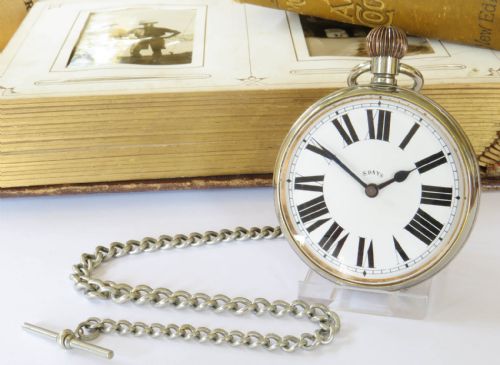
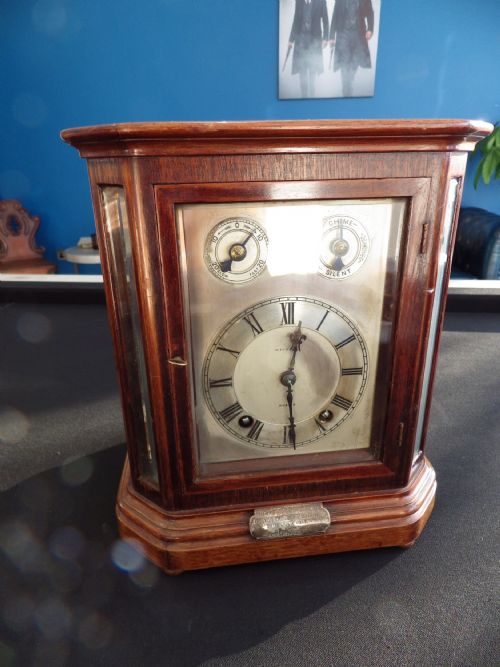
The objects appearing here span the Edwardian era alongside surrounding decades like 1900 and 1910, taking forms such as carriage clocks, mantel clocks, timepieces, and strut clocks.
Many examples combine sterling silver cases with glass, enamel, tortoiseshell, or brass accents, reflecting the domestic habits of early twentieth-century desks and boudoirs.
How they were made
Silversmiths constructed outer housings using solid sterling silver, silver plating, or silver front panels mounted on wood, brass, or tortoiseshell cores.
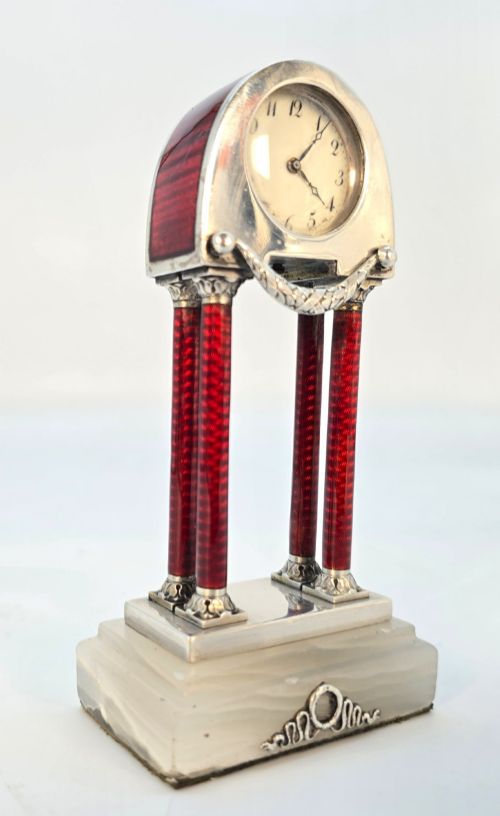
Interiors rely on mechanical movements, often featuring glass inspection panels, enamel dials, and sometimes guilloche enamel or hand-chased surface decoration.
Materials appearing across these listings include glass, enamel, silver, brass, sterling silver, nickel, steel, and tortoiseshell.
What varies in quality
Quality rests in the crispness of the hallmarking, the weight and gauge of the silver casing, and the intricacy of any added enamel work or chased detail.
The fidelity of the mechanical movement and the preservation of delicate materials like tortoiseshell and glass separate everyday items from finer examples.
Georg Adam Scheid·Mappin & Webb·David Veasey for Liberty & Co·William Comyns·Henry Matthews·Winterhalder & Hofmeier·Gay Vicarino·Pascall Atkey of Cowes
The Edwardian Silver Desk Clock Glossary
- Carriage clock
- A portable spring-driven timepiece originally designed for travel, typically fitted with a carrying handle and glass panels. They often sit inside substantial metal frames.
- Guilloche enamel
- Decorative metalwork covered in translucent enamel over an engine-turned background. This technique produces repeating geometric patterns beneath coloured glass.
- Strut clock
- A timepiece supported by a hinged prop on the reverse, allowing the dial to lean upright on a flat surface. They appear frequently in boudoir and desk accessories.
- Sterling silver
- An alloy containing a high proportion of pure silver combined with other metals to ensure durability. British pieces commonly bear clear hallmark stamps denoting assay office and date.
Edwardian Silver Desk Clock: Frequently Asked Questions
How do I wind an edwardian silver desk clock?
Mechanical timepieces utilise a key or a butterfly wing attached to the movement arbor at the back of the case. Turn the key gently until resistance signals the mainspring is fully wound.
Avoid over-winding, as this strains the internal mechanism and can snap the spring.
Where were these clocks placed?
Owners kept them on writing desks, bureaus, and dressing tables to track hours during letter writing or morning routines. Folding travel variants also accompanied owners on journeys.
Their portable size made them easy to shift between rooms as needed.
How do I clean the silver case?
Dust the surface gently with a soft microfiber cloth to remove loose particles without scratching the metal. Keep polish away from glass panes, enamel sections, and internal movements.
Take care around tortoiseshell and fabric linings to avoid staining or chemical damage.
How can I tell the date of the clock?
Inspect the silver components for British hallmarks, which include standard marks, a lion passant for sterling, an assay office symbol, and a date letter. Matching these stamps against assay tables reveals the exact year of testing.
Stylistic cues such as Art Nouveau curves or Edwardian proportions also help narrow down the period.