


Pocket Watch Desk Clock
These pocket watch desk clocks are functional timekeepers housed in stands, cases or miniature frames, built to sit on a desk or bedside table.
Pocket Watch Desk Clock
When you search for pocket watch desk clock, you encounter portable timepieces adapted for stationary use on surfaces. These items combine pocket watches or movements with specialised desk accessories, travel cases, or novelty frames.
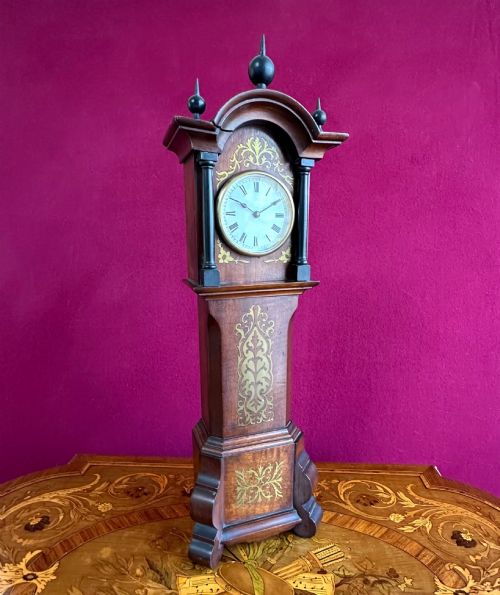
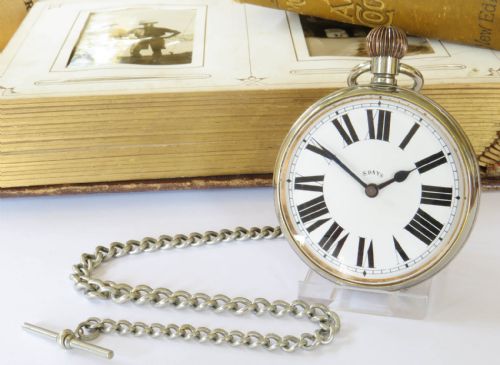
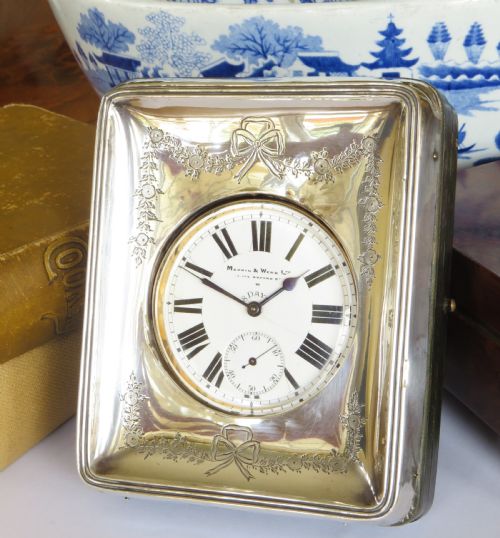
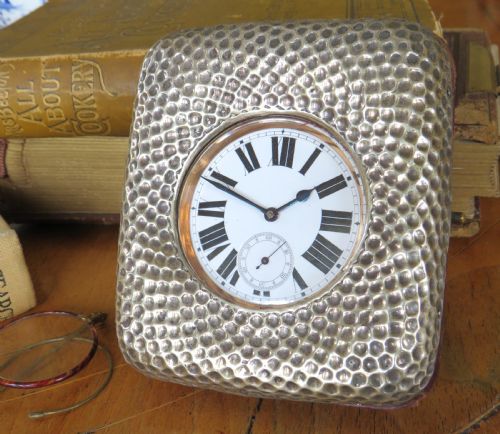
The pieces on this page emerge from several distinct periods, including the nineteenth century, the Edwardian era, and the nineteen-twenties and nineteen-thirties. You meet formats ranging from goliath pocket watches mounted in stands to folding hallmarked silver travel cases and miniature grandfather clocks.
Makers such as Mappin and Webb, Omega, Doxa, Douard, and Barwise London appear across these listings. They take various forms, from simple nickel and brass casings to elaborate guilloche enamel travel clock cases and champleve enamel novelty watch desk clocks.
How they were made
Makers construct these objects using metals such as sterling silver, nickel, brass, steel, and gilt bronze, often pairing them with glass lenses and enamel dials or decorative surfaces. Wood such as mahogany and satinwood appears in cases and stands, sometimes with inlay work.
The techniques involve metal casting, silver smithing, and the application of guilloche and champleve enamel. Watch movements are housed within fitted desk accessories, capstan shapes, folding silver cases, or miniature clock bodies.
Listings feature materials spanning sterling silver, brass, nickel, glass, enamel, mahogany, steel, and silver across the nineteenth and twentieth centuries.
What varies in quality
Quality reveals itself in the choice of materials, from simple brass and nickel to heavy sterling silver cases, gilt bronze, and intricate enamel work. The reputation of the maker, such as Omega or Mappin and Webb, influences the standing of the piece.
Design complexity marks the distinction between standard travel watches and novelty items like champleve enamel stands or miniature grandfather clock forms. The presence of original fitted cases, hallmarks, and eight-day movements also shapes the character of each example.
Mappin and Webb·Douard·Omega·Doxa·Barwise London
The Pocket Watch Desk Clock Glossary
- Goliath pocket watch
- An oversized pocket watch, significantly larger than standard pocket watches, designed to sit in a desk stand or travel case. These often feature eight-day movements.
- Guilloche enamel
- A decorative technique where a precise, intricate pattern is mechanically engraved into metal beneath a translucent layer of enamel. This creates depth and plays with light across travel clock cases.
- Champleve enamel
- A method where troughs or cells are hollowed out in the surface of a metal object and filled with enamel powder before firing. It produces rich, multicoloured decorative patterns on novelty desk clocks.
- Hallmarked silver
- Precious metal stamped by an official assay office to guarantee its purity and standard. These marks often help date travelling clock cases precisely.
- Capstan inkwell
- A desk accessory shaped like a ship's capstan, sometimes combined with a clock or used as a desk stand format. It represents a heavier style of desk furnishing.
Pocket Watch Desk Clock: Frequently Asked Questions
What is a pocket watch desk clock?
A pocket watch desk clock is a timepiece originally designed as a pocket watch or travel watch, housed in a dedicated desk stand, folding case, or novelty frame.
These pieces allow a portable watch to serve as a stationary desk or bedside timepiece.
How were travel clocks used?
Owners carried travel clocks on journeys and used them on bedside tables or office desks when stationary.
Folding silver cases and leather or enamelled stands protected the watch mechanism during transit while providing a stable display base.
What materials are common?
Common materials include sterling silver, brass, nickel, gilt bronze, and steel, often combined with glass and enamel.
Some desk clocks also incorporate wood cases made from mahogany and satinwood.
How do I identify an Edwardian piece?
Edwardian items often display hallmarks, specific silver smithing styles, and design motifs typical of the early twentieth century.
Objects from this period include capstan-shaped desk accessories and silver travel cases.