



Edwardian Silver Candle Holders
Edwardian silver candle holders combine practical utility with delicate period design, offering a refined way to light a dining table or mantelpiece.
Edwardian Silver Candle Holders
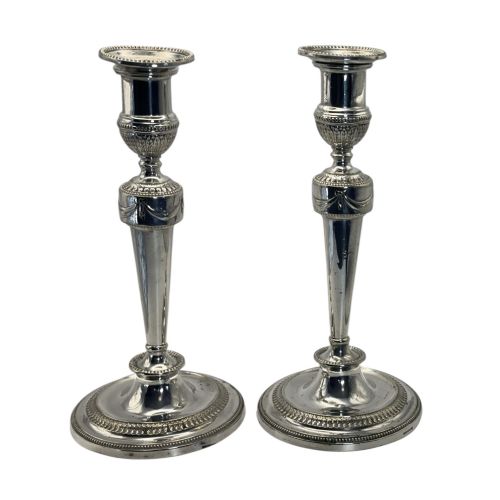
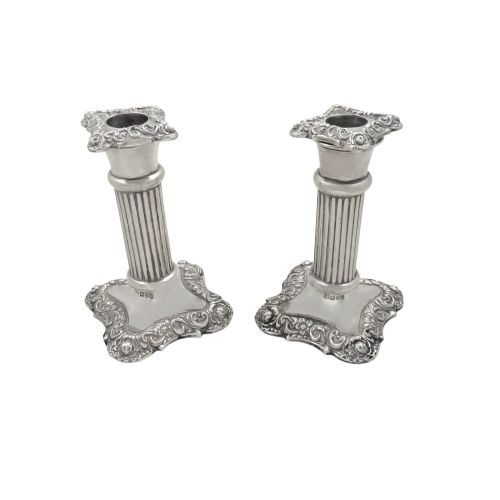
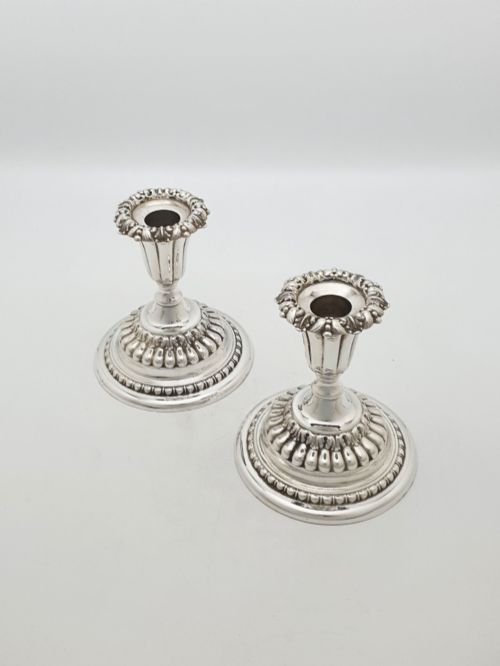
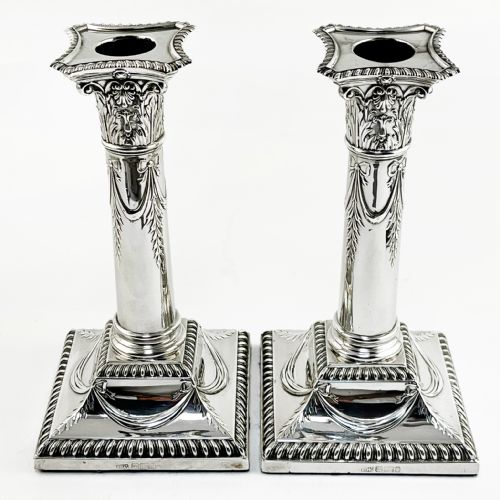
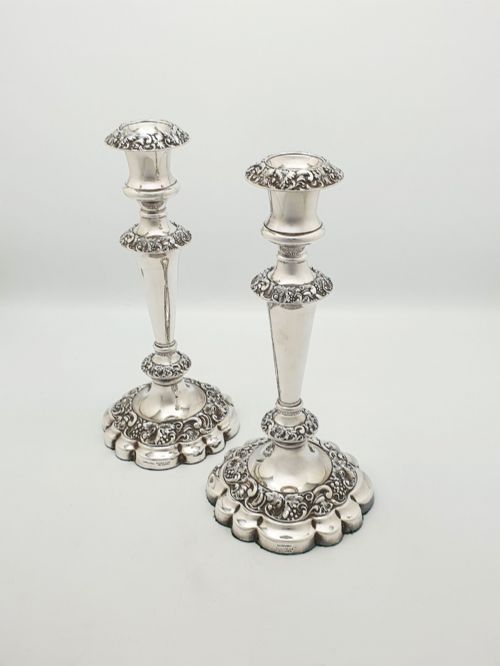
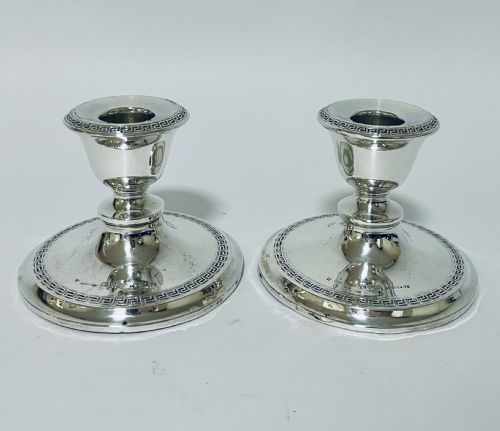
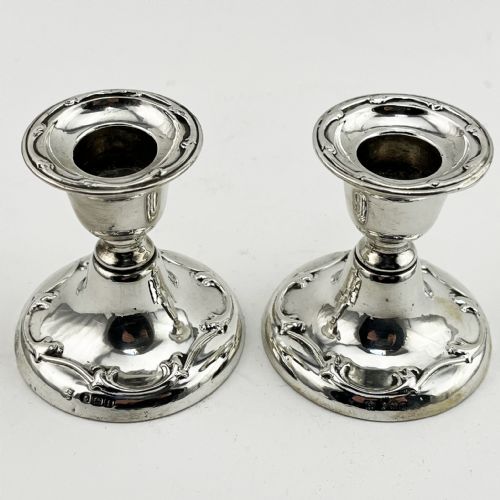
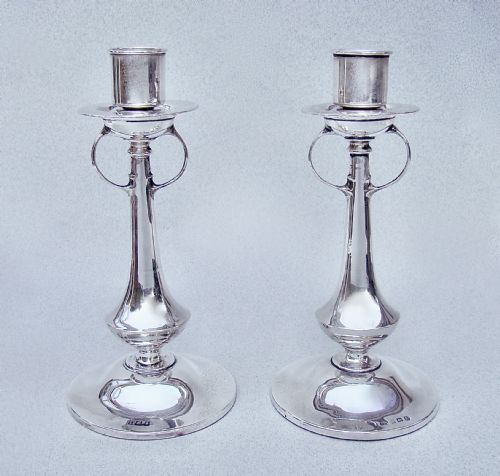
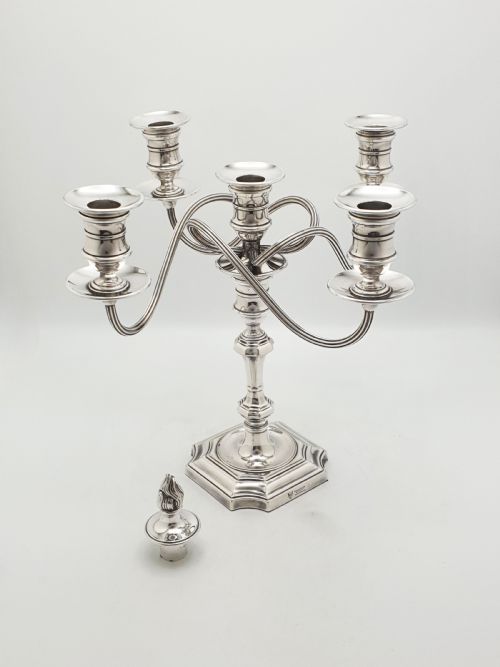
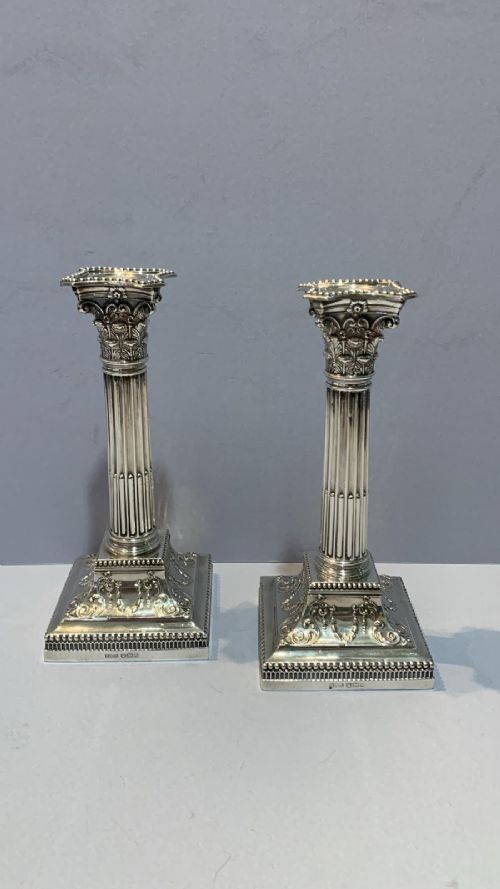
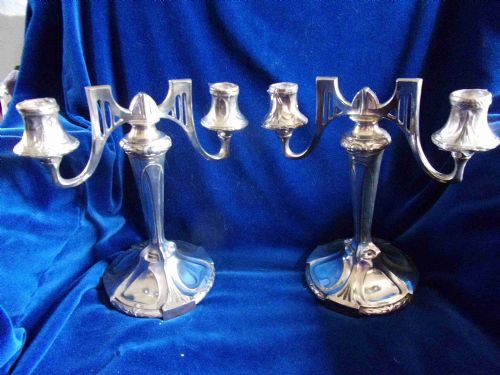
When you search for edwardian silver candle holders, you examine pieces produced primarily around the turn of the twentieth century, encompassing standard candlesticks, dwarf versions, and multi-light candelabras. Most examples encountered here are paired items designed for symmetrical placement, frequently taking the form of slim columns or neoclassical columns.
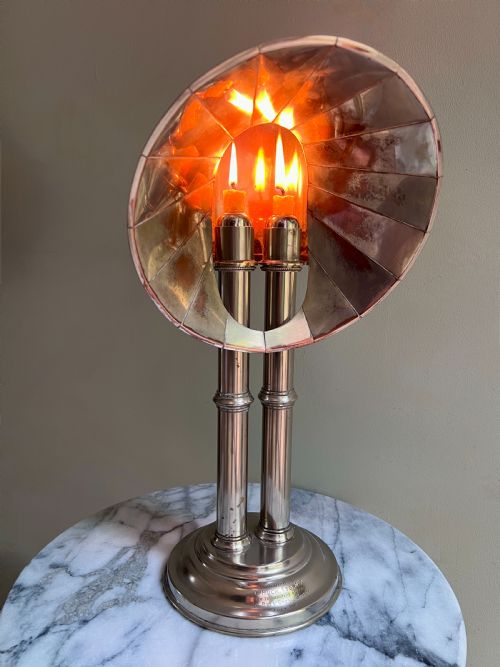
The selection extends beyond conventional sterling silver to incorporate widespread silver plate and electroplated nickel silver items alongside copper, pewter, and brass variants. Forms range from compact chambersticks and desk models up to substantial five-light candelabras, reflecting the diverse domestic lighting requirements of the period.
How They Were Made
Manufacturing methods balance solid construction with applied surface finishes, using sterling silver, electroplated nickel silver, and silver plate over base metals. Many pieces employ weighted bases filled with resin or plaster to ensure stability, while others combine mixed media such as copper and silver or pewter and silvered finishes.
Decorative work relies on stamping, casting, and hand-chasing to achieve distinct stylistic motifs. Makers execute classical columns, organic curves, and revival patterns through precise metalworking techniques appropriate to each workshop standard.
Listings feature items spanning the late nineteenth century through the nineteen twenties, incorporating sterling silver, silver plate, pewter, and brass.
What Varies in Quality
The distinction between standard commercial output and superior execution rests upon the crispness of the casting and the depth of the metal plating or gauge of sterling. Heavier gauge metal and clearly struck hallmarks or maker marks indicate higher workshop standards, whereas thinner plating shows wear down to the base metal more readily.
Proportion and decorative restraint govern visual success. Finer pieces demonstrate careful hand-finishing on detailing such as fluting or foliate borders, maintaining structural integrity across both large candelabras and smaller desk candlesticks.
Mappin & Webb·James Fenton·John Pound & Co·Thomas Bradbury & Sons Ltd·William Hutton & Sons
The Edwardian Silver Candle Holders Glossary
- Candelabra
- A multi-branched lighting device holding several candles simultaneously. These often feature removable arms to convert a multi-light fixture into a single candlestick.
- Chamberstick
- A low-profile candle holder fitted with a handle and a small drip pan. This portable form was traditionally carried to light a person's way to bed.
- Corinthian Column
- A classical architectural column form frequently imitated in candlestick stems. It is characterised by ornate capitals decorated with acanthus leaves.
- Electroplated Nickel Silver
- A base metal alloy of copper, nickel, and zinc coated with a layer of pure silver through an electrical process. This technique provided a durable silver appearance at a lower cost than solid sterling.
- Hallmark
- An official stamp indicating the metal purity, assay office, and year of manufacture. Sterling silver pieces commonly bear these marks to authenticate their standard.
Edwardian Silver Candle Holders: Frequently Asked Questions
What is the difference between sterling silver and silver plate?
Sterling silver consists of solid precious metal throughout, marked to guarantee its purity standard.
Silver plate uses a base metal core coated with a thin layer of silver, offering the visual appeal of solid silver at a different cost.
How do I clean edwardian silver candle holders safely?
Use a soft cloth and a specialised polish formulated specifically for silver or silver plate. Avoid harsh abrasives that can wear away thin plating or damage delicate chased details.
Store them in a dry environment to slow down the natural tarnishing process.
Why are some candlesticks weighted at the bottom?
Makers filled the hollow bases of many candlesticks with a dense material such as resin, plaster, or pitch. This internal weight provides necessary balance and stability to prevent the tall candle holder from tipping over easily.
How can I tell an Edwardian piece from a Victorian one?
Edwardian designs tend to favour lighter, airier neoclassical and art nouveau lines following the heavier, more ornate aesthetic of the preceding Victorian era.
Examining hallmarks and registration numbers often provides a precise date of manufacture.