



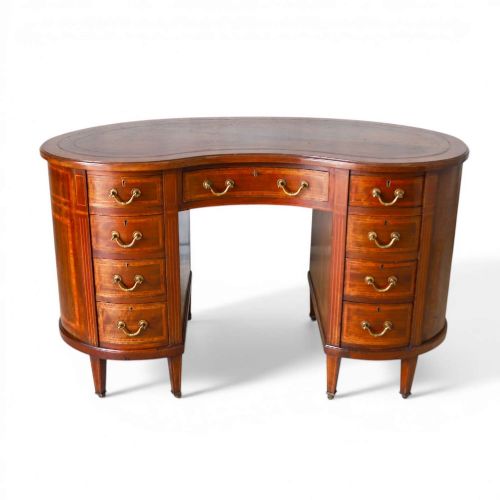
Edwardian Sheraton Style Table
These pieces unite the elegance of the eighteenth century with the cabinet-making confidence of the Edwardian era.
Edwardian Sheraton Style Table
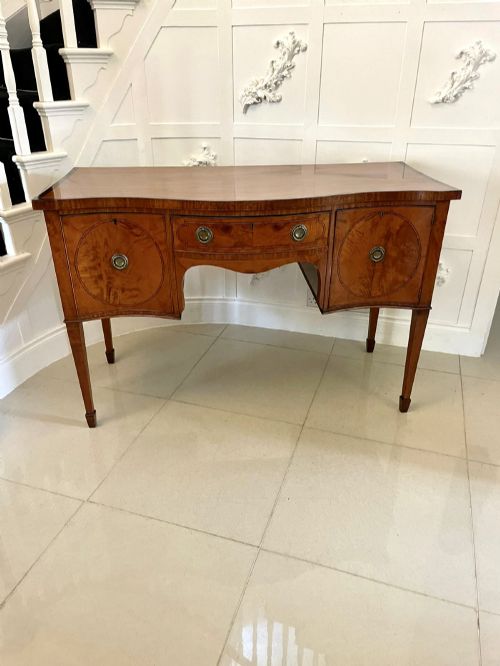
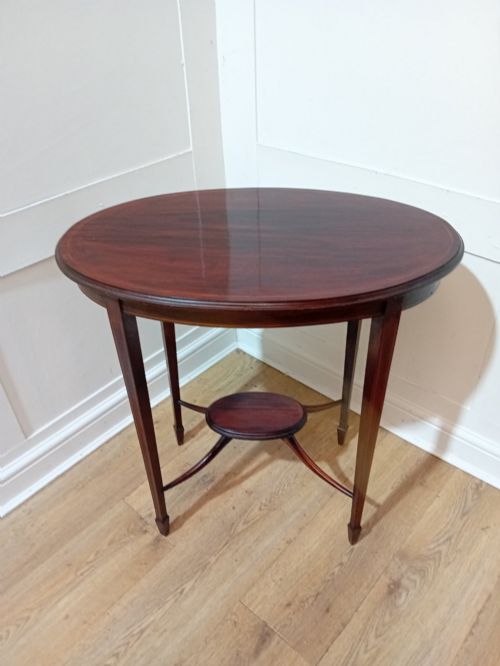
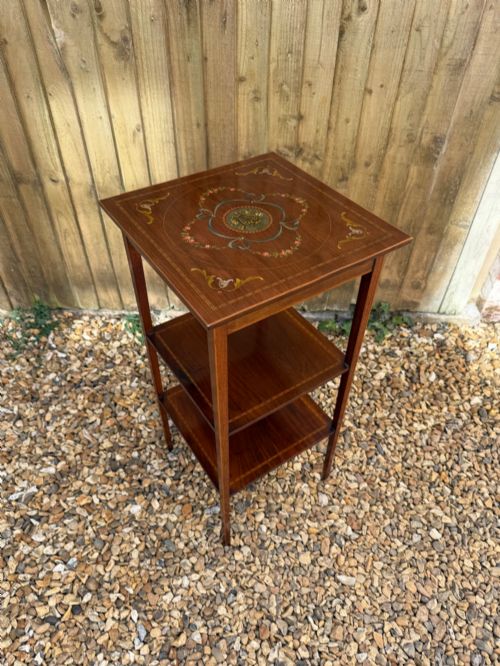
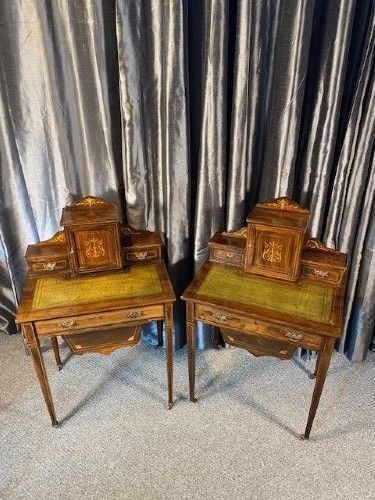
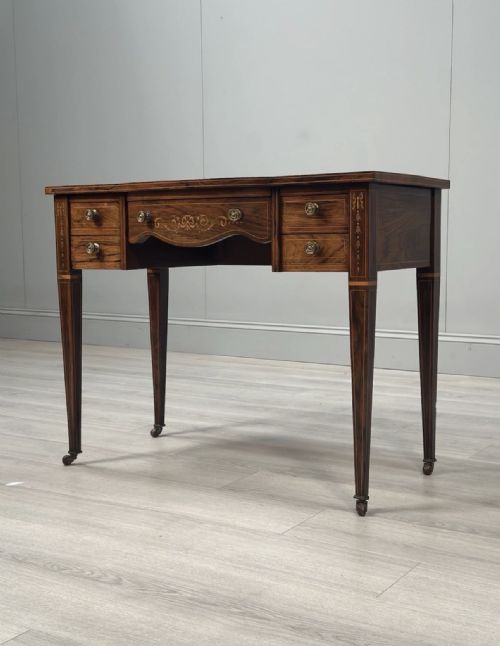
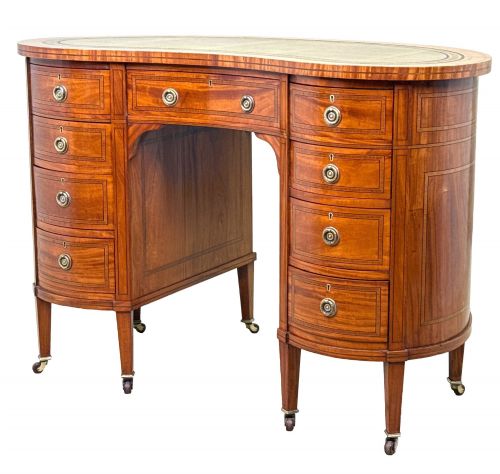
An edwardian sheraton style table belongs to a flourishing period of revivalism spanning the late nineteenth and early twentieth centuries. Pieces here take the form of occasional tables, nests of tables, writing desks, and console tables, drawing inspiration from original Georgian designs.
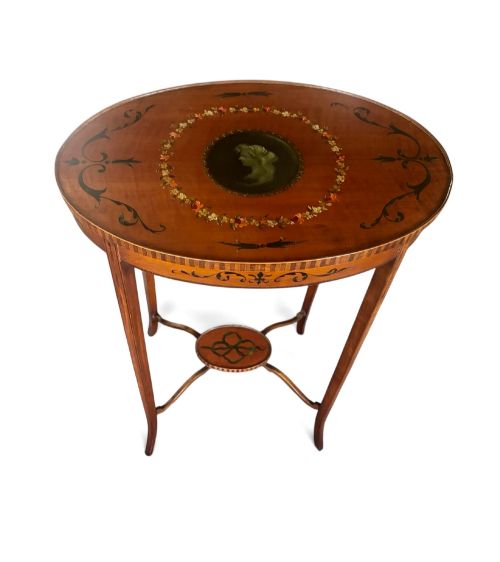
The material record shows a strong preference for satinwood and mahogany, frequently enhanced by boxwood and rosewood. Makers of the time adopted lighter woods and refined proportions to suit contemporary drawing rooms.
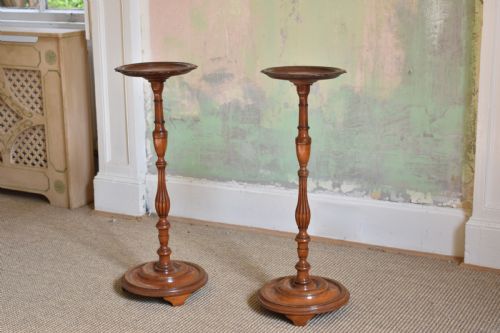
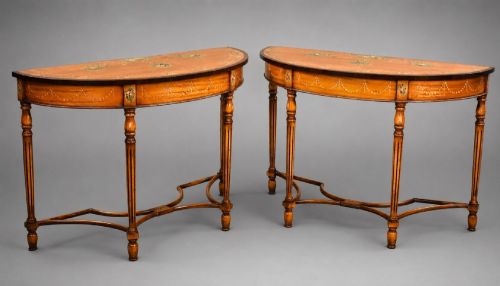
Surviving examples range from simple lamp tables to painted satinwood demi-lune console tables and multi-tiered etageres. This selection reflects the varied domestic requirements of the Edwardian household alongside Victorian antecedents.
Materials and technique
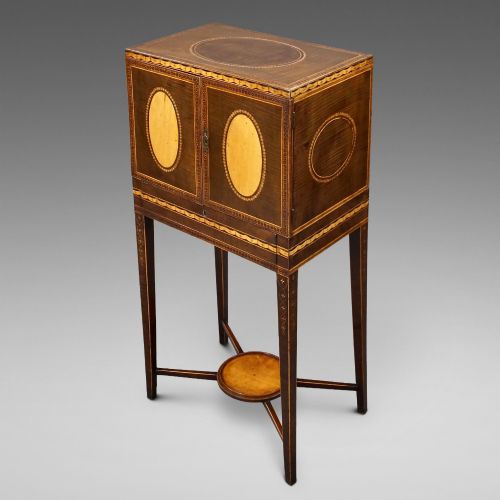
Cabinet-makers relied on solid mahogany and satinwood frames, often applied as fine veneers over stable secondary woods. Cross-banding in contrasting timbers established crisp borders around table tops and drawer fronts.
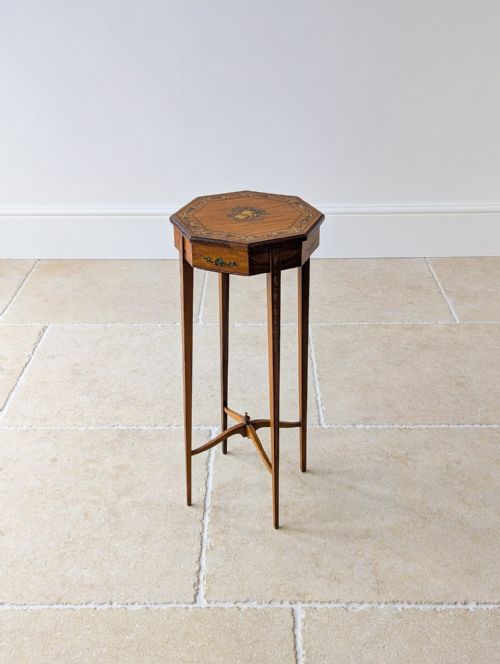
Inlay work utilised boxwood and ebony stringing to define geometrical panels and classical motifs. Painted decoration introduced floral motifs and swags directly onto the wood surface, a characteristic Edwardian interpretation of neoclassical taste.
The listings combine satinwood and mahogany across forms ranging from writing desks to nests of tables.
Design and execution
Superior execution shows in the precision of the timber matching and the subtlety of the contrasting stringing. Lower grades rely on heavier, blockier proportions and stencilled decoration rather than hand-painted detail.
The integrity of the structural joinery and the retention of original brass hardware or leather inserts distinguish higher quality production. A crispness in the taper of square legs and the tightness of the mitres separate standard commercial output from finer workshop pieces.
The Edwardian Sheraton Style Table Glossary
- Satinwood
- A pale, lustrous timber native to Ceylon and the West Indies, prized for its golden sheen and smooth grain. It formed the primary surface for many high-status Edwardian revival pieces.
- Cross-banding
- A decorative border of veneer laid around the perimeter of a table top with the grain running perpendicular to the central panel. This technique created a neat framing effect.
- Demi-lune
- Half-moon shaped, commonly describing console or card tables designed to stand flush against a wall. They frequently featured folding tops and tapering legs.
- Etagere
- A set of open shelves or tiered stands used for displaying small decorative objects and books. The form gained popularity during the late nineteenth century.
- Stringing
- A thin inlay of contrasting wood used to outline geometric panels and drawers. It added linear definition to otherwise plain expanses of mahogany or satinwood.
Edwardian Sheraton Style Table: Frequently Asked Questions
What defines an edwardian sheraton style table?
These tables draw upon eighteenth-century neoclassical designs popularized by Thomas Sheraton, reinterpreted by Edwardian and late Victorian cabinet-makers. They typically feature light timbers, stringing, and tapered supports.
Craftsmen focused on creating delicate, functional furniture suited to refined drawing rooms rather than heavy dining spaces.
Where should I place an occasional table?
Occasional tables work well beside seating areas or against hallways walls where surface space is needed without bulk. Their compact footprints allow them to fit easily into smaller rooms.
Avoid positioning them in direct sunlight to prevent the pale satinwood veneers and painted details from fading over time.
Are nesting tables an original period form?
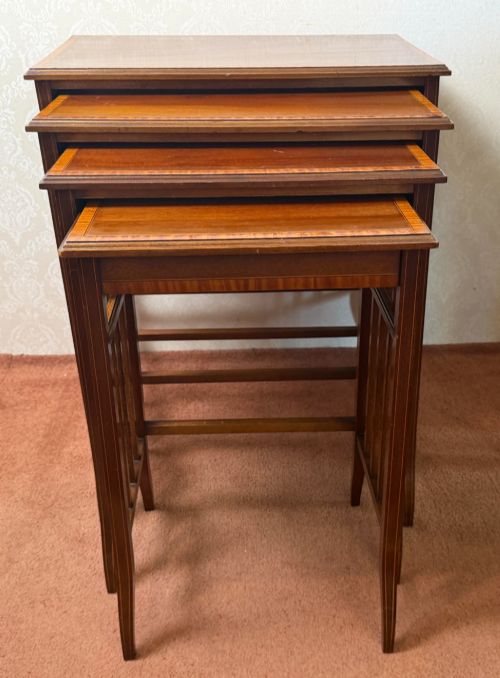
Sets of nesting tables, or quartetto tables, became particularly popular during the late Victorian and Edwardian periods. They offered practical space-saving utility for tea service or letter writing.
Each table graded slightly in size to slide neatly beneath the next, demonstrating clever nineteenth-century carpentry.