
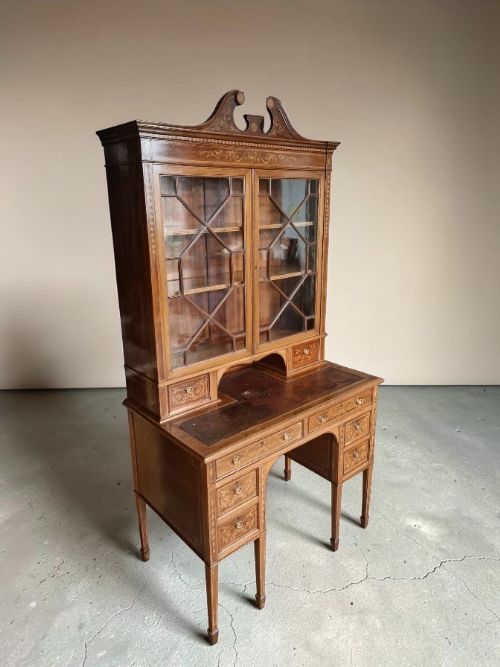
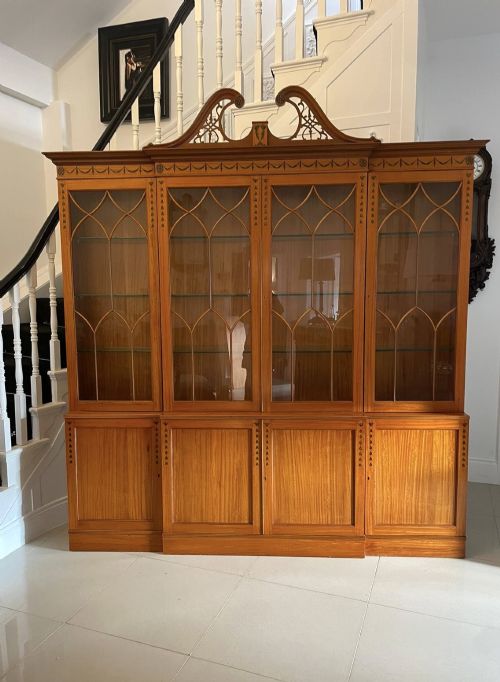

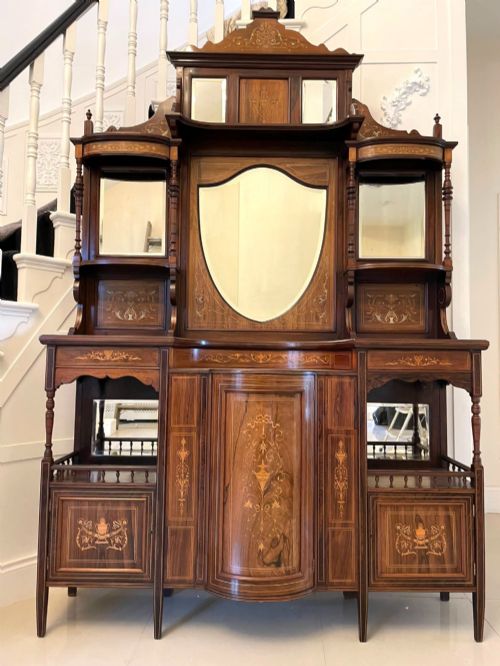
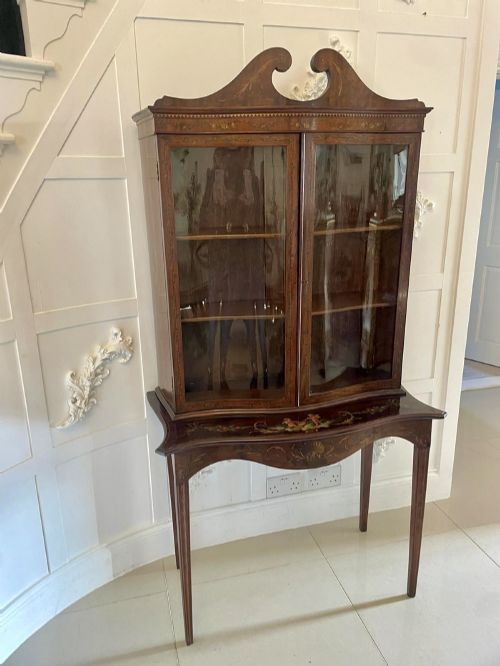
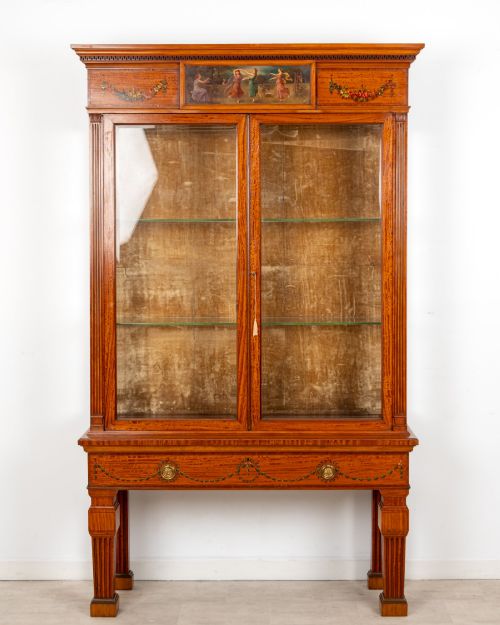
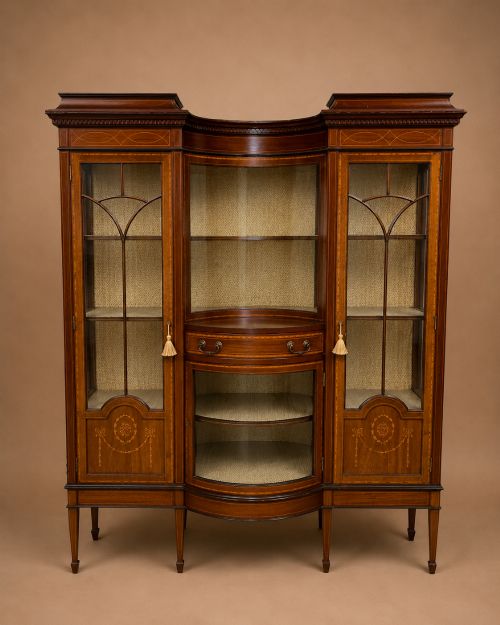
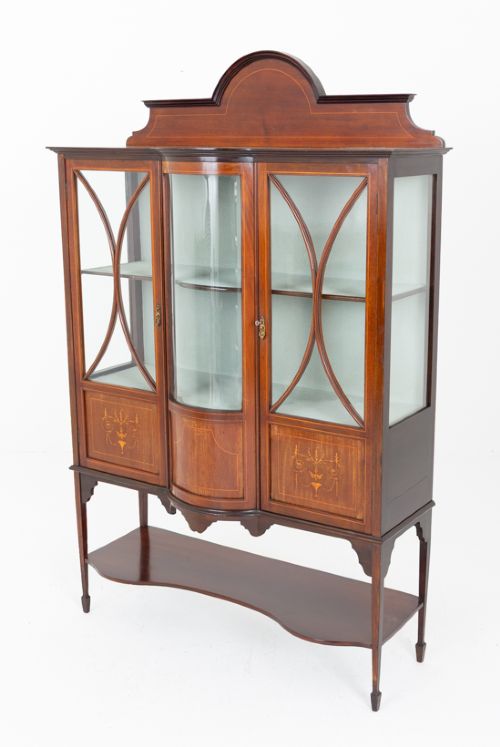
Edwardian Sheraton Revival Display Cabinet
An Edwardian Sheraton Revival display cabinet brings refined neoclassical elegance and fine glazed display to a room.
Edwardian Sheraton Revival Display Cabinet
An edwardian sheraton revival display cabinet combines the lighter proportions of the late nineteenth and early twentieth centuries with classical eighteenth century motifs. These pieces serve primarily to exhibit porcelain, glass and small collectables behind glazed doors.
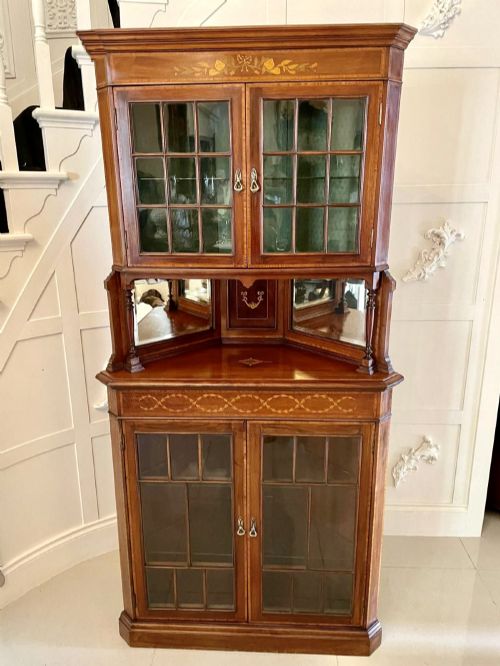
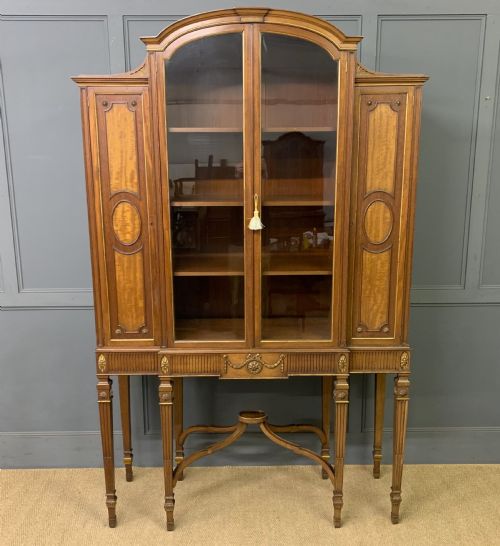
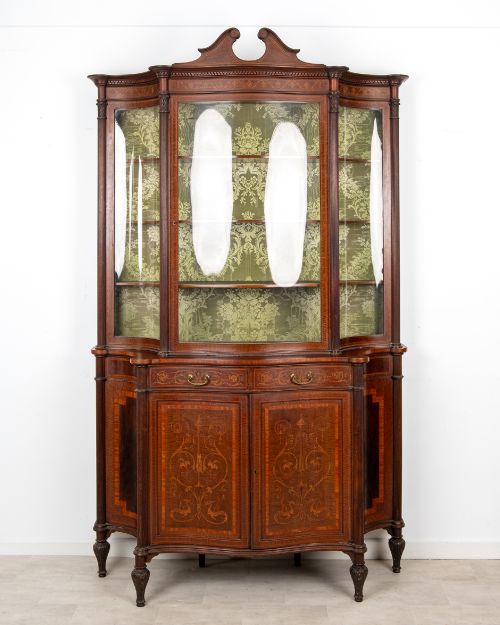
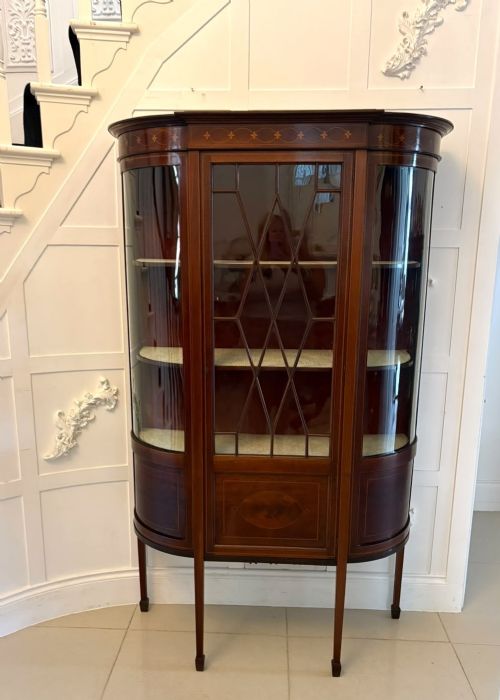
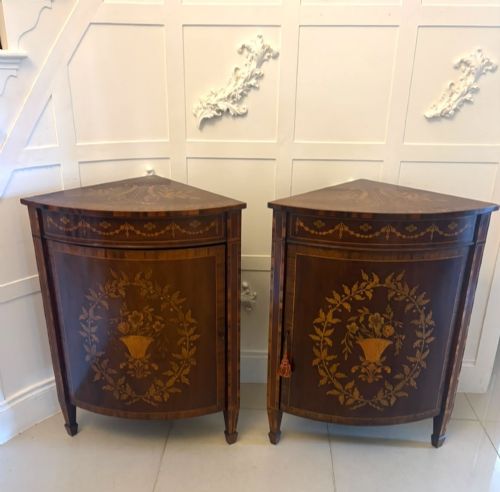
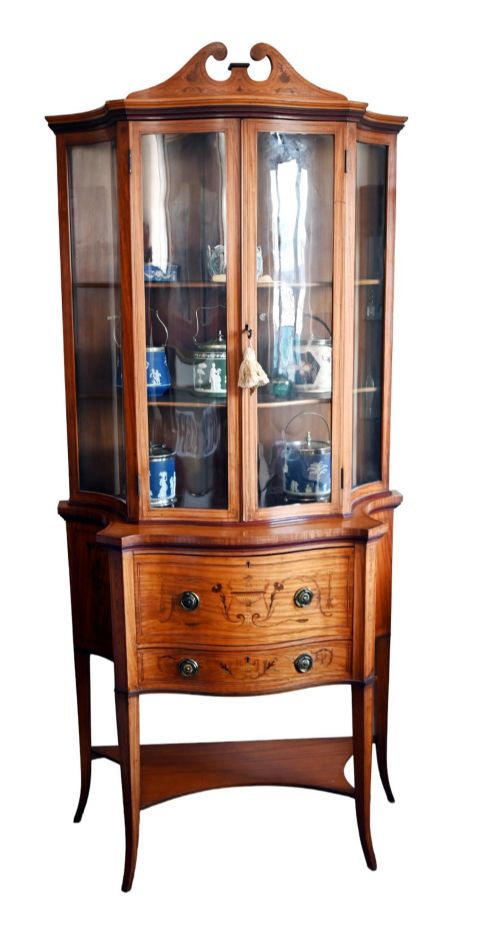
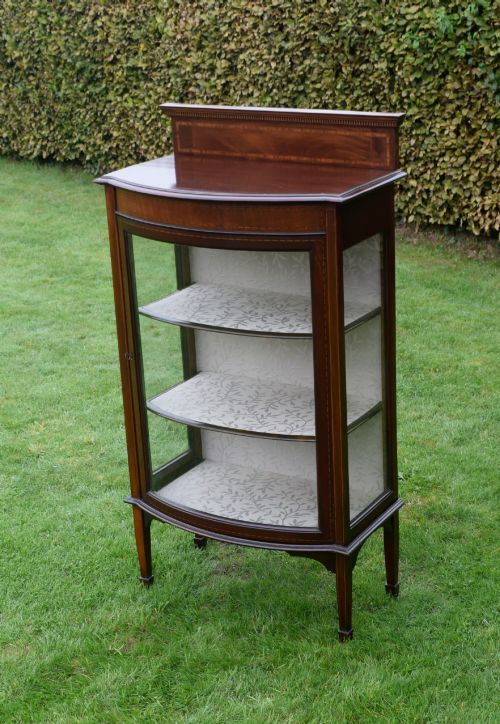
The versions met most frequently on this page date from the Edwardian period and the late Victorian era. They appear in forms ranging from bowfront and breakfront shapes to corner cabinets and side cabinets.
Makers working within this style utilised classical symmetry, painted decoration and delicate marquetry. The structural framework typically prioritises visual lightness over heavy proportions.
Materials and Construction
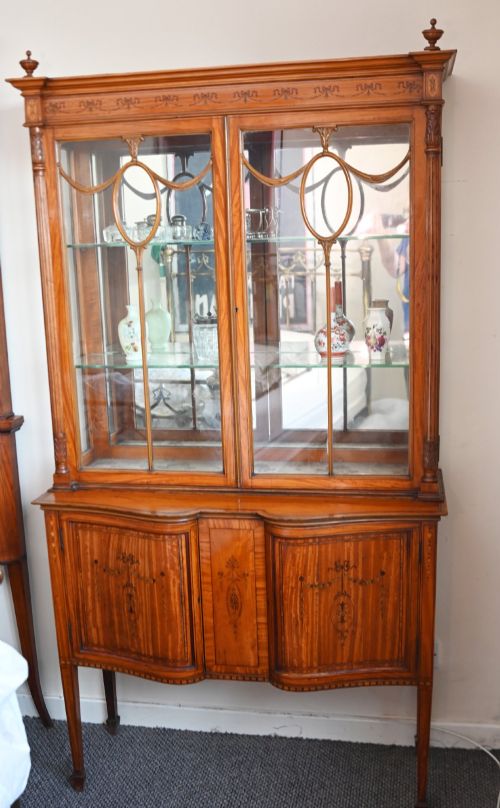
Carpenters built the carcases using mahogany and satinwood, frequently enhanced with contrasting timber inlays and detailed marquetry. Glass panels are set into doors to protect the interior shelves.
Surface enrichment often includes painted decoration, satinwood inlay and brass mounts. Glazing bars divide the glass into geometric or astral patterns typical of the revived classical taste.
Listings feature items spanning the Victorian, Edwardian and 1930 periods, constructed from mahogany, satinwood and rosewood.
Judging Quality
Quality rests upon the crispness of the inlay work, the preservation of original painted decoration and the selection of timber veneers. Better examples display balanced proportions and refined timber figuring.
Attention to detail in the glazing bars and the execution of marquetry distinguish finer workshops from standard commercial production.
Hampton & Sons London·Edwards & Roberts·James Hicks
The Edwardian Sheraton Revival Display Cabinet Glossary
- Sheraton Revival
- A design movement drawing inspiration from the late eighteenth century furniture of George Sheraton. It relies on satinwood, inlay and classical urn or floral motifs.
- Marquetry
- Decorative woodwork where pieces of veneer are fitted into a ground to form floral or classical patterns. This technique requires precise hand cutting.
- Astral Glazing
- A pattern of slender wooden bars dividing a glass door into smaller panes. These light frames maintain visibility while supporting the glass.
- Bowfront
- A convex curved front facade characteristic of certain cabinets and commodes. This shape softens the angles of a room.
Edwardian Sheraton Revival Display Cabinet: Frequently Asked Questions
What is an edwardian sheraton revival display cabinet?
An edwardian sheraton revival display cabinet is a piece of furniture made around 1900 that revives eighteenth century neoclassical styles. These cabinets feature glazed doors and decorative inlay.
They were designed to display porcelain and decorative objects in principal rooms.
How do I date these cabinets?
Dating relies on construction methods, timber choices and stylistic markers recorded in the period evidence. Pieces span from the late nineteenth century through the Edwardian era up to 1930.
Key indicators include the use of satinwood veneer and characteristic Sheraton Revival marquetry.
Where were they placed?
These cabinets were positioned in drawing rooms and reception spaces to showcase valued possessions. Corner cabinets and demi-lune shapes made efficient use of wall space.
Their glazed fronts protected delicate items from dust while keeping them visible.
What timbers are common?
Mahogany and satinwood form the primary structural and decorative timbers for these pieces. Inlays utilise contrasting woods to create classical motifs.
Rosewood also appears in certain cabinet variations.