
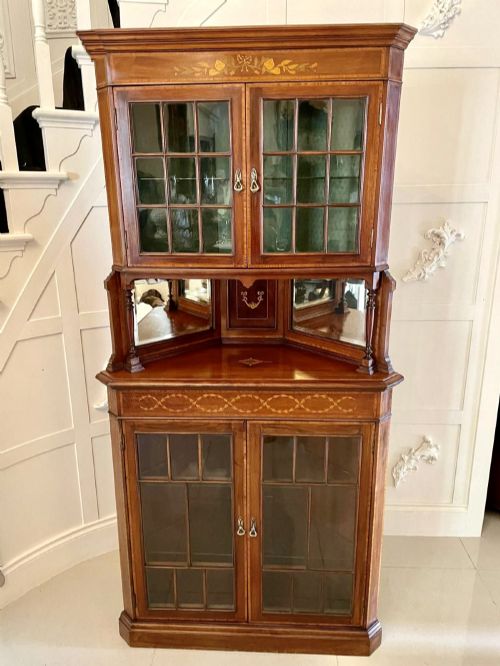
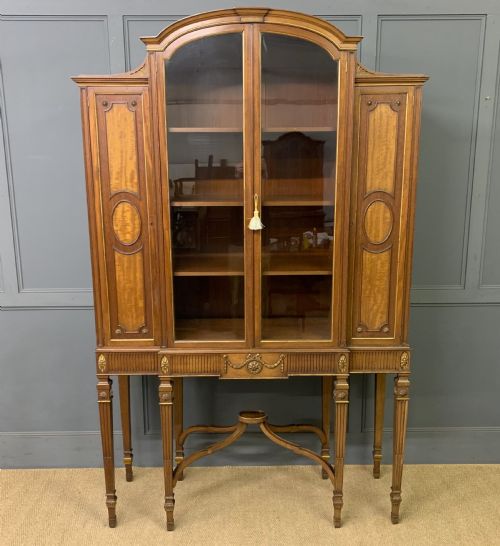
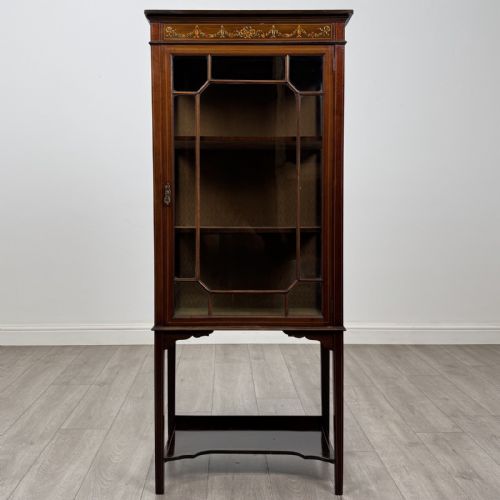
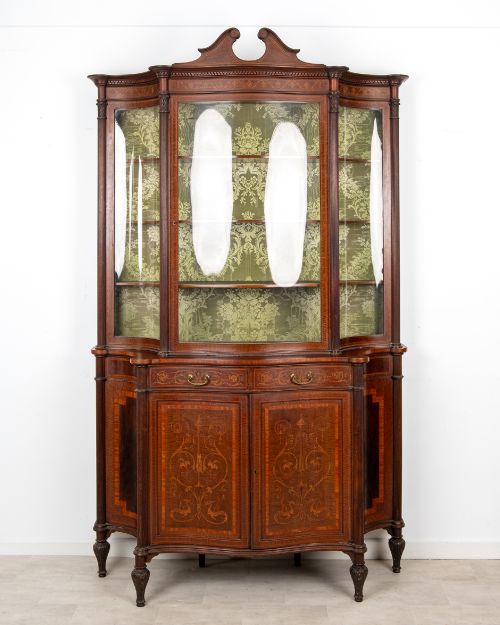

Edwardian Sheraton Display Cabinet
An edwardian sheraton display cabinet brings refined neoclassical elegance to a room, framing prized porcelain and collectibles behind delicate glass panels.
Edwardian Sheraton Display Cabinet
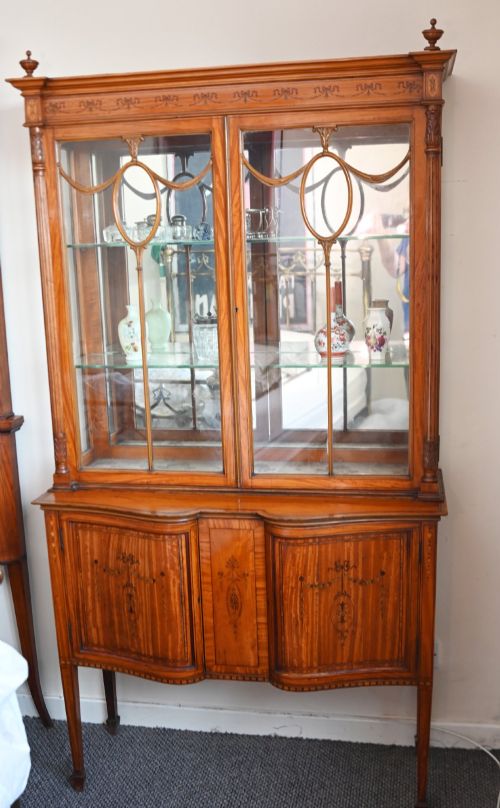
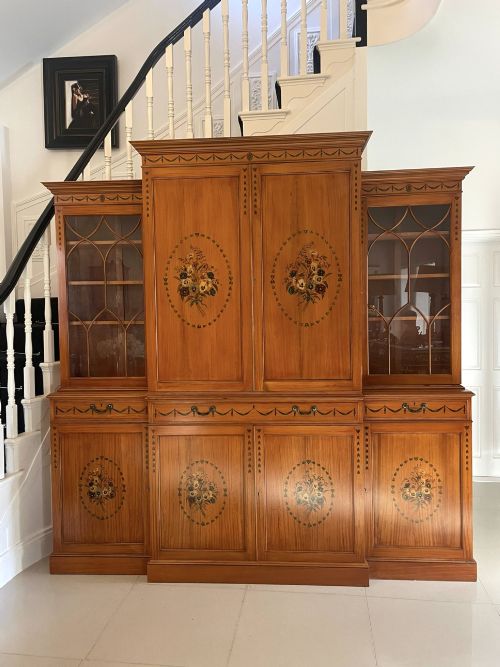
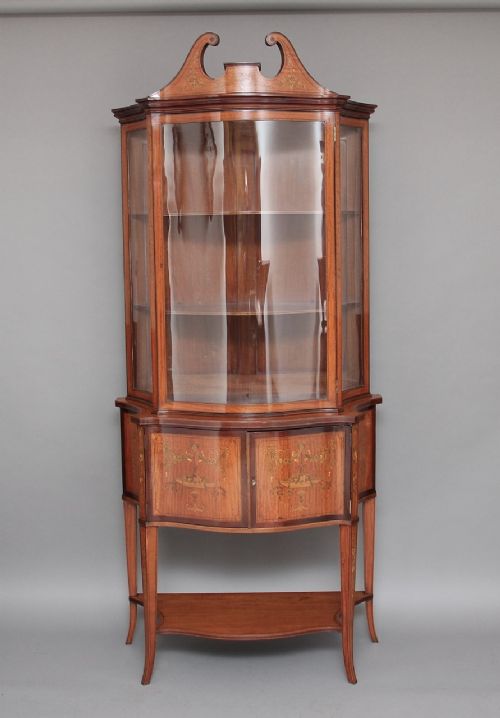
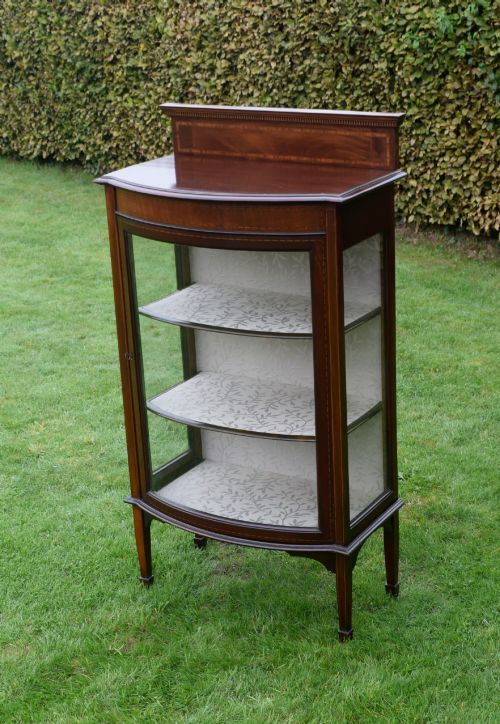
When you search for an edwardian sheraton display cabinet, you meet formal pieces built during the early twentieth century and the late nineteenth century. These cabinets draw heavily upon eighteenth-century Sheraton motifs, reviving light woods, symmetrical proportions, and classical ornamentation.
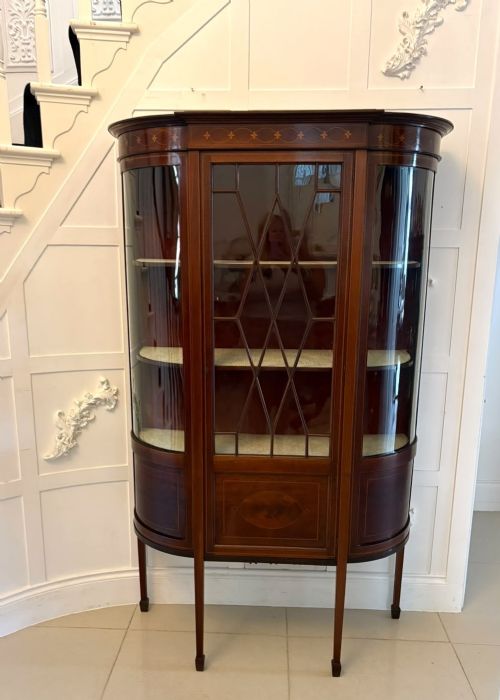
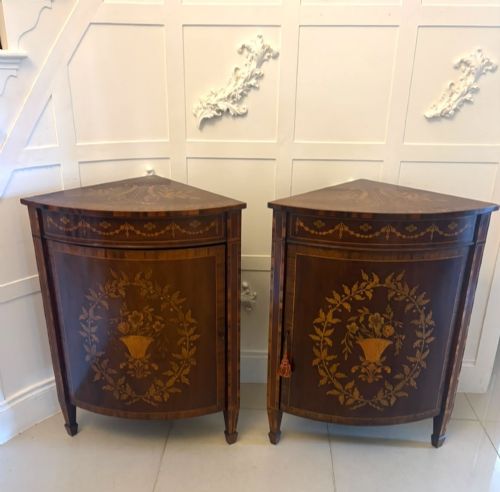
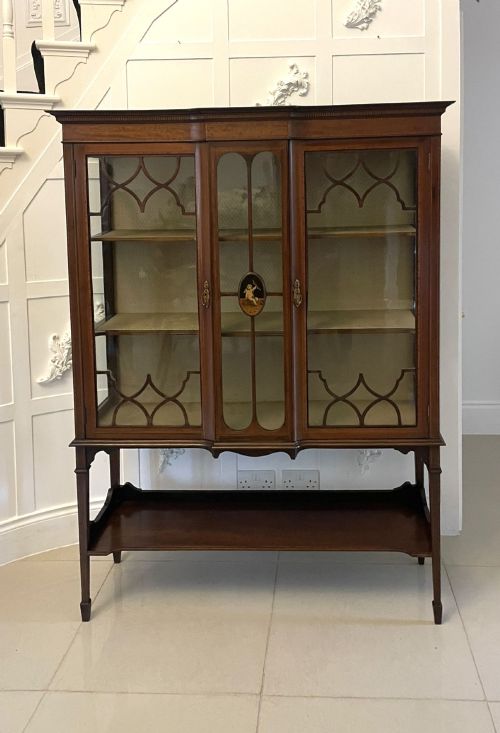
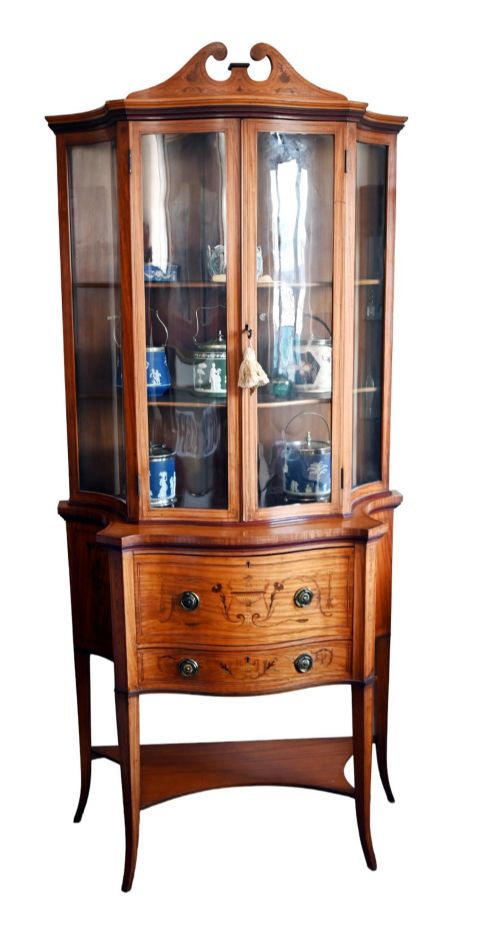
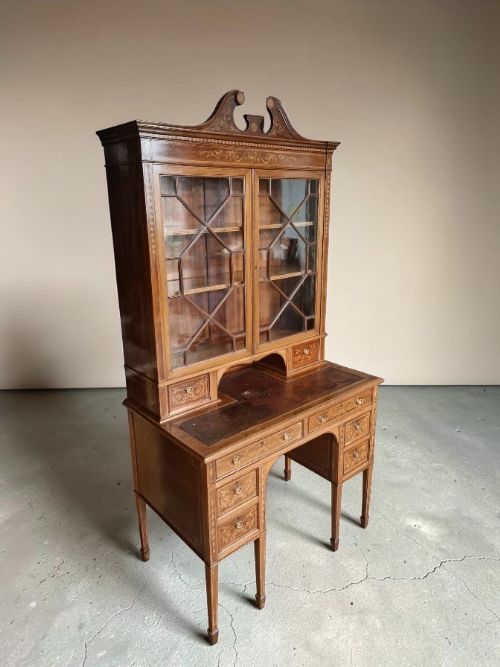
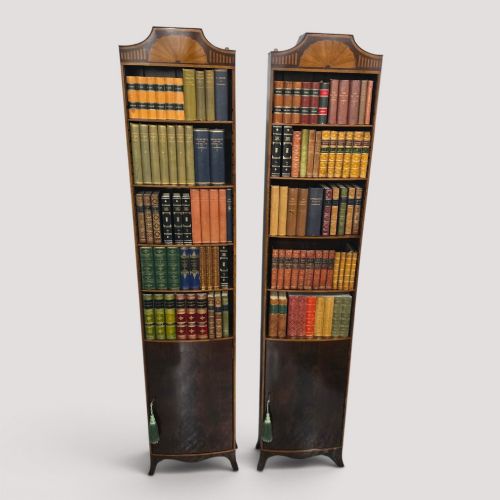
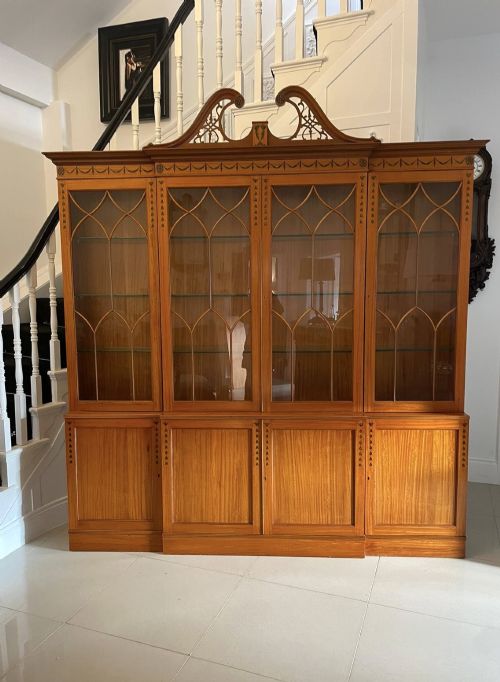
The versions most common on this page are upright mahogany or satinwood cases featuring glazed doors, delicate stringing, and inlaid motifs. You will also encounter corner variants, breakfront designs, and demi-lune shapes designed to fit formal drawing rooms and sitting spaces.
Materials and Construction
Cabinetmakers utilised solid and veneered timbers, primarily selecting rich mahogany and luminous satinwood as foundations for intricate contrasting inlay. Fine brass hardware, mirrored backs, and fabric linings frequently complement the internal shelving and glass doors.
Decoration relies upon meticulous marquetry, painted floral details, and individual glazing bars such as astragal mouldings. These elements require specialist joinery to achieve the curved bow fronts and serpentine shapes characteristic of the style.
Judging Quality
The distinction between standard commercial production and master craftsmanship lies in the precision of the marquetry and the choice of timber figures. Superior examples display crisp, hand-cut inlay and perfectly matched veneer grains rather than printed or stamped decoration.
Structural refinement also dictates worth, seen in the subtlety of the glazing bars, the weight of the brass fittings, and the integration of original painted details. Pieces bearing the marks of known cabinet-making firms command particular attention for their superior execution.
Hampton and Sons·Edwards and Roberts·Maple and Co·Leonard Davis
The Edwardian Sheraton Display Cabinet Glossary
- Sheraton Revival
- A late nineteenth and early twentieth century design movement that reinterpreted the lighter classical furniture forms of the eighteenth century. It employs symmetrical lines and delicate neoclassical ornamentation.
- Astragal Glazing
- A method of dividing a glass door into smaller panes using narrow wooden mouldings. These bars add structural support while creating an elegant geometric grid.
- Marquetry
- The art of applying small pieces of veneer to a structure to form decorative patterns and pictures. Craftsmen use contrasting timbers to achieve tonal depth.
- Demi-Lune
- A half-moon shape utilised for cabinet footprints and tabletops. This form allows the furniture to sit flush against a wall while offering curved visual interest.
- Satinwood
- A hard, durable timber with a natural golden lustre often used as a primary veneer in fine cabinet-making. It provides a bright ground for painted decoration and darker inlay.
Edwardian Sheraton Display Cabinet: Frequently Asked Questions
What is an edwardian sheraton display cabinet?
These pieces are formal glazed cabinets produced around the start of the twentieth century in a revived neoclassical style. They were designed to exhibit fine china, glassware, and decorative objects in domestic drawing rooms.
Characterised by light timbers, precise inlay, and slender proportions, they reflect a period that valued refined decorative arts and orderly interior display.
How do you distinguish original Edwardian pieces?
Original pieces display period construction methods, such as hand-cut dovetails on internal drawers, older backboards, and natural ageing in the timber and glass. Maker stamps or paper labels inside drawers and on carcases offer further confirmation of origin.
Stylistic cues also help, as Edwardian Sheraton Revival pieces combine late Victorian manufacturing standards with eighteenth-century neoclassical design vocabulary.
Where should you place a display cabinet?
These cabinets suit reception rooms, dining spaces, or hallways where natural light can illuminate the contents through the glass panels. Because many versions feature finished backs or curved sides, they work well positioned flat against walls or nestled into corners.
Protecting the wood from direct, harsh sunlight preserves the satinwood and mahogany finishes and prevents the internal lining fabrics from fading over time.
What is the difference between satinwood and mahogany?
Mahogany is a dense, reddish-brown timber known for its deep colour and stable grain, which served as the primary structure for many formal Edwardian cabinets. Satinwood offers a much paler, golden-yellow tone with a natural sheen that catches the light.
Cabinetmakers often combined both woods, using mahogany for the main carcase and satinwood for contrasting crossbanding, panels, and decorative inlay.