
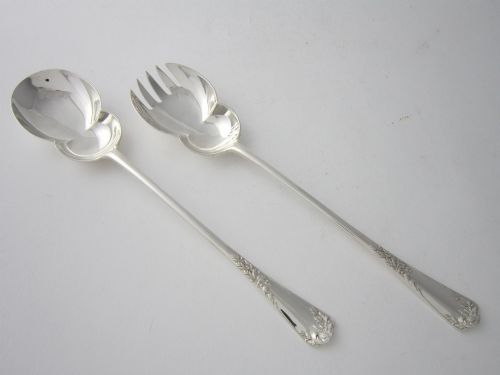


Edwardian Serving Utensils
Edwardian serving utensils are dedicated pieces of tableware designed for hosting, offering both functional utility and period elegance.
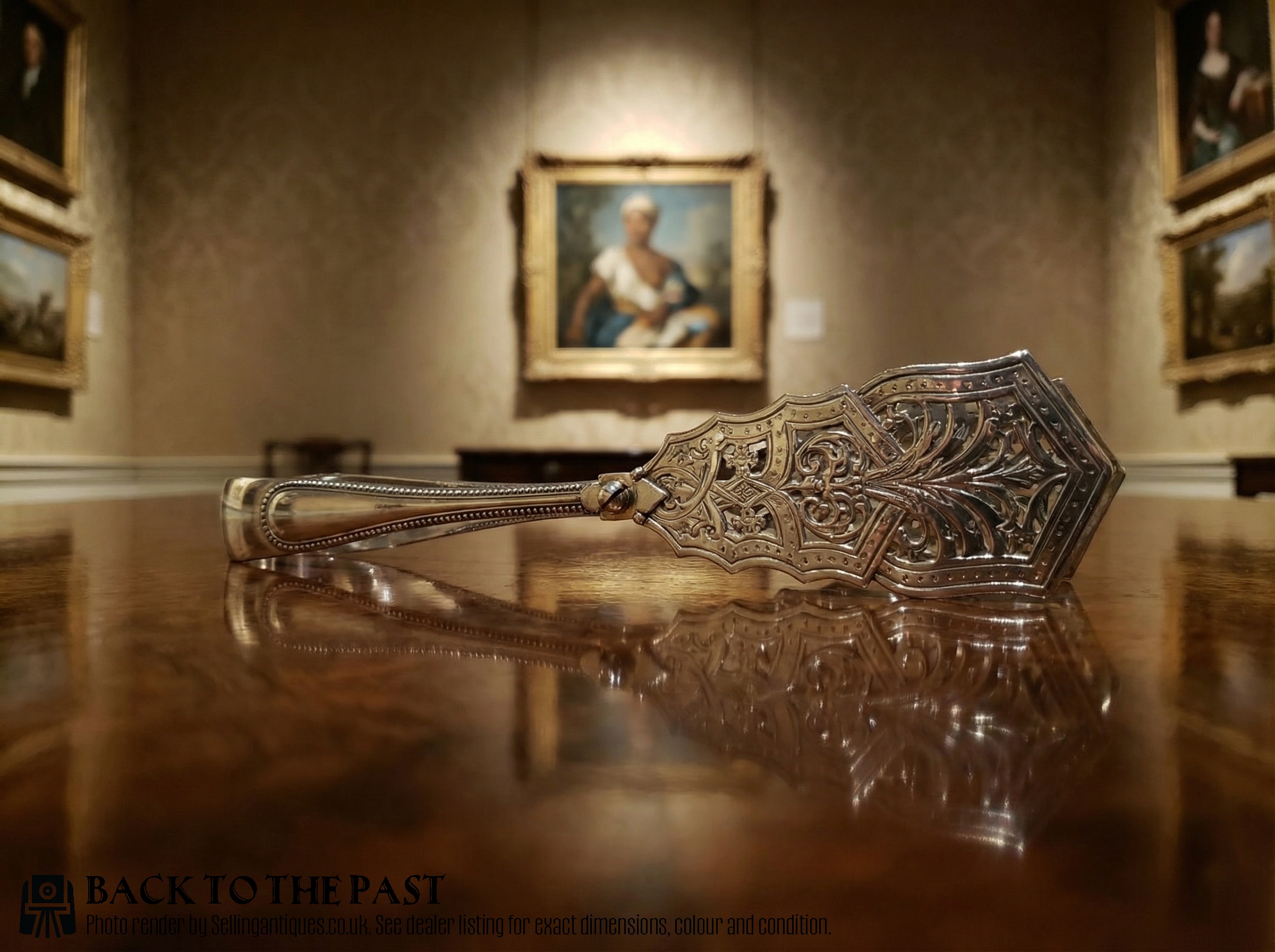
Edwardian Serving Utensils
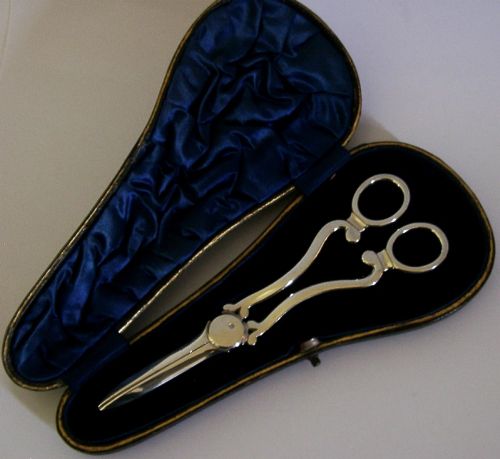
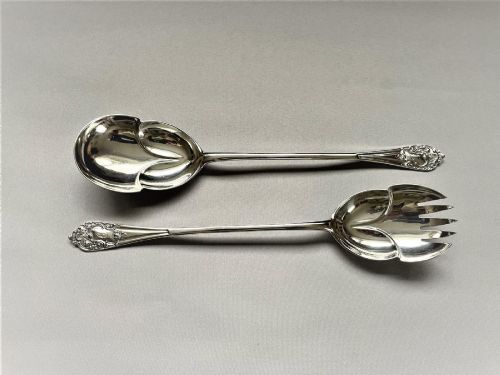
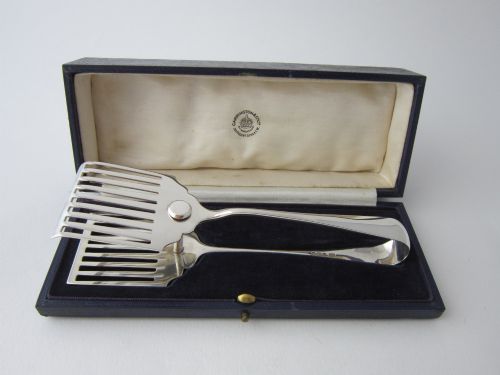
Edwardian serving utensils encompass specialist implements such as grape shears, salad servers, serving tongs, and fish servers designed for formal dining. Buyers examining this category will find sterling silver and silver-plated examples alongside fitted presentation cases lined with velvet, leather, satin, or silk.
The selection ranges from early twentieth-century pieces bearing hallmarks from 1900 through to the 1930s, alongside occasional Victorian survivals. Forms include specific items like stilton spoons, bread forks with mother of pearl handles, and berry spoons featuring scallop shell bowls.
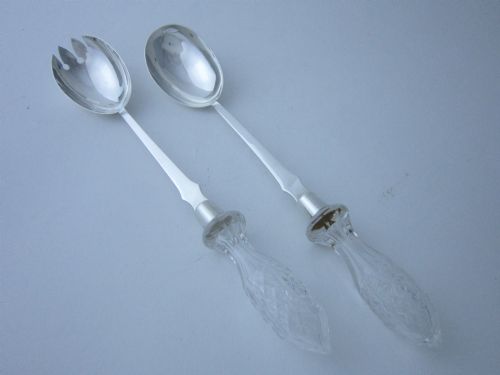
Art Nouveau styling appears alongside traditional Edwardian and George V designs, reflecting the aesthetic shifts of the period. Utensils often incorporate cut glass components or feature ornate pierced ends on silver-plated tongs and servers.
Materials and construction
Construction relies heavily on sterling silver and silver plate, shaped into specialised implements with tailored bowls, tines, and blades. Rat tail attachments and reinforced joints provide structural stability for serving heavier items.
Natural materials complement the metalwork, with mother of pearl utilised for handles and cut glass integrated into salad servers and vanity jars. Fitted presentation cases utilise textiles including velvet, leather, satin, and silk to protect the items when stored.
Distinctions in quality
Quality in these implements is determined by the weight and gauge of the sterling silver or silver plate used in their creation. Substantial metal thickness prevents bending during use and maintains the integrity of pierced or chased decoration.
The precision of the mechanisms in grape shears and serving tongs dictates the functional standard of the piece. Superior examples exhibit smooth pivoting action alongside crisp detailing in decorative elements such as scallop shell bowls and Art Nouveau motifs.
William Devenport·Whiting Co.
The Edwardian Serving Utensils Glossary
- Hallmark
- An official stamp applied to precious metals indicating the assay office, metal purity, and date letter. These marks allow collectors to date sterling silver serving pieces accurately.
- Rat tail
- A traditional strengthening ridge down the back of a spoon bowl where it joins the handle. This reinforcement appears on specific salad servers and serving spoons.
- Pierced work
- Metal cutting technique creating openwork designs in silver or plate. This method decorates the blades of fish servers and the ends of serving tongs.
- Mother of pearl
- The iridescent inner layer of mollusc shell used for utensil handles. It provides a smooth, contrasting grip against silver mounts.
- Grape shears
- Specialised scissors designed for cutting small bunches of grapes from the stem at the table. They feature curved blades to prevent bruising the fruit.
Edwardian Serving Utensils: Frequently Asked Questions
What are grape shears used for?
Grape shears are specialist cutting implements designed to snip small clusters of grapes from the main stem during dessert service. Their curved blades allow the user to reach between fruit without damaging adjacent grapes.
These tools often survive in fitted presentation cases lined with silk or velvet, reflecting their status as formal dining accessories.
How do I clean silver serving pieces?
Sterling silver and silver-plated utensils require gentle cleaning with a specialised silver polish and a soft cloth. Avoid abrasive materials that can wear down thin plating or scratch the metal surface.
Items with organic handles, such as mother of pearl, or fitted textile boxes should be kept away from excessive moisture during the cleaning process.
What is the difference between salad servers and standard spoons?
Salad servers usually consist of a paired fork and spoon or a pair of large matching spoons designed to handle bulky greens. They frequently incorporate extended handles and larger bowls or tines for portioning.
Some examples also pair sterling silver mounts with cut glass bowls or utilise natural materials like mother of pearl for gripping surfaces.
How can I date my Edwardian serving utensils?
Dating relies primarily on the assay office hallmarks stamped into the sterling silver components. These marks include specific date letters corresponding to the year of testing, such as those from the early 1900s.
Stylistic indicators, including Art Nouveau motifs or George V design markers, also help place pieces within the broader twentieth-century timeline.