





Edwardian Serpentine Desk
Edwardian serpentine desks combine curving fronts and polished wood to form practical writing spaces from the early twentieth century.
Edwardian Serpentine Desk
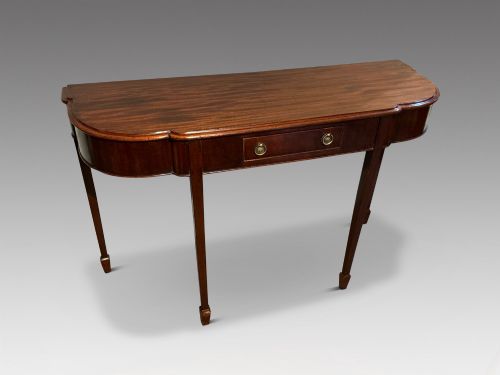
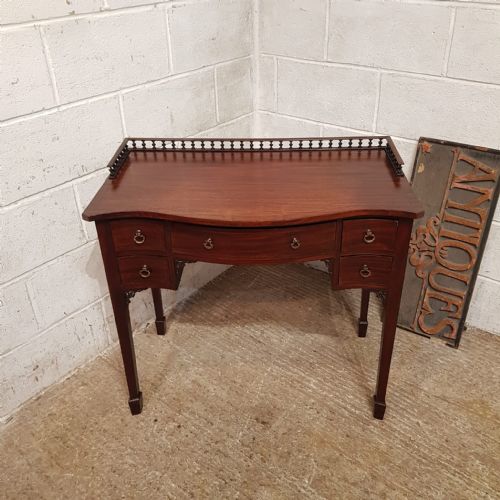
When searching for an edwardian serpentine desk, buyers encounter writing furniture defined by a distinct undulating front line that curves inward and outward. These pieces appear frequently in mahogany, often paired with contrasting wood inlays or fitted leather writing surfaces.
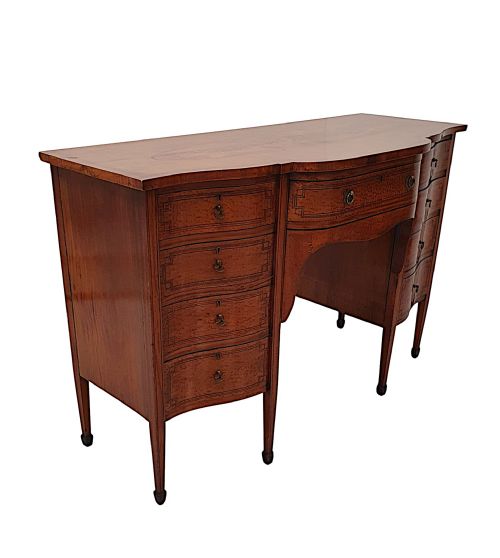
The archive and current listings show these desks taking the form of kneehole writing tables, twin-pedestal setups, and lighter ladies desks. Most examples date from the Edwardian period around nineteen hundred to nineteen ten, though Victorian and later pieces share similar proportions and forms.
Alongside dedicated desks, the serpentine profile surfaces on related items such as sideboards and console tables. This shape brings a softer, more fluid silhouette to traditional cabinetry than straight-fronted alternatives.
How they were made
Cabinet makers constructed these desks using solid and veneered timbers, predominantly mahogany, alongside walnut, satinwood, and rosewood. Delicate wood inlay and contrasting stringing define the decorative surface work on many examples.
Brass handles, escutcheons, and leather inserts provide functional contrast to the polished timber frames. Carpenters shaped the characteristic curved fronts through careful bending and carving of the solid wood or shaped laminated cores.
Several ladies desks included pull-out writing surfaces designed specifically for holding scented stationery and fountain pens.
What varies in quality
Quality rests in the crispness of the serpentine curve and the selection of figured timber veneers. Superior examples display balanced grain patterns across the curved drawer fronts and tidy internal drawer construction.
The fineness of the inlaid work and the preservation of original leather writing inserts distinguish finer pieces from standard utilitarian examples. Hardware integration and the weight of the timber further separate workshop tiers.
Maple & Co.
The Edwardian Serpentine Desk Glossary
- Serpentine
- A furniture front shaped with a convex centre flanked by concave curves. This contour creates a flowing, undulating outline across the drawer banks.
- Pedestal desk
- A heavy writing table comprising two separate stacks of drawers supporting a single desktop. The user sits in the central kneehole space between the pedestals.
- Inlay
- Decorative wood or brass pieces set flush into the surface of the primary timber. This technique creates geometric borders or floral motifs.
- Kneehole
- The central recessed space beneath a desk top where the user sits. Smaller writing tables often feature a single central drawer above this opening.
Edwardian Serpentine Desk: Frequently Asked Questions
How do I use one today?
These desks serve as functional writing tables or laptop stations in modern studies and living spaces. Their compact proportions suit placement against walls or even floating within a room.
The drawers provide storage for stationery and small items, keeping surfaces tidy while maintaining period character.
Are these desks comfortable for daily work?
Kneehole and pedestal variations offer ample legroom and surface area for writing or computing. The height matches standard contemporary chairs.
Care should be taken with antique leather writing surfaces by using blotters or desk pads to prevent ink stains and scratches.
How do I spot an Edwardian piece?
Edwardian desks from around nineteen hundred often display lighter wood tones, delicate satinwood veneers, and refined string inlay. The joinery and hardware reflect early twentieth-century manufacturing standards.
Comparing the style to heavier Victorian precursors helps identify the lighter, more neoclassical proportions typical of the Edwardian period.