
Edwardian Seed Pearl Necklace
An Edwardian seed pearl necklace brings together delicate golden framework and tiny, luminous pearls in designs shaped by early twentieth-century hands.

Edwardian Seed Pearl Necklace
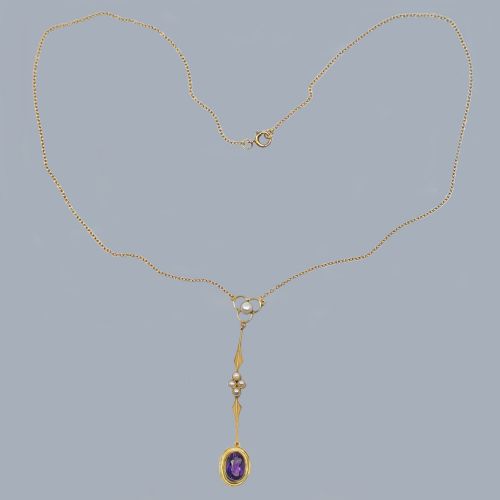
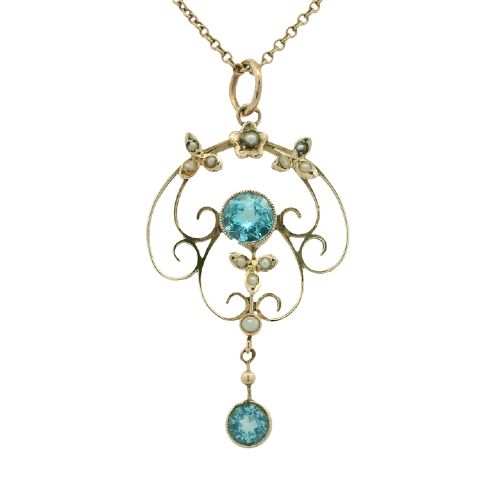
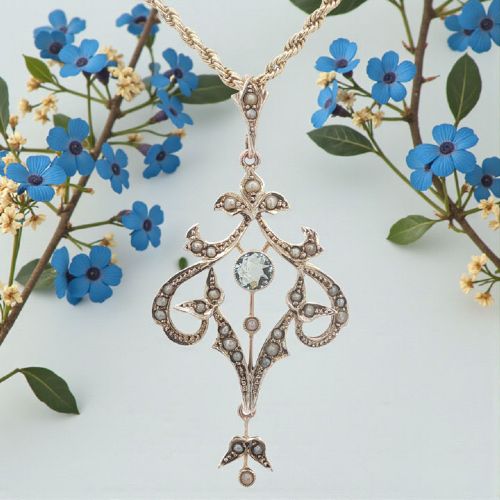
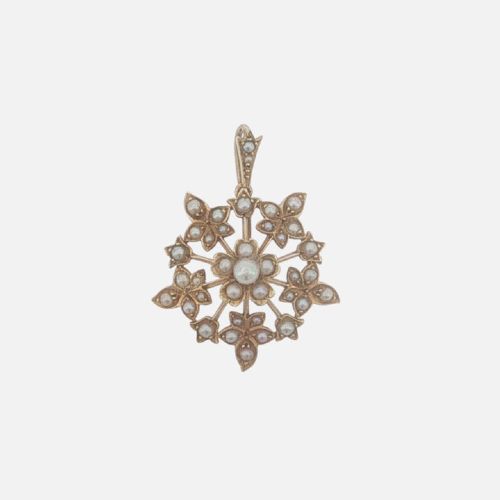
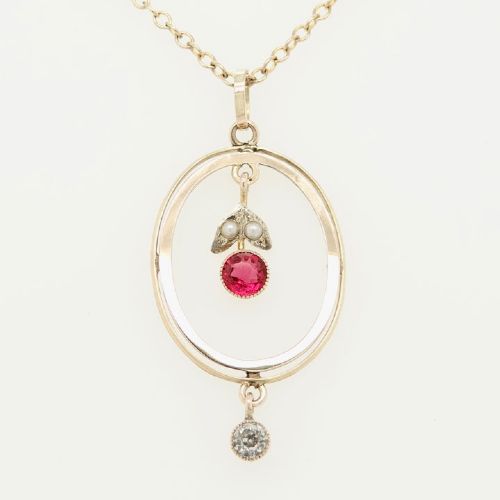
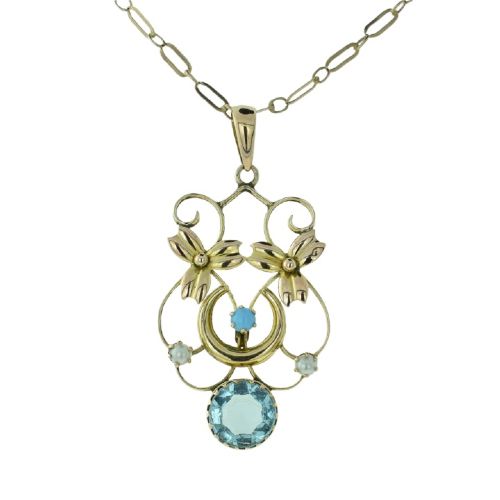
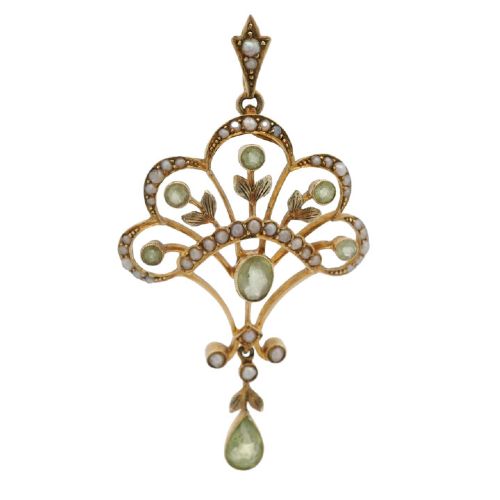
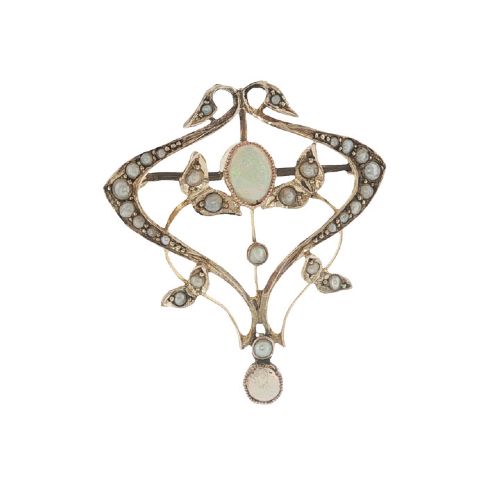
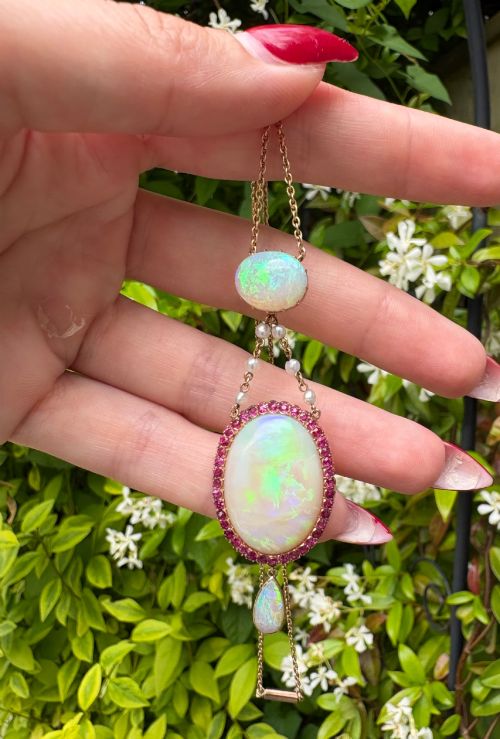
An Edwardian seed pearl necklace is a delicate piece of jewellery typically formed as a pendant suspended from a fine chain, heavily influenced by Art Nouveau styles. The pieces found here date predominantly from the early twentieth century, spanning the late Victorian era through to the 1920s and 1930s.
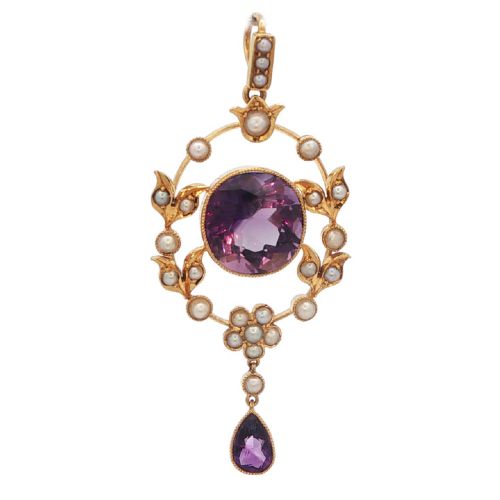
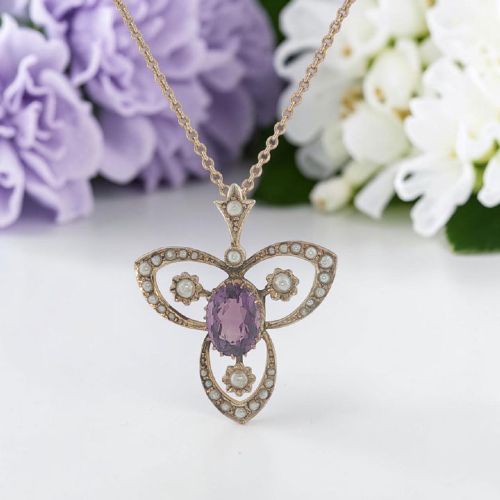
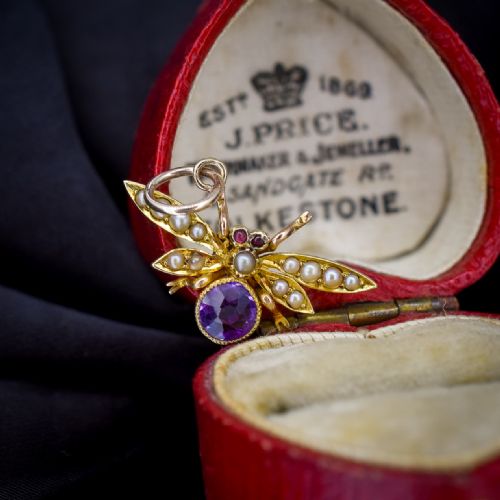
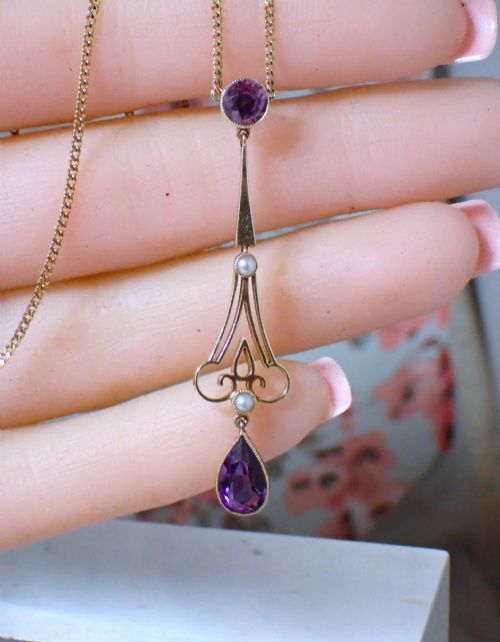
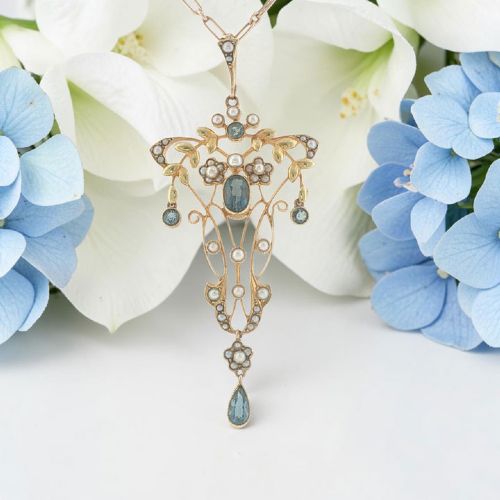
Makers of the period often combined tiny, river-harvested pearls with vibrant coloured gemstones such as peridot, amethyst, aquamarine, and tourmaline. Designs range from symmetrical floral garlands and bows to flowing, organic scrolls and lavalier drops.
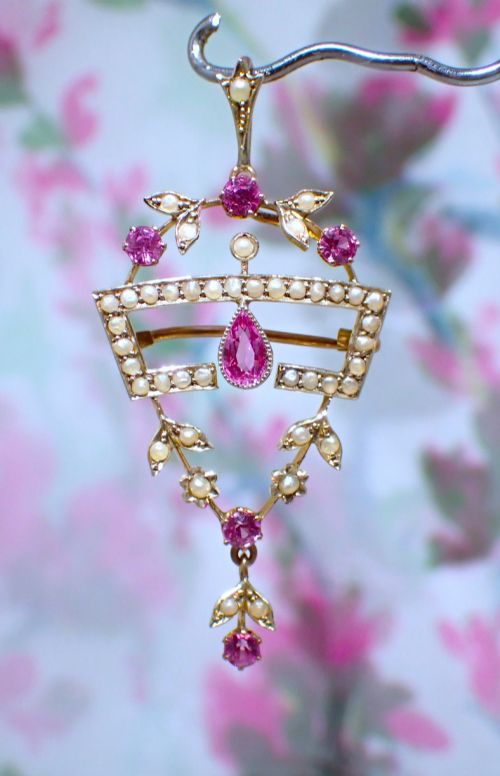
Most examples function as combined pendants and brooches, offering versatility through integrated pin mechanisms alongside suspension loops. Buyers encountering these items will see both 9ct and 15ct yellow gold, alongside occasional platinum and silver settings.
How they were made
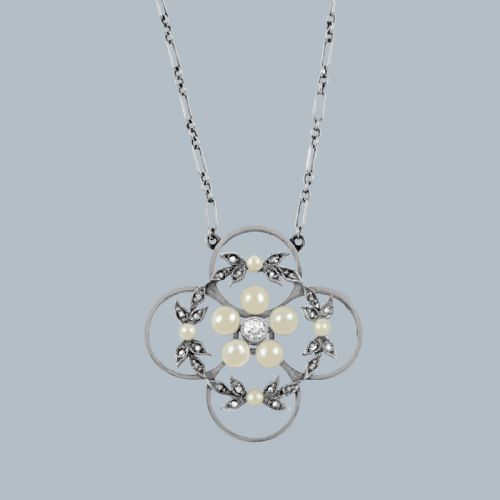
Goldsmiths constructed the foundational mounts using 9ct or 15ct gold, employing sheet metal piercing, wire bending, and hollow-stamping techniques to keep the frames lightweight. Platinum also appears in select mounts to provide a bright, durable setting for small diamonds.
Seed pearls were hand-selected for uniform size and drilled before being secured onto tiny pins or threaded with fine silk within openwork metal channels. Coloured gemstones, including cushion-cut peridots and amethysts, were claw-set or bezel-set as central focal points surrounded by pearl clusters.
Edwardian Seed Pearl Necklace Retail Price Guide 2026
Typical asking prices for edwardian seed pearl necklace among the pieces listed under this phrase on Sellingantiques today, from the lower quarter to the upper quarter. They describe what is for sale here now, not the wider market.
Listings show that Edwardian makers frequently paired peridots and amethysts with seed pearls in both 9ct and 15ct gold mounts.
What varies in quality
Quality reveals itself in the precision of the metalwork and the uniformity of the pearls used across the design. Finer examples display intricate openwork frames, secure settings where every seed pearl sits level, and well-matched stones with strong natural colour.
The choice of gold purity also marks a distinction, with 15ct gold settings generally housing more ambitious gemstone combinations and delicate articulation than standard 9ct alternatives.
S. Blanckensee and Son·Hamilton and Co
The Edwardian Seed Pearl Necklace Glossary
- Seed pearl
- A very small, naturally formed saltwater or freshwater pearl, typically under two millimetres in diameter. These tiny pearls were drilled and threaded or pegged into clusters to form textural backgrounds for larger gems.
- Lavalier
- A pendant necklace featuring a central drop stone or ornament that hangs lower than the surrounding framework. This style gained immense popularity during the Edwardian period and often incorporates swinging seed pearl drops.
- Art Nouveau
- An international design movement characterised by flowing, organic lines, asymmetrical floral motifs, and sinuous curves. Pieces from this aesthetic frequently utilise whipped wirework and naturalistic insect or plant forms.
- Plique-à-jour
- An enamelling technique where the enamel is applied within a wire framework without a backing, creating a translucent, stained-glass effect. It lets light pass directly through the coloured glass sections of a pendant.
- Garland style
- A decorative motif inspired by eighteenth-century neoclassical design featuring tied ribbons, swags, and wreaths rendered in precious metals. In Edwardian jewellery, these patterns are populated by delicate rows of seed pearls.
Edwardian Seed Pearl Necklace: Frequently Asked Questions
How do I wear an Edwardian pendant brooch safely?
Many Edwardian pendants include a hidden pin stem on the reverse, allowing them to be worn interchangeably as a necklace or a brooch. When wearing it as a brooch on heavier fabrics, ensure the safety catch is fully engaged.
When suspended as a necklace, pair the piece with a fine gold chain that matches the original gauge of the pendant's bail.
Can I clean seed pearl jewellery with water?
Seed pearls are historically sensitive to moisture because they are traditionally held on organic silk threads or secured with historical adhesives. Submerging the necklace in water or ultrasonic cleaners can weaken the internal structure.
Instead, wipe the gold components gently with a soft dry cloth and keep the pearls away from perfumes, cosmetics, and harsh chemicals.
How do I tell an Edwardian piece from a Victorian one?
Victorian jewellery often leans toward heavier, darker stones and substantial closed-back metal settings. Edwardian pieces, by contrast, favour lighter pastel gems like peridot and aquamarine set within open, airy platinum or high-carat yellow gold frameworks.
The inclusion of garland motifs, bows, and whiplash lines typically points toward the Edwardian era.
What is the difference between 9ct and 15ct gold in these necklaces?
Fifteen-carat gold contains a higher proportion of pure gold than 9ct gold, resulting in a richer, deeper yellow hue that does not tarnish easily. Makers reserved 15ct gold for finer, more intricate gem-set pieces during the late nineteenth and early twentieth centuries.
Nine-carat gold offers a paler tone and was widely used for lighter, everyday commercial pieces of the same period.