


Green Stone Necklace
These green stone necklace pieces bring together varied green minerals and precious metals across styles from the Victorian era to the mid-century.
Green Stone Necklace
A green stone necklace pairs green minerals with silver or gold settings in forms ranging from simple drops to elaborate multi-gem arrangements. These items span Victorian, Edwardian, Art Nouveau, Arts and Crafts, Art Deco and mid-century periods.
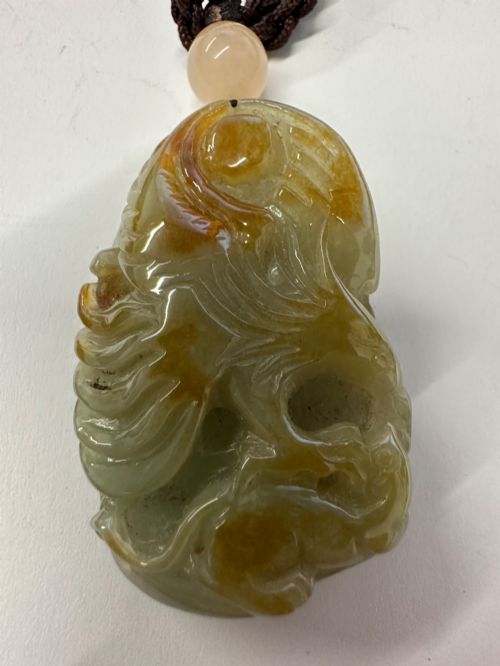
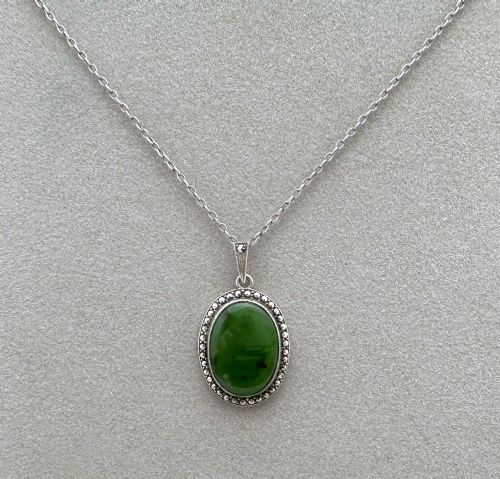
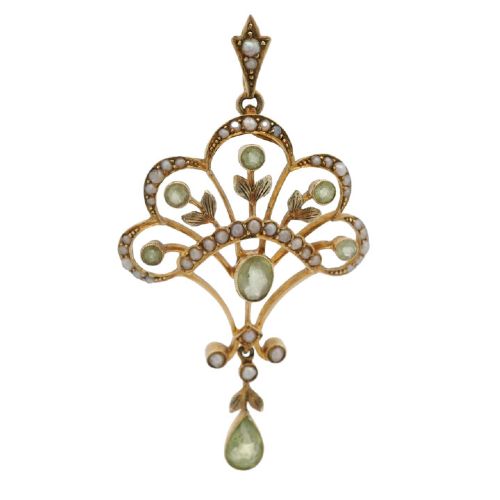
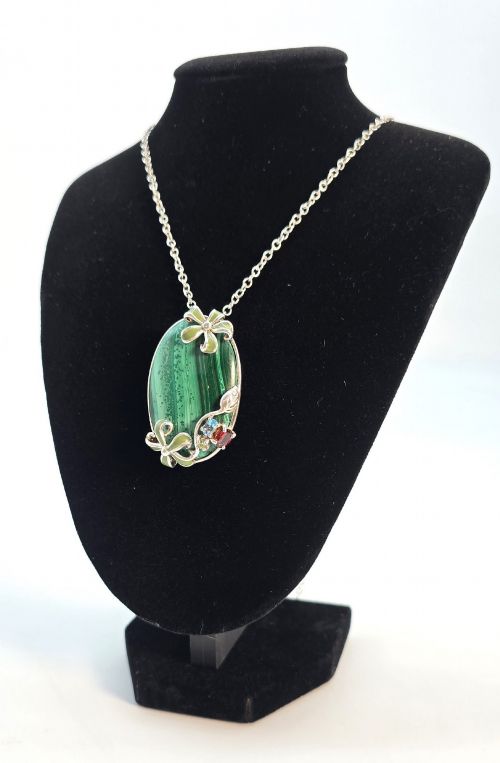
The version most commonly met on this page is a pendant necklace combining peridot, jade, malachite, chrysoprase or emerald with silver or gold. Such pieces often incorporate seed pearls, diamonds or enamel alongside the central green stone.
Makers and designers of these ornaments range from independent workshops to larger firms utilising distinct regional aesthetics. The resulting jewellery reflects both mass production and detailed artistic creation from the late nineteenth century onward.
How they were made
Metals such as sterling silver, 9ct gold, 15ct gold and platinum form the structure of these mounts. Artisans shape these metals by hand or cast them to hold the central stones securely.
Stones like peridot, jade and chrysoprase are cut and polished into cabochons or faceted gems, then set within collets or claw settings. Enamel work and seed pearls frequently add secondary texture and colour contrast to the designs.
Listings feature peridot, jade, malachite, chrysoprase, emerald, green chalcedony and multi-gem configurations set in silver and gold.
What varies in quality
The integrity of the setting and the matching of secondary gems like seed pearls or diamonds establish the overall cohesion of the design. Pieces that retain their original chain, enamel and stone integrity command greater interest.
Liberty and Co·Levinger and Bissinger·Otto Prutscher·Arthur and Georgie Gaskin
The Green Stone Necklace Glossary
- Cabochon
- A gemstone shaped and polished with a smooth, rounded surface rather than faceted. This cut is frequently utilised for opaque or translucent green stones like jade and malachite.
- Chrysoprase
- A gemstone variety of chalcedony that contains small quantities of nickel, giving it an apple-green colour. It appears regularly in Arts and Crafts pendants.
- Peridot
- A gem-grade variety of olivine valued for its distinctive yellowish-green hue. It is one of the most common stones found in Edwardian and late Victorian necklaces on this page.
- Seed pearl
- A very small natural or cultured pearl, often drilled and strung together or set in clusters. These tiny pearls accent many Edwardian and Victorian gold pendants.
Green Stone Necklace: Frequently Asked Questions
What periods do these necklaces cover?
The pieces span from the late nineteenth century through the Edwardian and Art Deco eras to the mid-century. Victorian and Arts and Crafts examples sit alongside later geometric designs.
Each period brings distinct material choices, such as high-carat gold in early pieces and silver with jade or malachite in later decades.
How do I care for a green stone necklace?
Store each necklace separately in a soft pouch to prevent the metal from scratching softer stones like malachite or jade. Avoid harsh chemical cleaners, particularly where enamel or seed pearls are present.
Clean gently with a soft, dry cloth after wearing to remove skin oils and residue from the gold or silver settings.
What metals are used in these settings?
Settings utilise sterling silver, 9ct yellow gold, 15ct gold, platinum and occasionally silver gilt. The choice of metal often reflects the period of manufacture.
Early pieces frequently employ higher carat golds or silver, while mid-century examples incorporate 9ct gold and white gold.
Are these pieces pendants or necklaces?
The listings include both standalone pendants designed to be hung from a chain and complete necklaces with integrated drops. Many items are described interchangeably as pendant necklaces.
Some pieces also feature dual functionality, allowing them to be worn as brooches as well as pendants.